





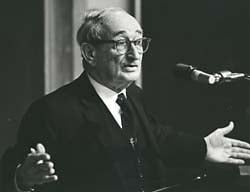
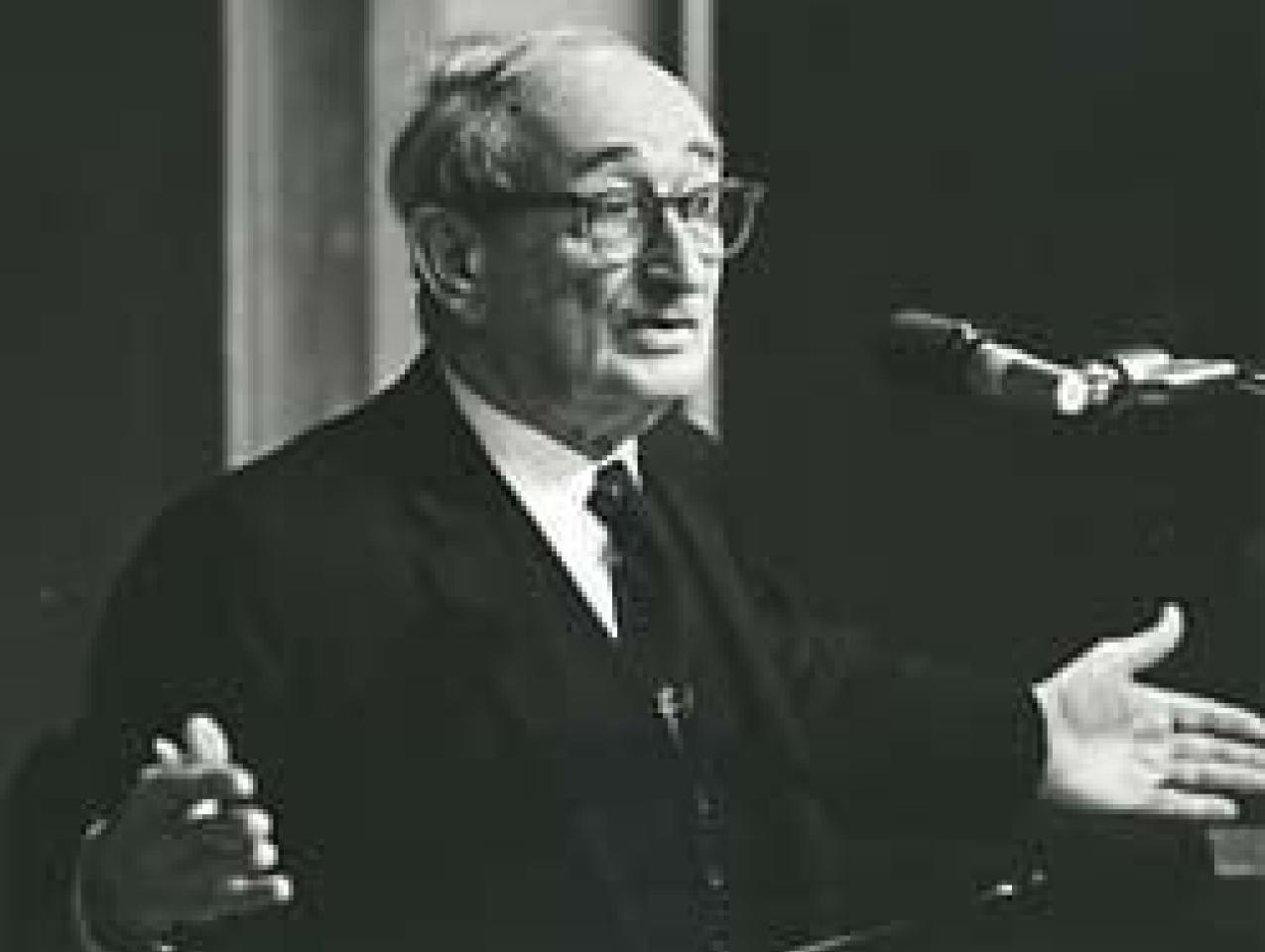
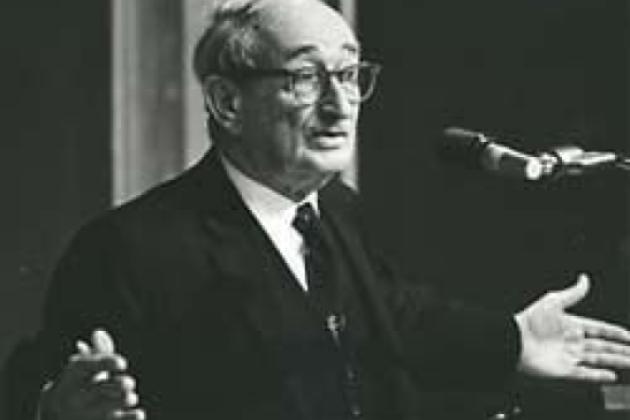
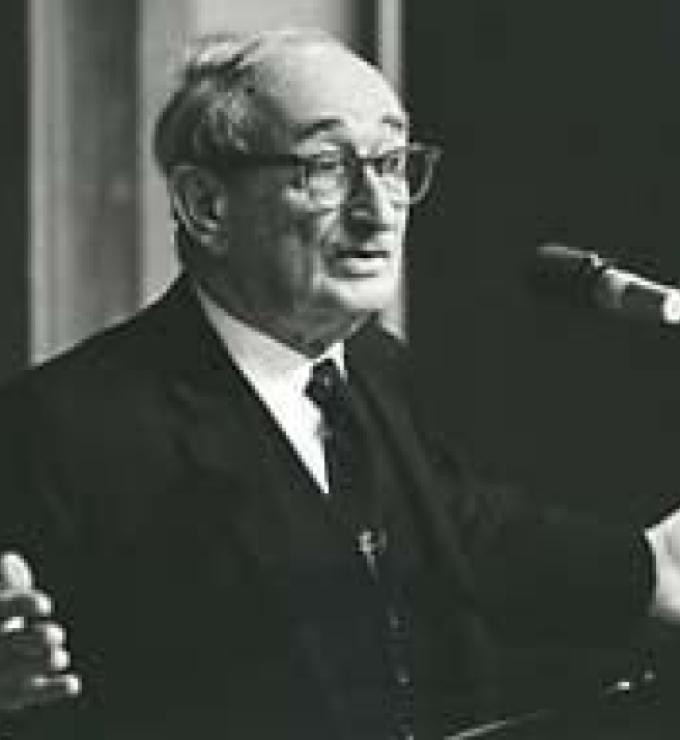
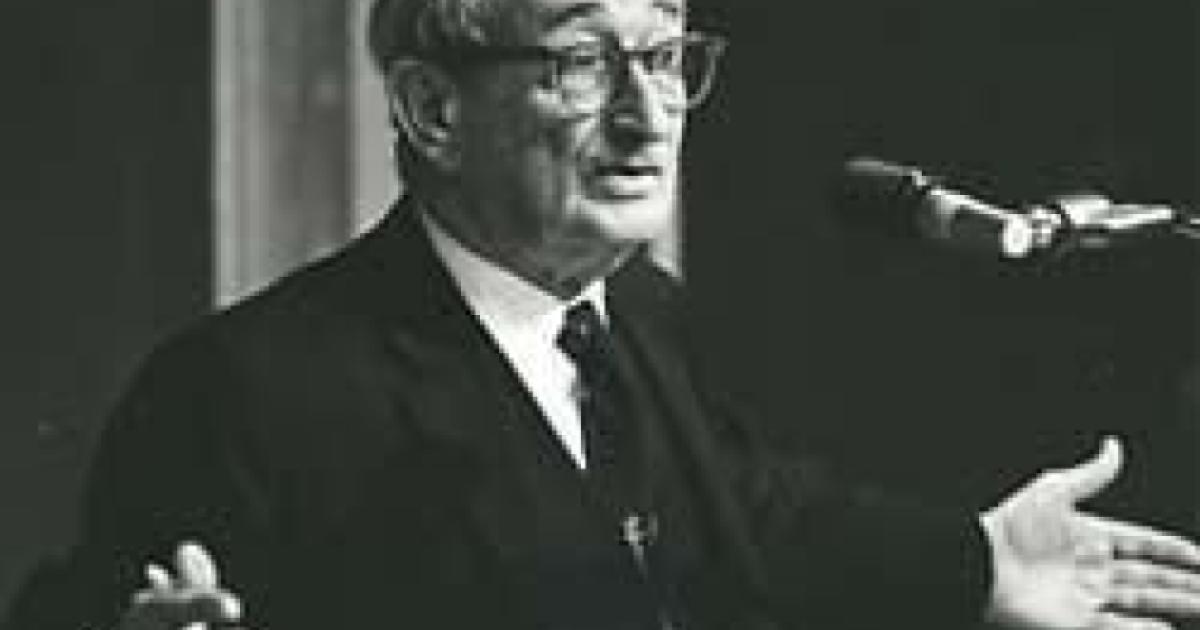
American philosopher Sidney Hook, an outspoken participant in many of the principal political debates of this century, was best known for his vigorous defense of political and academic freedom and his stand against totalitarianism in all forms.
American philosopher Sidney Hook, an outspoken participant in many of the principal political debates of this century, was best known for his vigorous defense of political and academic freedom and his stand against totalitarianism in all forms.
The influence of philosopher and educator John Dewey at Columbia University, where Hook received his Ph.D., resulted in his first publication, The Metaphysics of Pragmatism, which included an introduction by Dewey. Hook joined the philosophy department of New York University in 1927, becoming its chair after seven years, remaining there until 1968, and retiring from the department in 1972. He became a fellow at the Hoover Institution in 1973.
His book Toward the Understanding of Karl Marx: A Revolutionary Interpretation, published in 1933, depicted a moral and intellectual gulf between the humanistic ideals he saw in Marx and the communist orthodoxy in the Soviet Union. The Moscow trials of 1936 and 1937, indicting old Bolsheviks (chief among these, Leon Trotsky) for treason, further convinced him that "any conception of socialism that rejected the centrality of moral values was only an ideological disguise for totalitarianism." Hook enlisted Dewey among others to participate in an inquiry held in Mexico City to examine the charges against Trotsky. It became known as the Dewey Commission. During World War II Hook argued that the Soviet Union should be regarded as a cobelligerent rather than an ally. After the war, he opposed Soviet influence but never indulged in the excesses of McCarthyism.
As a professor during the sixties, he deplored the student radicals who denied freedom of speech to those who disagreed with their views. His Academic Freedom and Academic Anarchy documents the turbulent events of that decade.
A prolific writer of books as well as book reviews and articles (he had more than one thousand publications to his name), Hook became well known for his strong opinions and keen logic, not only to intellectuals, but also to the public at large. In 1985, he was awarded the presidential Medal of Freedom.
His autobiography, Out of Step: An Unquiet Life in the 20th Century, published in 1987, illuminated Hook's many philosophical battles, from his high school days throughout his long life.
The Hoover Archives preserves his extensive papers, including a lively correspondence and extensive manuscripts.