

Hoover Institution (Stanford, CA) — The Hoover Institution Library & Archives is pleased to announce the acquisition of the papers of Francis Mading Deng, a statesman, scholar, and a founding architect of the international principle that sovereignty carries the responsibility to protect.
Francis Mading Deng was born near Abyei, the senior son of Deng Majok, paramount chief of the Ngok Dinka. He studied law at the University of Khartoum and at Yale, and served as a Human Rights Officer in the United Nations Secretariat from 1967 to 1972. His diplomatic career took him from ambassadorships in Scandinavia, the United States, and Canada to the post of Minister of State for Foreign Affairs (1976–1980).
He later went on to found and direct the Africa Project at the Brookings Institution and to hold research positions at the Woodrow Wilson International Center for Scholars, the United States Institute of Peace, the Library of Congress’s Kluge Center, and the MIT Center for International Studies, as well as teaching appointments at Yale Law School, the Graduate Center of New York University, and Johns Hopkins’ School of Advanced International Studies – SAIS.
From 1992 to 2004, Deng served as the United Nations’ first Representative of the Secretary-General on Internally Displaced Persons. He led the drafting of the Guiding Principles on Internal Displacement (1998), and his framing of “sovereignty as responsibility” prepared the ground for the Responsibility to Protect. He returned to the UN as Special Adviser on the Prevention of Genocide (2007–2012), and closed his diplomatic career as South Sudan’s first Permanent Representative to the United Nations (2012–2016).
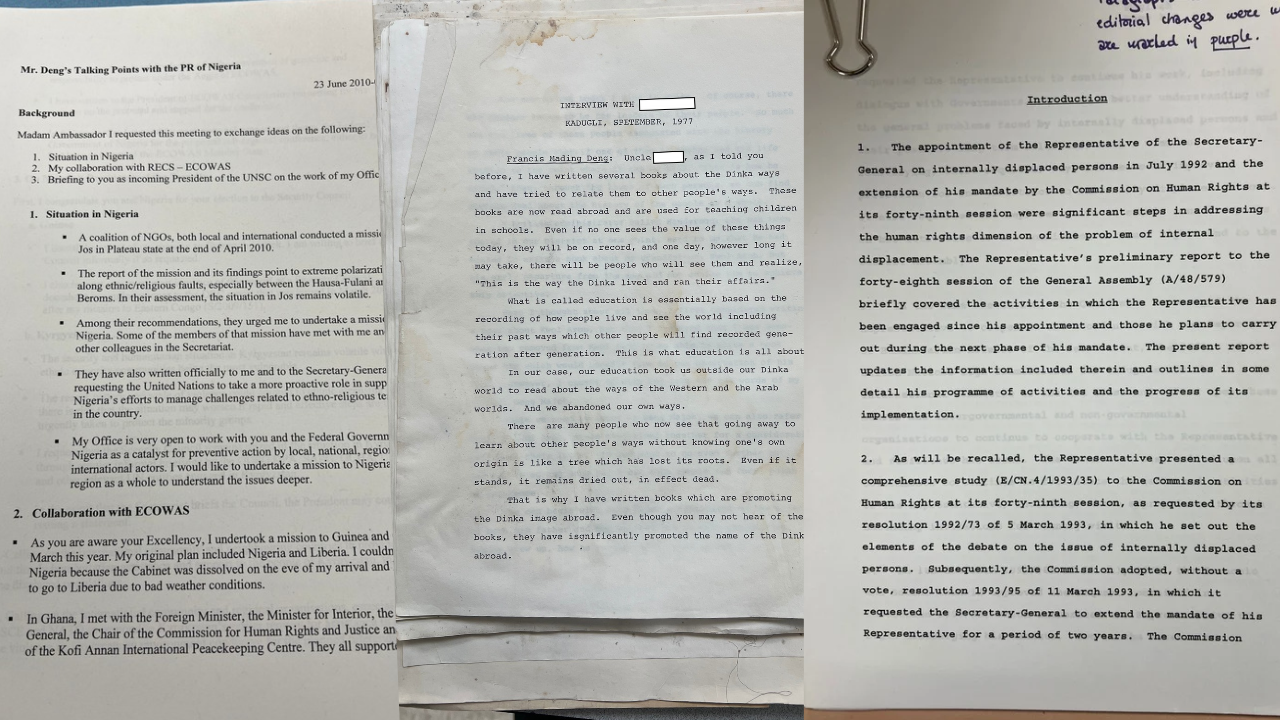
The mandate files preserve this work in motion. The vast collection includes: 1993 drafts of his reports as Representative, handwritten revisions still on the page; his note to the Secretariat on displaced civilians in Chechnya; his mission report on Rwanda in the wake of the 1994 genocide; and more mission reports from his over thirty country visits during his term of office as well as talking points from his genocide-prevention office. Reflecting on that office in 2008, Deng put its premise plainly:
There is a potential Hitler in all human situations. Unless we address what produces a Hitler, we will not be able to eradicate him within society.
The heart of the collection is Sudanese. Its series follow the books Deng built from fieldwork: the interview tapes and transcripts behind The Man Called Deng Majok, his biography of his father; Africans of Two Worlds: The Dinka in Afro-Arab Sudan; Bonds of Silk, on British administration in Sudan; Recollections of Babo Nimir; the Abyei files on the contested ground between North and South; the Sudan Peace Process records; interview material with Sudanese for his book, War of Visions; Conflict of Identities in Sudan; and he also gathered Dinka folktales and songs from which resulted his book The Dinka and Their Songs for the Oxford University’s Library of African Literature. In A Journey of Ideas, the annotated collection of his 176 published titles, Deng names the principles that run through all of his writings — “identity, dignity, diversity, and equality” — traced across four levels, “local, national, regional, and global.” The purpose he gives is the purpose of this archive: people “need to read about themselves as much as others need to read about them.”
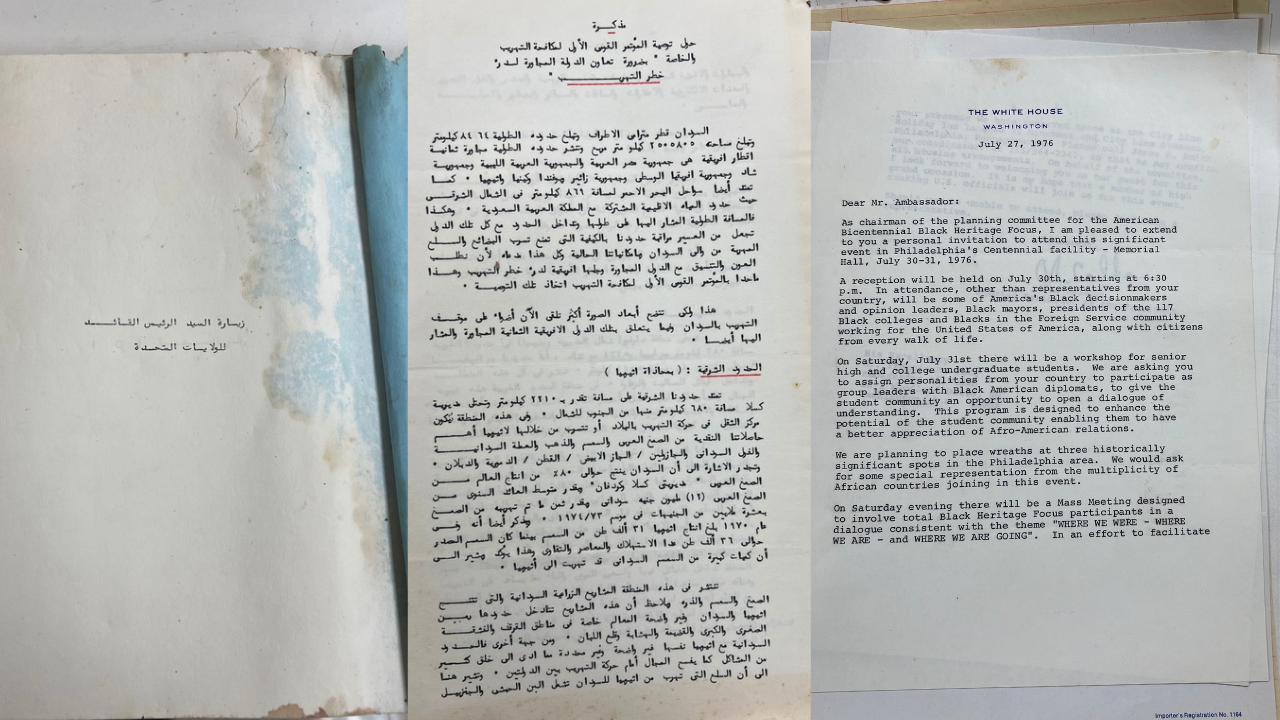
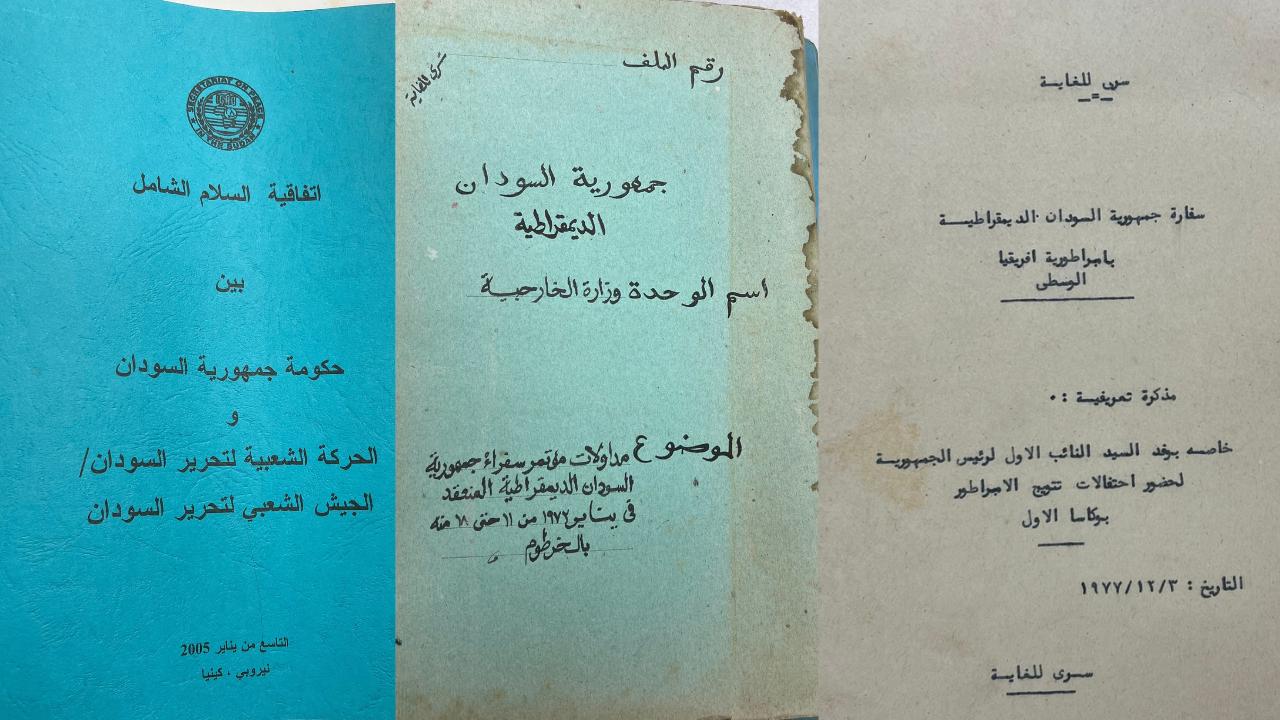
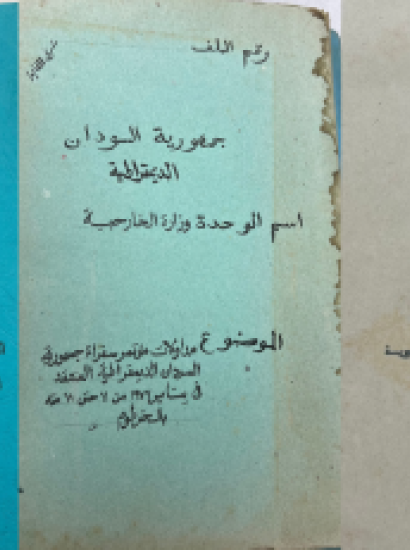
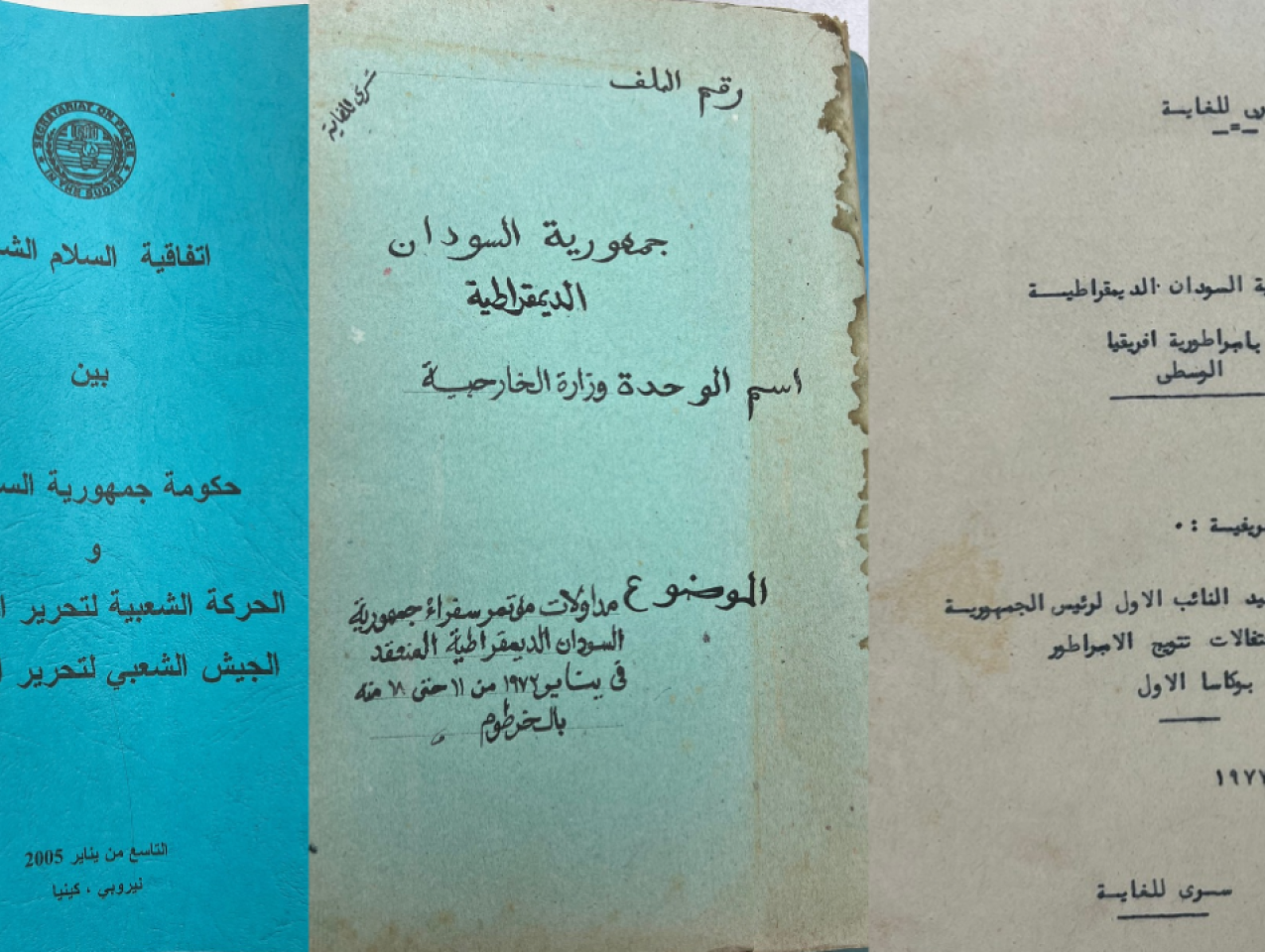
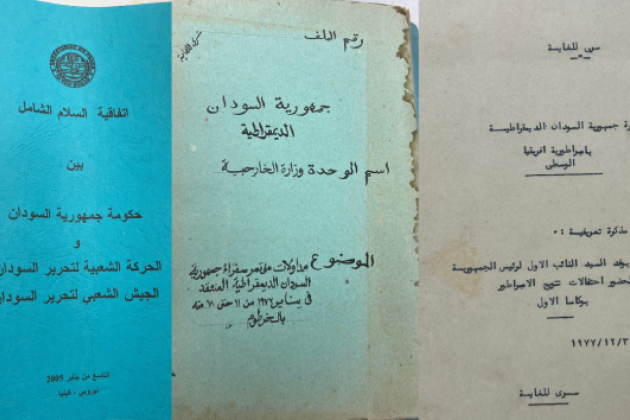
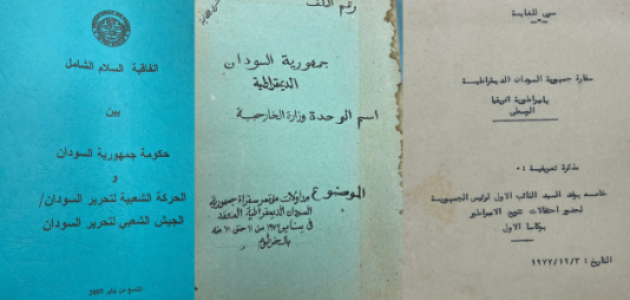
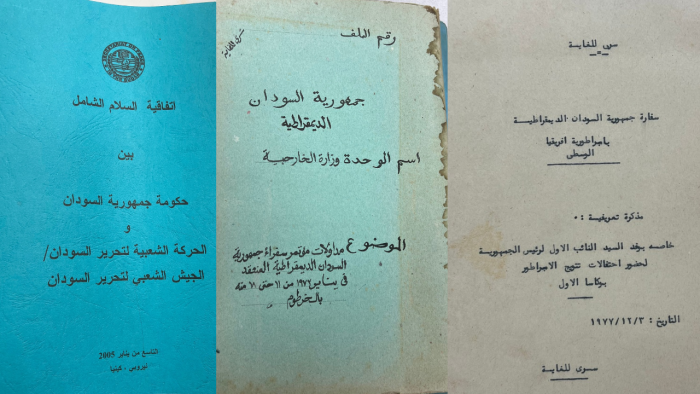
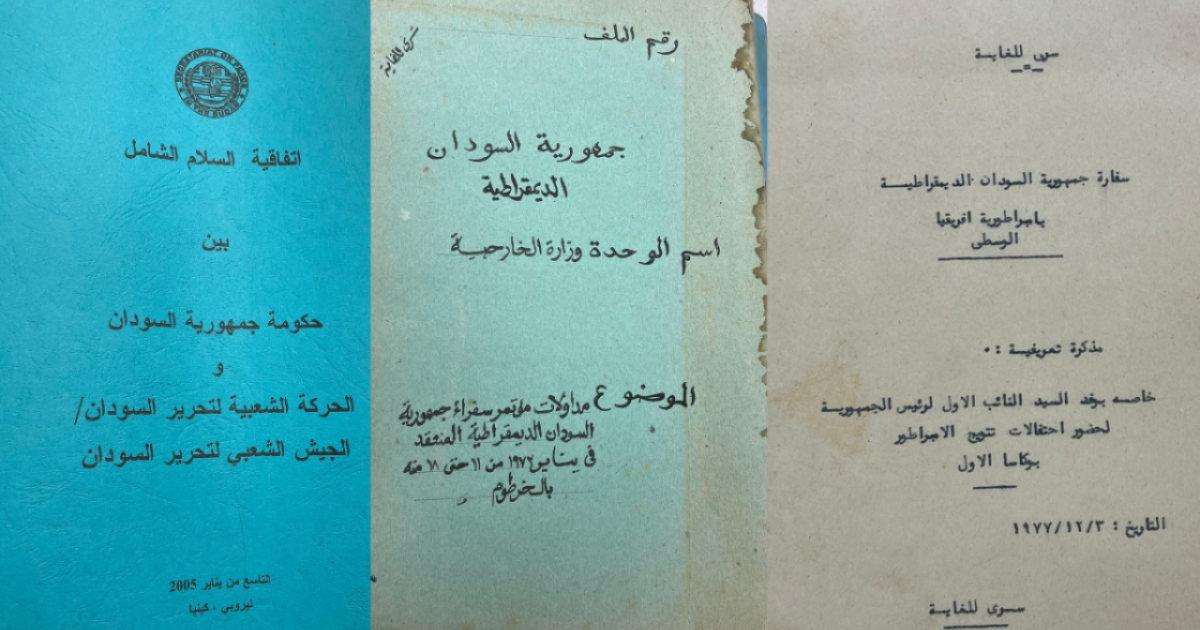
The papers hold the texture of a working life across those levels. A study-group summary from December 1963 lists “Mr. Francis Deng” among the attendees discussing property and economic development in African countries. A September 1977 interview in Kadugli, with a number of Ngok Dinka chiefs and elders, feeds the biography of Deng Majok. A top-secret briefing dated 3 December 1977, prepared for the First Vice President’s delegation to Emperor Bokassa’s coronation, survives among his ministerial files. Among the rare collections is Deng’s handwritten report on the Camp David’s Accord between Egypt and Israel, which became the basis for Sudan’s support for the Accord. The most recent item is the June 2025 issue of the Nairobi weekly ATAR, carrying Deng’s essay “A Letter to the People of Sudan,” on the war that began in April 2023 and continues to rage on.
For scholars of Sudan and South Sudan, of Dinka anthropology and customary law, of African constitutionalism, and of the international effort to protect the displaced and prevent genocide, this is a working archive of rare completeness — the same hand visible in a chief’s son’s field notes, a minister’s confidential files, and a UN mandate’s drafts.
The Hoover Institution Library & Archives gratefully acknowledges Dr. Deng’s transfer of his papers.