



Hoover Institution (Stanford, CA) — The Hoover Institution Library & Archives has acquired the collection of Iraj Varzandeh, an Iranian Kurdish cartoonist and graphic artist whose satirical drawings — made between 1967 and 1971, while he was a university student — survived censorship, imprisonment, two wars, and decades of concealment before leaving Iran wrapped in clothing inside garbage bags to pass unnoticed through searches.
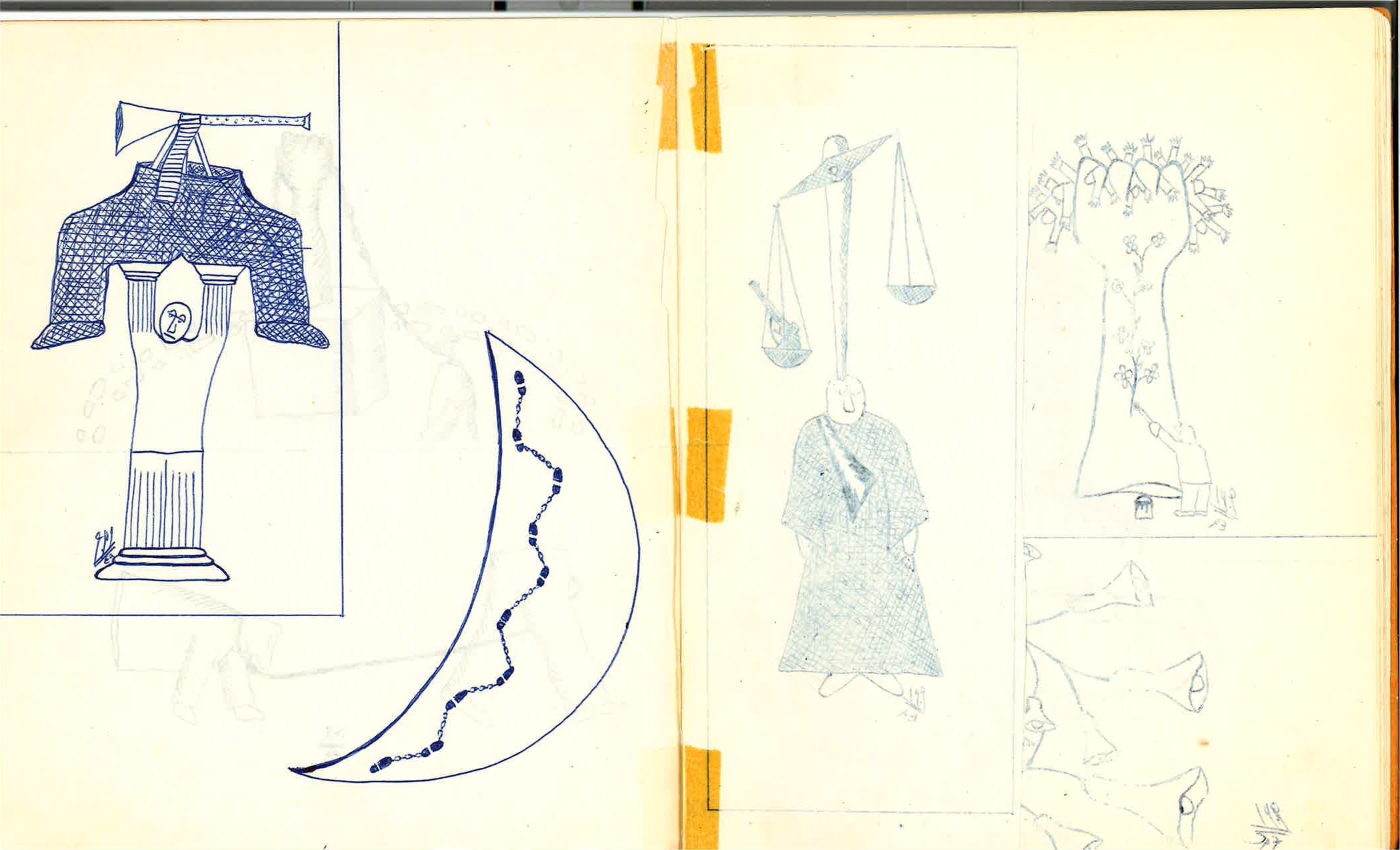
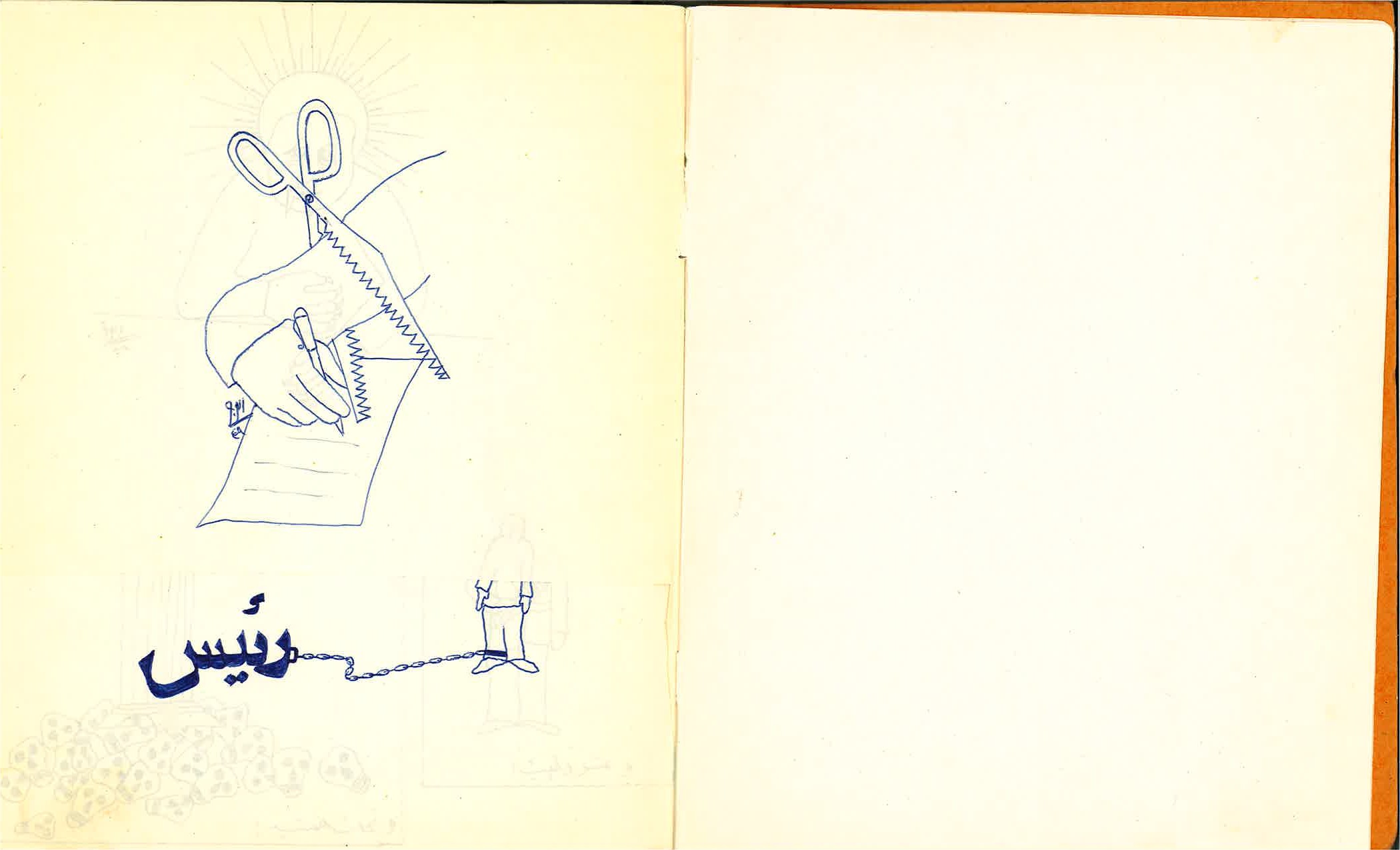
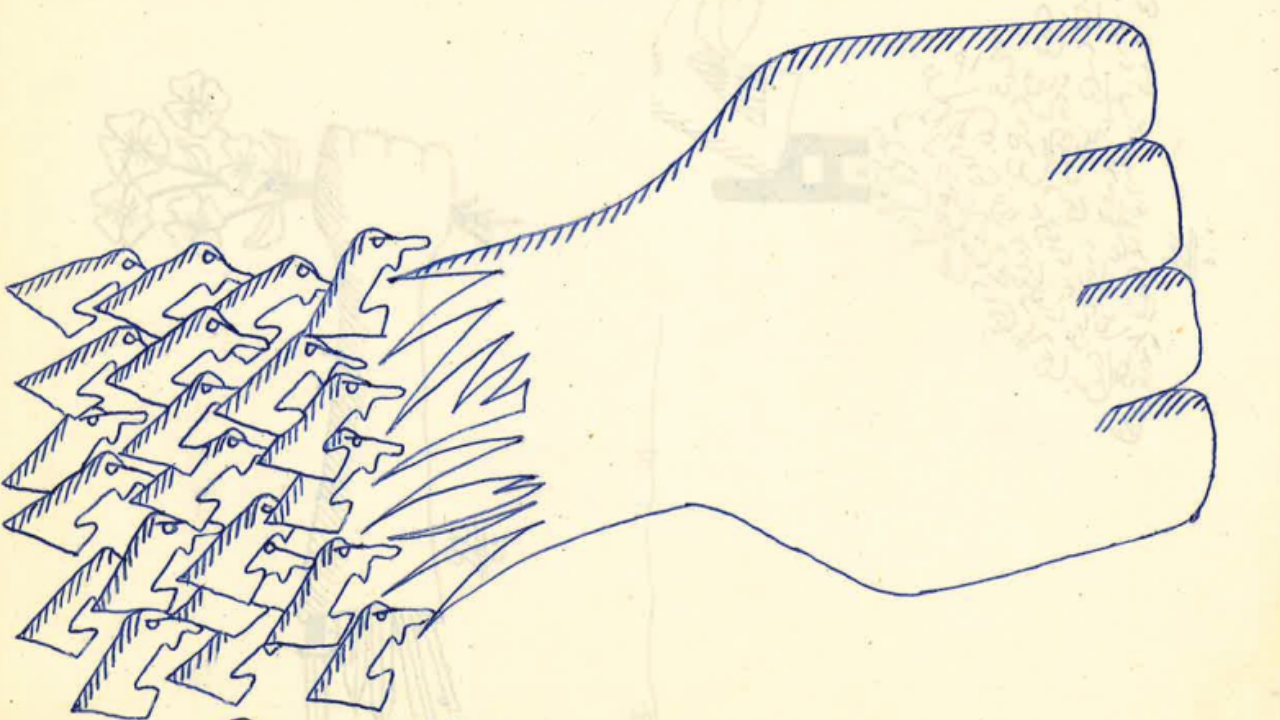
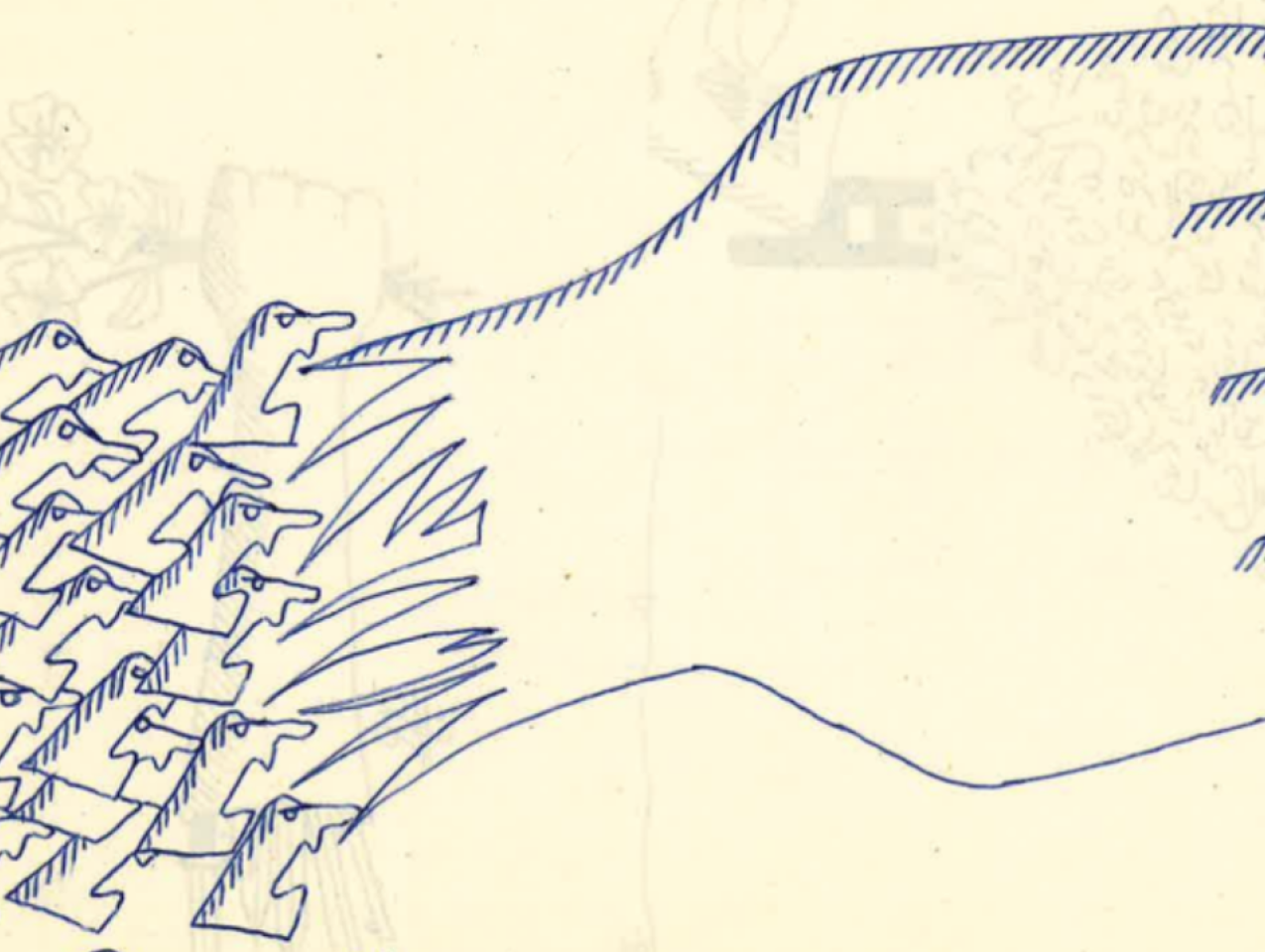
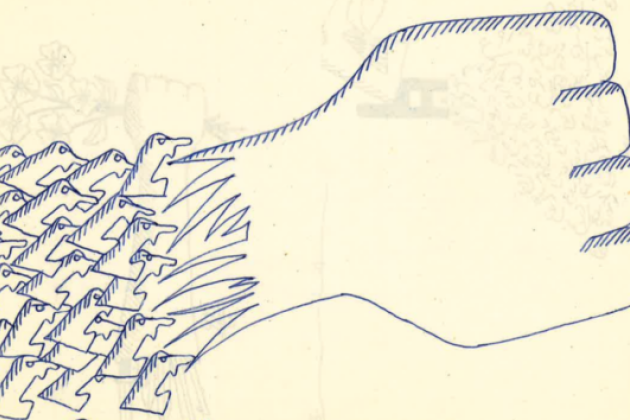
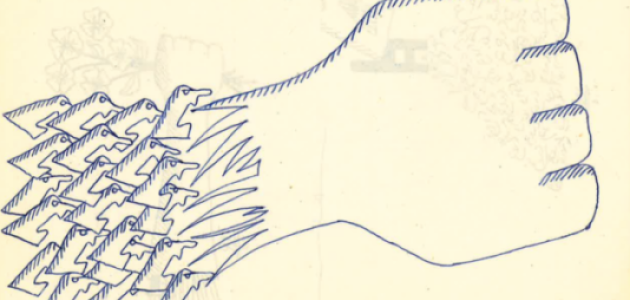
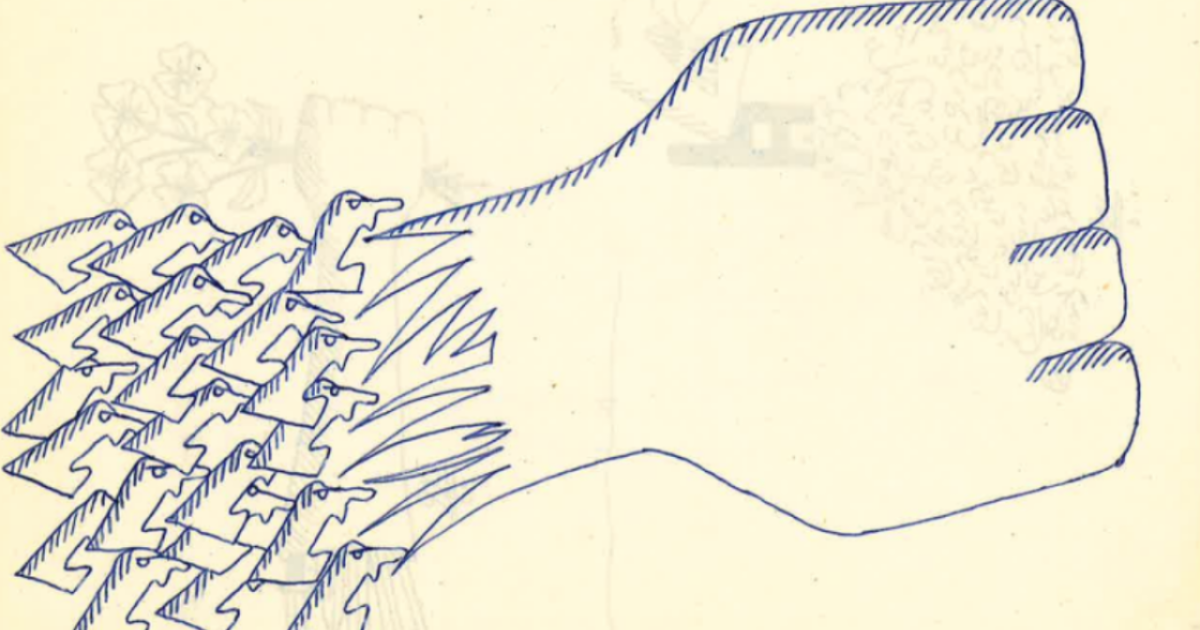
The collection contains a series of numbered notebooks: scissors severing the page beneath a writing hand; a syringe loaded with human eyes; men chained to a wall; a hand offering flowers while daggers wait in its sleeve. Signing with the pen name “Iraj,” Varzandeh combined calligraphy, illustration, and graphic design in single compositions that took up politics, justice, human and women's rights, ethical dilemmas, and political identity — themes that have kept the work's relevance undimmed. The drawings carry almost no captions, but the censors understood them anyway. When Varzandeh designed a book cover around the Ark citadel of Tabriz, where Iran's Constitutional Revolution began, the censors ordered the image stripped and replaced with plain lettering: the symbol itself was the offense.
Varzandeh was raised in the home of a military officer who was imprisoned and stripped of his position after (1953) for supporting the nationalist movement, in a house full of books and political argument. At a time when dissent was met with imprisonment and persecution by the secret police (SAVAK), he was arrested as a student for his activism. Much of Varzandeh's artwork was lost while in the possession of his siblings during his imprisonment.
Release brought its own sentence: barred from employment, denied a passport, and conscripted — despite his university degree — as a common soldier in one of the country's harshest regions. As a Kurdish artist, he carried the compounded weight of ethnic discrimination and political repression, which ultimately forced him to abandon his artistic career. Asked what drove a generation of students toward dissent, he answers:
«بیعدالتی و فقر و اختلاف طبقاتی و نبودن آزادی بیان... برای ما که جوان بودیم و عدالتخواه، باعث میشد که به این طرف کشیده بشیم.»
Injustice, poverty, class disparity, and the absence of freedom of expression — for those of us who were young and justice-seeking, these drew us in this direction.
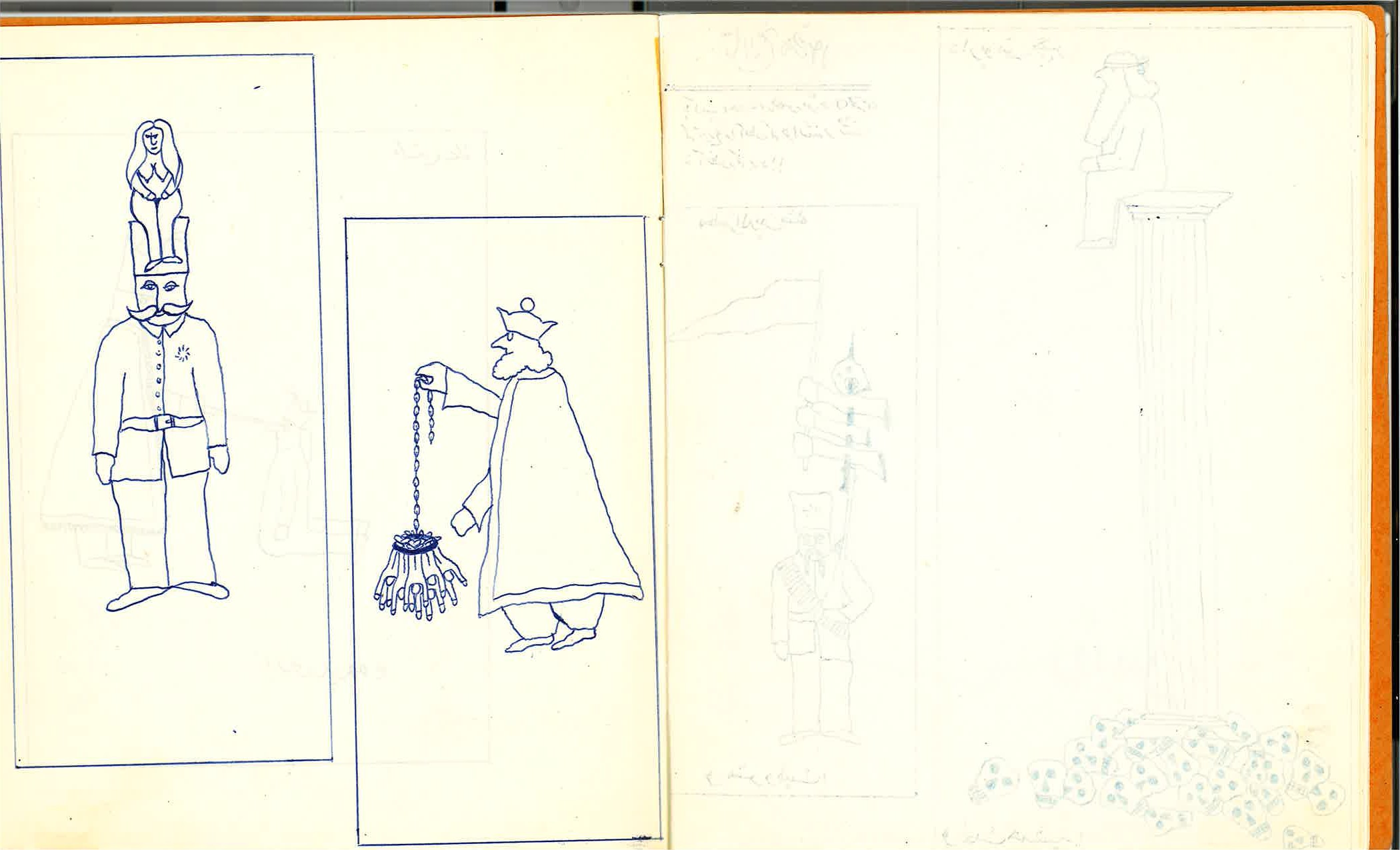
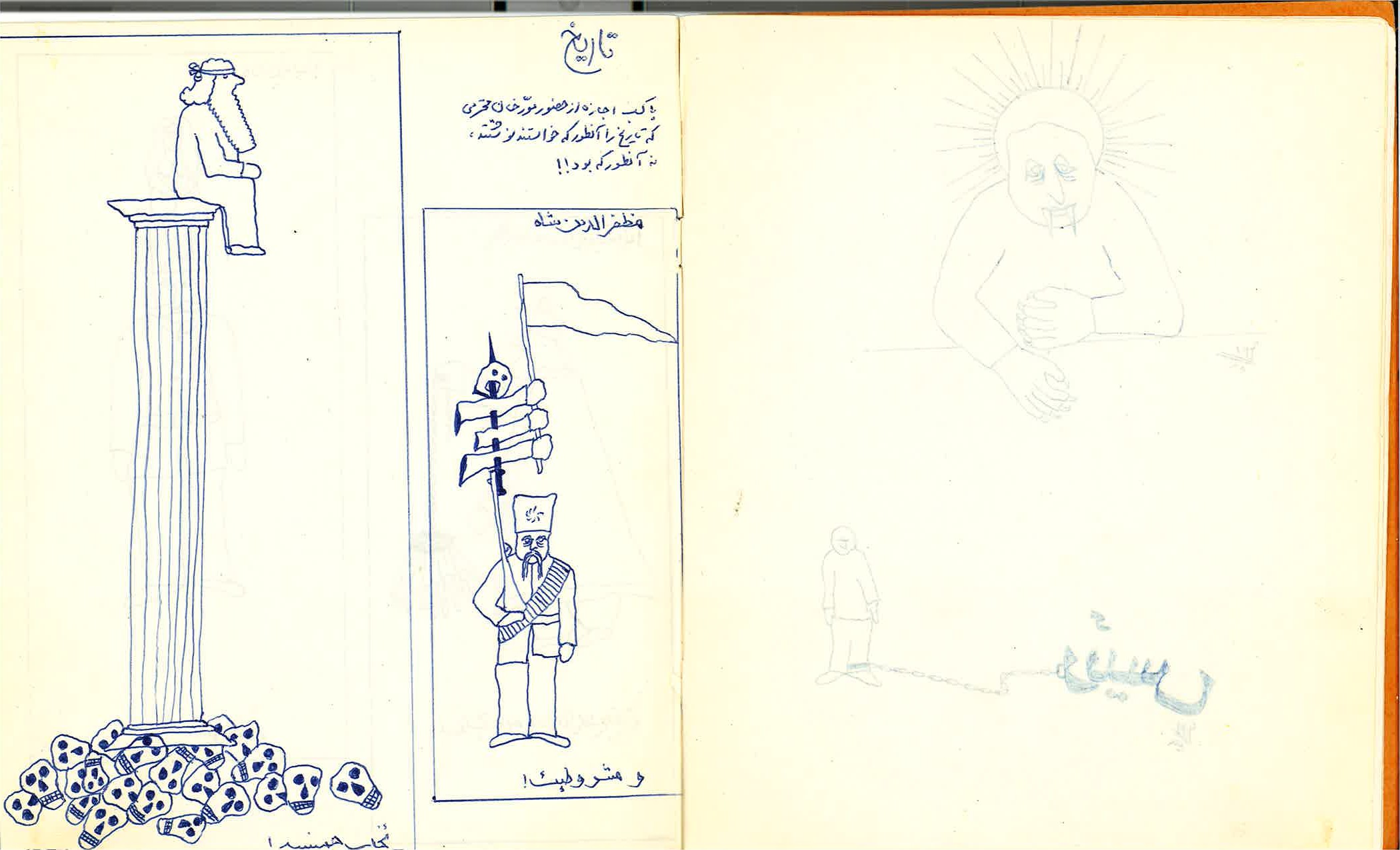
The “9th” notebook contains the Tārikh-e Moṣavvar (Illustrated History) series — the kings of Iran redrawn as the artist saw them: the history, as he puts it in the interview, that the historians wrote as they wished rather than as it happened.
The surviving works owe their existence to the artist's wife, who safeguarded them at personal risk through political upheaval, the military invasion of the family's Kurdish hometown on August 19,1979 and the Iran–Iraq War.