



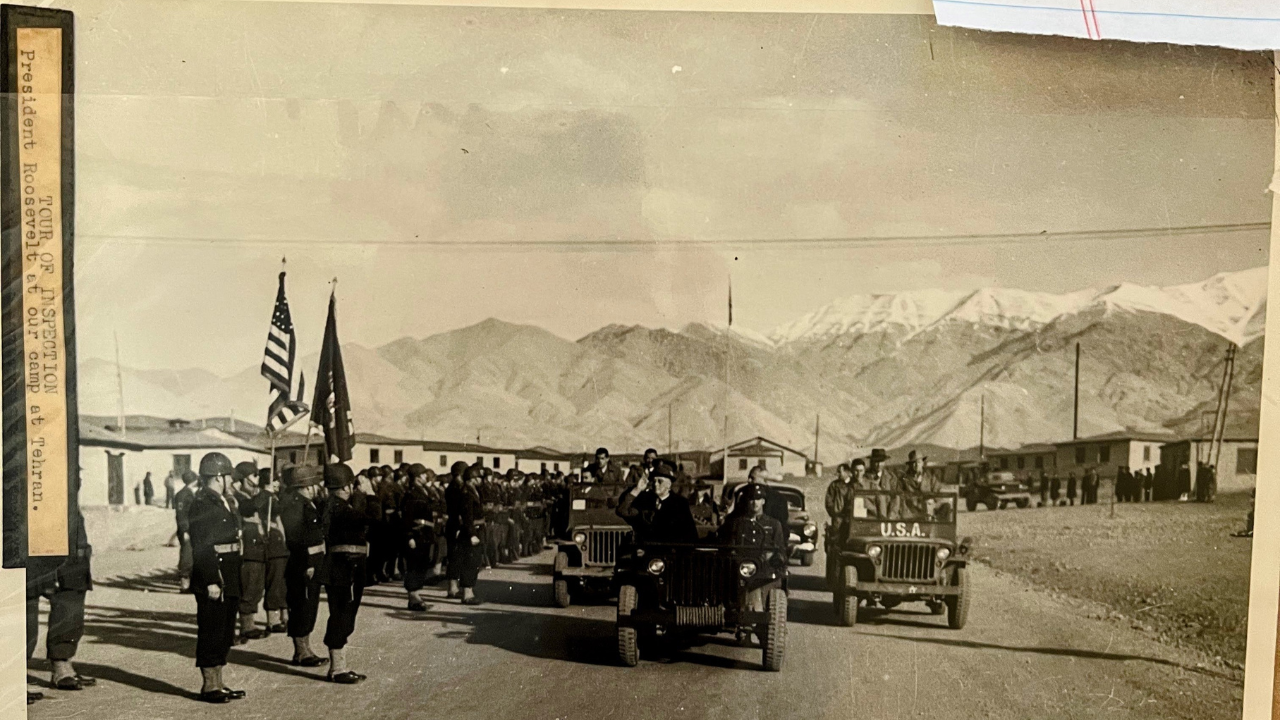
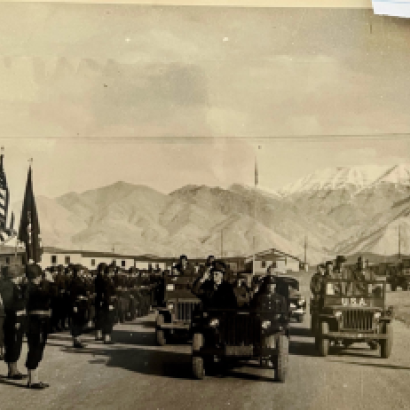
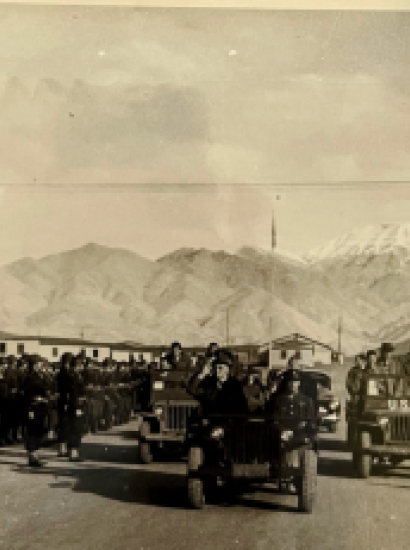
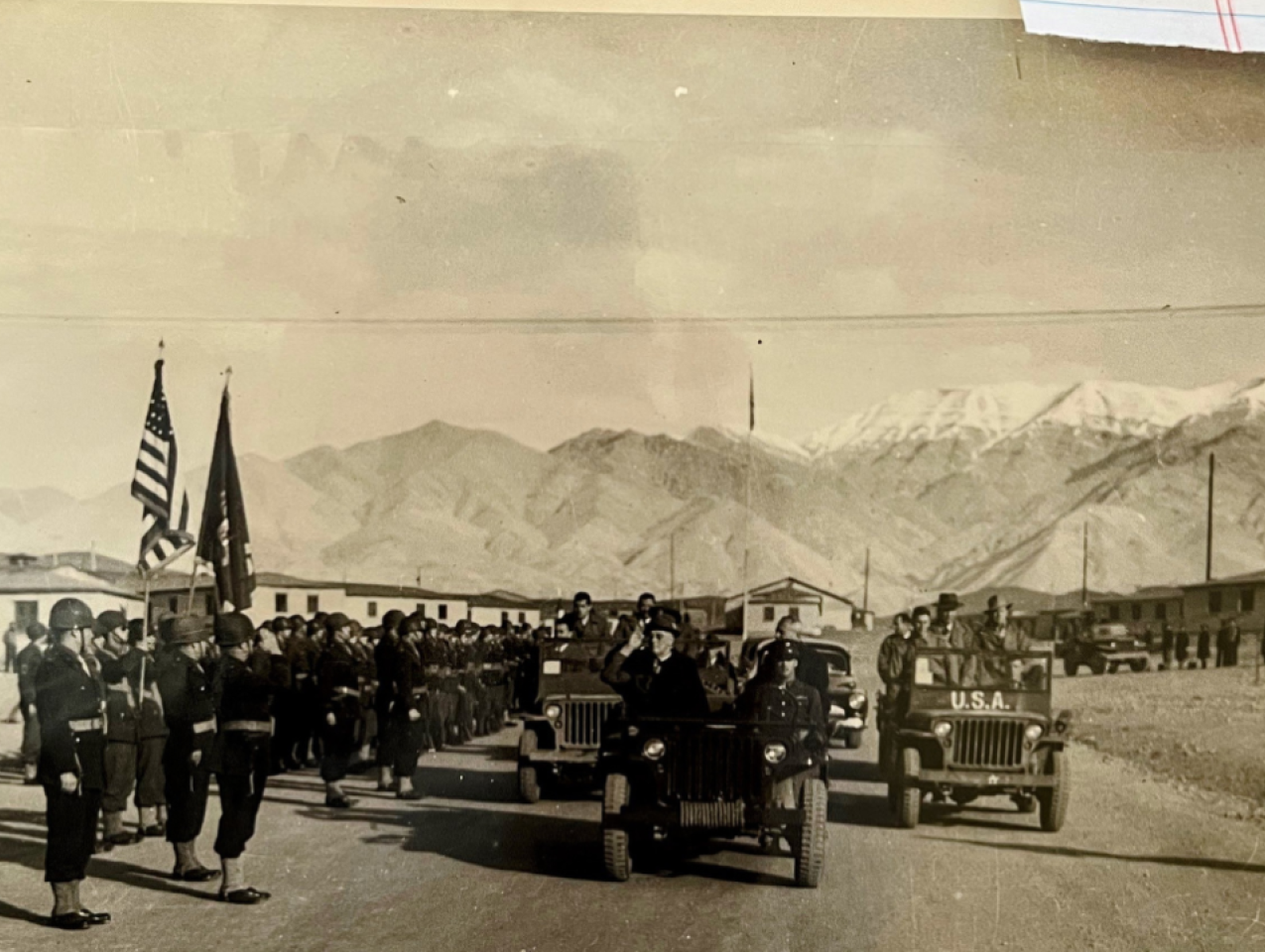
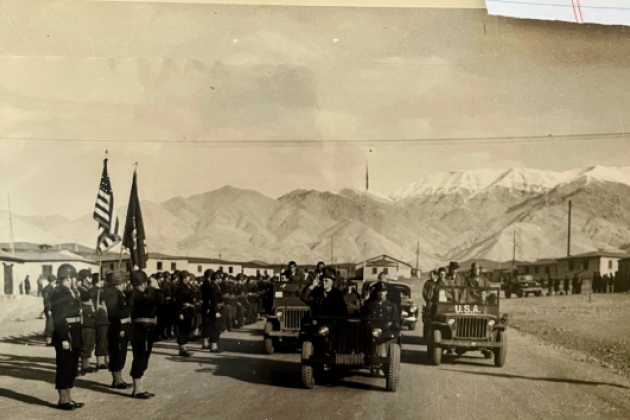
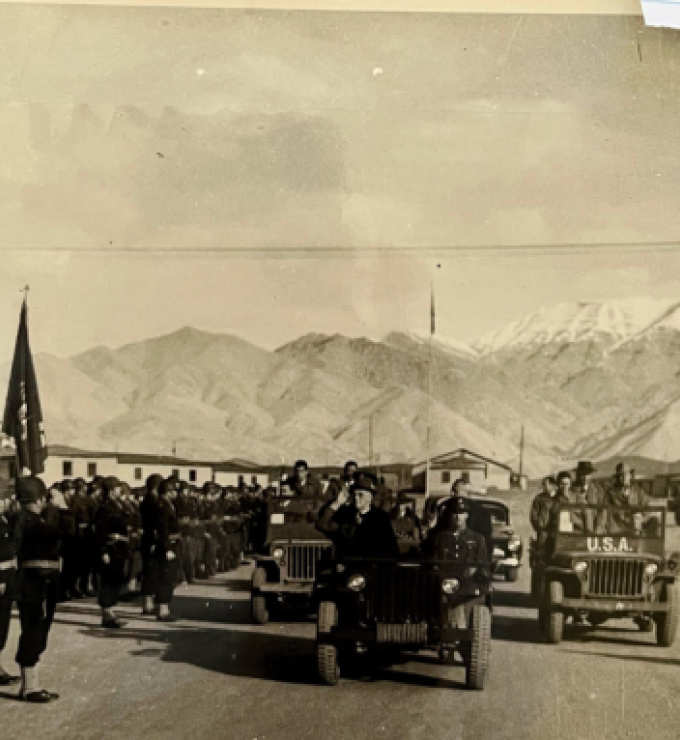
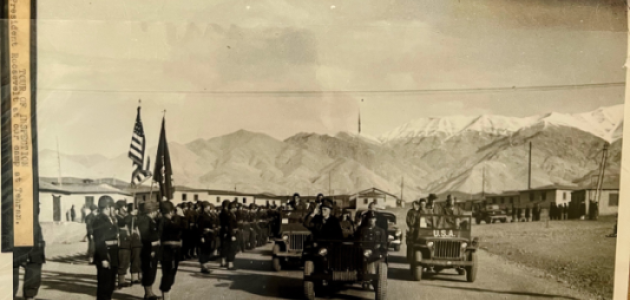
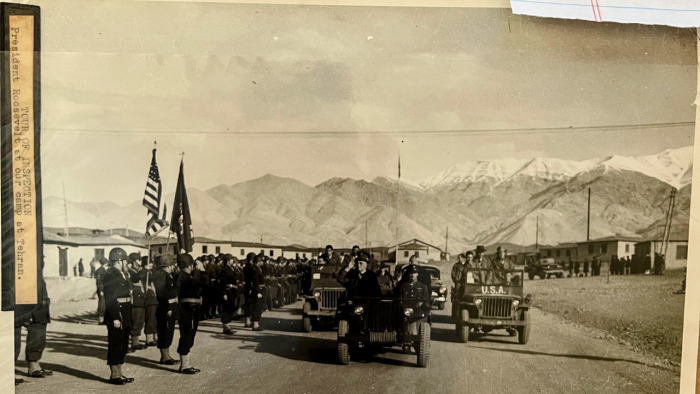
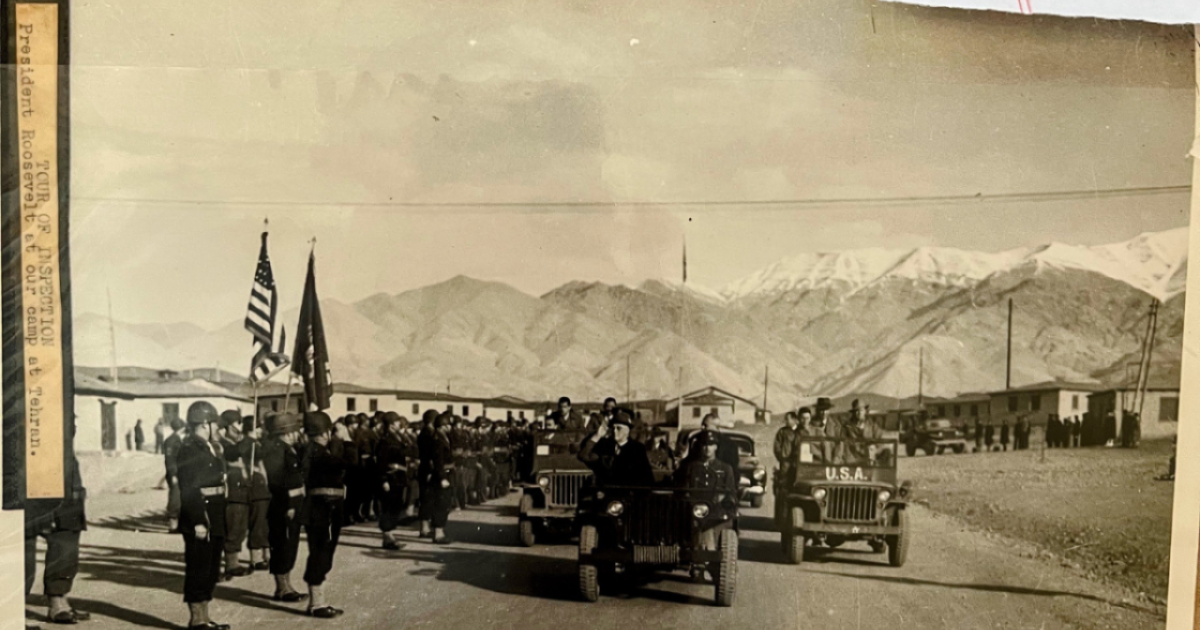
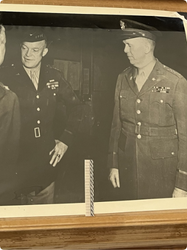
Hoover Institution (Stanford, CA) — The Aaron Arthur Rosen Collection includes original photographs, negatives, letters, transcribed personal correspondence, and propaganda materials documenting Rosen's service as a United States Army Signal Corps photographer during World War II.
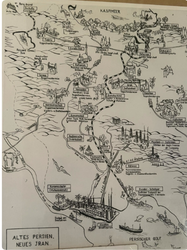
Images portray military life on bases in Iran and India, with materials directly connected to the November–December 1943 Tehran Conference, and a rare piece of Nazi propaganda — a detailed illustrated map of Iran titled Altes Persien, Neues Iran ("Old Persia, New Iran") — which Rosen described as having been "put out by the Nazis for the Persians to show them how Germany would help them reconstruct Iran," noting that "it was put out before we and the British took over."
Aaron Arthur Rosen (September 18, 1919 – December 25, 1995) was a United States Army Signal Corps photographer who served during World War II, stationed in Iran and India. Having begun his interest in photography at DeWitt Clinton High School in the Bronx, Rosen scored highly on the Signal Corps examination and was assigned to the unit upon being drafted. He was among a small number of Signal Corps photographers present at the 1943 Tehran Conference — the historic first meeting of the Allied "Big Three": Franklin D. Roosevelt, Winston Churchill, and Joseph Stalin — where he captured what is believed to be an unpublished original negative of the proceedings.
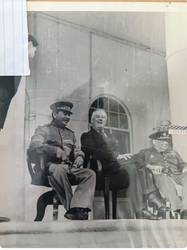
Rosen shared the story that he was told to get his cameras and come to a specific location, but he had no idea why. As the “Big Three” walked out of the conference room onto the porch, he found that his hands were shaking. To get the picture, he described making his body into a tripod to steady his hands — and, it worked. The collection also includes photographs of General Dwight D. Eisenhower and General George C. Marshall at Tehran, offering a rare and intimate visual record of the Allied presence in the region at one of the war's most consequential moments.
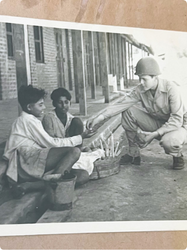
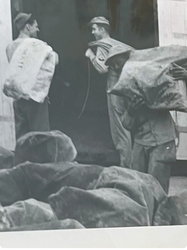
Rosen's transcribed letters home, written during his posting in Bombay in November 1943, offer a vivid and candid portrait of wartime life in India — from cultural encounters and daily camp routine to the stark realities of poverty — he recounts receiving 172 letters all at once after weeks without mail, a detail connected to the historic work of the 6888th Central Postal Directory Battalion, the African American WACs credited with breaking through the wartime mail backlog.
The Aaron Arthur Rosen Collection is a valuable resource for those studying World War II, United States military history, Allied diplomacy, and the American presence in the Middle East and South Asia during the mid-twentieth century.
The collection was donated to the Hoover Institution Library and Archives by his daughters, Carroll Seron, Andrea Lovitt, and Donna Seron.