
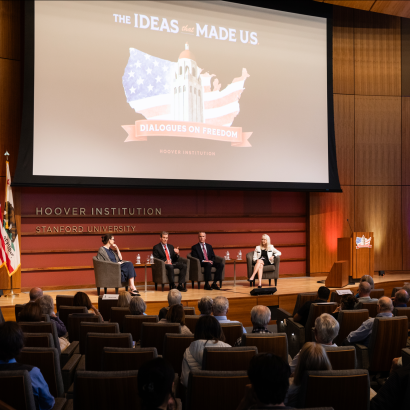



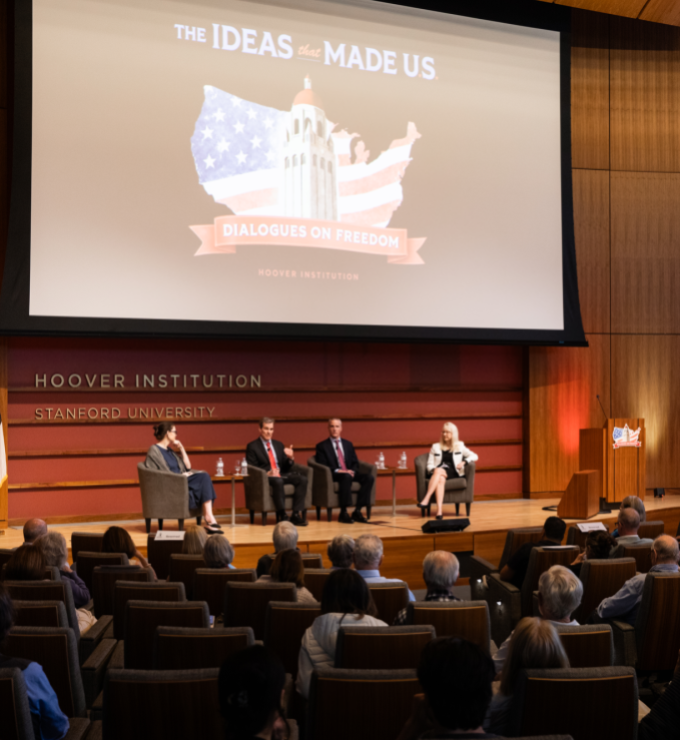


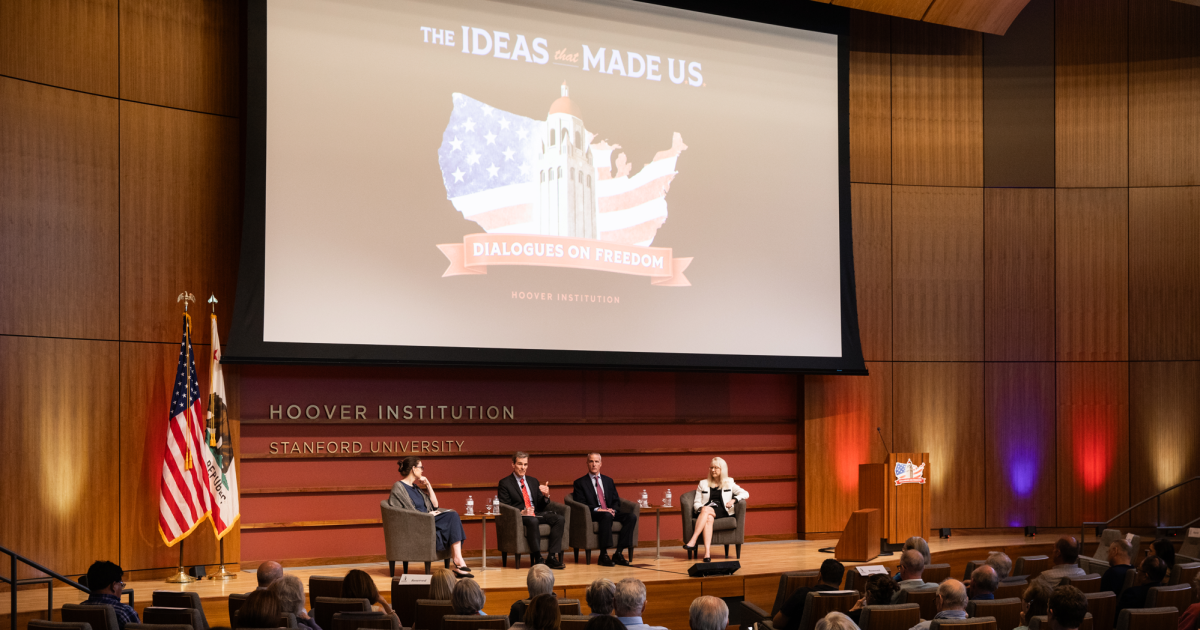
Hoover Institution (Stanford, CA) — Three leading economists from the Hoover Institution gathered on May 12 to define the roots of American prosperity and debate whether the nation’s best economic days still lie ahead.
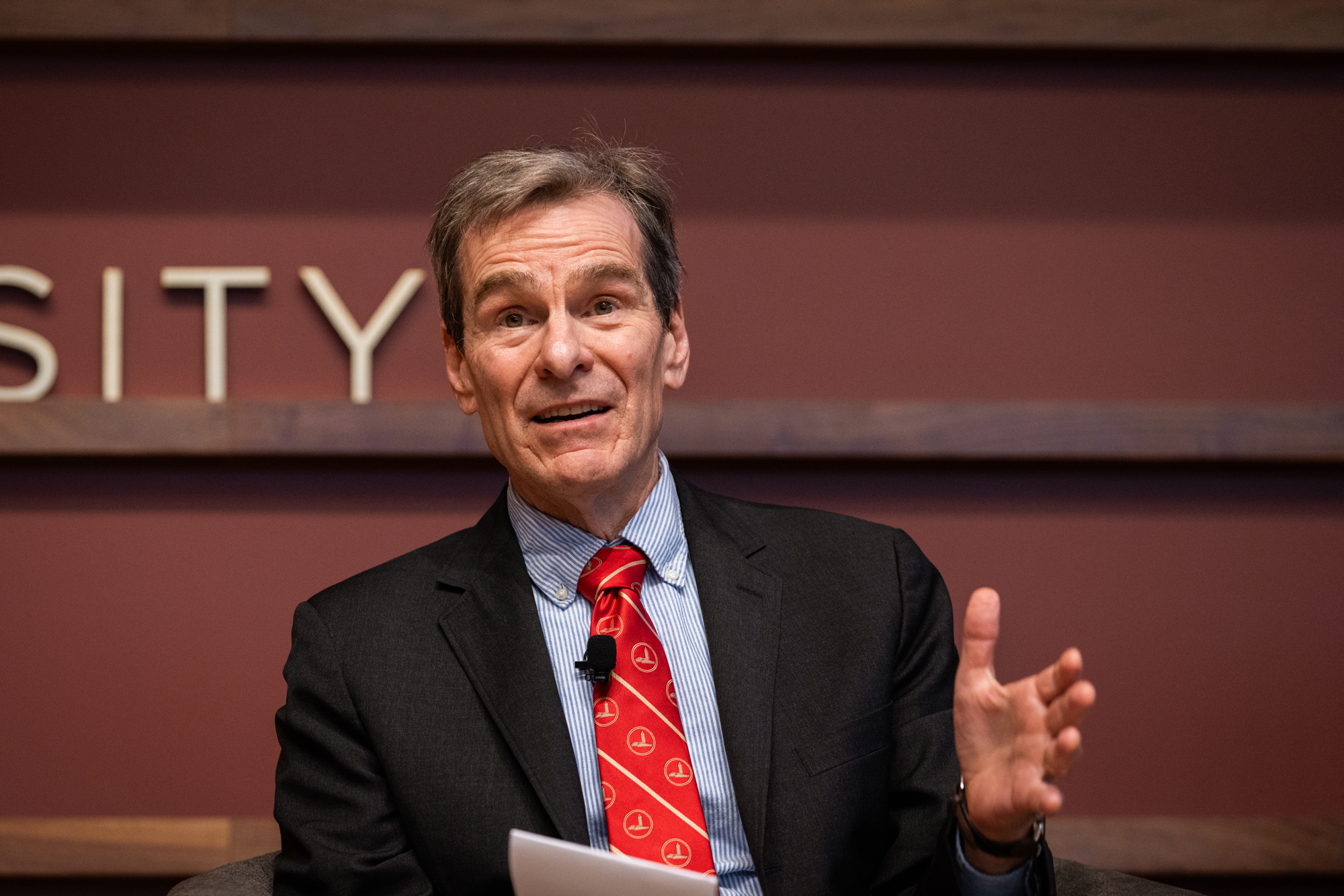
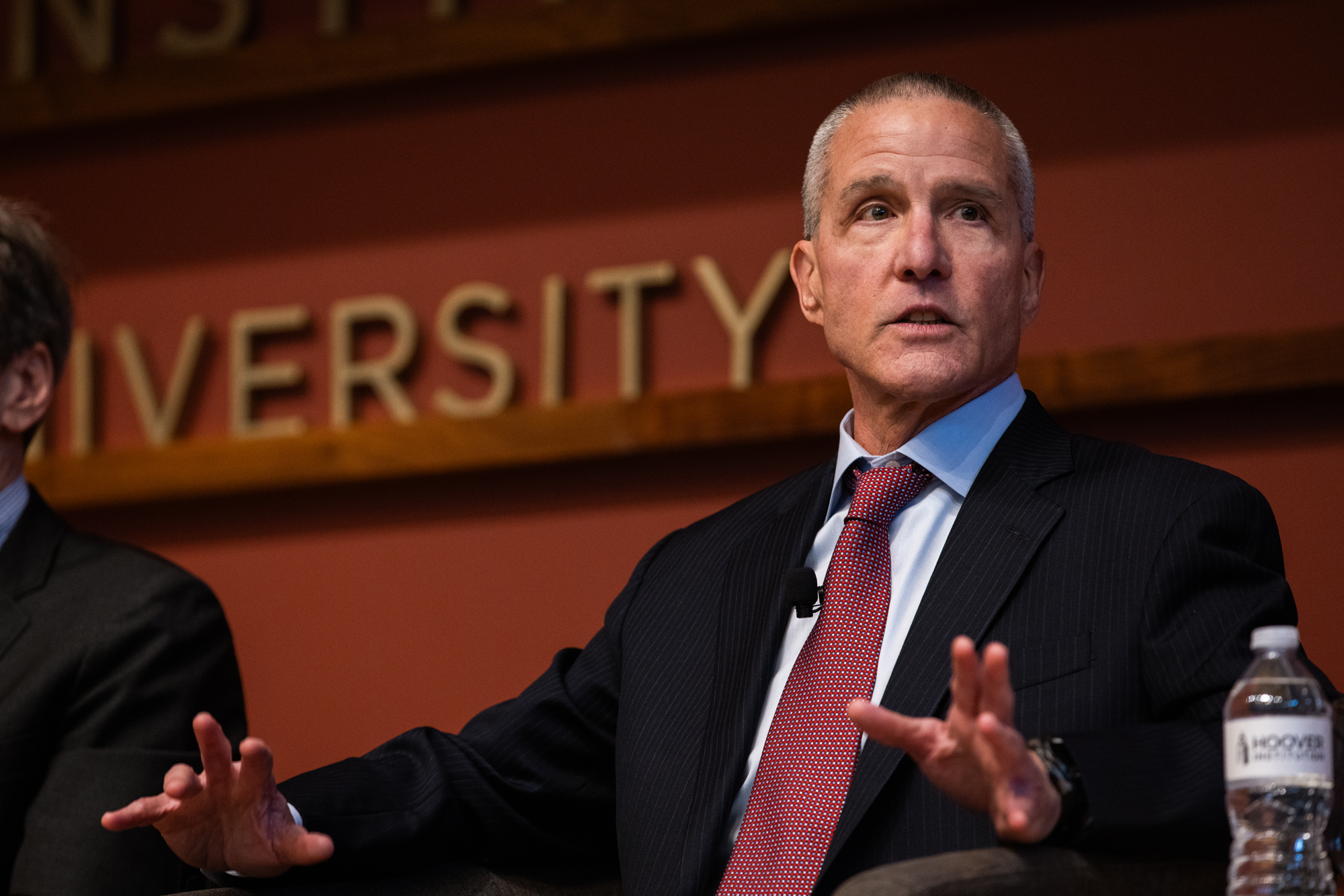
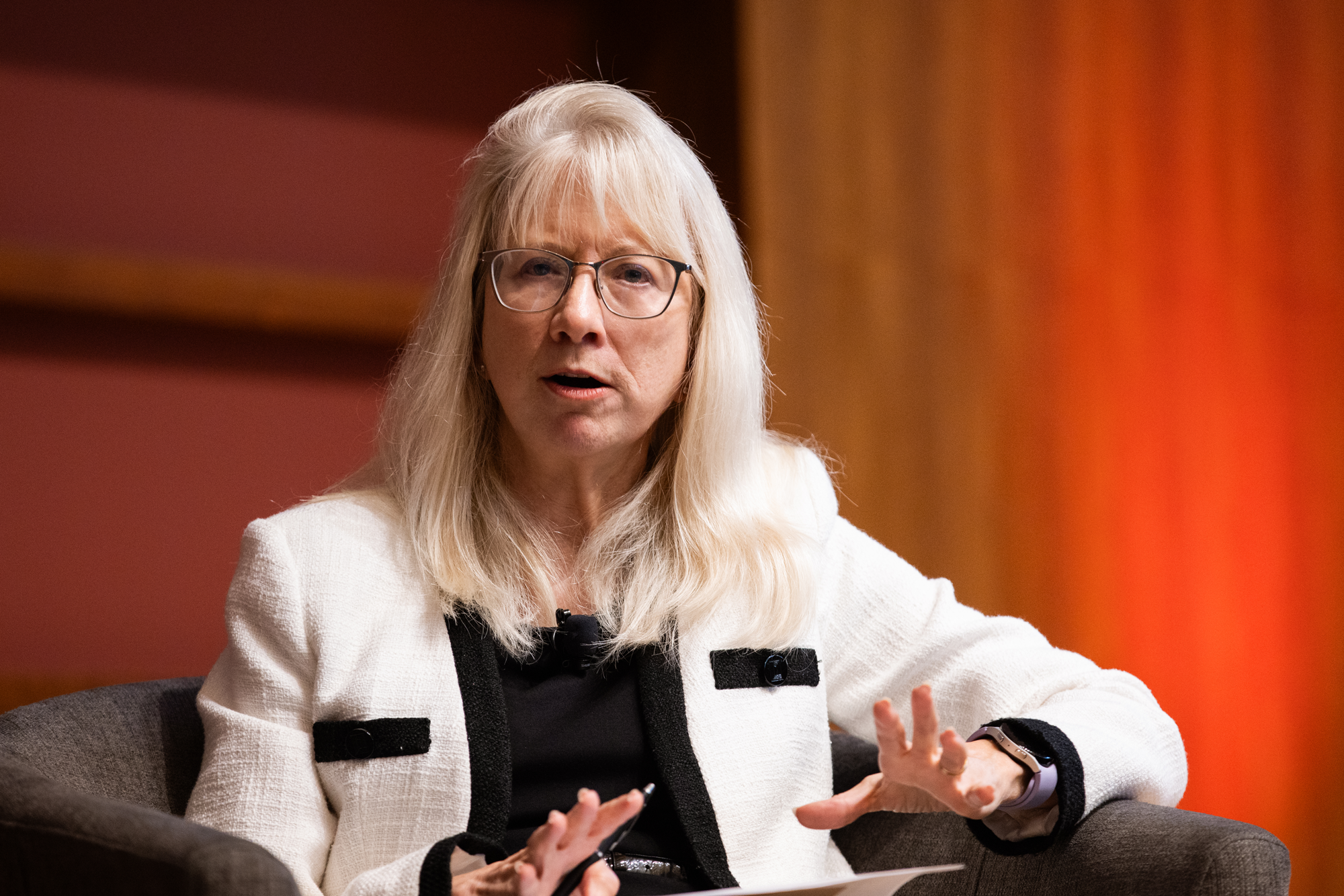
The panel, moderated by Washington Post columnist Megan McArdle, featured John Cochrane, the Rose-Marie and Jack Anderson Senior Fellow, Ross Levine, the Booth Derbas Family/Edward Lazear Senior Fellow, and Valerie Ramey, the Thomas Sowell Senior Fellow.
The Hoover Institution has launched a yearlong series marking the 250th anniversary of America’s founding. As part of Hoover’s featured speakers’ series, Ideas That Made U.S.: Dialogues on Freedom, this panel tackled fundamental questions about what propelled the United States to become the world’s most dynamic economy and whether the institutions and culture that created that success could sustain it in the coming decades.
Introducing the panel, Hoover research director and senior fellow Steven J. Davis said doubts and headwinds abound for America’s $24 trillion economy.
“We live in a time when many feel a wavering confidence in the American dream,” Davis said. “That raises questions about what it will take to reinvigorate our prosperity, opportunity, and a renewed sense of economic possibilities. We have just the right folks to tackle those questions.”
How did the US become the strongest economy on earth?
Cochrane started by reframing the central question. Rather than focus solely on America’s relative advantage over other nations, he emphasized the dramatic absolute improvement in living standards since the founding.
“When you look at the world of our founders, America was astonishingly poor compared to today. In numbers, it may have been $1,000 per capita. Now it’s $80,000,” Cochrane said. “Infant mortality, poverty . . . We have grown spectacularly. And I think if the founding fathers were to come back, they would say that we had no idea this would happen.”
Cochrane attributed American success to multiple factors but stressed that maintaining prosperity matters more than simply outpacing competitors. Asked about the sources of American exceptionalism, he responded, “All of the above and a certain amount of not shooting ourselves in the foot, which a lot of Europe seems to be busy doing these days.”
The panelists identified institutional advantages that set America apart: the nation’s size, its cultural tolerance for risk and failure, federalism that allows policy experimentation, and regulatory frameworks that encourage innovation rather than stifle it.
Levine, whose research focuses on financial systems and economic growth, emphasized that American ethos, undergirded by a framework of competition, justice, and stability has made the country’s economy truly exceptional.
He spoke of his neighbor, a floor installer in Maine, who began working for someone else, discovered a more efficient way to do the job, and started his own business to compete with his former employer.
“Sam was able to go to some friends, including me, get a little money. He had a good reputation in the community. He got some funds from a bank,” Levine said. “He did not have to serve a long apprenticeship or put down $50,000 in order to break into this occupation. He was able to compete. He was able to try to persuade people that he had a better product… He could pursue his entrepreneurial ambitions.”
Ramey, one of the nation’s leading macroeconomists, brought her expertise on monetary and fiscal policy to bear on questions about what government policies either enabled or hindered growth throughout American history. She centered on one that helped America prosper in the last quarter of the twentieth century: deregulation.
She spoke of a time in the 1970s when trucking rules were so onerous and byzantine that a tractor-trailer was “only allowed to carry cargo one way and had to come back empty.”
Since then, across a multitude of industries from hauling to energy to airlines, regulation has pulled back, allowing growth to rebound and giving the US a competitive edge over many other industrialized nations.
The panel agreed that America’s success stemmed not from any single factor but from a combination of geography, institutions, culture, and often simply avoiding the self-inflicted wounds that hampered other nations.
“[Since the 1950s], we had a marginal tax rate of 90 percent, we had women enter the labor force like never before. We had high tariffs and low tariffs. We had many individual policy changes, [but] eventually the US has come back to expanding opportunities and prosperity,” Levine said.
Levine also writes a regular column for Hoover’s Freedom Frequency in the voice of Adam Smith, whose Wealth of Nations came out the same year the founders penned the Declaration of Independence.
The challenge of today
The economists expressed concern that the very growth engine that powered American prosperity shows signs of slowing. Beyond that, the headwinds pushing against the future of the US economy continue to mount.
“The number of unaddressed dumpster fires is increasing and the ability of our political system to handle them is decreasing,” Cochrane said.
He listed dysfunction in the K–12 education system, growing public debt, and a rising feeling that the permitting and regulatory burden is strangling growth.
“We need a Marie Kondo cleaning up of the insane complexity of our public life,” Cochrane said.
These are common themes Cochrane touches on in Freedom Frequency and his personal Substack, The Grumpy Economist.
The panelists appeared concerned that America risks damaging itself through policy choices that could undermine the foundations of prosperity. These include regulatory approaches other nations have adopted, with negative consequences.
They expressed a broader worry that America might abandon the policy approaches that enabled past success in favor of precautionary principles that prioritize avoiding theoretical risks over enabling innovation.
Ramey, whose work often focuses on fiscal policy and Keynesian stimulus, pointed out that America’s spending is on a completely unsustainable track.
“The latest CBO estimate is that by 2056 we will be at 175 percent debt-to-GDP ratio,” Ramey said.
The good news, Cochrane said, is the plan to reverse the rising deficits and return to a world of low debt is achievable.
“It would take a committee of the four of us about ten minutes to solve the problem,” he said.
A significant problem: there is a lack of political will—on both sides of the aisle—to tackle the issues necessary to balance the budget, such as entitlement reform and reworking the tax system to limit distortionary impacts.
Are America’s best years still to come?
Despite identifying serious challenges, the panel ultimately expressed optimism about America’s economic future, though with important caveats.
McArdle posed a final question that forced the panelists to stand behind their predictions. She asked each to bet 10 percent of their net worth on whether America would be on an upward or downward trajectory by the nation’s tricentennial.
When asked which direction she would bet, Ramey answered simply: “Up.” Levine and Cochrane also bet on up.
Levine said the answer to the challenges America faces, especially the national debt, will not come from demonizing any out-group but will involve cooperation, compromise, and a focus on the facts.
“It’s going to require us demanding leaders that will solve problems rather than give us these platitudes that make us angry at some make-believe villain.”
The panel’s ultimate message combined realism about threats to prosperity with the confidence that America retains the capacity for renewal. Success, in the end, requires avoiding the policy mistakes that derailed growth in other developed economies while preserving the institutional framework that enabled past achievement.
The panelists indicated that as America approaches its 250th anniversary, they see a nation possessing the ingredients for continued success—but one that must choose to use them wisely.