








Hoover Institution (Stanford, CA) —A new analysis from Hoover Institution scholars suggests California’s proposed one-time billionaire wealth tax is a fiscally incoherent response to federal Medicaid funding changes, despite proponents’ claims that the levy would address a “$19 billion-per-year budget hole” caused by Washington.
The paper, released May 27 by Hoover fellows Joshua D. Rauh, Benjamin Jaros, Daniel Heil, and Tom Church, examines the 2026 California Billionaire Tax Act and contrasts its effects with reforms contained in the One Big Beautiful Bill Act (OBBBA) of 2025. The proposed state tax would impose a 5 percent levy on billionaires’ accumulated wealth, collected over five years, with proceeds devoted primarily to health care spending.
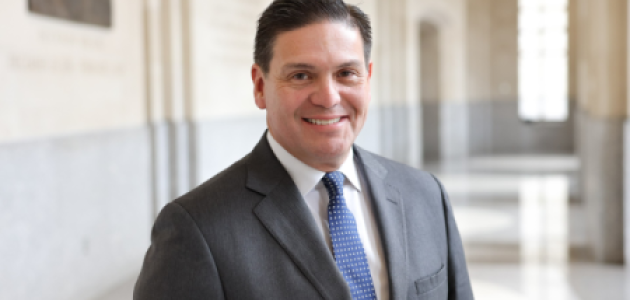
“The state of California has a spending problem that predates the One Big Beautiful Bill. California faces a $93 billion structural deficit through 2030, driven in significant part by Medi-Cal spending that has grown 1.6 times faster than the rest of the state budget over the past fifteen years,” said Rauh. “The difference between Medi-Cal’s current General Fund cost and what it would be at its 2011 budget share is $14.2 billion annually. We go provision by provision through every major Medicaid change in the One Big Beautiful Bill and estimate total federal reductions of $156 billion over ten years.”
“Even at face value, those reductions average $15.6 billion per year. Costly spending increases reflect Sacramento’s inability to control a program it expanded through its own policy choices. A wealth tax doesn’t fix this spending problem; it just delays the reckoning.”
In the paper, the scholars argue there is a basic mismatch between the tax instrument and the spending problem it purports to solve.
“The proposal uses a one-time revenue source to finance what proponents describe as a recurring annual shortfall,” the authors write. “This structural disconnect creates predictable fiscal pressures for future wealth taxes once initial revenue is exhausted.”
The analysis estimates that OBBBA will reduce federal Medi-Cal spending by $156 billion over ten years, less than 10 percent of projected program expenditures during that period. However, roughly two-thirds of these reductions are concentrated after 2030. The billionaire tax, by contrast, would collect approximately $40 billion over five years ending in 2029. After accounting for income tax losses, the authors project revenues would be exhausted well before the bulk of federal Medi-Cal reductions take effect.
The paper challenges the premise that California’s health care safety net suffers from underfunding rather than poor design. They point out that Medi-Cal expenditures have nearly tripled since 2011 through successive expansions, growing faster than revenues, even during periods of economic growth. The program’s share of the state general fund has climbed from 13.7 percent in fiscal year 2010–11 to 20.0 percent in fiscal year 2025–26.
“California’s Medi-Cal challenges predate OBBBA and stem from policy choices within the state’s control, not insufficient federal funding,” the authors argue.
More than half of the projected federal reductions stem from eligibility provisions requiring work, school, or volunteer activity. These represent a return to bipartisan welfare reform principles and the default condition of federal law. The authors note that California faces a choice about whether to replace coverage removed by these requirements with state funds.
The scholars warn that enacting a wealth tax eliminates the state’s ability to credibly commit against future levies. Once the initial revenue is exhausted and spending obligations persist, political incentives favor additional “one-time” taxes. Wealthy residents and their advisers understand this dynamic, evidenced by billionaire departures from the state.
Their paper also contextualizes OBBBA’s Medicaid reforms within broader program integrity concerns. Federal authorities have suspended payments to more than 700 hospices and home health care providers while investigating fraudulent billing. California exhibited among the highest growth rates in potentially fraudulent hospice providers nationally.
Beyond investigating possible fraud, there are ever more policy levers available to legislators in Sacramento to contain Medi-Cal’s costs. The authors estimate that reversing coverage expansions for undocumented residents of the state could save $37 billion over ten years. Meanwhile, returning annual Medi-Cal spending to its pre-2020, but post-Affordable Care Act passage, levels could save about $88 billion over the next ten years.
The paper concludes that the billionaire tax proposal fails to align with OBBBA’s actual fiscal timeline, magnitude, or structural nature. The scholars suggest that California’s Medi-Cal trajectory reflects spending decisions rather than revenue insufficiency, undermining the case for an emergency, one-time wealth tax.
Read the full paper at Social Sciences Research Network.
For more information, please contact Jeffrey Marschner, assistant director of media and government relations, at jmarsch@stanford.edu or 202-760-3200.