




The Hoover Institution invites you to a virtual presentation of Wargaming the Pacific: Lessons from the Naval War College's Interwar Games on Tuesday, March 24, 2026, from 12:00-2:00 pm PT.
This webinar examines the interwar wargames conducted at the U.S. Naval War College before World War II and their foundational role in shaping U.S. naval doctrine and strategic planning. We explore how these games contributed to America’s success in the Pacific Theater, their enduring impact on U.S. military effectiveness, and the remarkable archival materials preserved by the Naval War College.
- Okay. So as we have people virtually entering the room, I wanna give a few just small introductory remarks in order to kind of welcome you today as we start this extraordinary webinar. So, this event is an event that is something that we're sponsoring as the Hoover War Gaming and Crisis Simulation Initiative, but it's in big part because of the archival collection that we house within the Hoover Library and Archives. So for those of you who have been to the Stanford campus, you know that the tower, the Hoover Tower, which is kinda one of the main center pieces of the Stanford campus, is actually where the Hoover archives originally began, their genesis, and where a vast majority of material is currently held. And this is a repository that has an extraordinary amount of primary source material on revolutions on war. And this library, this collection that we've currently started, which is a war gaming collection, is meant to kinda be a new type of collection, which is primarily a digital collection. And our aim is to democratize the ability to look at war games, to be able to think about war games as meta-analysis and as large data sets. And also to be able to kinda dive into the weeds of the historical case study. So the we're giving in crisis simulation initiative has been, we've, we've been up and running for a little over two years, and in those two years we have acquired over 3000 different objects that are part of this archival collection, that some of these are declassified, some are unclassified, some are researcher materials, some are from foreign countries. Now, of those about 3000 documents, we probably have 600 to 700 that are currently available online. The rest are kind of going through the, the curation process. And really in an exciting addition, and this is the reason why we're holding this webinar today, is that over the course of a few years working with the Naval War College and their archives and their legal team, we were able to digitize an extraordinary amount of war games that are currently held within the Naval War College archive. And in particular, we were able to digitize a huge amount of material from about 1885 to about 1945. So those materials are now up@wargaming.hoover.org. Our extraordinary program manager, Jacob Gantz, will put that link in the chat. And for those of you who have been to our website often, we actually just included an, an entirely new box on war gaming.ho.org, which is Naval War College materials. That way it's easy to find this extraordinary trove of material. And so feel free, as we're taking part in this discussion to go ahead and peruse the documents that are, that are currently there, we're also continuing to work with the Naval War College to make sure the documents going all the way up into the nineties and early two thousands that have reached their declassification date are declassified and released to the public. So that's, as you can imagine, that's a very long and very difficult process. So we're, we're hopeful that that process will lead to the documents in, in the next six to nine months. But keeping, you know, keep into, keep tuned to what we're doing here. So we're, we're constantly updating our, our data collection. Now, today we're gonna focus on games that were played between World War I and World War II at the Naval War College. And I have the real honor today to be, to be joined by some historians and strategists who are kind of the world's leading experts on these games. So, Norman Friedman strategists, he does historical technical strategic factors in the work that he's done. He has a PhD in physics, actually from Columbia University, which I, I also love Columbia University. I'm an alum of Columbia University, but he is written over 40 books and has written some of the best work on the, the inner war war games at the Naval War College. And John Scott logo professor in the war gaming department at the Center for Naval Warfare Studies at the Naval War College, where he has been since 2011. He is the author of Designing Gotham, which is about West Point Engineers, but he is also a member of the department where I used to be a member where John Scott's not only a historian, but he actually kind of lives the war games on a day-to-day basis. So we are really, really grateful to have you on this webinar to be able to talk about what the impact of these games, what they were. And then my hope is that in rediscovering and talking about these games, we find applications to current events on military innovation and what the Navy can do today to build kind of the best Navy for the future. So I wanna start a little bit with the, some of historiography about the documents. Now, Jacob and I spent a good amount of time in July, August and September of last summer, digitizing these materials. And they're, it, it's extraordinary. I mean, you open, you know, the, the file and you pull out these maneuver rule books and you know, they're like, these toes that are, are this big and, and you know, you still have the torpedo effects in there and these huge charts, but it's not a simple story about how those documents ended up on that desk in front of me last summer. So Norman, you've been working with these documents for a very long time. How did, how did you come to them? What do you know about the history of how these documents were preserved?
- Well, I think what you got was files that I found at the War College at some point, and I've forgotten what year it was. The Naval history and Heritage Command asked me to write a history of interwar war gaming at Newport. They thought of that as a compliment to work that had been done on the full scale fleet problems. And it's obvious there's some kind of connection. So I was not a war gamer, but I was a naval historian and I had certainly spent a lot of time at Newport in various, for various purposes. I found out that the archivist, Dr. Pac was about to retire. So ouch because she knew her archived brilliantly. So I called her up and went up there. And fortunately there were digital cameras and I was limited by the number of hours in the day when I could sit in the archive and by the strength of my arm. But I managed to capture what I think were most of the games. Not all of the games that Mike Laos lists remain. The other thing is that there was a deep connection between the war college and the war plans division of the Office of Naval, of the chief of Naval operations of Op Meadow. That meant that if you went to the war plans, division files at College Park, there were games there which were not represented back in Newport. If you look at all of them, the first thing you discover is that Newport had a very different view of war gaming than other places in Newport's view war. Gaming's war games were always two-sided. And what they were really trying to teach was how to outthink an enemy. So it was very important that students were on both sides. If you look at, at others, the British and suspected Japanese, a war game is more a simulation of what we wanna do, and let's see how it can go wrong. If you read about the gaming that the Japanese should have spent, atten should have paid attention to before Midway, it's not a game that we would play. It's a game in which they carry out their operation and then they ask, well, can anything go wrong with games to Newport? Both sides had the option of making sure things went very wrong for the other side, and they were really teaching how to make decisions. So the method of making a decision was that you thought through what the enemy might do. You see that in a lot of places. A lot of their, their gaming was not what you would think of as naval. Well, how would you, how would you deal with World War I strategy? That was a, a day's worth of work, I think maybe more. How do you make decisions, how do you think through, and, and their motto if you like, was you wanna outthink a smart enemy, which is a rather good motto. Now to support that they try to simulate actual naval battles. You can decide whether you think the simulations worked or they didn't. After things went sour at Newport, there was a very bitter paper written by a, an ordinance officer who said, well, a lot of your assumptions are haywire. You're teaching people how to fight naval battles using various kinds of details of the enemy, which you don't know. American naval intelligence wasn't terribly good at that time. And certainly when you, you find out about action in the South Pacific, you can tell all of those things came together. They had a tremendous variety of scenarios. But the big scenario, the big game represented the war plan. So until 1933 or through 1933, it was the war plan against Japan, which was the through ticket to Manila. The fleet would steam west, the Japanese, the war would always begin with the Japanese invading the Philippines. And the question was, well, what do you do about it? And the idea was the army would hold out as long as it could waiting for the fleet to relieve it. If you read Army accounts of the campaign in the Philippines in 19 41, 42, there's a bitterness about the fleet not relieving them. They omit a little detail, which was that by 1935 we knew the fleet could never get there in time. And general signed on to the concept that they would hold out as long as they could and then fold. They never expected to be relieved. But of course MacArthur doesn't remember things very well at that time.
- We all have that problem at some point.
- Well, yes, you know, a little thing like your chief of staff of the Army signed undocumented, you know how it is. Anyhow, what happens in in 1933 is very interesting. They have an evaluator, a Navy captain named Van Kin. I think he was the only one ever in that job. I don't know because I don't have a lot of their archive. I don't know why he was appointed. It was a very, very good choice. He kept papers on lessons learned from the games. But after that game we said, well, you know, as usual we beat the Japanese because more of us and fewer them, but most of the American battleships have taken underwater damage. You know what that means? That means they'll sink un unless they keep their pumps running and eventually they have to turn 'em off. Now in this particular game, the Japanese overrun Manila before the fleet can possibly get there. And later in the commentaries that that Van Orkin leaves some army officer says, yeah, we knew that would happen. You've been kidding yourself for years Anyhow, said, this is a, a joke. Your ships will end up sinking in Anchorages in the Southern Philippines because there are no floating dry docks. There are no repair facilities. Japanese will go home to their dock yards and be fixed and we will lose. What are you going to do about that? This was a remarkable insight. And for the first time, I think the only time an account of the war game written by Van Alkin went to the Chief Naval operations, his reaction was to change the war plan. We changed from the through ticket to Manila to what's called step by step, which is how we fought World War ii. That's a remarkably effective war game, you know? So I go, wow. And I keep reading the successor to the president of the War College at that time leaves early, the war College loses its influence, it shifted to the Navy educational system where before it had been an arm of the Office of Chief of Naval Operations. I couldn't find out exactly why that happened. I would recommend that someone could find out, it'd be very interesting. Something went very sour up until that point, you find questions asked of the president of the War College, like how do you think carriers should be used? And he writes back, well, in the 1930 war games, this percentage of the time they was this way, this percentage, this other way, we think blah, blah blah. And oh, by the way, the blah blah blah shapes the next class of carriers. He's taken very seriously. Can I look at, at attempts to shape warship designs later in the 1930s? And although the the War College is on the distribution list for the questions, there aren't any answers. Yeah. They're no longer feeling that they should be talking about that. Now the War college influence starts in the 1920s, well before the President comes in. Who, who does the, the heavy lifting in 1929? The question is, well, how should we react to the, the new Naval Treaty limiting ships more radical than Washington?
- But I'm gonna interrupt you there 'cause I I actually do wanna, I wanna start from this very beginning. I think it's important because you've seen all of these documents, you've touched them, you've felt them, John Scott, you've lived them, you've physically lived in the Newport area, right. You look out into Narraganset Bay,
- Right? Well, no, no. I'm, I'm a New Yorker.
- Well, I, John Scott lives up in Narraganset Newport, and so both you and John Scott have an intimate understanding of what these games are, but I'm not sure that everyone that has listening into this conversation Sure. And sure as that same intimacy. So I think it's, it's helpful. I mean, normally that was such a helpful kind of outlay of the way in which the, the Newport influence waxes and wanes. So like not every war game is important. Some of the war games are important, some of them matter, some of them don't matter. And since, because it's really complicated relationship between like the war games and then how the Navy ends up organizing and planning for that war in the Pacific. I, I think it's interesting, you know, coming back to Newport and like John Scott, you lived there, right? Like, and you've lived there in the summer and like there's something magical about Newport in the summer for anyone who's kind of watched those gilded age shows, right? Like everyone's got their cottages, you know, the Vanderbilt have cottages, they're not cottages, they're giant mansions, right? This is the big social scene. And so you have to imagine the Naval war colleges actually formed in the late 1880s. This is like peak kind of gilded age times. But it was this kind of upstart, there had never been a professional military education like it, all of the Navy's kinda traditional education occurred at the Naval Academy. So then they had this idea to like, we need to do training of officers besides just the Naval Academy. And this is a, a big debate because actually the Navy's like, no, they need to be aboard a ship. But there's like these curmudgeony group of people that are living in this like guilded world and they create this war college. And as you point out, Norman, their war games are different that they turn to, and that's because they have these kind of funny little characters. They're not little, but like McCarty little who is like this Newport resident. And he's really excited about the Prussian way of war, which is a very organized, very scientific way of designing wars. War games are a huge part. It's the Creek s spill, right? So there you have faculty like that that are sitting in Newport, but as you point out Norman, it is not like a FAA coli that the Naval War College is gonna end up being influential. But so what do they have going for it at the beginning? Not a big budget and the Navy doesn't like them, right? But they had some pretty enterprising entrepreneurial leaders and they saw these war games, war games that were a huge part of kinda who they thought they were and how they thought the Navy should be organizing and thinking about campaign planning. And so they started running war games as early as like the 18, 1890s. And we know this because they invited journalists from Harper's Bazaar to come and chron or Harper's Weekly to come and chronicle the war games. And we have a letters where they invite the Secretary of the Navy and Theodore Roosevelt to come out and watch the war games. And Roosevelt, who does spend his summers, you know, in Newport says, oh, you know, I, I can't come this year, but I would love to partake in one of your grand strategic games next summer. So they're using war games like to, you know, think about the future Navy, but also from the very beginning of who the Naval War College is. They're leaning on war games as a huge part of differentiating like what the War College is versus the Naval Academy and other parts of the Navy enterprise. And John Scott, you, you've looked at, you've touched like you've, you've, you've engaged with these documents. Can you explain for people who are kind of just coming new to these games, like how did, how did they start? Like is this about teaching? Is it about learning? Like is, you know, what was this for the Navy? Like how are these games, what was the be the genesis of thinking about these games and like how are they designed and integrated into the Naval War College in those early years that are like, right before World War I and right after World War I,
- I think John Hattendorf and Mitchell Simpson and those folks have a right in sailors and scholars and Lu was a reformer and he was in the spirit of Henry Emory Upton. And it needed some idea of how to transform the education of, of officers beyond the tactical level of war, to think operational things strategically. And so loose was an advocate of applied application of war. So study of war, independent study, read books, read theory, read clause, which read geometry, but then also think about how can a naval officer apply that? And obviously we know that ships are expensive. They tried to have their training destroyer illa in the early, in the 1890s in the first century of the, the 20th century, not the 19 hundreds, but it became easier to do war on a map or chart maneuver and the evolution that happens there. And so I would submit it's, it's three parts of what I've discovered. And, and I I can't thank Norman enough for the work he did because I have set off to try and answer those connective tissue questions of what in the twenties and thirties, how'd those games get there? And at first, McCarty Little is using them to, as a way to teach. But if you study the history of the, the, the Navy's general board, and you look at the work of John Kuhn and John Kuhn is very informative. The war, you know, the war college was on the general board and was in favor. And of course Edward Miller's war Plan Orange documents this connection. But at some point, the Navy and the officers, the staff at Newport realize it's a form of research. Not only is it a form of education, but it's a form about learning about modern naval warfare. It's about learning how to fight these steel ships and the, the steel Navy with the big guns. And, and that, that early period that, that Norman has documented in so many of his books. And I would leave with two, two points to, to before I stop here. One is war gaming is the Navy's version of planning. You know, the, the, the Eisenhower trope, it's not the plan, it's the planning. And the people say the Navy doesn't plan no war gaming is how the Navy plans. And it does it in its own cultural way. I spent, having spent 20 years in the Army, I was astounded at the willingness of naval officers in the 21st century to go into a war game and not know the outcome. A lot of army officers will go into and exercise our quote unquote war game, and they try to control everything throughout that whole training process. So war gaming is a way to train, it's a way to plan. And finally, the connection with Van Alkin, it starts with Harris Lanning. And Lanning is advocating and testifying before the general board as early as 1922 as Captain Lanning, everyone. Yeah,
- Yeah,
- Yeah. And so, so we're, as Captain Lanning, you know, it's the first time I find in the proceedings, and if you look at the whole 1900, 19 50, they're all online now. You can get 'em from, they've been digitized. The, the Microfish have, and this is where I found the connective tissue that answers some of what Norman is trying to look to, to look at of, you know, it may not be a direct influence on on the plans board, but the CNO was sitting on the Navy board and in 1924 landing testifies about the, the value and performance of carriers in the 2222 games. And that's the first time since 1911 that the general board says, you know, we're gonna start consulting the War college again if it's just through testimony. So it's the form of training, it's a way to think about planning. It's a, for, for the Navy. And lastly, it becomes a, a way to think about research, how decisions will be made with these modern weapons of naval warfare. And it's, it's experimental in so many ways. And I, I would argue that it was all, it was done through the people going between the journal board, the folks who were on the staff, the officers who were in the games, and then the folks who end up those officers who end up going into the exercises that El Nafe writes about.
- So this i I throw in somebody else, if you go back to when the college starts, naval officers are not chosen by some kind of evaluation. It's seniority only. And there are people who realize that this is not a very good idea in a world of technology. You're gonna get a lot of officers who don't get it and a lot of officers who do, who might otherwise be passed over. So there's a strong movement towards, if you like, more intellectual, maybe more technical, and that keeps running it, it runs through World War I, Sims becomes a major force in that.
- Norman, can you explain to people who Sims is?
- Say again?
- Can you explain to the, to the people listening who Okay. Who Simpson, because he becomes a appointed character
- Is a, a naval officer. He was appointed president of the war college about 1916, then he becomes the US Navy chief in European waters. Then he comes back and he becomes president of the war college again. And he pushes gaming and if you like, simulation, which is sort of the same thing, but not quite. He's a, he, he's a showman. Yeah. So for example, we signed the Washington Naval Treaty and he uses his gaming data to show that we got a bad deal and basically to attack the general board for being dumb enough to agree to it. Well it turns out that he cheats, he credits British Navy with guns that shoot a lot harder than they actually do when the appropriate numbers are plugged in. We do rather better than they do, but he's looking for credit and he pushes gaming. He realizes that the War college has been very badly disrupted by World War I and it's, it's up for grabs. So he grabs it. In fact, I think that he's offered Chief of Naval operations and says no,
- That's right. He believes that he prefers to go back to Newport.
- Yeah, - I mean, keep in mind, I think for other people to understand this is somebody who, at the time that he comes back after World War I, he is in an active fight with the Secretary of the Navy. Like he as the president of Naval War College goes and testifies in Congress about how much he thinks the Secretary of the Navy has messed up.
- Oh yes, yes. That's amazing.
- Like he's wi not only is he like, you know, I I wanna influence the Navy, the future. Like he is willing to go to these crazy lengths to fight what he sees as the established navy. And like this is a tendency that he exhibits all the way going back to when he was initially a student at like the very early Naval war college because he writes a, a paper about why he about criticizing the Navy's like very tactical kind of firing assumption. Well,
- I I have to say
- That to Roosevelt, like straight to Roosevelt. Can you imagine like, he was like, like at oh three and he, he sends it straight to like Theodore Roosevelt. That is insane.
- Well, the Navy is a much more open organization at that time than we can imagine. Look, I, I worked a little bit for the Army, but not much. I had the feeling that to an army or Air Force officer, the Navy is insane. Well, I'm I the Navy a lot
- Officer, so I do think the Navy is slightly insane. Agreed.
- Well the Navy places a much greater load on individual commanders. And that's because until very recently, communication was extremely difficult. But in a world in which space assets may be destroyed and jams may be everywhere, it's probably not the worst idea. But that's the secondary thing. The the war college was to teach you to think so that if you were in the middle of nowhere and you were responsible for something, you would know what to do. That's very important. Now Sims was a showman. He was willing to take chances. The, the time when he went after Roosevelt personally was an argument about gunnery, can you make the fleet work? And there was a, a gunnery revolution happening elsewhere. Roosevelt was very receptive to that idea. A gunnery performance in the Spanish American war was fairly appallingly bad. Excuse me, leave out the failing. If the fleet doesn't do its job in war, why bother? And if you want Congress to build a fleet, you better convince them that it works. So Sims as a reformer got a lot of mileage out of it. And when he came to the War college, he thought, well, that's where it should start. At that time, I think they were beginning to have merit-based promotion only that was something quite new. If you look at the contemporary Royal Navy, you might ask a few questions about that. We had had a tremendous shock in World War I when the US Fleet operated with the British and discovered that it was amateur. I I used to say that, that you, you get reform when you lose something big and you get reform also when you virtually lose. And I think that that World War I was like virtually losing.
- I'm gonna interrupt for just a moment right there, because this is an opportunity to highlight the World War I experience in attendance today we have Martin Frost, he is the grandson of Holloway Frost. And of course Holloway Frost as a lieutenant came up with the first rule set. So one of the, the major seminal battles of World War I was the battle of Jutland, where the Royal Navy and the German high Seas basically fought to a draw march, May 31st, June 1st, 1916. And Norman's well aware of, of this battle, but I'm just sharing for the audience. And by November of 1916, Lieutenant Frost had drawn the first rule set and schematic. So the college upstairs at Loose Hall could replay the Battle of Jutland based on reports from William SIM's, London flagship and newspaper reports. And as they kept playing this game later on, later on the German High Seas accounts as well, and they were trying to understand what happened with this major Dr was kind of a stalemate, is how most historians would, would say what happened with the first major modern battleship battle in, in the 20th century. So I, I think Holloway Frost is, is one of these staff as a student turned staffer who spends the next 20 years studying the Battle of Jutland, becoming a staff officer for the Navy as they go through the treaty Navy conferences throughout the, the, the twenties and into the thirties where he's writing for proceedings. Holloway Frost is writing for, for the Washington Post op-ed pieces to do this campaign, a strategic campaign communications campaign to the nation for the Navy's bidding. Norman, have you, have you had much interaction with Holloway Frost with your research?
- No, my research was in library research. Yeah.
- But could you speak to the battle of Jutland and and what that meant to, you meant to the the interwar period?
- Yeah. This first comment would be that our Jutland was less studies than people claim. The, the question at Julin was how did you reconcile the performance of the two Navys with the theoretical performance they should have had? They made many fewer hits than you would've expected if you were doing the gaming. You cared a lot about that because you had to estimate how well your fleet would do. And one of the reactions was in combat, things get a lot less affected. That was apparently very important less, I was surprised that, that the war college did not play Jutland very frequently. And the reason's obvious, once you have airplanes, you're not gonna have Jutland. One of the the weird things that you get reading about the British is that in their tactical school that had a couple of big dioramas, one showed the battle as it was fought. I'm not sure how you could make a diorama of a battle that that extensive and the other showed what it could, what it would be like with modern imp improvements. Well, what it would be like with modern improvements, at least with the US Navy would've been no battle. There would've been a lot of air spotting, which would've told the commander exactly what was happening. And the, the fog of it had a lot to do with what Geico could and couldn't do. But a massive torpedo bombers would've made a hell of a difference. And it very striking to me that the games were a way of telling officers who were not flyers, were not aviation enthusiasts what airplanes meant. That's why American officers in World War ii who were not aviators like Rein, managed to perform extremely well in a combination era and naval battle. They understood what was going on. If you look at the contemporary Royal Navy, they didn't do a lot of gaming as far as I can tell. And they certainly thought that airplanes were sort of nice touch on the side. And boy that had a big effect. Juggling was the only big modern battleship battle that you could look at. So of course it mattered a lot, but it mattered mostly because of the, the fog battle that neither side really understood what was happening. Geico apparently a lot better than the Germans did. But how he understood that I think was more experience in pre-war exercises than anything else. There were always questions about why things sour only much later. Was it public that the British lost more ships because of grossly suicidal practices that they, they followed? Let me, and they covered up. Yeah, I think it may
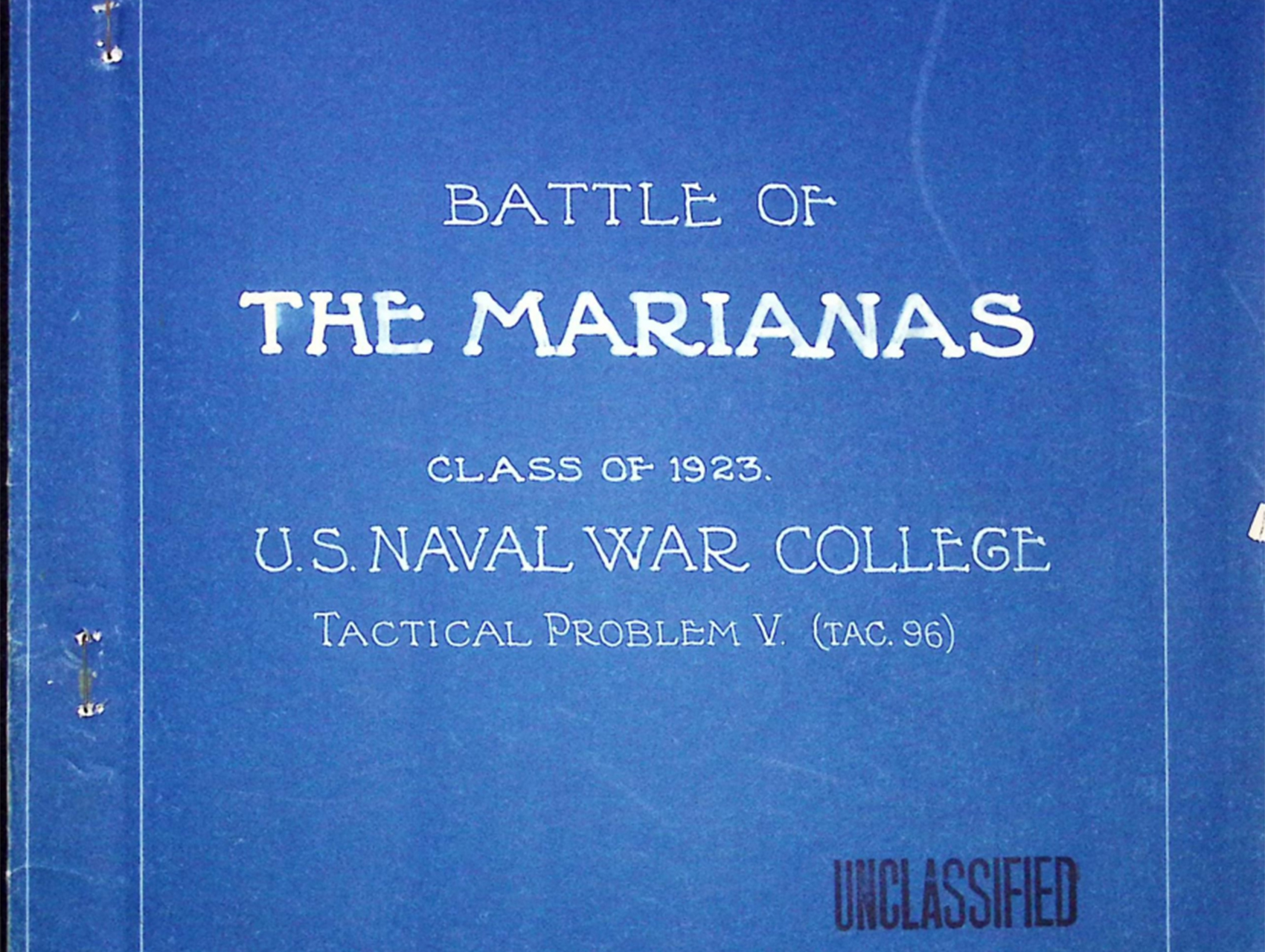
- Helpful to let me show people what this, what we're talking about and it can feel okay, theoretical. Does everyone, Norman John Scott, can, can people see these maneuver rules that I've pulled up?
- Yeah. From June 1st, 2020 1923? Sure.
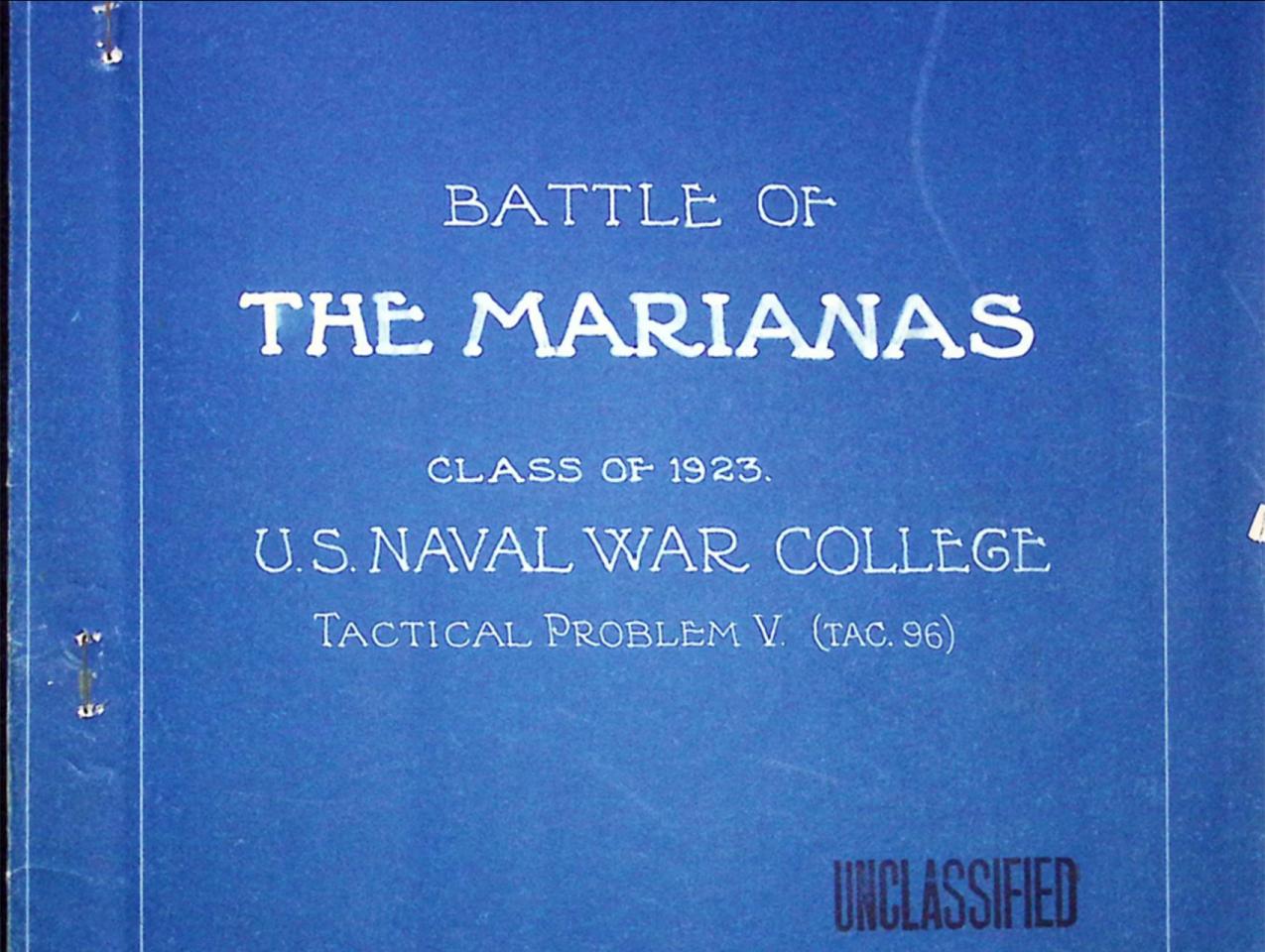
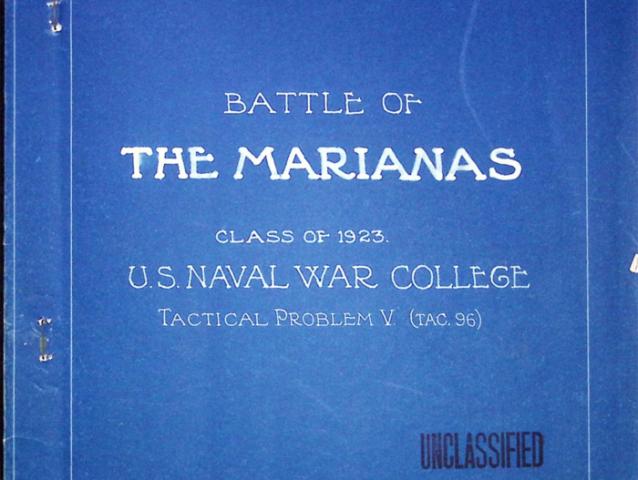
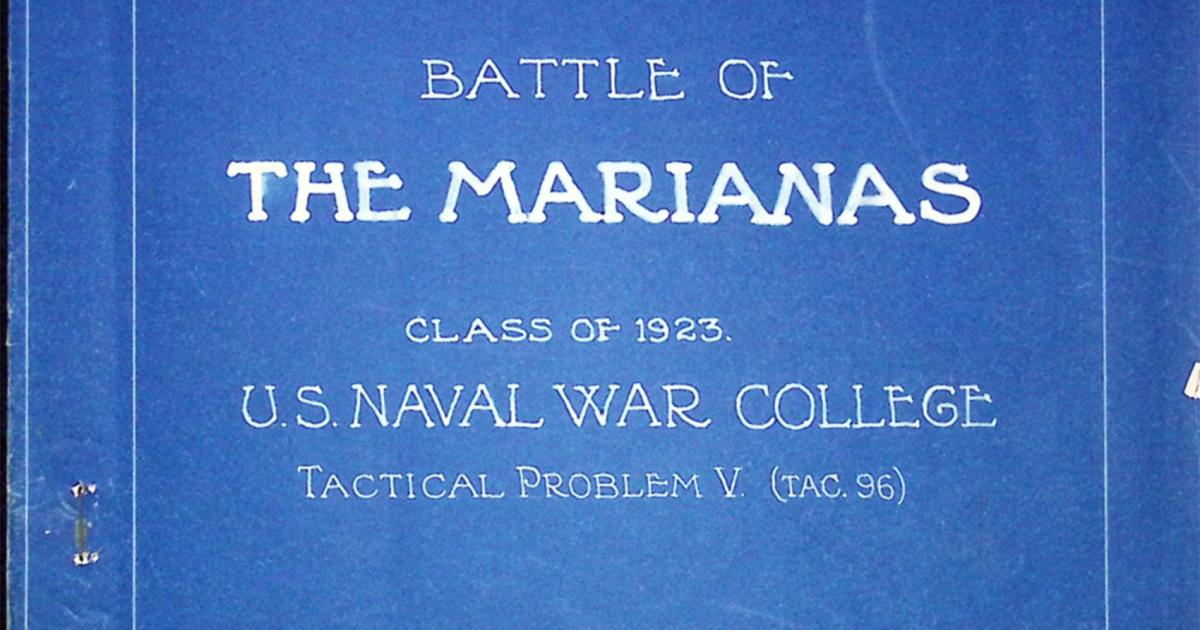
- So here's in 1923, so, so what John Scott was initially talking about, so over the course of the time between World War I and World War ii, the way games are used within the curriculum, it evolves. And so you see that as, you know, as Norman discussed earlier, right after World War I, they're really thinking about comparing themselves to the British. They're operating at a time when the US Navy doesn't really know what its future's going to be. The Washington Naval Treaty is really important. There's a lot of kinda domestic debates about the rebuilding of the US Navy and you can see that kind of in the games in the way that they're playing. And as we move closer to what ends up being World War ii, you see that the, the question set becomes more refined, far more focused on the Pacific. And you see also that games are used in a much more kind of structured way. But whether you're doing a historical game or you are doing a game that's replicating what's going on almost contemporaneously in the Pacific, you have to have rules in the game. And these rules are, are, they lay out kind of assumptions about weapons, about tactics they insert sometimes fog, literally fog torpedo effects. And so this is a, so you have to understand these are like such complex extraordinary games in their development and they represent, so if you're writing the maneuver rules in 1923, this is 110 page document. It's telling you about communications, gunfire, torpedo, fire, mines, submarines, aircraft. So this is, I mean keep in mind this is 1923, so it's relatively new. So some of this information, they're getting straight from Navy intelligence and so they're ingesting it into the game. And actually some of the game materials that we brought in that they, for games that occurred during World War ii, you can see where they had an order of battle and they actually cross out like, oh this one's KIA, this one's no longer working. So you see that like they're actually like updating the maneuver rules as orders of battles are changing in the actual conflict itself. But you can see like the level of detail that we see here, you know, they've got, and each one of these reveals to you the assumptions that the Navy is making about the technology and also in later assumptions that faculty that are are making and then what they think is important. So Norman mentioned earlier, kind of the aircraft, the aircraft is you can really look at kinda the evolution of how they're thinking about the aircraft by looking through the maneuver rules. So I think it's kinda helpful just to see kind of what this looks like. And often in the back of these maneuver rules you would get addendum which are like torpedo effects. So if you, so they're all, we've got a lot of these uploaded online, but you can see like all the various preparation that had to go into each one of these games that they're playing. Which leads me to a question for both John Scott and Norman, which is these are really extensive maneuver rules. The assumptions are made. And Norman, you mentioned already that there were some assumptions made for example, about the British that definitely bias the output of games. There are other assumptions that are being made about emerging technology aircraft, aircraft carriers. Sure. What did, I'd love for you to highlight both of you. One case where either they got it right and that's amazing or they made the wrong assumption and that had significant implications for whether the games got the future, right.
- Well these are simulations and they're half rooted in the current situation and they're half a little bit future because these officers are gonna rise to the point where they, they actually use the sub. So I think the worst areas were probably the ones pointed out by that officer because our intelligence was appallingly bad. We could not guess things like deck armor on enemy ships, you can't see that. We couldn't see how well fuses worked in shelves. Once you get to details, you get stuck in details which really matter. Obviously we knew we didn't know about the Japanese torpedoes. On the other hand, night torpedo attacks are a big thing in the games or almost automatically. One of the striking things in the games for me was that a lot of the way that battles played out, you could see because it made sense, the logic of the games was always look at what the enemy might want to do. Look at that first. I think that was really the biggest contribution the war college made. That it taught the officers before you get smart yourselves, ask what the enemy will do, then get smart and get smart based on what you know about the enemy's ideas. The only thing we didn't predict was kamikaze, as Nimitz said. On the other hand, in accordance with the, the culture of that era, whenever there was a game, one of the entries for the enemy was racial characteristics.
- Yeah. - Now you know that, that there was supposed to be a lot of anti-Japanese racism in the US Navy. That isn't what you see in those games. What you see there is one entry fanatical bravery that's not too bad. You know, that's how they played it now, how fanatical and crazy they would be. Obviously we didn't realize,
- Well I do think games in general have trouble assessing political will and they also struggle with military effectiveness. Like we can model how good a torpedo is, but it's very difficult to model the crew's familiarity with that torpedo or the main absolutely done on that torpedo. And so it's a limitation of games in general. Do you have any, have any examples of rules or assumptions that were embedded in these games that were either like extraordinary win or significantly biased at it in a way which made them less valid?
- They tried, they, they tried very hard to make it difficult to be lucky. So for example, the damage assumptions on ships did not include lucky hits. Hood would not have blown up in these games the way she did in 1941. And yeah, we were certainly aware that that terrible things could happen. I mean, we'd seen ju but yeah, we assumed that people were smart enough to get away from that.
- Norman, I would, I think what strikes me now and where I've been with the research I've been doing for over the last year is going back to the work that you noted about the use of the carrier and carrier formations and getting rid of the small carriers for initial planning, at least Ernest King's desires in 33 to separate the carrier force from the main body. And that really propelled for a lot both political reasons and technical reasons why we have the carriers emerge as, as one of the main battle arms in the second World War. I know, you know, Tom and Trent hone have written about this as well, but what reinforces it for me is both King's testimony to the general board and Captain Lanning's testimony to the general board and how he umpires the, the, the plea problems in 35, 36. So I think the games really helped carrier aviation. They didn't get it exactly right. You know, we ended up having large carriers and small and escort carriers in effect. But to make those decisions and where they wanted to go, I think the experience of King in the 33 game played out and with, and his experience in the fleet problems really influenced his, his decision and his recommendations during that interwar period for car aviation.
- John Scott, I want to take a second there because 1930, the class of 1933 is actually a pretty, this is an important class. There's also, there are other cohorts of classes that end up being very, very important to the history of the Navy. So can we talk a little bit about who played in these games? Are there people that played in this game that had an outsize effect in the Pacific War? I think there are some really, and we, we know about this quotes from Nimitz, but that relationship between the players and then how the games influence the players themselves ends up being an important part of the story of the inner World War games. So who are the players that played these games?
- They're, well certainly it's Nimitz, it's King, it's Stark, it's Richmond, Kelly Turner, you have and Bill Halsey. Bill Halsey. Those are probably the most famous of the five. And the other curious aspect is, is
- Not everybody that's listening to this is gonna be as like Navy fluent as you.
- Okay. Admir Admiral King, commander in chief of the Navy during c and o during World War, world War ii, obviously Nimitz the command of Pacific Fleet after Pearl Harbor. Spruance commands the task force at Midway and then through 43, 44. And of course, Admiral Halsey was supposed to have commanded his task force at Midway, but Admiral Halsey ends up commanding multiple battles in 43, 44 in the Philippine Sea.
- So this is quite the roster, right?
- Yeah. And the other thing I would add, and this is important and I think Norman would would agree with me, is we, you know, the, the Nimitz quote was really solidified as myth in 1962. Stacy Perillo, if she were here, she could show you the correspondence between the college and a retired Nimitz to get that quote to the way we know it. Many folks, I, I really like Nimitz's quote from December 5th, 1941, where he is talking to the graduation class as Rear Admiral Nimitz, the head of naval personnel ERs, where basically he tells the graduates five days before Pearl Harbor that the value of your education at Newport is that you now have the ability to think about the problem similarly operate independently and carry out a general plan in distributed fashion. And so that, that is really what the habit of mind is. William MCC car, little would say the game's created the habit of mind for them to solve these problems going into the second World War. And the other thing is the fact that Spruance in Richmond, Kelly Turner, they were actually on faculty running the games in 36 and 37. So I find it curious that they end up, you know, ending up commanding during the war. And as Norman has, has highlighted, is that the college has been in and out of favor with powers in the Navy and certainly the college vindicated itself in the second World War. We could talk later about what happened after. But thinking about those five, those, those five admirals as they commanded in the war, their experience in the interwar period, Nimitz did not fight the same games that Halsey and Spruce and King did. But they were similar in the way they informed them. And the last thing I would say, and I was looking at the document chief hung online, for example, strategic problem number one from September 14th, 1922. It is practice for the estimate of the situation and the estimate of the situation. I've got the 1942 book here. But this was the practical application of, of pretending, of practicing to write orders and to give orders to the forces. So as the players were going through the games, they had to conform with orders writing and follow the process of planning and giving commands both, both sides, whether the blue, orange, blue, red, black, blue. So it was practice for orders writing. So they, they were able to communicate to one another and they were trained in doing that as well through these games.
- So the players, those players that ended up becoming commanders during World War ii and really the leaders of the US Navy during that timeframe, that those players becoming students at the Naval War College was not happen chance. So when I started this story and told you that the Naval War College was struggling to retain a budget and were struggling to continue to exist, one of the biggest problems the Naval War College that early Naval War College had was that they didn't actually consistently have students. In fact, there were years that they had no students at all and they had sometimes summer seminars with three to five people. And one of the biggest things that came out of when they had the Navy Secretary Herbert come view one of the war games is that they convinced the Navy to de to select a very important few to be able to be at the Naval War College for a longer period of time. And so, and John Scott, maybe I'm going back to you here. This actually seems to be a story that resonates today because I remember when I was a professor at the Naval War College, the lament was the Navy never sends its top officers to the Naval War College. So we had like top officers from the Air Force and the Army and, but the Navy was didn't, didn't necessarily send all its top officers. So like how important is it to get the, the right students and like what is the Navy's relationship with getting these students that then become really influential leaders in the Navy
- In the twenties and thirties, it was the depression and it was the influence of Sims as Norman was talking about William Sims, he loomed large the history of the war college, the naval war colleges, it exists in spite of the Navy. So when loose establishes the school, it's, it starts in 1884, but really he was hosting these LE seminars and basically if, if you were on Goat Island, which is where the hotels are now in Newport, but it was a torpedo station and that was the only part of Newport that the Navy cared about was the torpedo station. And then if you were left on Pier side and you got hin, you know, you got recruited, you look at the first graduates that came, they were probably the guys that were stuck on the dock and got told to go over, take a barge over to coast of Harbor's island, listen to loose, listen to Mahan and do and, and maybe do some war games by 87 with 1887. So that persists. So the ebbs and flows throughout. And I would offer today that since, especially since Goldwater Nichols, the, the, the congressional bill in 1986 that mandated the joint service and mandated how the Department of War trains all of their officers that the Navy has struggled to make Newport relevant or as important for naval officers in the current day. But that's not to say that we don't get good naval officers at the college. We do get excellent officers, but they're just not selected The same way that the army, the Air Force and the Marines select officers to come today. The way that that ERs selected those officers in the twenties and thirties to come to Newport for Sims, for Sims is college.
- And I think that gives me to where I wanna leave us before we open this up for questions, which is the application to today. So I'd love to hear from both of you, Norman first. So what lessons do you think the inner war games suggests about how the Navy should think today about emerging technology drones, AI and how we integrate them into campaigns and build an arsenal for future war?
- Oh, well the important thing for me is that the games were filled with the then emerging technology, which was airplanes. And as a result, American naval overseas understood what airplanes could and could not do and how to use them. Now if we do not fill the games with the currently emerging technologies, probably cyber and AI and things like that, we're shortchanging ourselves because what will happen is that we'll have a core of people who know about these things in a black way and then we'll have officers who don't have any idea except to ask their cyber people what to do. Bad idea. Now obviously a lot of what happens in cyber and crypto and the rest should not be spread around period. But there's probably a way to spread around a synthetic version of it, which is safe and can be handled in normal classification. And that's important. If you want a lesson of, of war gaming, the first thing that would be necessary would be to compare our war gaming with other people's. I tried that. It didn't work terribly well. The British had some war gaming, they talked to us about it, but it was so different that I'm not sure we got it right. You have to be able to say we did it right, they did it wrong, here's why. And the why is having the emerging technology basic to your games. Yes, we had games which involved a lot of carriers. We had games which showed that carriers were very vulnerable. So it was important to keep them separate from other things. It's very obvious that the War College helped shape the carriers that we operate in World War ii, and I would argue that that may have been their biggest contribution other than changing the war game war plan. But to do that you have to have people with a sense of what the technology does. If you don't have them, they're gonna be blindsided. And the history of secret weapons is extremely depressing that way to talk about you can't use it,
- You're kind of living through this 'cause as both a historian who looks at the inner war games and as someone who works directly with the Navy to help them build the Navy of the future, what do you think that this, this time period can tell us about the drone revolution, the world that we're in and we, Norman talked a little bit about technology. I'd also like to hear your thoughts about the way the Interwar games might be able to help the Navy think about what its kind of theory of victory in any future conflict might be.
- Jackie, did we mention strategically yet?
- No, I was gonna mention it right before we went into questions, but this is a good, great time to do that.
- Yeah, so Jackie had us write some short commentary in, in my piece and on the online magazine or digital journal strategic for the Hoover Institute. I look at this and I, I think what's important is understanding the enduring principles and fundamentals of how the games worked. And, and I think Norman hit it right off the head from the start of the session with decision making and what we have to do and what we do now. And the challenge is, regardless of security environment, what are the decisions that operational joint maritime leaders are gonna have to make in battle tomorrow? What information do they need? How do they make the decision? And how does AI influence that? How does cyber influence that? Right? What and I isolating and understanding that dynamic I think is, is what they did so long ago. Right? You know, at height of the gunnery adjudication in the thirties, it was 57 minutes of adjudication for three minutes of play, right? So not very satisfying from an experiential gameplay, you know, if you're used to playing on a game board or, or a digital game or you know, video game. But it was so important to make sure the information was right as they under, as they projected it to be, that the students would be able to make appropriate decisions and have the information appropriate to do that. And I think we do that approach today. If games can be used, we use, we obviously we use games for the fleet and for the joint force staffs and then the students, we, we play the Unclass games and we have to simulate just enough of what AI does to the environment, what cyber does to the environment, what space does to the environment, and where do you get to make a decision of that if, if you're a combat leader, if you're an operational leader. And that, that is, that to me that's the lesson from, from a hundred years ago, is make sure that your games are not exercises. Make sure your games are not just rote training of how to, to write an order, but you have some thinking and decision making information in there that, that gives that decision making experience in the simulated game environment.
- Well, that leads me to the final question I'm gonna ask before I open up to the audience question. So please do put your questions in the, the q and a box, which should be at the bottom of your zoom screen. So John Scott and I were at the Naval War College together for the few years I was there and one of the big debates we had while I was there was this question of iterative war gaming. And we must have sat through like, I don't know, 10 different meetings about like, what is iterative war gaming? And I think the inner war war games got used were used as an example, maybe like in a, kinda a blast in this way, right? Like there was this assumption that we knew what iterative war games were because we, what we wanted was what we did in the inner war years. But what this conversation over the last hour shows is that those games were actually, there was a lot of differences between them. They were really complex. So what is, is there a thing called iterative work gaming? And even if there isn't, what can we learn when we think about designing games or we think about building games within professional military education curriculum? What, what can we take from the inner war years? What do we learn about game design and how we run and execute games?
- I I'm interested to hear what Norman says.
- Yeah. Well the first thing is that they were not iterative in the sense that the people playing were very different each year. Every year there were a lot of small games and they led up to the big game. The big game was played by everybody available and it simulated part or all of the US war plan against Japan. So in 1927, I think Pratt was president, he gave a talk to, to the class before the, the big game that year and said, this game is your future. This is what your career will look like. You'll be fighting this war if we ever come to war. And it was the big fleet progress to the far east and then the big battle against the Japanese Navy. The gaming seems to have promoted a strategic concept for what war was so that the Navy view of a war against Japan was they overrun the Philippines, we destroyed Japan, and when they come out with their hands up, they disgorge everything they bring, which I find very satisfying. The army did not look at it that way at all in its view. It was all about particular pieces of territory. You find that in the army's of official history. It's, it's not just some prejudice on reflecting the, the way the army describes World War II in the Pacific. It's about the Philippines, the way the Navy would describe. It's about Japan. You sink Japan. Then the question is how do you sink Japan? It's a very different kind of question. One of the amusing things about those games is that we expect to play the war single handed. There is no idea that if the Japanese go after the Philippines will be part of something bigger where they try to kick it or Europeans outta the far east. Now that's despite the fact that they're national motto at that point was Asia for the Asians, which doesn't sound like a pro colonial attitude to me, but I, I'm maybe missing some substitute. Anyhow, as a result, not attacking the British by accident became a major theme. You can't do an unrestricted submarine war against Japan because you might sink British ships. Well, geez, by that time they may all have been grabbed by the Japanese anyway. And what then happens is that since the Japanese are going to overrun all of Asia, big deal, we'll do our best. Now you might be amused to know, there were a couple of war games before the war involving submarine operations against Japan, which basically demonstrated that if you don't do it unrestricted, unrestricted means you see a ship, you sink it right off the submarine doesn't last very long. And I would think that as a former submarine commander, Admiral Nimmi was very interested in those games and was well aware of the results. Nobody ever written about that. And I don't know why the games were a way of exploring what would happen in the war that people expected to fight and they had to be explored subtly. It was one of the factors that hasn't come out is that we discovered at some point that the Japanese knew all about our war plans. We watched one of their exercises. Unfortunately for them, we were broke breaking their codes, and we found out that it was a very good counter to what we had planned to do to them that did not cause a change in the war plan. I don't know why the big change came only after the demonstration that we would get wipes by Van Orkin. I don't, I don't think anyone else wanted to rock that particular boat. And Van Kin's reaction really worked. You have one war game right after that, which is basically, let's see what happens if, and it was a demonstration that scouting matters a lot in the Pacific. And then we went to games involving season islands. And the first time that's played, the then president of the War College says, this is very secret. And oh, by the way, it's just tentative and don't take it too seriously. It's a war plan. Of course, they should take it seriously, but he was afraid someone would leak. Hmm. So one of the questions that, that you might want to ask is how well did the Japanese guess what we were up to? I've never seen anyone who talks about what they figured out about us.
- Yeah. Well, the good thing is the Japanese archive is now far more accessible than it has been in the past. So that's actually an archive that we're hoping to get a researcher to go into, to get us a, a better understanding of kind of their perspective of war games and stuff.
- Well, it would be, we would wanna know a lot about how they were thinking just before the war. There's a little bit of evidence. So
- That actually leads me really nicely. It's a really good segue, Norman, into one of the audience questions that I'd like to start with. And this is from Dana Iyer. And he asks, and he, he brings up the famous Nimitz quote, which for those who have not heard the quote, the war with Japan had been enacted in the game rooms, the War college by so many people, and in so many different ways that nothing had happened during the war was a surprise. Absolutely nothing except the kamikaze tactics toward the end of the war. We had not visualized these. And as John Scott mentioned, this isn't, this is actually something that is written in the 1960s. And so, you know, there's context around what he's saying. But Dana goes on to say that as a sociologist, he reads that is saying, we did really well when we thought about the Japanese as professional military officers because, but when they became Japanese left professional military norms aside, they really surprised us. Is there any evidence of reflecting on how war games should incorporate sociocultural dynamics? Well, so how do you think about playing the red team?
- I don't think there was ever any real incorporation of Japanese attitudes in any war game that I saw. The Japanese side was played by Americans and they played as Americans. So their, their preferences didn't play. We knew they would be aggressive. I don't think we understood that. For example, they made very little effort to protect their ships. The damage control was awful. Everything went into shooting. We were not as alert as we should have been. Everyone knows that. But there were lectures on topics like Japanese thinking. I have copies of them. I've not read some of them, but I don't know that anyone noticed. I think that the students worried about the games. The games were their whole education. We cannot imagine how intensely that was done. And
- Yeah,
- If you're a successful officer, you're gonna be somewhat aggressive. Right. You better be. And this gives you a chance to find out how aggressive you can be.
- Yeah. Yeah. I'm gonna plug another book. John Lillard's playing War J John. He wrote and did, he introduced me to the Van Alkin report with his research. He, Evelyn Sheek put that together for him, probably as well as for you, Norman. And we went looking for it. Stacy Perillo and I did because we couldn't find it. But what it is, what Van Alkins report, the 33 report that he submitted to c and o as Norman's been talking about, was the first time that I can find in the Navy's history of trying to get an iteration. And when I say that is, they said, you know, you been c and o and LA said, we've been playing the blue orange game systematically. Our problem number four for 1927 through 1932, what can we learn about all the times the students played this game. Now granted it was US Navy students playing the Orange Side, Japan and US students playing blue, right? And what you get in this report is, is a, is a cross game analysis. And you also have in there they use these huge architectural blueprints. And they had this table and they laid out the games. You've probably saw these Norman, where the 33 game had the most information. It had the order of battle for blue, the order battle for orange, the path, the island path in which the strategy in which the blue players took it took the scouting, and it had the, the, the kills and the, the casualty counts. And it went from 33 to the games in 28, I'm sorry, 33, 32, 31 30 and 29, 28. And it's what was the data that Van Aukin and his technical staff, his research staff, put together to write that report. And I think that's the idea of iteration, is you're coming at the problem, the same problem set. It's not the same players. It may not be the same order, battle may not be the same capabilities, but you're revisiting it. And there are shortcomings to it. But there are also pluses to that. And I think that was on the mind of Navy leadership 10 years ago, Jackie, when we had to come back to what is iteration. So it's not a model and sim iteration, it's not where you can run it through the computer again. But I think it's, it is, as they say, in in, in sports parlance, right? Reps and sets, right. Getting repetitions and getting repetitions and sets of, of playing the operation you want to try and pursue or the strategy you try and pursue. So that's my, my, my take on, on on the idea of iteration. Well,
- I seen that. I've not seen that. The iteration I have in mind was in 1930 when man is asked, what do we do in the next carrier? And he says, well, in the 1930 games. And then he lays out statistics. There were, that was a statistical iteration. The other one was, he was asked whether we should have torpedoes and heavy cruisers, which by the way, were very common in the world's navys. And they, again, go through statistics and decide that it's a bad idea. Most of 'em are still on board when the ship is sunk. So I think that they did that by looking at one class, running through a large number of small scale gains rather than the big one.
- Right. Those are literally like chart maneuvers, right? The
- Yes.
- And the reason why they're called chart maneuvers is because they are limited by the size of the chart. And quite ly
- I, I would say it differently if you like.
- Sure.
- They're called chart maneuvers 'cause that's what they're done on.
- Exactly, exactly.
- And they
- Very tactical.
- The idea is, is to differentiate that from the full scale fleet problems. Now, I have to say something else, years ago, a very smart naval officer said to me, you know, that in a full scale exercise, it has to be designed so that everyone gets a chance to play. You can't have, for example, scouting failures, because in that case, you will have spent a fortune setting this thing up and nothing happens. And yet in real life right now, I can give you an example. The year after they figured out that the through ticket wasn't gonna work, they did not yet have an accepted alternative. So they ran a game, which is different from most and kind of weird in this game. The idea is that if the fleet reaches Soviet territory, we just recognized the Soviet Union, the Russians will decide to go in with us. Good luck to that. And so it has to go by a northbound route along the Lucians. And how does it get there? Well, the Japanese in this game, stationed submarines around Pearl Harbor, not to sync the US fleet as it comes out, but to determine where it's going. And we death charge them to keep them from finding out, well, in this case, the death charging works, the fleet escapes and it goes north. And the Japanese commander has to try to find it. And he sets up a chain of cruisers, but it's not long enough. And he spends about, well, I think it's three weeks or six weeks desperately trying to find the US fleet. Eventually he does, he bums us. But to me, that was to show you that the Pacific is a rather large place and that it's possible to evade detection for surprisingly long period scouting matters. And had that been a full scale exercise, it would've been, what the hell are we doing here?
- So I wanna, I wanna bring us back to, so the, the original question was about this kind of sociocultural, and it related very nicely to this lar lar this larger question of iterative. And I think one of the things that both Norman and John Scott are highlighting here is that the iteration was not in doing one game over and over again, but instead the ability to look across games that had a, a series of different, of, of differences, right? They differed in players, they differed in assumptions about technology.
- Oh, sure.
- And but I do think that what they did not vary very much was thinking about the red team, right? So your players might play the red team differently based on their own kind of beliefs, but the, this wasn't like a systemic thing that, that the Navy necessarily, you know, thought about was the way in which the red team changes might occur. And I, I think that is not a, an artifact of the inner war period. I think it is very difficult in general to think about the red team playing the adversary. Even in large games right now that are run by, you know, the US government, you have a limited pool of people that are able to represent with any fidelity at all, the bad guy. And so you actually get a, a very kinda small upward, they're talking about iteration and looking across games and the value that looking across games gives us into understanding big patterns. If you only have a small amount of people who are constantly playing red team, I think you do run into some of the issues that Dana's bringing up, which is where you don't have a lot of variance about sociocultural assumptions within the game and that are reflecting like very, very limited pools and very limited numbers of people. I wanna also, let's, I wanna bring us back into the to present day. And this question with by Joseph Walla. So he's talk, he talks about some very prominent unclassified war games that are run by CSIS. So CSIS runs games looking at the Taiwan, a conflict around Taiwan. And they find that, you know, this is a war that would be a significant war of attrition and there'd be a lot of munitions and a lot of lives lost and actually made a pretty significant impact in the public. There was, you know, featured on Bloomberg and Wall Street Journal. But what he's asking in the question is like, is that still something that we're thinking about? Is that something that we think about? We design games today. If we were taking the inner warm model and we're now thinking about a US China problem instead of a US Japan problem, what kind of game should we develop to think about that problem? And then what would, how would those games then influence decisions about procurement strategy and tactics?
- There's something we haven't brought up about Newport. Newport was a fairly isolated place once you went up there. You probably spent your time there. You certainly, the culture of the interwar Navy was that you shut up. That's a very important thing. Worked in the classified business for many years. I certainly value shutting up games that are public, have a publicity value. There's no way to escape that. And as a result, I'm a suspicious character. Now that may be unfair, but for example, in a more open world, the 1933 game would never have reached conclusion. It did. No one would've passed a memo to the CNO saying, watch out, you're in trouble. There was a lot of publicity about what we would do in the Far East. I had a distinct feeling that there was none about island hopping before World War ii. I may be wrong, there was a book called something like War, war Plans and War Games by a well-known commentator, I think it was Captain Eson in the 1930s, which I have someplace, but I haven't read. And, and the idea was that you could deduce what we were gonna do from the a well-known full scale games that that couldn't be hidden. And the Japanese obviously monitored hours the way we monitored theirs. But the value of keeping things quiet, it's enormous.
- Yeah.
- If it's something that's bigger, think
- It's also value in saying things loudly. I mean, I think the reason why that particular war game got so much attention was that it said that the US couldn't easily win and that we needed to buy a bunch of technology and invest heavily in the military if we had any chance in the long term. So there's a, there's a real public conversation here, and then, you know, this is not A-C-S-A-S game, but there was a Cena s game that was played contemporaneously with members of Congress that was run by the commission on China and thinking about how you provide aid and support to Taiwan. And so they play a very similar game. So this, this, you know, it doesn't necessarily reveal anything. It does, it reveals some kind of problems that the US has with munition stores, for example. But it also has this incredible rallying cry of convincing the public and legislators that this is something that they're willing to invest in. So it's kind of interesting the way in which they're used instrumentally. Now, John Scott, you actually, I mean you, I don't know how much you can talk to this, but you live this on a day-to-day basis thinking about how war games are used today. So do you see any big difference about how war games are used today to influence campaign planning and procurement from what we saw in the interwar years?
- Well, I haven't
- Been, I think I, I, I talk you normally what I would say is this security secure games, secret games should remain so, but now, just as it was 90 years ago, the Navy leadership has multiple audiences they need to influence. And I think Jackie's hitting on this. And so when you see Admiral Papa Paro talk about a war game on 60 Minutes, or, or, or a plan 60 minutes, that was probably war game somewhere. And he's making it public for a couple audiences, probably the American public. So they understand why there's going to be a demand on the defense budget for uni, certain munitions, certain capabilities. It's for Congress. It's also, you know, if you look now today, you know, look at the policies coming out of the department, the defense department for the defense industrial base, you know, for the last year, right? Last three years, you know, both the Biden administration and the Trump administration have sought to, to put these initiatives, to energize the industrial base, to support what they anticipate the demand both. And that demand has been anticipated, not only through through war games, but it's anticipated through multiple studies and Pentagon from across all the services, all of their research. And so I, I think that there's a lot of similarities to that. I think I'm, I'm gonna go back to Holloway Frost. I mean, you look at the Washington Post during the lead up to the 1930 London conference, there's a reason why they have him. First of all, Holloway Frost is a good writer. And second, he can explain in layman's terms, you know, what is a destroyer? What is a cruiser? How do submarines work? So the American public reading about this in the paper, and, you know, they, they could have the reaction like, well, this sounds like this should be secret. But the reality is, is they're shaping the environment for the c and o for the Secretary of the Navy and, and ultimately the president for Roosevelt to, to get that, that spending in depression era dollars on his defense.
- So I'm gonna take another question from our q and a. With the increasing complexity of warfare and emphasis on war gaming for junior officers, junior officers, what are some of the best ways that junior officers or officers in training could benefit from war gaming? John Scott, I'll lead to you, I'll go to you first since you do have, I, you guys have students that war game as well.
- Yeah. So war gaming has, has a revival since 2015. Jackie lived it with us. When Bob work put that memo out and and war gaming, it was, it was perfunctory certainly in, in the, in the classroom. But over the last decade, the college and the college faculty have embraced it as a method to teach. So we have students, you know, from all services, we have students from, you know, 90 plus partners, d international officers. And so as a junior officer, understanding and playing even an unclassified game helps you understand just principles of employment beyond the ship. One of the phenomenas about, about a naval officer's career is when you ask a naval officer, what's the first time you've thought beyond the ship? And the answer from for many of them is usually as a commander, as in oh five. Prior to that, those lower ranks, you know, they have to have technical tactical competency in their, in their upbringing. You know, whether they be aviators, whether they be summer rains or, or you know, surface warfare or, or cyber officers. And so the gaming, certainly at the war college, whether you take it here in Newport or you go through the, the college of just education, you'll have an opportunity to game in your curriculum. So I would say take that seriously. The, the faculty have set that up for educational objectives and they don't have to all be classified games. Right? It's, there's a lot of naval fundamentals to joint warfare at sea that you can gain by, by actually getting involved in the game, immersed in the environment, and a lot of, a lot of the, and things you learn in a game or like, you know, so many times I've had senior leaders and yeah, I could give it to 'em in a report and tell 'em that their capability is gonna be limited, but until they go through the game and they come to the, the plenary at the end of the game, they say, well, that capability was limited because they experienced it. And I think anybody who's junior officer will get that playing in a, in a game offered by many of the institutions, the PME institutions today.
- I would say kind of reaching back to the historic, the historic part of what made creeks feel, creeks feel's kind of the, the, the first real kind of campaign level gaming that advents in the Prussian military. And when you look at the impact of Creek spill and why it was so important for Prussian, it wasn't necessarily that it ended up kind of like directly developing campaign plans. There's some, some linkage, but it was the amount of experimentation that junior officers were able to do through games. So there were kind of like salons that would pop up where junior officers would be debating other junior officers about the rules and the adjudication and like, oh, if we do this tactic, I don't believe it's really going to have this effect. So I think the value for junior officers often is, is not, is it can be in playing games, but it's also in, you know, building the rule sets of games. And actually, when I worked at the Naval War College, one of the things that I thought the Halsey group did remarkably well was that they always integrated the students as part of the adjudication. And the students would spend like an entire semester looking at that adjudication saying, no, I don't think that's right. Or I think that's changed, or I think there's new technology. And so there is a lot of experimentation and learning that can occur not just in playing games, but also in engaging with the games at the rule set level. And I think that sometimes gets overlooked. I, let's see, let's take another one. Okay, so this is a favorite, 'cause I play with this a little bit, right? We've been talking about history and we showed kind of how complicated these games were, but that there were limitations in these games. And one of the limitations, right, is thinking about the enemy. Well, today we have the opportunity to integrate new technology to think about the enemy AI agents, you know, your, your CLOs, your chat GBTs, your Geminis. So I know we've been talking mainly about the historic, but do either one of you have, have a take or are, do you think about like how these types of technology might be used within games to simulate the red team or to think about kind of adversary behaviors or, or the non-model parts of war, which is, you know, emotion and human behavior?
- I was just answering a question of that. Someone was asking about getting into sociocultural aspects of, of adversaries in these games. You know, we do a, a deterrence game and one of the things we do is we build a game. You have, you may have the two adversaries or three belligerents that you want to have, but often we have to replicate the rest of the world and how other entities, other countries, other agencies may react to an, an escalatory oratory move in a deterrence game. And what we've discovered is that we've been testing the rest of the world, so to speak, with an AI agent and say, you know, how might Japan react to an escalation between Russia and, and us, right? And so we don't have to invite a, a player to play Japan. We could use the AI agent to say what, what might be a typical, you know, Japanese government response to a blockade or, you know, as you picked your, your, your prompt for it. And so, you know, as Jackie remember, we used to have to have somebody play each of those entities and craft, you know, what would be a, a good story to put into the game and not violate what the game was getting at, but they, they weren't representing a true player, right? It was to create the environment, the decision environment. So AI agents, I think are that, that's, that's low hanging fruit for us to use them today for games where we, you know, use, when you do a, a deterrence game, a instrument, a power game.
- Yeah, hopefully it decreases like some labor, but some of the, the labor that's involved in making these games,
- I'm not worried about that. You, you hear two things about ai. One is that it's designed to make you love it, and the other is that it gets hallucinations. I I first worried about this in connection with a thing in a Newport game some years ago called the knowledge wall. The idea of the knowledge wall was that a commander would have enormous numbers of inputs that he would find very difficult to manage, so you could manage them by what amounted to ai, although it wasn't called that. And my question was, so how does he know that they're reliable? And the answer was, well, he can drill down and find out where he got his information. And the answer on my part was that as the weapons are flying and hitting people and blowing up things, and do you really think he has time to do that? And the answer is, you've gotta be kidding. What I worry about in, in AI is that the people who are selling it seem not to have much sense of the way people think. Perhaps I'm being too crude in my testament of, of the technology world.
- I, I, I think you're, you, you, you raised, you know, a, a a case because I've been, we've been experimenting with AI for the last year in the classroom. How do we use it in, in research? How do I use it with my work? And the, the, the straw man that I use is Google Maps or Waze, right? We've had that, the, the, the GDPS systems in our com in our phones that take us, you know, it's gonna take me from Newport to New York, right? I'm gonna, it's gonna give me a recommended and that I should there and generally it, it's just the right way, right? Am I gonna go, you know, nine i interstate 95, or am I gonna take the Merrick Parkway and the AI inside the GPS inside the Google map should help me do that. But often I make it, I may make a decision, I may, it may be telling me to go Merrimack Parkway, but I'm gonna decide on my own because I have human cognition and other inputs that the AI machine does not. And I stick on the interstate and it turns out to be a faster time. I get there ahead of time it was anticipated. And so that is the trick I think, for ai. It's knowing how to use it, how to leverage it the same way we, using an AI map. It's a tool and you have to recognize when it's giving you information you can't trust. And that, that is, to me, that's the biggest challenge for a war fighter trying to incorporate AI into actual war. But for the gaming world, I think the gaming world is, is, is a huge laboratory to test that out.
- Yeah.
- And see what does, you know, what does AI give you because it's a safe environment, right? And if it gives you hallucination, you figure out the post game analysis, you're like, well, at least nobody got killed. Yeah. And we can figure how to use it. Some of
- The arguments that were made, you know, for the value of war gaming at during the interwar years, which was that, hey, we don't have to build all these different types of aircraft carriers and then take them out to an exercise. We can actually run through some of the logics in the game itself. I will say this is something that we at Hoover and at Stanford are working on a lot. I'm gonna put some stuff in the chat where we've been running games with humans and then comparing them to LLMs and then comparing across LLMs. And we also have a game that we're running next week in which we're gonna be comparing human players to a Chinese chat agent, where that we worked with an outside company XC labs to produce a Chinese chat agent that's fine tuned on very specific PLA and CCP documents. And the point here is that, and not that LLMs can replace human players in games, but in understanding the ways in which the, what biases exist for the LLMs, and then whether you can use them in a way to kind of compliment what's very difficult, which is kind of finding red team players in general. We do find a lot of escalation and hallucination, and that's even with Claude. So there are definitely, you need to understand the biases that are associated with these LLMs as you play with them. And I think future historians, to come back to the historian side, we now we're looking back, you know, a hundred years ago at these inner war games and trying to understand the way they played the Japanese and what biases they inserted into the game that made the games more or less realistic. Future historians are going to look at the way in which we integrate AI and LLMs and try to understand what biases were inherent in those LLMs that may have changed the outcome of the game that made us better or worse at predicting the future. Okay. So I'm gonna take the, there's a, a great question about, were gaming personnel. So the question is, were gaming still seems to struggle in training and qualification of personnel to facilitate war games. And they referenced a GAO report about developing education and qualifications for war gaming personnel. And the question wanted to know if there were lessons from the inner war games about how facilitators were trained and anything we can use today. And I saw John Scott, you took a bite on that, so why don't you elucidate us?
- Yeah, well it's a great question from James Miller. I know James, he's worked with us and he's been at the college before. And I, I think Norm one would back me up on this, and what I said back to James is that a hundred years ago, the war gaming staff was predominantly naval officers. And so the the subject matter expertise required, I think to be, to, to run, to be on the war college staff. They weren't gonna say called faculty, they were war college staff back then. Is is that operational naval experience, number one. Number two, and and Jackie can attest to this, the enduring question in my time in Newport has been how do you make a war gamer, right? You know, and that's been asked by leadership. It's been asked by our department chairs and deans of, you know, do you send somebody to the course at NA Naval Post graduate school? Is it somebody who comes out of a, a war gaming methodology at one of the universities? You know, we have Sebastian Bay and the Georgetown University War Game Society. And I, I think right now the answer is, it's all of those sources. Because gaming to me is a methodology. It's a, it's a way to, to, to do research. It's a way to, to learn. And so it's a method used by multiple disciplines. I don't know if I have an answer for that GAO study from 2023, but I, my my recommendation tot leadership here in Newport is that, and I, and they've taken board as you come up with a a org, if you want to man your warga department, you need to have a cross section of, of multiple disciplines from military officers, men and women from, from multiple services to civilians, young and and old academics who, who have an idea of how to design war games, analyze war games, and put war games together. War gaming is, is the most human of, of activities we do in peacetime for, for preparing for war. And it is the most collaborative, you know, it's much more collaborative, I would submit than, than an experiment or a campaign analysis. And so I'm a big tent guy and I think that, that, to get war gaming, right, it, it, it really has to be curated and, and it's a lot of, it's a lot of understanding how to build a good team.
- Do they have a similar GAO report about sponsor behaviors? I feel like that probably is a bigger problem than the lack of facilitators. It's like you're sponsors who pays for the game. And often sponsors can be a problem because they have ideas about the direction the game should go.
- Yeah. But if there were no sponsors, we'd have no games
- Unless you're living like me in the beautiful academic world. Yeah. Okay. So I wanna kinda tie things up really quickly here and just ask the two of you, one final question. And the final question is, you know, I think the professional military education and the Naval War College in general, you know, it's in a time of big transition. The Trump administration has asked for PME to review and think about how it's generating war fighters. So what are the lessons you take from the inner war years if you had to use that as your dataset to justify what PME should do and what they, how the Trump administration should think about PME in the future? What are the inner war years reveal about how PME and war gaming how to do it? Well?
- Well, my guess is that the Navy was very good at decision making. And the decision making excellence was trained largely by war gaming. We don't know how many people went through correspondence courses. We don't know how many people did smaller scale war gaming on their ships or offshore activities. The US Navy emerged from the pre-World, world in better shape to understand what was going on in other navies. We had a distinct style of decision making based on looking at the other side first. That style was demonstrated both before the war and during it. The British cultivated a very, very different style of operation, straight aggressiveness. And they said that our officers were too chicken and spent too much time figuring the odds in advance. That's the sort of way of describing the war college idea. I would say we did rather well, the British did okay by aggressiveness against people who could be beaten by aggressiveness. They didn't do too well by aggressiveness against people who were pretty tough like the Japanese. And they certainly did not do very well. Understanding new technology, the, the, the internal war concerning the aircraft was amazing. If we hadn't been there, they would've ended the war flying only by plants. And there's every reason to believe that had they followed their aggressive ideas that would've been disastrously hit. You see that in an account of their near miss going after the Japanese fleet in the Indian Ocean, I wouldn't bet that that would've worked at all. Now that says bad things about the Italian and German nas and it also says that if they had assumed like we did, that they were as good as they were, they wouldn't have done what they did. They bet much more heavily on national differences. And that turned out to be a terrific bet in the North City and the Arctic and the Mediterranean. It was not a very good be bet, but it was a horrible bet against Japanese. We did not suffer that kind of, if you like, racially based reasoning and you can thank the workout for that.
- So this is large, largely a positive take, right? That like the War College did their job well and therefore Yeah, recreate Oh yeah. Giving faculty freedom, putting top students through the war college and then focusing very heavily on war games. That part of curriculum is a model that could be successful today or that should be doubled down on
- Not a bad idea, I think.
- All right. I'd love to hear your thoughts on
- That. It were successful, my guess is that what broke it was nuclear weapons after 1945. It was not Fleet on Fleet anymore. And it was also, are you ever gonna fight a big war given nuclear weapons? Good question.
- I, I know I will have to do another webinar on the global War games in the eighties and the way in which those were used in a very different way to influence the Navy of the Cold War. John Scott, what are your thoughts on the future of PME and war gaming?
- Yeah, I think the, the warrior ethos that Mike Vejas asserts came out of the interwar period is, is a powerful message, you know, with, when we really put structure and CNO gave the global war game to Pac Fleet, all the Pac Fleet commanders, all their task force commanders, when they come to Newport, it becomes a band of brothers moment in the sense the commander has his or her subordinates here, they attack the problem that's given to them. They understand the commander's thinking, they understand the commander's intent and how he, he or she wants to approach the problem. And that that's what the games did. You know that as Holloway Frost wrote in, in 1936, you know, his admission that the, the Flo, the, the British Flotilla should have been more aggressive. The spirit of being aggressive was the idea espoused in a lot of the games at Newport. How can we be aggressive with our fleet? It's a bander brothers moment from a hundred years ago. I, as a, I use it as a, as a, as a short term to think about that. The other, the other way to think about the interwar period is, is as Norman highlighted, is, is as much as we can assume about future capabilities and emerging capabilities, let's put those assumptions into the games and let the players today war game with them. Use them and, and put orders to them and see and think through how those capabilities may work or not work. And because it's, it's the space to do it, and it, and it won't be, it will never be predictive. As I always say, I like to quote my old colleague, Mike Martin, war games are good for showing pathways to failure, pathways to success. There's, they don't predict or validate anything by themselves, right? They have to work in conjunction with the entire enterprise.
- Well, I wanna, I wanna thank you John Scott, and thank you Norman, for joining us today. And what I hope this is such an extraordinary period of time for award gaming and the materials that we have are so rich. I think you, you've heard a few questions highlighted here that even the people on this panel don't completely have the answers for. Like, why did the Naval War College fall out of favor in that time period in the 1930s, right? They, these, these questions remain. And so what I hope that people get out of this webinar is first kind of, you've got an introduction to what was a pretty remarkable cast of characters in a pretty remarkable setting. And each of these characters in the Holloway Frost, the landings, I mean, there are names here that deserve more attention to better understand the way that they influence the Navy of the future. And so what I hope is that this conversation, by introducing you to the, these characters, this location and these games, that if you know, you're just new to inner war games, that this opens up a, a line of historical inquiry that you look at the documents that we have, that you find new documents that we better understand and delve into history. And what we hope as part of our collection is that anybody can access, you don't have to physically go to the Naval War College. You don't have to file FOIAs, we did that for you. They, these will become highly accessible, that you can look across cases to do analysis so that the iteration of war games doesn't happen, have to happen in one place, it can happen digitally, and that we're able to make war games something that is more accessible and therefore also a larger part of the way in which we think about using war games for policy and for understanding historical processes. So thank you so much for joining us, and please do look at the materials that engage with us. The materials are@wargaming.hoover.org. And then our team is always excited to hear from people who are using the material and who have questions. Or maybe they wanna know, have you seen this document or that document, because we have, oh, gosh, over 2000 documents that are still sitting in our individual files that have not been uploaded to the public repository yet. So if you have a question, we might actually have the document that answers it, even if it isn't online. Thank you, John Scott. Thank you Norman. Thank you Jacob, our pro, my program manager, and Hannah and Michelle from our events team. And thank you all for joining us today.
- Thank you for having me. Thank you.
ABOUT THE SPEAKERS
Norman Friedman is a strategist known for melding historical, technical, and strategic factors in analyses of current problems. He spent over a decade at a prominent think tank, then a decade as a personal consultant to the Secretary of the Navy in the Office of Program Appraisal, and later served as a futurologist at Marine Corps headquarters. His government work has included studies on defense transformation, network-centric warfare, U.S. and British aircraft carrier development, over-the-horizon targeting, torpedo and mine countermeasures, and U.S. industrial mobilization, as well as major historical analyses such as interwar wargaming, U.S. Navy air defense missiles, and the MRAP program. Dr. Friedman has published over forty books, including the award-winning The Fifty Year War, and has received major honors such as the Westminster Prize, the Samuel Eliot Morrison Prize, the Lyman Prize, the Commodore Dudley W. Knox Medal, and the Anderson Lifetime Achievement Award. His writing has appeared widely in leading defense and national security publications. Dr. Friedman received his Ph.D. in physics from Columbia University.
Jon Scott Logel is a professor in War Gaming Department of the Center for Naval Warfare Studies at the United States Naval War College. Since joining the War Gaming Department faculty in 2011, he has focused his research on the use of historical methods in war game analysis for gaining insights into maritime and joint operational issues. Specifically, he has collaborated in qualitative research and analytical projects that have informed the Navy’s development of future naval warfighting concepts, and the drafting of operational plans to address current and emerging threats. His additional research explores American history and the influence of military education and professionalization in the nineteenth and twentieth centuries. He is the author of Designing Gotham: West Point Engineers and the Rise of New York, 1817-1898 with LSU press, co-author of several white papers and chapters on war gaming and analysis, and multiple war game reports. He served twenty-one years as an Army Aviation officer, including combat deployment to Afghanistan and Iraq. He holds BA from Wake Forest University and PhD from Syracuse University.
Jacquelyn Schneider is the Hargrove Hoover Fellow at the Hoover Institution, the Director of the Hoover Wargaming and Crisis Simulation Initiative, and an affiliate with Stanford's Center for International Security and Cooperation. Her research focuses on the intersection of technology, national security, and political psychology with a special interest in cybersecurity, autonomous technologies, wargames, and Northeast Asia. She was previously an Assistant Professor at the Naval War College as well as a senior policy advisor to the Cyberspace Solarium Commission. Dr. Schneider is an active member of the defense policy community with previous positions at the Center for a New American Security and the RAND Corporation. Before beginning her academic career, she spent six years as an Air Force officer in South Korea and Japan and is currently a reservist assigned to US Space Systems Command. She has a BA from Columbia University, MA from Arizona State University, and PhD from George Washington University.