



Hoover Institution (Stanford, CA) — The Hoover Institution Library & Archives has acquired the Afghanistan photograph collection of Õnne Pärl, an Estonian journalist, photographer, and singer whose work offers a unique window into Afghan life from 2006 to 2008. Pärl's images — ranging from schoolgirls in Kabul to nomad camps in the mountains — capture a hopeful era in Afghanistan's history and preserve it for future generations. This collection's importance is amplified today, as Afghanistan has once again fallen under Taliban rule, making many of the scenes Pärl documented either endangered or impossible to witness today.
A woman's life in Afghanistan is different from what is customary in the West, but that doesn't mean it is bad.
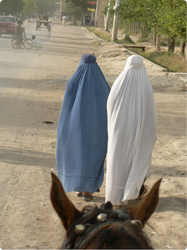
This empathy and nuanced perspective shine through her photographs. With this acquisition, the Library & Archives not only safeguards Pärl's legacy but also honors the resilience of the Afghan people she so lovingly portrayed.
Pärl lived and worked in Afghanistan during a period of rebuilding and cautious optimism (just a few years after the Taliban's first regime ended in 2001). Based in Kabul, she traveled extensively across the country as a journalist and photographer embedded with various organizations. Pärl turned her lens to everyday life, culture, and hope — what she often called the "true face" of Afghanistan.
She titled her 2008 book and touring exhibition "Beloved Afghanistan" ("Armastatud Afganistan") to reflect this affectionate approach.
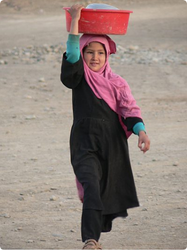
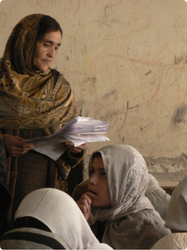
During those years, Pärl documented women and children reclaiming their rights, vibrant cultural traditions, and the efforts of Afghans to rebuild their communities. For example, one striking photograph shows an Afghan female teacher in a refugee village classroom, her blue burqa hanging on the wall of a tent as she teaches — a powerful symbol of women embracing education when given the chance. In another image, Hazara girls in Bamiyan province carry on with daily chores — a young girl balancing a basin of washed dishes on her head while walking home at dusk. Through such visuals, Pärl's work celebrates ordinary Afghan lives and the country's diverse cultures at a time when they were flourishing once again.
Pärl's newly acquired collection comprises around 15,000 photographs organized by location and theme. Together, they paint a rich mosaic of Afghan life in the late 2000s — a time of hope, change, and rebuilding.
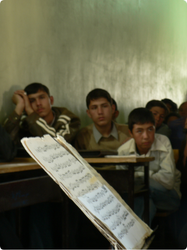
When Õnne Pärl set out to share her experiences, she intentionally wanted to counter the prevailing narratives of Afghanistan as only a land of war and terror. "In order to counterbalance fear and hatred… the title will be Beloved Afghanistan," she noted of her project, emphasizing the love and admiration she felt for the Afghan people and their culture. Her work illuminated the humanity and hope in Afghanistan — images of girls learning, mothers working, friends picnicking — and offered a counter-narrative to the fear. Today, that counter-narrative has become even more vital.
This collection offers visual primary sources related to post-conflict reconstruction, transitional periods, women's rights, and the history of Afghanistan, helping to inform contemporary understanding of the country and its people.