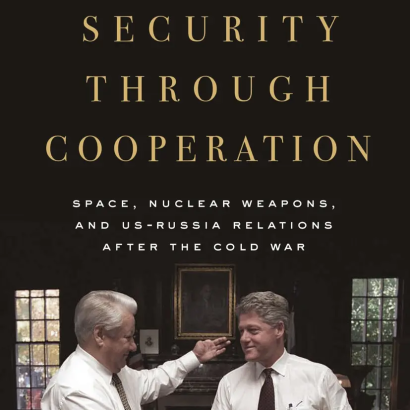
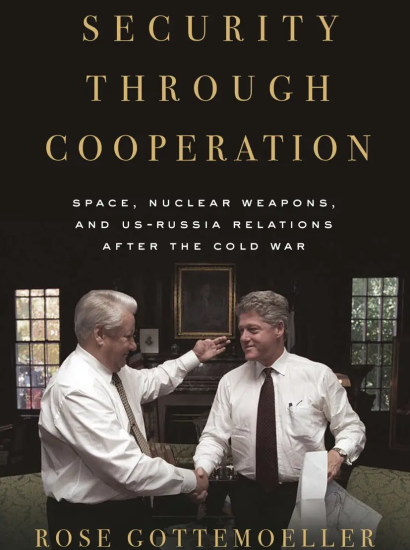
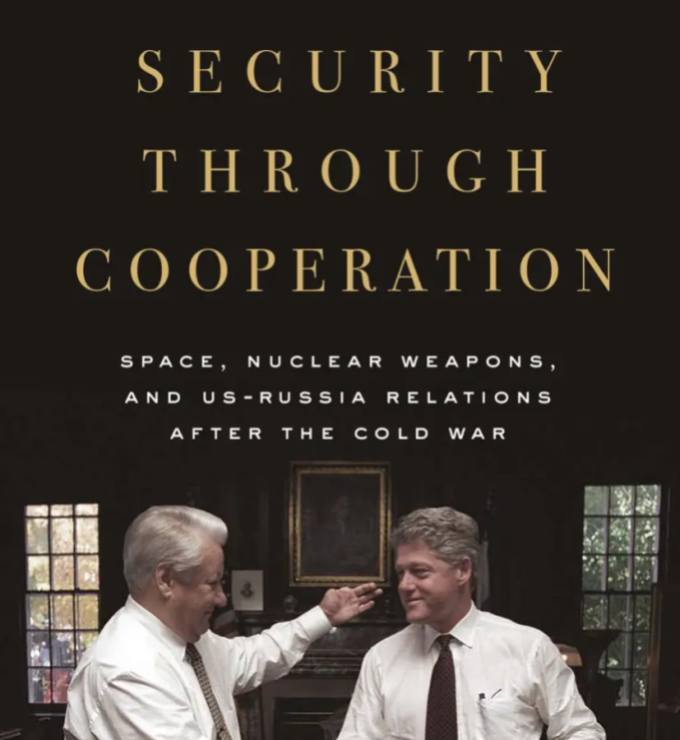
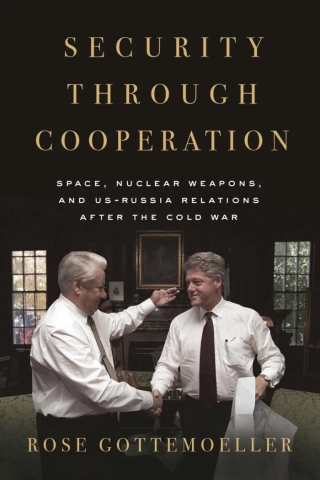
Hoover Institution (Stanford, CA) — A new book by Hoover Institution Research Fellow Rose Gottemoeller offers an insider’s account of how leaders in Washington and the newly democratic Russian government forged a working relationship that advanced international security and cooperation in the years after the collapse of the Soviet Union.
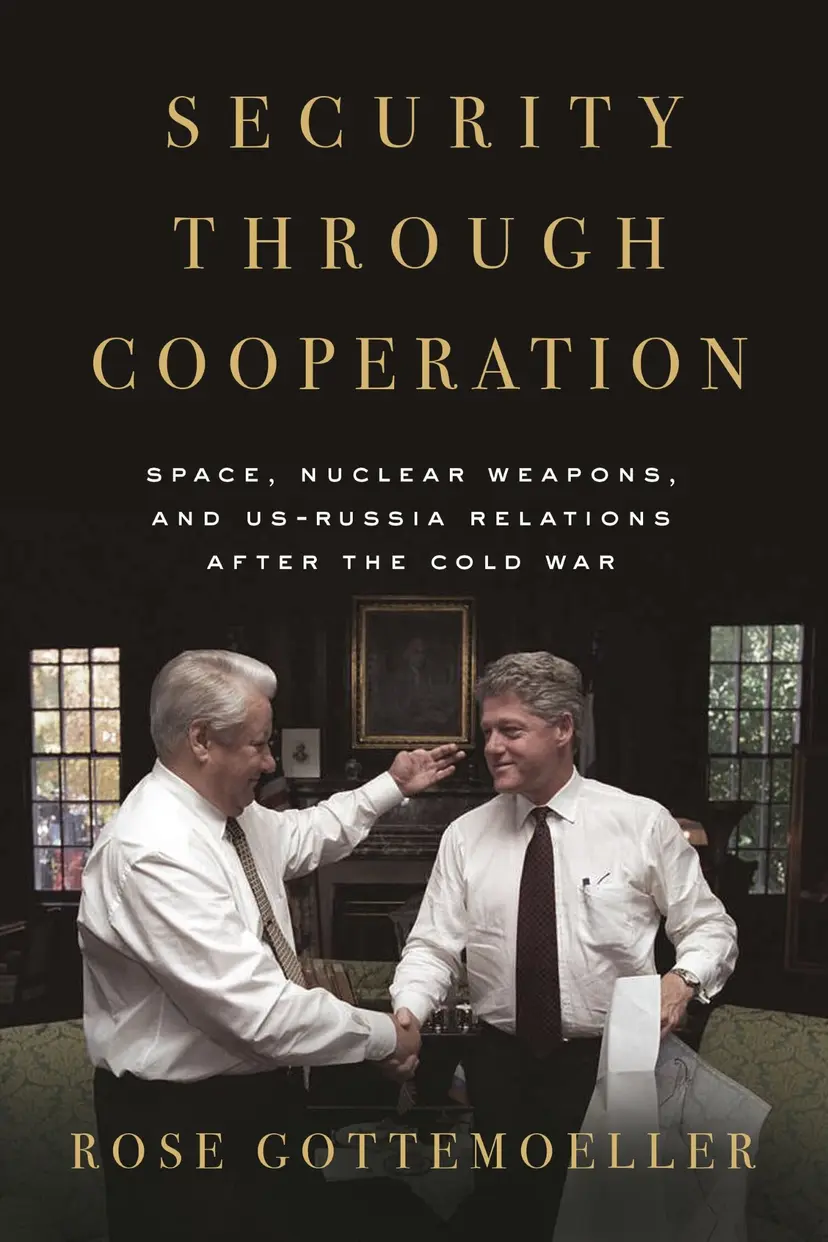
In Security Through Cooperation: Space, Nuclear Weapons, and US-Russia Relations after the Cold War (Stanford University Press, 2026), Gottemoeller challenges the view held by some contemporary Russian officials and commentators that the United States sought to weaken or isolate Russia during the turbulent post-Soviet transition of the 1990s. According to that narrative, the United States was primarily focused on expanding NATO and undermining Russian influence.
Drawing on both the historical record and her own senior government experience, Gottemoeller presents a different interpretation. She argues that successive American administrations viewed deep cooperation with Russia as essential to global security and stability. That conviction first emerged during the administration of President George H. W. Bush and took fuller shape under President Bill Clinton, when he and his Russian counterpart, President Boris Yeltsin, agreed to develop technological cooperation that would be useful to both countries.
Gottemoeller, who served as Russia director on President Clinton's National Security Council staff in the early 1990s, and later as chief US negotiator for the New Strategic Arms Reduction Treaty (New START) during the administration of President Barack Obama, recounts how American and Russian leaders pursued cooperation across a range of strategic areas.
Under President George W. Bush and President Vladimir Putin, the two countries deepened this spirit of cooperation, achieving significant progress in space, counterterrorism, and nuclear energy in the years that followed.
While today’s geopolitical landscape differs sharply from the optimism and cooperation of the 1990s, Gottemoeller draws on the lessons of that earlier era to examine what it would take for the United States and Russia to rebuild cooperation in support of global security—once Russia ends its devastating war in Ukraine and begins to confront the consequences of the conflict.
Praise for Security Through Cooperation:
"I am glad Security Through Cooperation will allow more people to know the story of this important era in US foreign policy."
—President Bill Clinton
"Written by a giant in her field, Security Through Cooperation is essential reading for anyone wanting to more deeply understand where US-Russia relations have been, and where they may go. Rose Gottemoeller's tremendous experience, expertise, and leadership mean that anything she writes, I will always read."
—Andrea Kendall-Taylor, Center for a New American Security
About the Author:
Rose Gottemoeller is a research fellow at the Hoover Institution. She also serves as the William J. Perry Lecturer at Stanford University's Freeman Spogli Institute for International Studies and its Center for International Security and Cooperation (CISAC). Before joining Stanford, Gottemoeller was the deputy secretary general of NATO from 2016 to 2019, helping to drive forward NATO’s adaptation to new security challenges in Europe and in the fight against terrorism. Prior to NATO, she served for nearly five years as the undersecretary for arms control and international security at the US Department of State, advising the secretary of state on arms control, nonproliferation, and political-military affairs. Gottemoeller is also the author of Negotiating the New START Treaty, which chronicles her experience negotiating with Russian officials in Geneva in 2009–2010 as the first woman to lead a major nuclear arms negotiation.
For coverage opportunities, contact Jeffrey Marschner, 202-760-3187, jmarsch@stanford.edu.