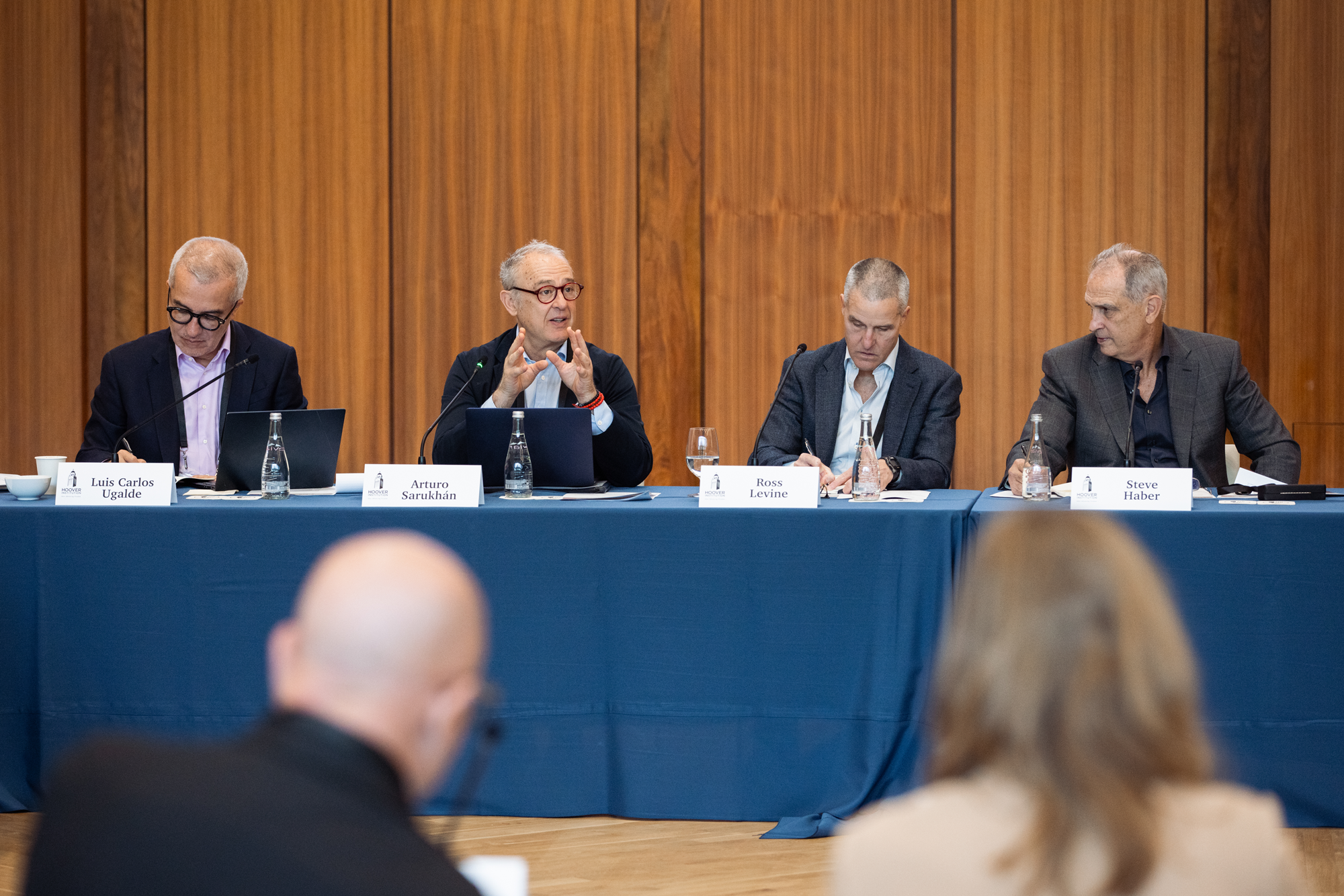
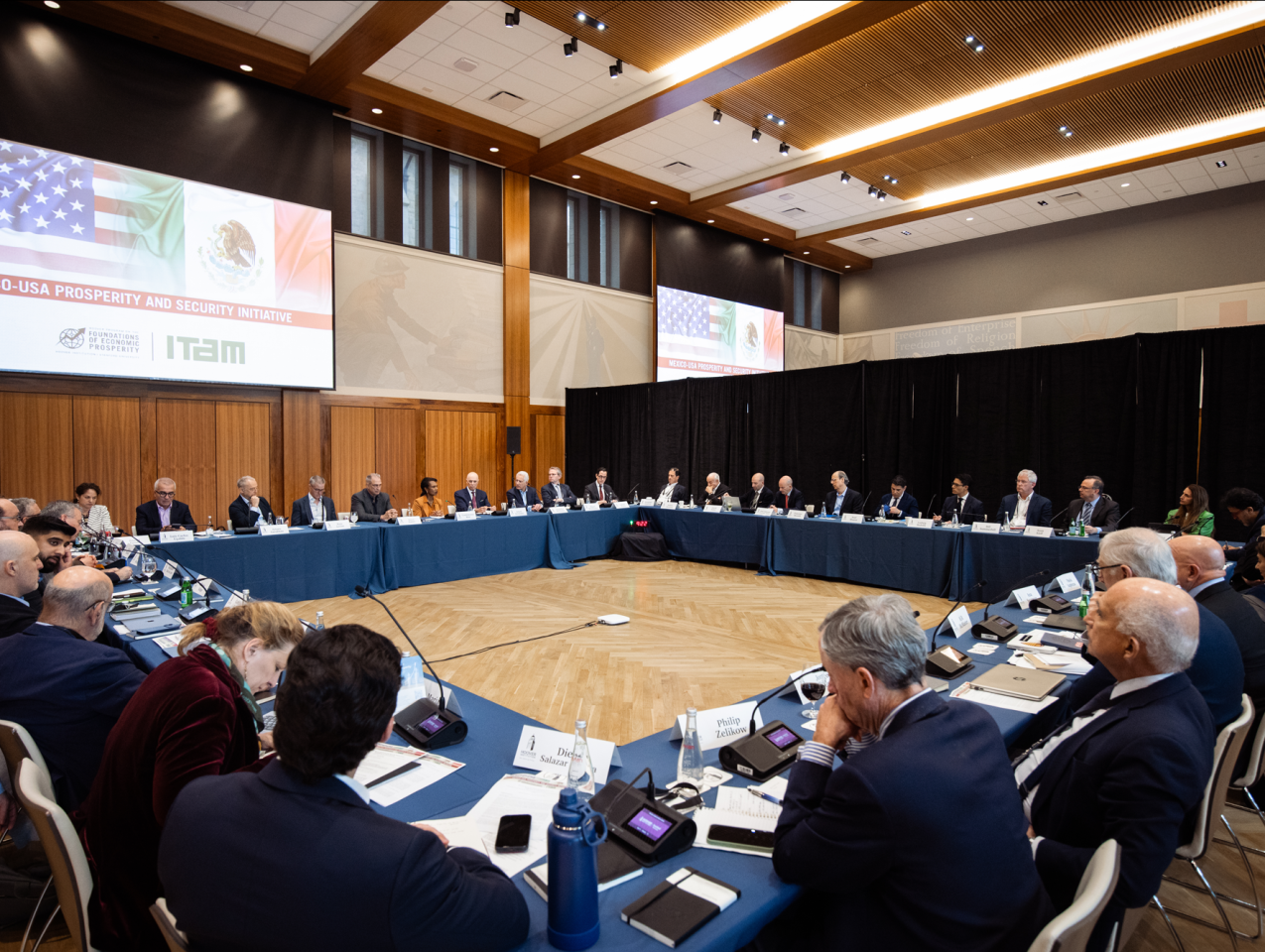
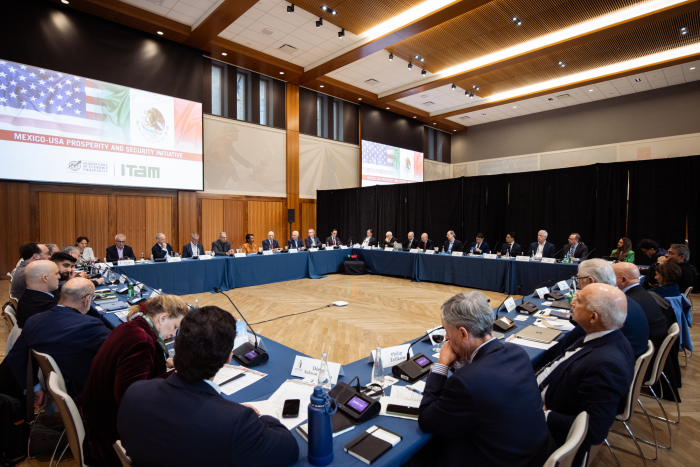
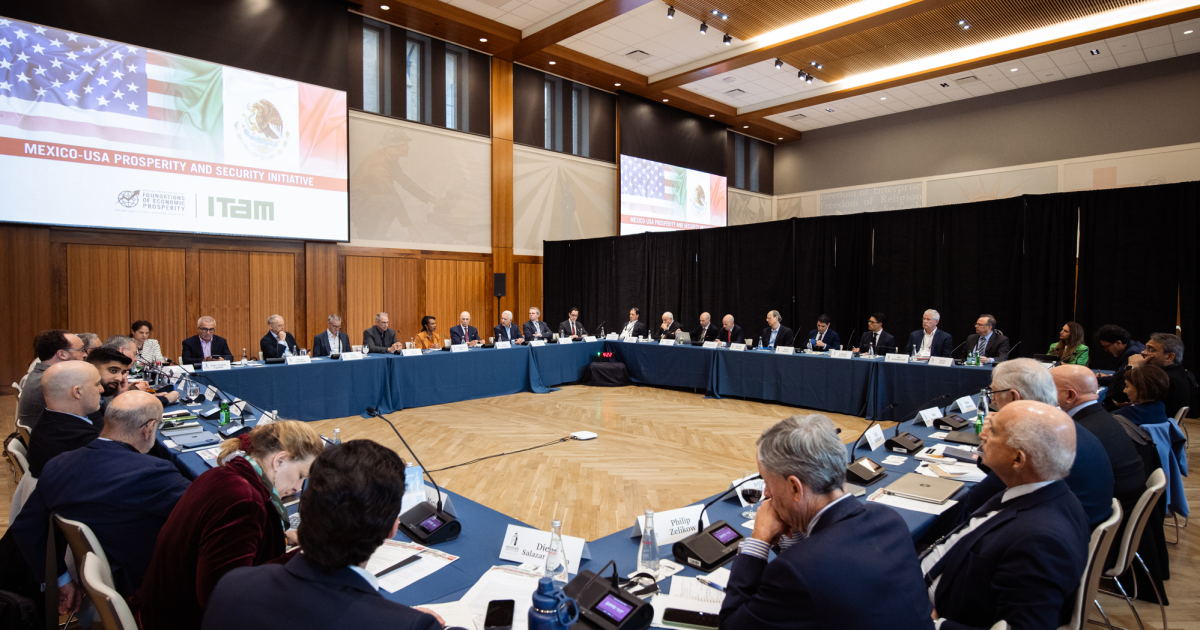
Hoover Institution (Stanford, CA) — The US and Mexico can strengthen ties by deepening automotive supply chains and developing shared energy infrastructure, but better dialogue between both governments and coordination in security issues may be necessary to advance with further integration, speakers said at a Hoover Institution conference.
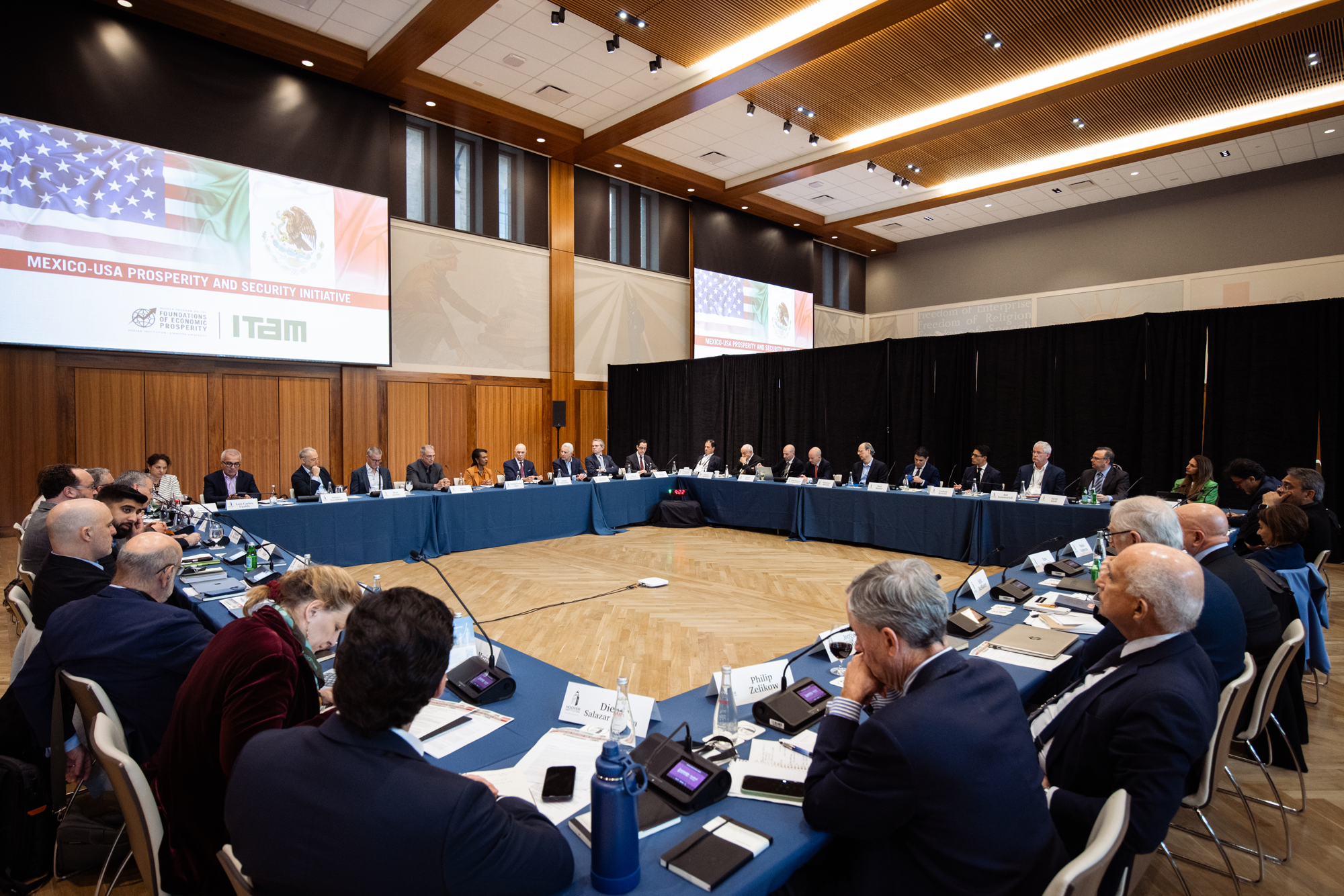
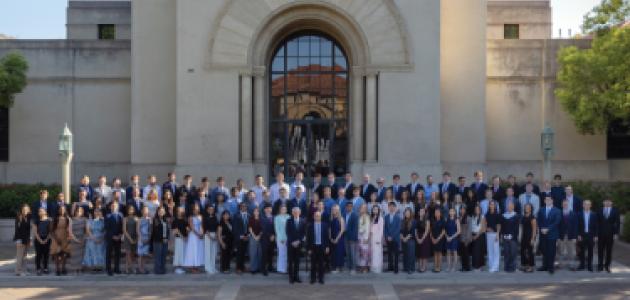
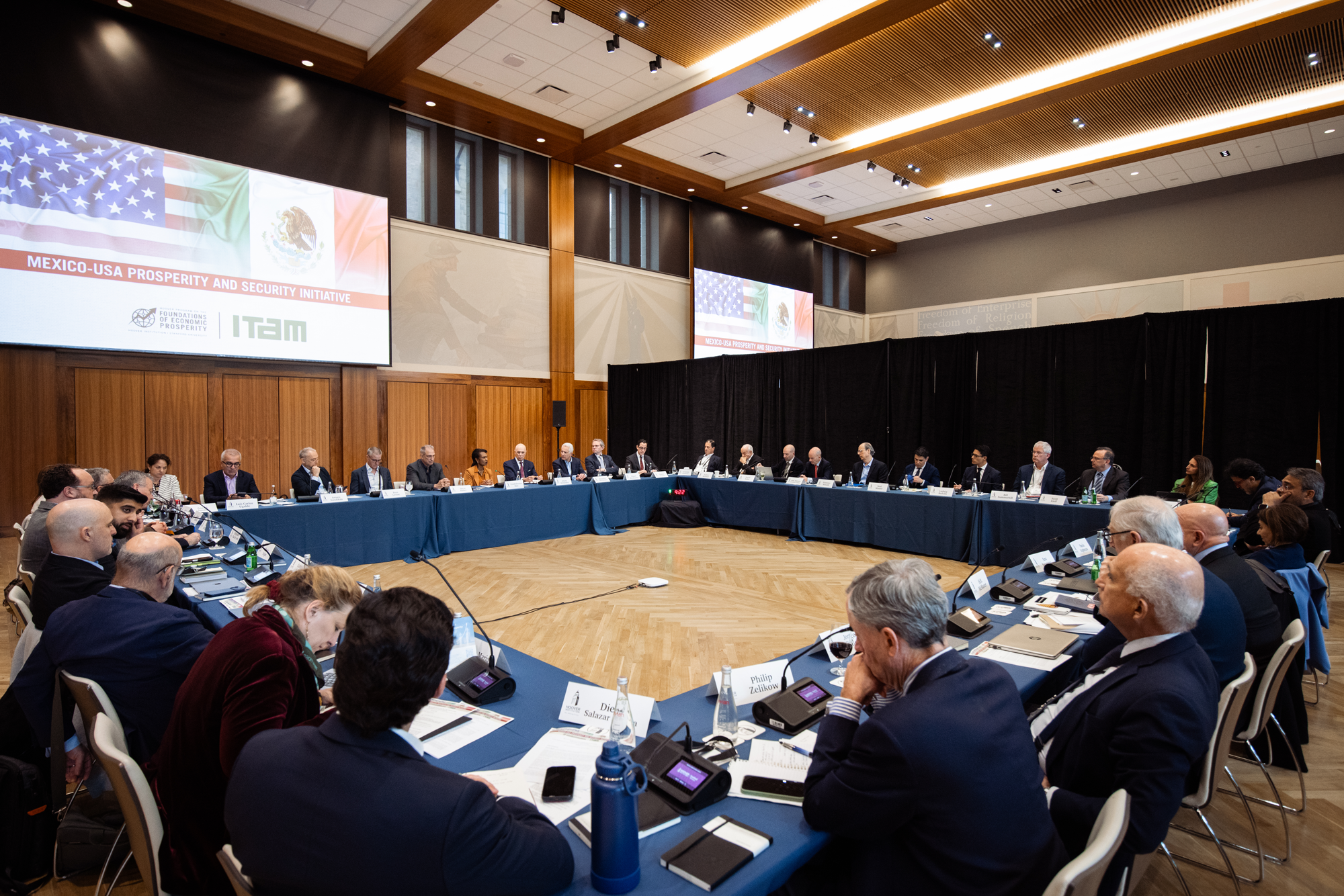
The April 20 gathering was made possible by Hoover’s Program on the Foundations of Economic Prosperity, which together with Instituto Tecnológico Autónomo de México (ITAM) has formed the Mexico-USA Prosperity and Security Initiative.
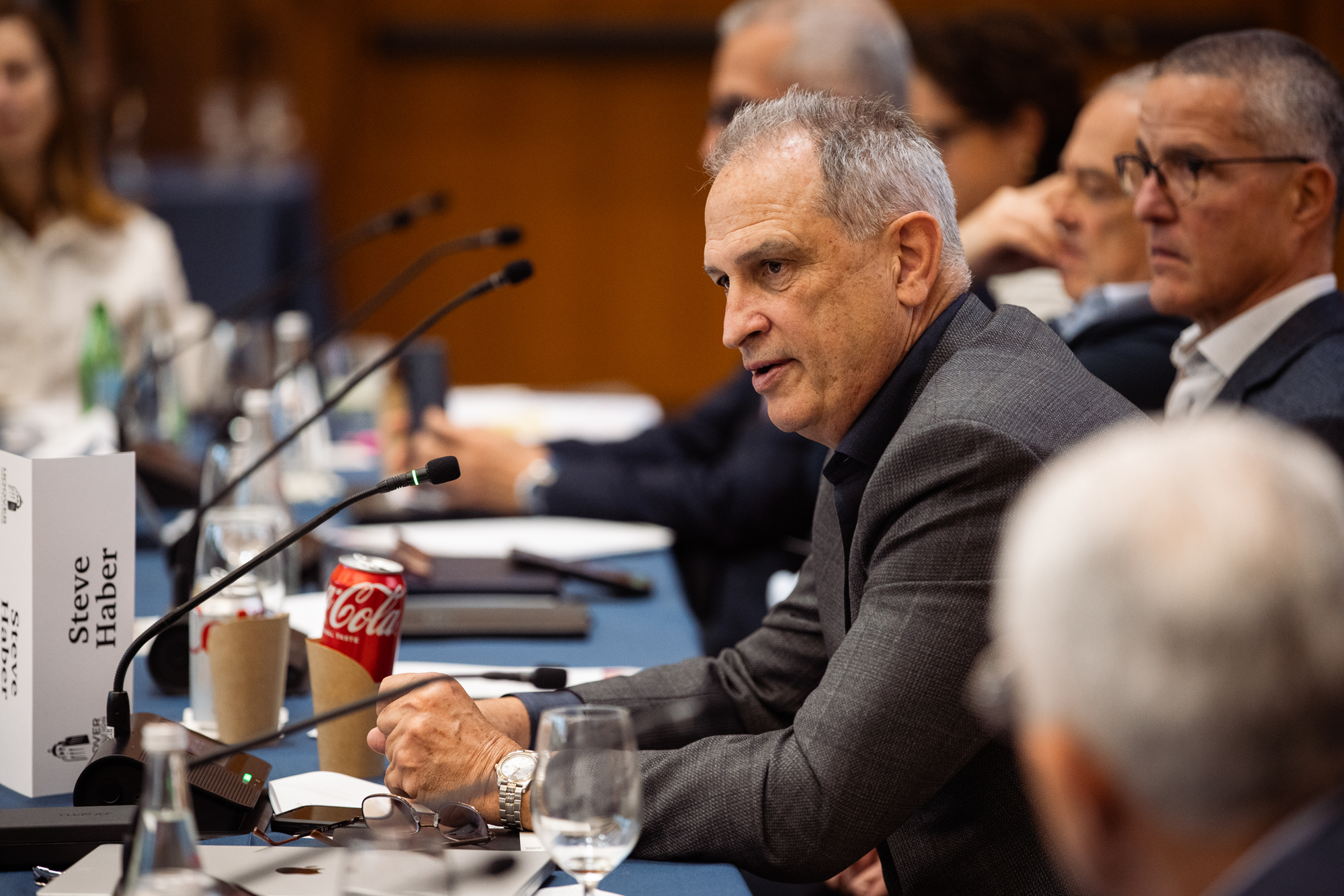
“The basic idea of the Hoover-ITAM partnership is that there are big complementarities between the US and Mexican economies, but for most of history those complementarities were not taken advantage of,” said Hoover senior fellow and Foundations of Economic Prosperity Program director Stephen Haber.
Annual US-Mexico trade totals roughly $850 billion, with about 80 percent of Mexican exports going to the United States. Participants argued that bilateral trade has delivered tangible gains over the past several decades, even as disputes have persisted in some areas.
The day’s discussions concerned the opportunities and challenges facing the US and Mexico as they renegotiate the United States, Mexico, and Canadian Free Trade Agreement (USMCA) and as Mexico works to reinvigorate its domestic energy sector; the threat posed by cheap Chinese EVs to the continental auto sector; and the Trump administration’s reorientation of the national security strategy to concentrate more heavily on the western hemisphere.
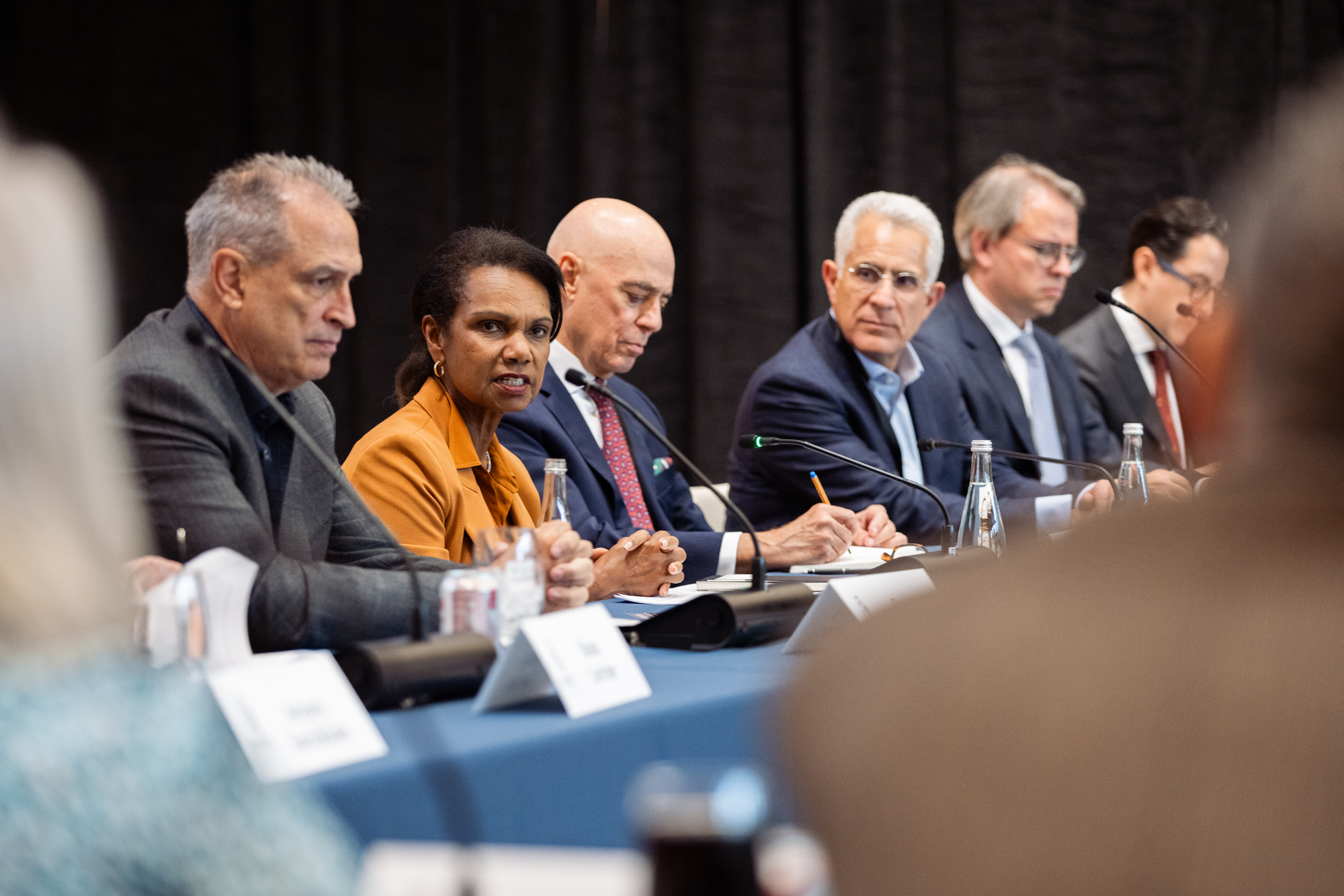
Hoover Institution Director Sec. Condoleezza Rice welcomed attendees in the afternoon and said: “there really is no more important relationship for the US than with Mexico.”
She said the conversation had to include topics beyond trade or energy, to include how both democracies will properly deliver for their people going forward.
“This is about more than trade, this is about building economies that are robust, not just for industry but for our people. It’s a time when people are extremely demanding of their democracies, so we need to be addressing those needs, and I think we can address them together.”
At the same time the conference got under way, US Trade Representative Jamieson Greer met with Mexican President Claudia Sheinbaum in Mexico City to discuss renewing USMCA.
Security
Several speakers characterized the US-Mexico diplomatic relationship as experiencing its lowest point in decades.
They said Mexico believes it is now seen in Washington as a risky partner, where collaboration is still possible but must be reassessed frequently.
Speakers said Sheinbaum should do more to point out that Mexico is no longer a contributor to US undocumented immigration concerns, as crossings have fallen to almost zero.
One of the “redlines” cited by some speakers was the possibility of US law enforcement indicting sitting public officeholders within Mexico, for alleged ties to narcotrafficking, if those individuals also belong to Sheinbaum’s Morena governing coalition.
They said such a move would take relations between the US and Mexico to unseen lows.
Nine days after the gathering, the US Justice Department indicted Rubén Rocha Moya, governor of Sinaloa and Morena party member, for alleged ties to drug trafficking.
Speakers also said that Sheinbaum’s government could do more to promote the positive attributes of the US-Mexico relationship within the US, through advertising, diplomatic outreach, or other methods utilizing Mexico’s “soft power.”
Securing Supply Chains and Automotive Cooperation
In 2025, about 2.7 million finished automobiles were exported from Mexico to the US, alongside parts that together were worth more than $23 billion.
But that number is falling under the pressure of sector-specific tariffs applied to select auto parts enacted by the Trump administration.
Some of the long-term impetus for these tariffs may be to keep out “transshipped” Chinese designs, components, and vehicles that are now available in the Mexican market, and which will also soon be available in limited quantities in the Canadian market.
Speakers warned that Chinese electric vehicle producers benefit from cumulative subsidies and cheap credit from state-owned banks, which can prolong industry shakeouts and keep weak firms afloat.
They noted that the United States has imposed steep tariffs and other restrictions on Chinese vehicles and connected car technology, limiting near-term market entry but not removing the competitive challenge.
One of the speakers underscored the importance of USMCA to North American production, arguing that stable rules are central to the competitiveness of US based manufacturers.
Participants also flagged the US challenge of scaling EV and battery production at costs that match global competitors, the risk that uncertainty in trade rules could slow investment, and the challenge for the region arising from state support to concentrate metal refining—the source of a crucial input to the auto sector—in China.
Energy
Energy cooperation came up during the discussion as a potential opportunity, despite the current roadblocks hindering integration.
A speaker said PEMEX will need additional help from private companies to find and develop new oilfields and to repair and expand infrastructure, which he described as standard practice among global energy firms.
But others spoke of a reluctance on the part of the Sheinbaum government to further open up to increased private investment in energy.
One speaker cited a concrete bottleneck: a roughly 250-kilometer pipeline segment, estimated at $400 million, that could help link Texas and northern Mexico energy infrastructure to the countries of Central America. The project has not been built, participants said, due to funding constraints and related hurdles.
--
While the relationship faces headwinds today, attendees spoke of the incredible growth in bilateral trade, recent headway on combating drug trafficking, and the need for Mexico to remain a close partner of the United States in order to stave off the growing influence of China in Latin America. Scholars from Hoover and ITAM remain committed to sharing ideas that will support a continued positive relationship between both nations.