






- China
- Confronting and Competing with China
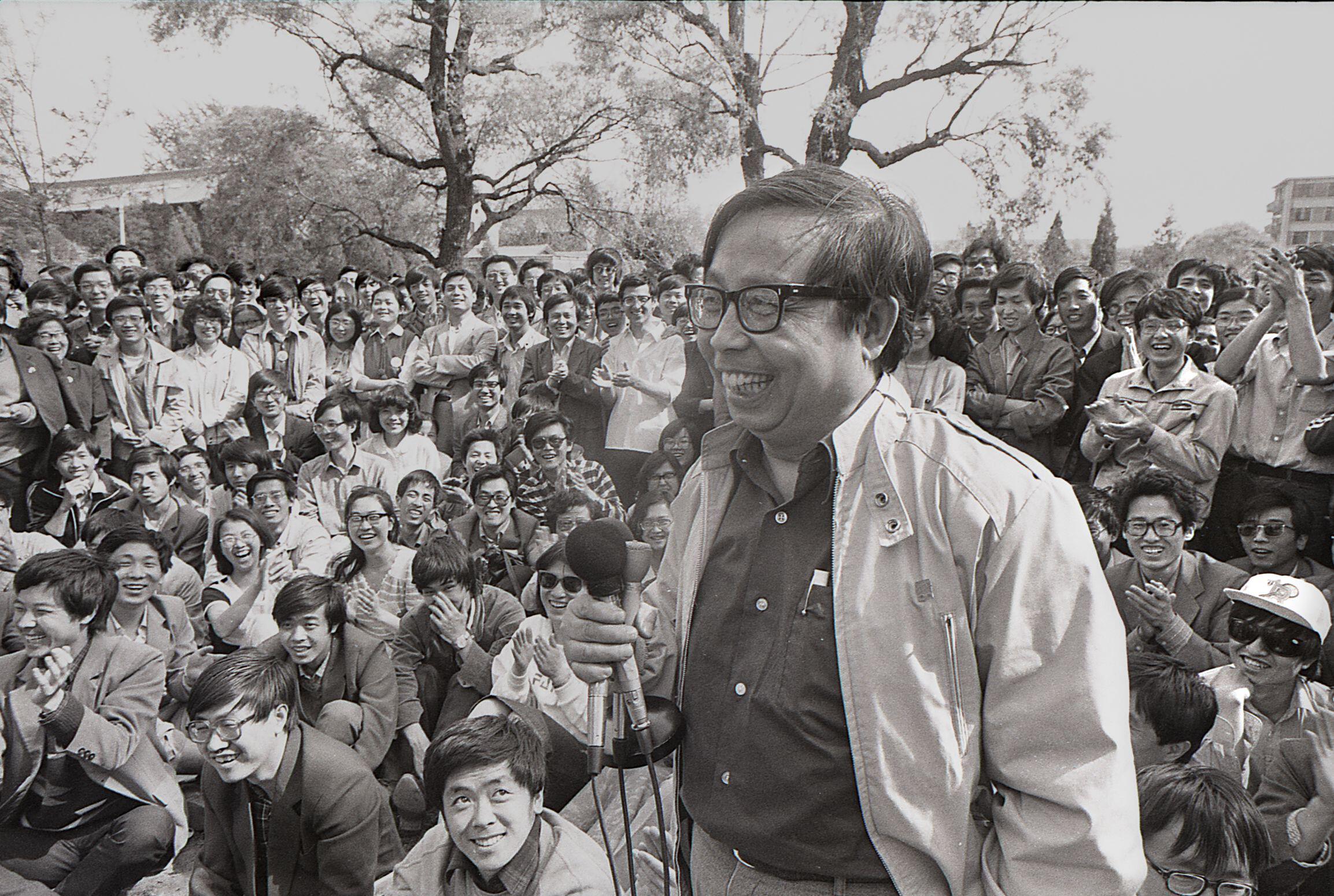
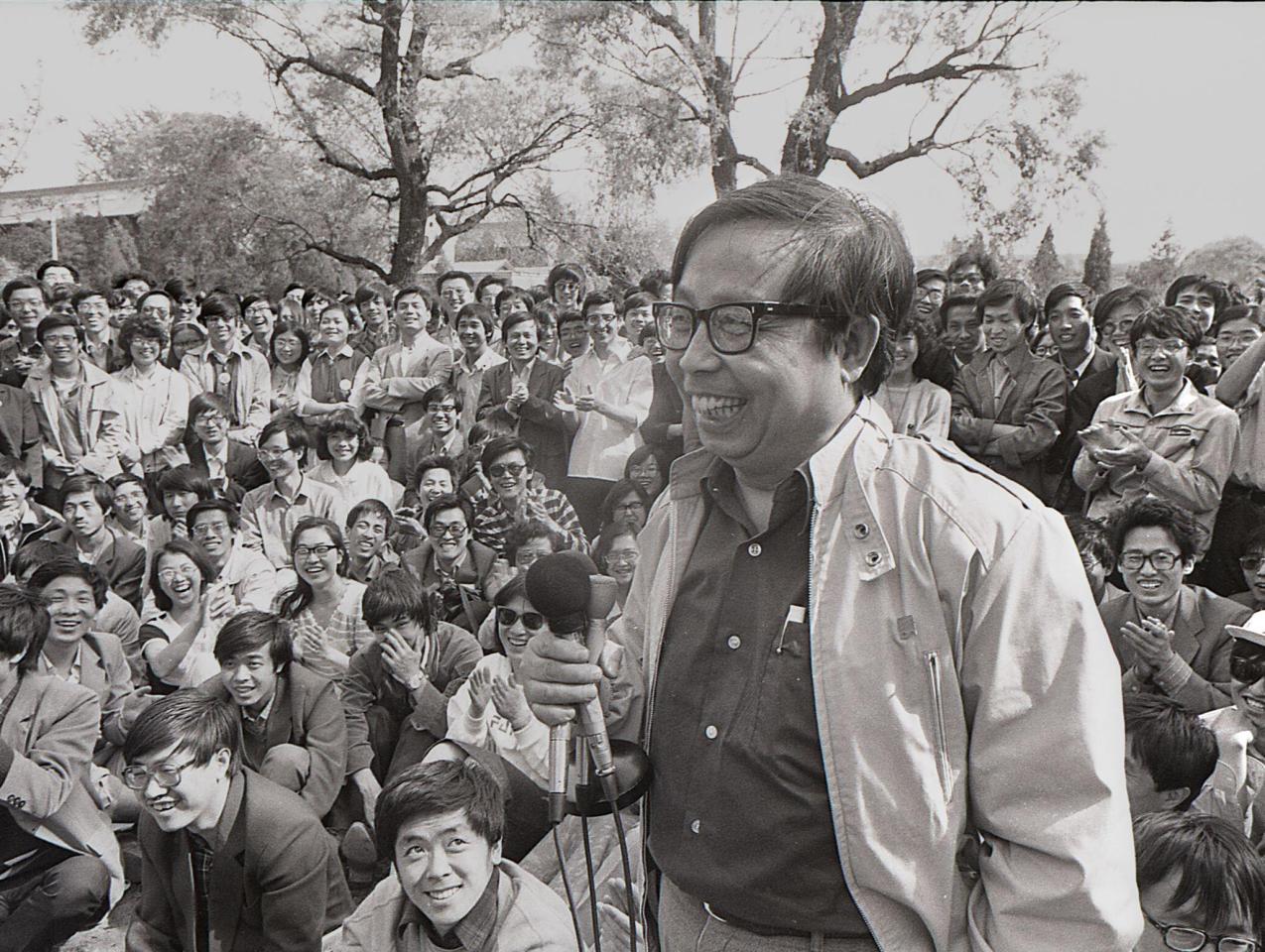
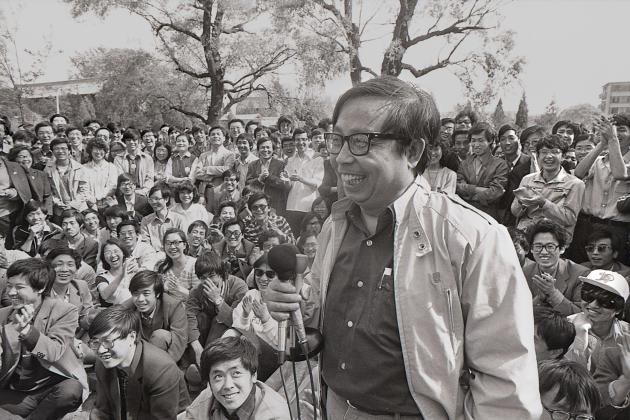
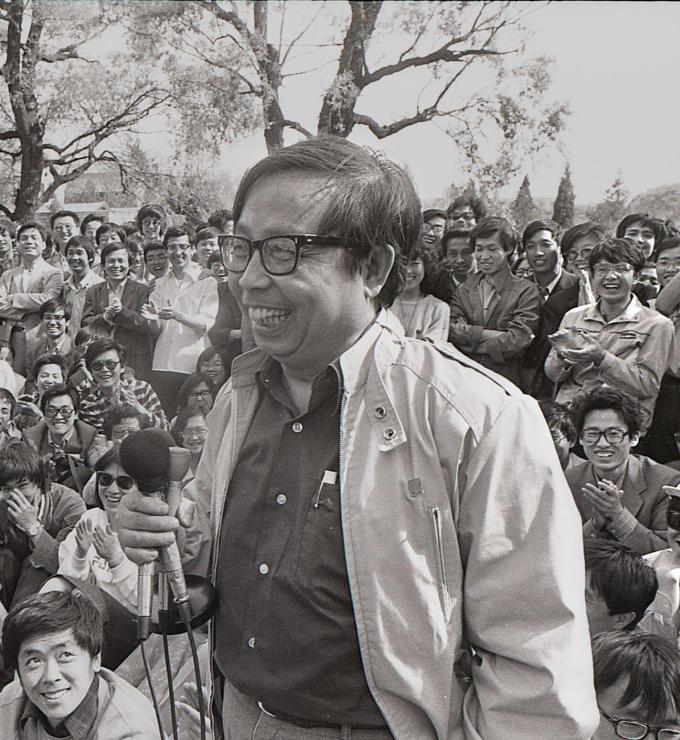
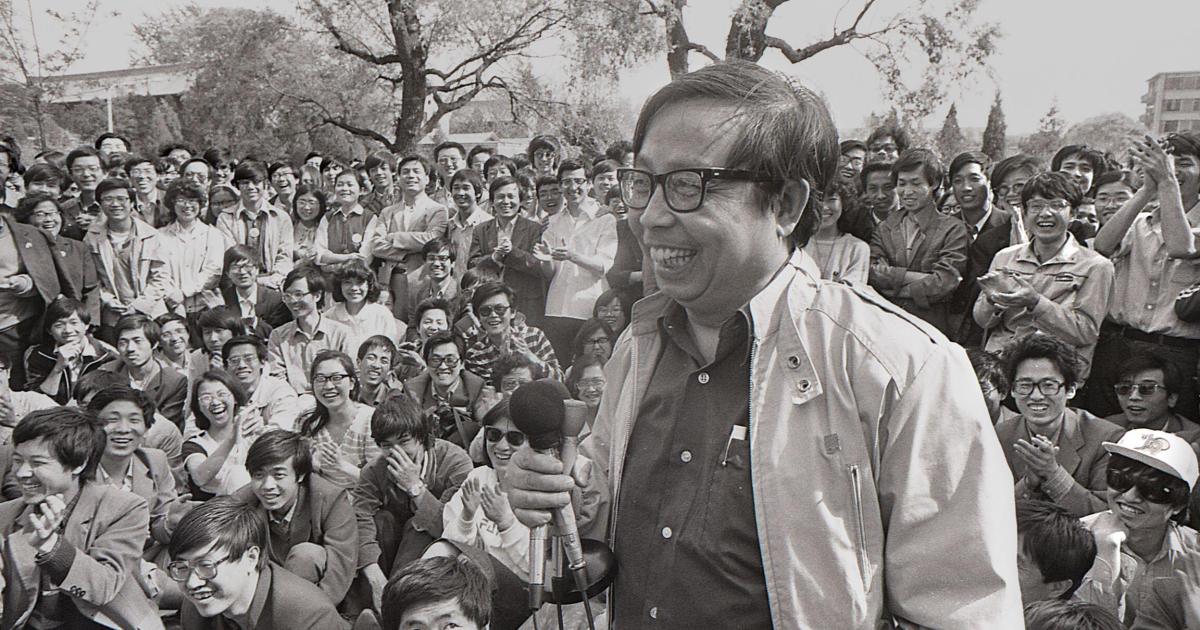
On April 3, 2026, the Hoover Institution’s program on the US, China, and the World hosted the debut public screening of “The Man Who Told the Truth,” a documentary about the life and legacy of pioneering Chinese astrophysicist and human rights advocate Fang Lizhi. Below, we publish remarks from the occasion honoring Fang by Larry Diamond, Hoover Institution William L. Clayton Senior Fellow, and Xiao Qiang, a student of Fang’s, a physicist, and the founder and Chief Editor of China Digital Times, an independent, bilingual media organization that brings uncensored news and online voices from China to the world.
Treasuring the Memory of Fang Lizhi
It is a great honor for the Hoover Institution and its program on the US China and the World to sponsor this event honoring the late Chinese astrophysicist and human rights advocate, Fang Lizhi.
Before we screen the film, I want to say a few words about Fang Lizhi and why we treasure his memory. A repeated victim of political repression for his liberal views during the frenzied periods of the Anti-Rightist Campaign and the Cultural Revolution, Fang nevertheless managed to build a trailblazing scientific career in astrophysics and cosmology, fields that were considered opposed to the Chinese Communist Party’s ideology of dialectical materialism. In 1980, Fang was elected as the youngest member of the Chinese Academy of Sciences, but his membership was revoked after the Tiananmen Square Protest of 1989. The day after the brutal crackdown, on June 5, 1989, Fang and his wife, Li Shuxian, took refuge in the US embassy, accompanied by a US academic—Perry Link. They remained there for a year until June 25, 1990, when they were permitted to leave on a US government plane for Britain. Fang then taught at the University of Cambridge and Princeton University before settling at the University of Arizona as a professor of physics. Throughout his exile, he continued to speak out for human rights and democracy, and he served on the board and as co-chair of Human Rights in China.
I might add that many people at the time and since have called Fang Lizhi “the Andrei Sakharov of China.” Sakharov was one of the Soviet Union’s most accomplished physicists. Like Fang (who was born fifteen years after him), Sakharov jeopardized his career and his freedom to speak out for civil liberties and human rights in the Soviet Union and around the world, as well as nuclear disarmament. For this work he earned the Nobel Peace Prize but also relentless persecution and six years in internal exile. I mention this because Sakharov had a special personal and professional relationship with the Stanford physicist and longtime Hoover Fellow, Sydney Drell. Years later, at a Hoover event, Drell reflected that he thought Sakharov’s defining characteristic was “selfless kindness.” And I think that could be said of Fang as well.
Fang died on April 6, 2012, at the age of 76, The Economist obituary read in part:
Fang Lizhi was the man who had encouraged the students to speak out [in December 1986]: the first and, so far, only intellectual in Communist-ruled China whose dissent has spurred the young to challenge party rule. He liked to describe himself as “just a physicist”: a professional stargazer and longstanding party member who had been vice president of the University of Science and Technology in Hefei since 1984. But he was far from ordinary. He had assumed, then demanded, freedom from his earliest days in science.
Scientific inquiry, as he repeatedly, fearlessly wrote, needed spirit, ideas, passion, and individual integrity. What it did not need was the “guiding role” of Marxist ideology. To attach philosophical pedigrees to scientific theories, usually in order to discredit them, was the method of the Inquisition and the tormentors of Galileo, whose stories he knew well.
In 1972, his paper was condemned as “capitalist metaphysics.” Big Bang theory of that sort was not communist doctrine; had not Engels declared that the universe had always existed, and was infinite in space and time? Mr. Fang spent the rest of his life retorting: “Not necessarily.” He did so in goading, playful style. He wrote for public consumption in newspapers, as well as for academic journals. And, with unheard-of daring, he sniped at political structures as well as pseudo-science. Marxism-Leninism was “a worn-out dress that should be thrown away.” And “if every one of those good words—liberty, equality, fraternity, democracy, human rights—has been called ‘bourgeois,’ what on earth does that leave for us?”
In 1986, his chirpy irreverence for party authority stoked student unrest not only in Hefei, but also in Shanghai and Beijing. Deng Xiaoping, China’s leader, denounced him, and party cells across the country were ordered to study and criticize Mr. Fang’s views, usefully gaining him a readership of millions.
In 1989, he spurred forward their campaign for change. That January, he wrote to Deng demanding the release of political prisoners, inspired dozens of other intellectuals to sign up in support, and kicked off a spring of unprecedented upheaval. When protests broke out in Beijing in April, he stayed in the background, but hardliners saw him as a “black hand” behind Tiananmen. At one rally after the unrest had been crushed, his effigy was burned.
In his obituary published a few days before, the Chinese democracy advocate Wei Jingshing wrote:
For those of us whose memories have not been erased by the censorship of getting rich gloriously, Fang was a hero. In the years and months leading up to the Tiananmen demonstrations in 1989, he dared to tell the historical facts—about Mao, the Party, the Great Leap Forward, and the Cultural Revolution—to a new generation.
It was Professor Fang’s open letter to Deng Xiaoping on January 6, 1989, that sparked the mass movement that Deng would crush in June. In that letter, he called for my release from prison, where I had already served ten of the fifteen years I would ultimately serve for my big character poster calling for “the Fifth Modernization”—democracy. My gratitude to Fang remains immense. For foreign dignitaries to ask the Chinese government to release me was one thing, and I am of course grateful. But for the person whom Deng Xiaoping hated most to openly offend the dictator required enormous courage.
We are deeply grateful to all the speakers who we will hear from today—most of them longtime friends of the program on the US, China, and the World. I want to acknowledge now the participation of Fang Lizhi’s son, Fang Ke, as well as Perry Link, who helped put this event together, and Tony Tsoi, the filmmaker. Tony, thank you for making this film and for choosing the Hoover Institution to debut it.
– Larry Diamond
The Source of Fang Lizhi’s Courage
Thank you to Tony Tsoi for making this remarkable film. Thank you to the Hoover Institution’s program on the US, China, and the World for hosting this event.
We have just seen the film and learned who Fang Lizhi was. Our moderator Professor Perry Link asked me, in my remarks on this panel, to address a different question: What was the source of Fang’s courage? What was the source of his moral clarity? What was in this man that made him—not just a dissident, not just a brilliant physicist—but someone whose very existence changed the people around him?
I was one of those people.
I studied physics under him as an undergraduate at the University of Science and Technology of China. It was his recommendation that brought me to the United States, to continue as a PhD student in astrophysics at the University of Notre Dame. Later, when I left physics and became a full-time human rights activist, our paths converged again in a different way—when he served as co-chairman of the Board of Human Rights in China, the New York-based organization where I served as Executive Director throughout the 1990s. We worked together, in exile, advocating for the rights of the Chinese people—until the end of his life.
Let me take you to a specific moment.
Summer, 1989. The tanks have just left the streets of Beijing. Thousands killed or imprisoned. Fang Lizhi—China’s most prominent dissident, the man the Party wants most—has taken refuge inside the American Embassy with his wife Li Shuxian.
They will stay there for thirteen months. Surrounded. Watched. Unable to leave.
And in that room—in that siege—Fang Lizhi finished several research papers in astrophysics. And completed a draft of his autobiography. Reflecting, with full clarity, on the meaning of his own life.
How? How does a man under that kind of threat maintain that kind of concentration? That calm? That productivity?
I think the answer is in something he said during that period. When he accepted the Robert F. Kennedy Human Rights Award—speaking from inside the embassy—he ended his speech with these words:
“May the blessings of the universe be upon us.”
Now, Fang Lizhi was shaped by classical Chinese culture and trained by modern physics. He was not a Christian. He didn’t pray in any traditional sense. So he wasn’t simply reaching for a substitute word when “God” felt unavailable to him.
This is a man speaking from the deepest place he actually inhabited.
Einstein wrote in 1930: “The most beautiful emotion we can experience is the mysterious. It is the fundamental emotion that stands at the cradle of all true art and science.”
For Einstein, that wasn’t a romantic sentiment. It was a precise description of what drives a physicist into the interior of things—and what he finds there: pattern, order, beauty. The fact that there is something rather than nothing at all—and the awe of being the creature that is aware of it.
Fang spent his life in that interior. Gravitational equations. The arrow of time. The large-scale structure of the universe. For a physicist at that depth—the universe is not an object of study.
It’s a home.
The place you truly come from. And truly return to.
When he said those words—he was saying: I know where I belong. And no political power on earth can take that away from me.
There’s another man whose words help us understand exactly what Fang meant.
Andrei Sakharov—the Soviet nuclear physicist who became the Soviet Union’s most consequential dissident—wrote in his diary:
“God is not the ruler of the world, not the creator of its laws—but the guarantor of the meaning of existence, despite all appearances of meaninglessness. Even in the brief moments of life and communion, a person can feel the infinite.”
Sakharov wasn’t a religious man in any conventional sense. But he had found something—a fixed point beneath the apparent absurdity of existence—that no gulag, no persecution, no state power could reach. Something that guaranteed meaning when everything around him argued for despair.
Where Sakharov said “God”—Fang said “universe.”
But they were pointing at the same thing. A truth beneath existence that holds. That has always held. And that no political power can confiscate.
That is where Fang Lizhi lived. Even inside those embassy walls.
That is the source.
When you truly trust this source—not as a slogan, but as something you’ve arrived at in the deepest hours of your work and the deepest places of your life, where thought and what you’ve lived through become certainty, and certainty becomes the ground you stand on—then the courage to say “this is wrong” doesn’t feel like heroism.
It feels like telling the truth about what you can plainly see.
Fang Lizhi was not an extraordinary man because he was braver than other people.
He was extraordinary because he was more at home in the universe than most people ever allow themselves to be.
And from that home, nothing could dislodge him—not the embassy walls, not the tanks still on the streets of Beijing, not the nuclear arsenal governments held over one another's heads. None of it could reach where he actually lived.
That is what his life—and this film—is about.
And that, I believe, is what we most need to remember today.
May the blessings of the universe be upon us.
–Xiao Qiang

