







- Science & Technology
- Innovation
- Understanding the Effects of Technology on Economics and Governance
Drew, what is Biotic? Why is it launching now?
Biotic is a new public benefit charity whose mission is to make real the foundations underlying twenty-first century bioengineering on a transparent, responsible, and available-to-all basis.
We are launching now because the field has reached a hinge moment. Kate Adamala’s lab has shown that it is possible to put chemically and functionally defined molecules together and get a simple cell that grows and divides.
Within the Bio-Strategies and Leadership team at Hoover, it’s been apparent that Western governments are still working toward fully engaging with and advancing biology as a strategic domain. Biotic, as an independent, multilateral, and public benefit platform can move with agility, scale, and professionalism, in a way that strengthens and complements both public and private efforts.
Doing so is important because what’s needed next is significant foundational engineering work to make routine the reliable, safe, and responsible engineering of cellular-scale systems. Biotic exists to get this work done well, responsibly, and soon enough to matter.
We are also mindful of the fact that the foundations of engineering disciplines—the platforms, the standards, the reference designs, the tools—tend to get built once, early, and then shape everything that follows. There is a narrow window to make sure biotechnology’s foundations are built in ways that advance freedom and flourishing.
Restated, biology has extraordinary engineering potential. Natural living systems build every material in every living thing with atomic precision, at planetary scale, powered by the sun. But we have used this machinery crudely, thus far borrowing Darwin’s designs and tweaking them by trial and error. All of this is about to change. We need to steer the ship.
Kate, what is SpudCell? What isn’t SpudCell? How does SpudCell relate to Biotic?
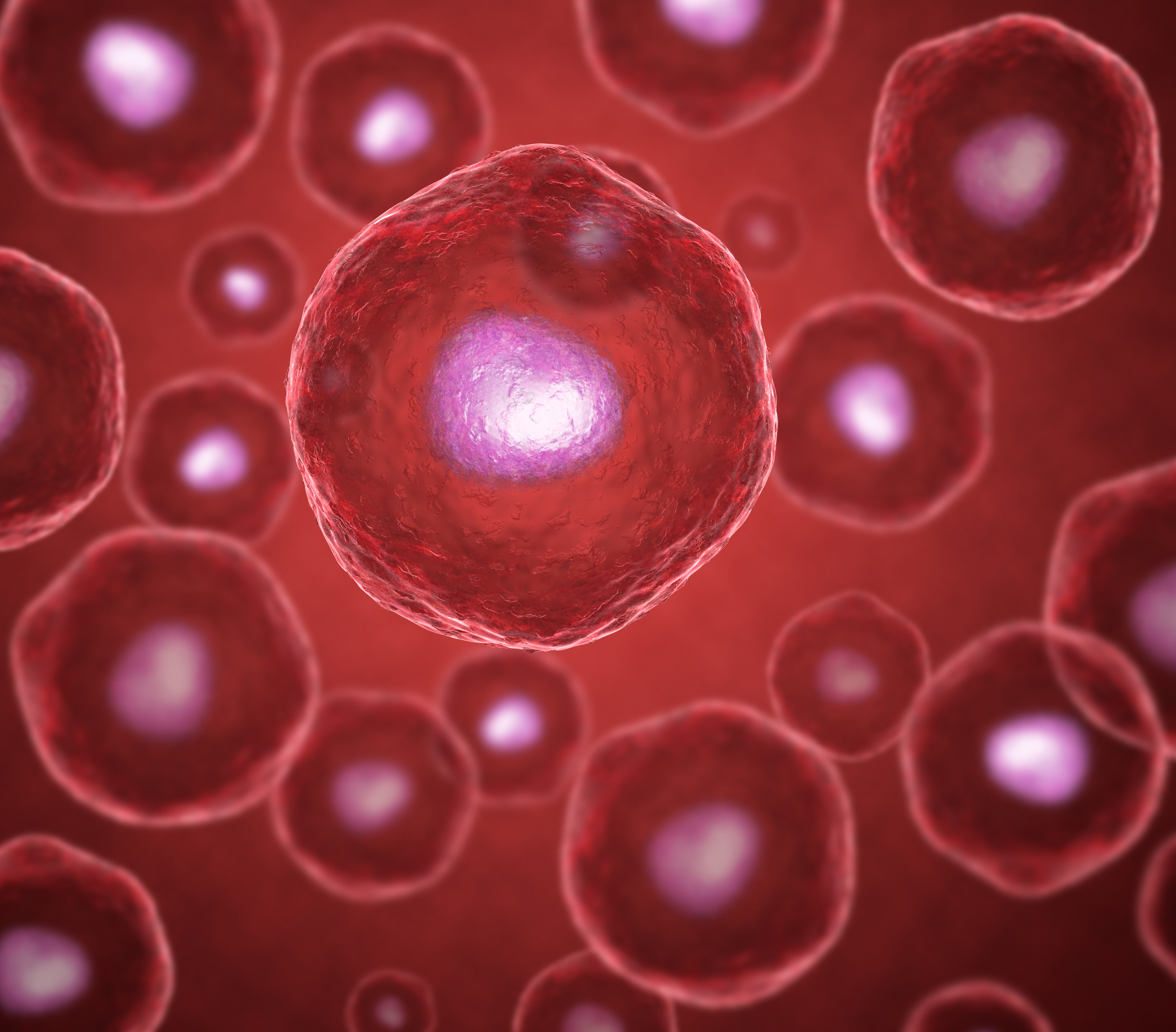
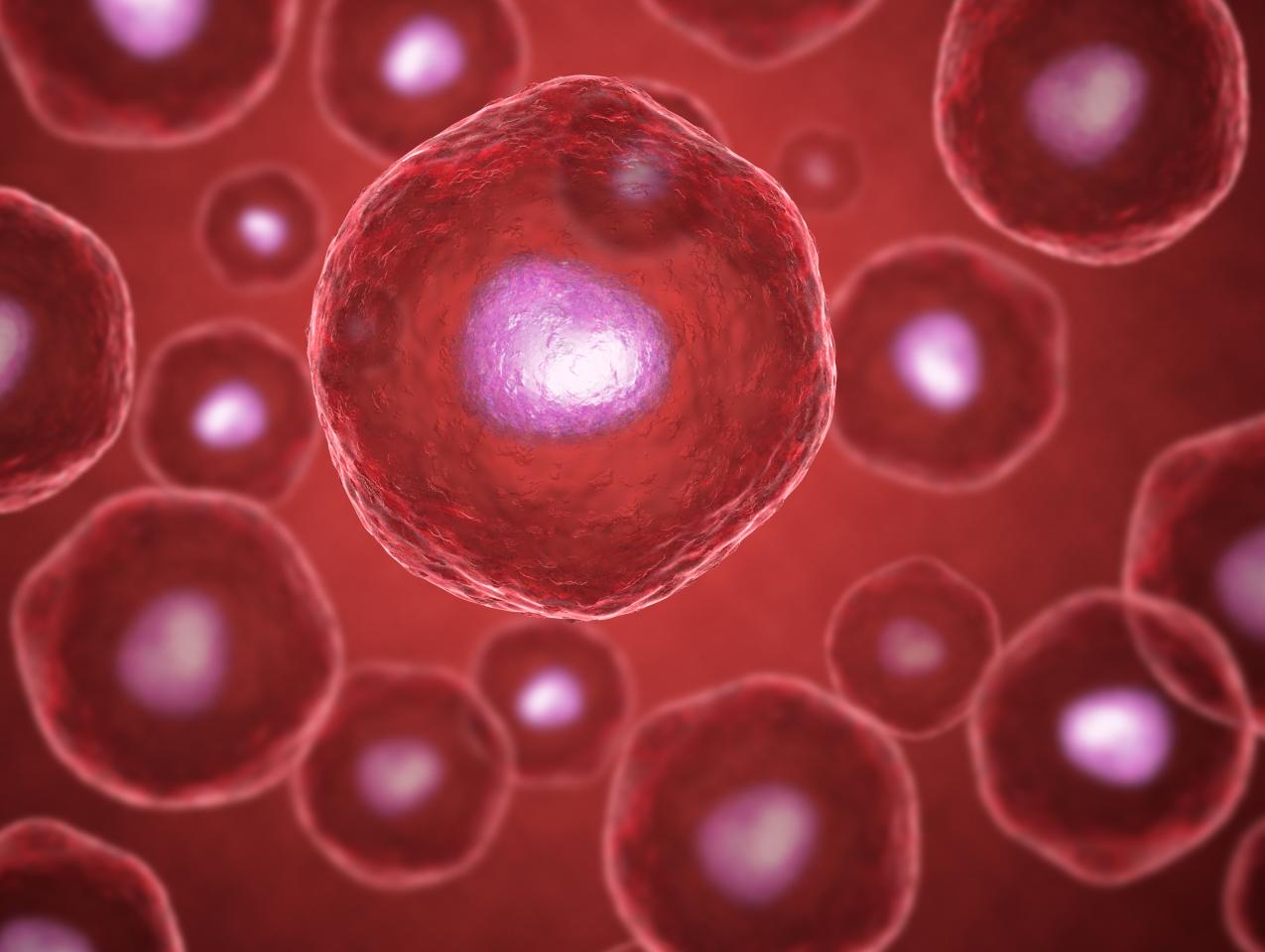
SpudCell is a synthetic cell my lab built entirely from purified, nonliving molecules that runs a complete cell cycle. It feeds, grows, copies its own genome, and divides into daughter cells. It can compete with other cells in selection, so that a faster-growing variant spreads through the population over generations. Every part is known, engineered and put there by hand. SpudCell is the first time the full cycle runs in a system that was built, not born.
We do not claim to have created life. SpudCell is not a “finished” cell, and it is far simpler than anything in nature. SpudCell has a very primitive metabolism, and it cannot yet build its own ribosomes. The main advantage of SpudCell lies in genetically encoded growth and division, coupling the genotype of the synthetic cell to the phenotype—growth rate and number of offspring.
SpudCell is proof of what is possible. It proves that nonliving, defined molecules can be assembled into a cell capable of functions that previously were exclusively reserved for natural life. What’s ahead requires much more research, international coordination, safeguarding, and policy work to advance the field of bioengineering as a general-purpose technology. A system you can fully specify is one you can engineer, and turning that simple SpudCell into a robust engineering chassis is bigger than any single lab. Biotic is the new institution that will allow us to take the next steps: coordinate research, build in safety and security, and facilitate practical applications.
What brought each of you to Biotic? What question or problem do you hope it can help address?
Kate: I’m a chemist, and ever since I started working on biology, I’ve been frustrated by our inability to fully describe and characterize any natural living cell. It’s hard to engineer something if you don’t have a blueprint. At the same time, I recognize that for our civilization to survive, we need a better way of moving atoms and distributing resources, and biology is the only viable solution. To understand and routinely use biology, we need engineerable and fully defined cells. That was my motivation behind making a synthetic cell in the first place. Building SpudCell took years, and it’s amazing how much of that difficulty was avoidable. Every lab in this field is solving the same problems from scratch, and little of that institutional knowledge is carrying over to the next group. At some point, this stops feeling like the normal friction of research and starts feeling like a structural problem worth fixing. That is the problem I want Biotic to solve: how to turn a field of one-off accomplishments into a real engineering discipline, built on shared, open foundations, so the ability to engineer biology is not something only a few private hands ever hold.
Drew: Kate and I have been working with Richard Murray of Caltech, John Glass of the Venter Institute, Elizabeth Strychalski and NIST [National Institute of Standards and Technology], and Lynn Rothschild of NASA [National Aeronautics and Space Administration] for almost a decade to bring the United States’ synthetic cell community forward. For this entire time, we’ve been staring at bottom-up synthetic cells that definitely do not grow and divide. So, when Kate first shared her result with me in confidence at the Build-a-Cell workshop we hosted at Stanford back in spring of 2025, it was, for me, like seeing the Earth for the first time from outer space—“cellrise” in place of Earthrise.
It was also immediately obvious that most of the work was ahead of us, that nobody was funding the actual research at the scale needed and that an organization capable of getting the job done didn’t exist. Hence, we simply had to create Biotic.
For me, Biotic is both old and new, a conviction I have held for my entire career plus building on my experiences cofounding iGEM, BioBricks, undergraduate majors in bioengineering at MIT and Stanford, and more: that the basic machinery of life should be common ground, available to everyone, not owned by whoever reaches it first. I have spent a long time on the unglamorous parts of making biology engineerable, the standards and the openness, because I think that is what decides who gets to participate. The question that matters most to me was and is how to ensure the foundations of bioengineering get built in the open for the benefit of all who seek to do good.
Jan: A result like SpudCell does not turn into a discipline on its own. Somebody has to build and shepherd the infrastructure around it—the institution, the standards, the international coalition—and make all of it hold together. That is the work I know how to do and the work I find energizing. What I want to help solve is the gap between what Kate’s lab proved is possible and a foundation the whole world can build on, and making sure it is set up from the start to stay open rather than drift closed.
Chris: What pulled me in is that this is a rare chance to help build something foundational that will change the way we do science and engineering for decades to come. I have spent enough time around how technologies get built and funded to begin to notice patterns. The most important layer, the one everything else stands on, is usually the hardest thing to pay for, because no single company can capture the return on it. That is exactly the gap I want Biotic to fill, the open foundations that markets, governments, and universities will struggle to build on their own, and to get the job done before the substrate of this field quietly hardens into something that limits the innumerable potential upsides.
Kate, from your perspective as a scientist, what does SpudCell make newly possible? What needs to happen next for the broader field to build on it?
The most important thing is a growing and dividing system where every component is known and can be changed one at a time. In a natural cell, even a minimal one, most of the machinery is inherited from evolution, and a lot is still uncharacterized. Changing one thing reliably is hard in any natural cell, and altering the essential parts is often lethal. When the Venter Institute’s minimal cell was first reported, the functions of 149 of its 473 genes were unknown. You cannot cleanly ask what one part does when so much of the rest is a black box. We cannot reliably expand on a cell that is full of unknown dependencies.
SpudCell has no black box. All chemicals and pathways are known and defined. You can swap any gene or molecule and measure the effect on the whole system. That is what lets cellular biology start to behave like an engineering discipline rather than a series of one-off results.
Importantly, SpudCell can be used to expand on the capabilities of biology. Adding new types of reaction pathways, new chemistries, will open up possibilities of engineering biology beyond the limits of natural cells. This is crucial for using cells to make products needed for every area of our life. This is the most practical, and impactful, application motivating such work for me.
To make this promised biotic future a reality, we need to coordinate efforts in building different modules, standardizing protocols, and safeguarding all new instances of this technology. That’s why we founded Biotic as a public benefit steward of synthetic cell research and more. Biotic will ensure cellular chassis are available for everyone to improve on and [its] efforts will contribute to the shared goal.
Kate and Drew, do you consider SpudCell to be alive?
Kate: I do not. We constructed it. We did not create it, and we do not claim to have built life.
There is no single universally accepted definition of life. SpudCell does the things people often use to tell the living from the inert. It feeds, grows, replicates its genome, divides, and undergoes selection. But it is far simpler than any natural cell, and it cannot sustain itself without outside help. Whether that makes it alive is a profound question that belongs to many more people than biologists.
Drew: You know Kate, when it comes to questions like “What is alive?” I tend to trust Sesame Street and Robin Williams more than most. What do you think of this video?
Kate: Who am I to argue with Robin Williams and the Cookie Monster? I've been deferring to their sound judgement since they taught me the alphabet.
Drew, you have spent much of your career thinking about what it would take to make biology more engineerable. How does Biotic fit into that larger project?
The throughline has always been this: Biology will only become something we can reliably engineer when it has what every mature engineering field has, an ability to design something that works the first time you build it. The core, foundational capabilities for making something like this possible for biology must be made real and shared in the open.
SpudCell is a catalytic event for the field, more starting line than finish line. The Wright brothers’ first flyer combined just a motor, propeller, wing, and control surfaces. Humanity’s first airplane lacked everything from wheels to Wi-Fi. No bathroom either. SpudCell is like the Wright Flyer for me.
With SpudCell as inspiration, Biotic will let us build the foundations of cellular-scale bioengineering, with the protocols, the data, the designs, the software, and more so that engineering cells becomes boring. Not boring in a bad way—rather boring as something that just works, that everyone can count on. The goal of synthetic biology has always been “design, build, work.” Somewhere along the way, people got lost in the endless loop of “design, build, test, learn.” We are going to get things back on track.
Also, note that synthetic cells are not merely synthetic cells. Being able to routinely and reliably construct cellular scale systems will profoundly change how people can partner with biology to solve problems. The internet gave us communication resilience. Biotic-enabled advances in biotechnology will lead to bionet-enabled manufacturing resilience—a download-and-grow future in which people can make what they need when and where needed.
Drew, Biotic is trying to build shared infrastructure for synthetic cell engineering. Why does that matter for American competitiveness? Why does it matter globally?
Biology is becoming a domain where countries and companies compete, which is clearly reflected in global investments over just the past few years alone. I do not think the answer is to treat biology as something to lock down or to be controlled by just one country.
The most durable leadership in any field of emerging technology comes from building the open foundations everyone else ends up adopting. The places that built the open layers of computing and the internet set the terms the next thirty years were built on. Although Biotic is a US-based charity, we are already operating on a multilateral basis and will soon be supporting work in Japan, the UK, France, Germany, and the Netherlands in addition to the United States. The window for getting the architecture of all this right is now, before the pressures of money and geopolitics become too great.
Drew, what policy implications are raised by synthetic cells? What should policymakers pay attention to?
First, Kate’s SpudCell work does not pose any immediate safety or security concerns. More practically then, governments are already standing up serious, multiyear national programs aimed at synthetic cells, which tells you how widely the strategic significance is understood. Consider the roadmap published in May by China’s SynCell Asia Initiative, which outlines a strategy for integrating the different modules needed to create a synthetic cell through establishment of a centralized, AI-driven biofoundry in Shenzhen. Kate’s achievement with SpudCell is already years into the future on this roadmap. One roadmap implies centralized control. We are suggesting, via Biotic, another path.
Jan, why does synthetic cell engineering need an international frame? What would be lost if this were organized only country by country?
Because the science is already international, and the problem is too big for any one country to solve alone. The people who can contribute to this—the labs, the talent, the ideas—are spread across the world, and the questions SpudCell opens up are the same ones groups in a dozen countries are working on right now. A shared, open foundation lets all of that effort compound, because everyone builds on the same chassis instead of starting over.
If you organize it country by country, you lose most of that. You get duplication—the same problems solved over and over in parallel, if ever. You also get fragmentation, incompatible standards that do not talk to each other, which is the opposite of what a technology foundation is supposed to be. You slow the safety feedback, because fewer eyes see the work. And you make capture more likely, where the foundational layer ends up controlled by whoever is fastest or best resourced in one place. None of that serves the field, and none of it serves the public. The whole value of infrastructure is that it is shared. That only really works if it is shared across borders, not walled off inside them.
Jan, Biotic’s launch materials point toward a future multilateral governance alliance. Who needs to be involved in shaping that, and what should not be decided by the founders alone?
The model we keep pointing to is the way shared technical infrastructure gets governed elsewhere: the Linux Foundation, or the World Wide Web Consortium, or how people organize around real-world missions, like at the International Union for Conservation of Nature and Natural Resources [IUCN]. In all cases, wherever a broad membership stewards something, nobody single-handedly owns or controls [it]. That is the direction for Biotic. The four of us founded it, but the point of the institution is for control to broaden, not concentrate.
Who needs to be in the room? The researchers who will actually build on this, across biology, chemistry, physics, and computation, not just the original circle. The institutions and funders who will sustain it. The biosecurity and safety community—early, not as an afterthought. International partners, for all the reasons we just discussed. And voices from the ethics and public side, because this work raises questions that should not be answered only by the people doing it. Finally, the many people who might usefully use well-engineered synthetic cells to solve problems!
What the founders should not decide alone is the substance: the technical roadmap and standards, who gets a say, the rules for membership. If we fixed all of that in advance and handed it down, it would not be shared infrastructure; it would be our platform with extra steps. So, we are deliberately leaving the specifics open, to be shaped with the founding members as they join. The hard part, and the right part, is building the multilateral human layer that makes the open foundation genuinely shared.
Jan, biology is a strategic domain. Open infrastructure sounds appealing, but how do you balance that with considerations of security and competition at the same time?
Those are real considerations, and I do not want to wave them away. Biology is a strategic domain, and security and competition are exactly the right things to be thinking about. My argument is that for a foundational layer like this, openness is how you serve both, not the thing you trade off against the other.
When the data, methods, and materials are in the open, the safety and biosecurity communities can see what is actually happening and raise concerns early, well before any capability could be misused.
Keeping the base open and shared is also what engenders real, healthy competition, rather than one or two actors owning the ground everyone else has to stand on. So, I would not frame it as openness versus security and competition. Done right, openness is how we can achieve all three.
Chris, why is Biotic the kind of institution that funders should take seriously?
Because it is built to do something that genuinely matters and that almost nothing else is structured to do. Biotic is a public benefit institution, not a startup and not a single lab, and that is deliberate. It exists to build the open foundations of an entire field and to keep them open for maximum public benefit.
A few things make it serious rather than aspirational. There is a real scientific anchor underneath it: SpudCell is a concrete result, not a promise, and it is what tells you this field is ready for foundational investment now. There is a credible team across the science, the engineering, and the institution building. And there is a clear, disciplined model, [following] the same logic that produced the Human Genome Project or the Protein Data Bank, where the foundational layer is built as a commons and then compounds across everything built on top of it. Funders who have watched that pattern know how much value those open foundations created and how little of it would have existed if they had been privately enclosed.
We are also thoughtful and deliberate about scale. This is not about raising the most money; it is about building the right foundations and putting them in the open. For the kind of funder who wants to back something foundational rather than incremental, that is exactly the appeal.
Chris, Biotic is not simply trying to commercialize one discovery. It is trying to build shared infrastructure. Why is that important, and why is it hard to fund?
It is important because the foundational layer is what everything else stands on, and it tends to get built once. If it is open, every group that comes after can build on it, and the benefits compound across the whole field. If it is enclosed, a small number of actors own the ground, and everyone else has to negotiate with them. Which way that goes determines a lot about who gets to participate in this field for the next generation and beyond.
It is hard to fund for a structural reason, not because anyone is doing their job badly. The existing institutions are each very good at what they are built for. Universities are where breakthroughs like SpudCell actually happen. Companies turn discoveries into products. Public agencies back mission-driven research. But a durable, open foundation that everyone draws on and no one owns is a different kind of thing, and it falls between all of those models. Its whole value is that it is available to everyone, which is exactly what makes it a poor fit for any model that depends on capturing the return. That is the classic feature of a public good: everyone benefits from it existing, so no single party has the incentive to build and maintain the whole thing.
That gap is the entire reason Biotic exists and why it is a public benefit institution backed philanthropically rather than a company. The thing that is hardest to fund is often the thing that matters most, and it needs an institution built for exactly that.
Chris, what is your best-case scenario for Biotic? What would success look like five or ten years from now?
Best case: In five to ten years, synthetic cell engineering looks like a real engineering discipline, and the open foundation it runs on is the one Biotic helped build. Concretely, that means the hard problems still open today have moved a long way in the right direction, and it means the protocols, data, designs, and tools are out in the open and widely used.
The other half of success is institutional. The thing stewarding all of this is not us; it is a broad multilateral alliance, with the people building on the foundation governing it together.
If that happens, the applications start to follow: medicines, materials, new ways to make things, approaches to carbon, [all] designed into cells rather than constrained by what evolution happened to build. Those are a long horizon, not something we’ll realize next year or even by the end of this decade. But the whole point is that how fast they arrive depends on how many people can build on shared foundations. If we get that right, biology might look a lot different than we can even imagine today.
Dr. Drew Endy is a science fellow and senior fellow (by courtesy) at the Hoover Institution and heads the Bio-Strategies and Leadership Initiative. He is also the Martin Family University Faculty Fellow in Undergraduate Education (Bioengineering) at Stanford University.
Dr. Chris Raggio is a technologist, investor, and former physician. His technological curiosity led him to become an early cryptocurrency investor well before mainstream adoption. Now, Dr. Raggio is leveraging his unique combination of medical expertise and technological acumen to pioneer investments in synthetic biology.
Jan Jedryszek is a co-founder of Biotic and a physics PhD student at TU Munich. Trained through the Max Planck School Matter to Life, with earlier work at the European Space Agency, his work focuses on synthetic cells, biological information processing, and materials that sense, compute, and act. Jan is an OSV Fellow and a Renaissance Philanthropy BiTS x SPRIND Fellow, where he was mentored by DARPA Program Managers on designing coordinated research programs.
Dr. Kate Adamala is a biochemist whose research centers on building synthetic cells to study the origin of life and advance biotechnology. Her lab develops synthetic cell technologies for metabolic engineering, drug discovery, and biosensing, with applications ranging from medicine to space exploration. She earned her MSc in synthetic organic chemistry from the University of Warsaw and conducted graduate work with Pier Luigi Luisi and Jack Szostak on RNA biophysics and protocell dynamics. As a postdoctoral fellow in Ed Boyden’s group at MIT, she developed new tools for multiplex control of mammalian cells. Beyond her lab, Dr. Adamala coordinates the international Build-a-Cell community, co-founded bioengineering startups, and works on biosafety and biosecurity in synthetic biology. She is a Polymath Fellow at the Geneva Centre for Security Policy, co-chairs the EBRC Security Working Group, and helps lead initiatives including BioBOLD and BioMADE’s safety programs.

