

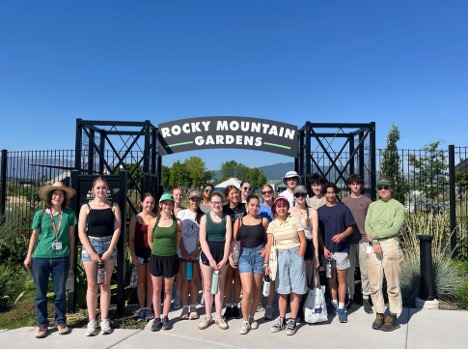
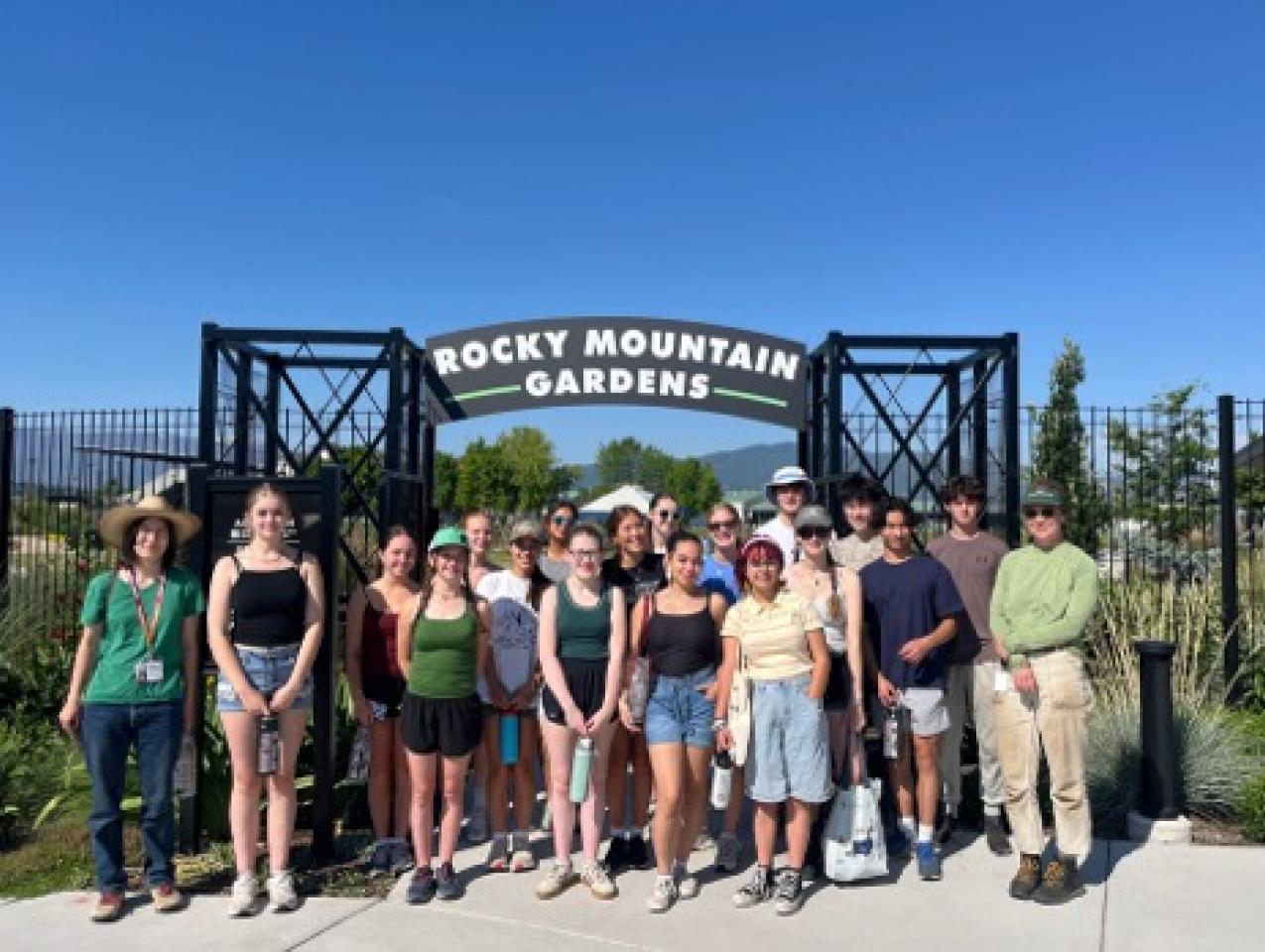
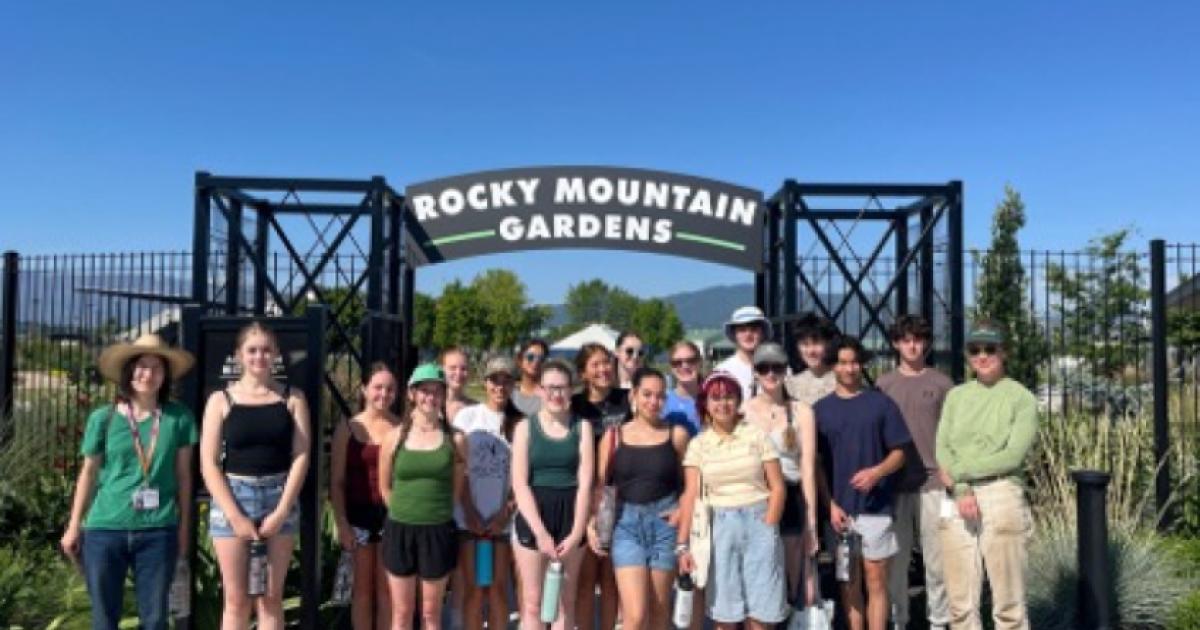
In 2025 the Center for Revitalizing American Institutions launched the People, Politics, and Places Fellowship (3PF) to encourage Stanford students to explore rural life and institutions. This summer, between July 6-17, three members of the 2026 cohort – Lily Bourne, Thresa Skeslien Jenkins, and Isaac Nehring – served as teaching assistants in the Mansfield Civics Institute at the University of Montana. They lived and studied alongside high school students from across Montana, challenging their thinking and learning themselves. The following summary was contributed by Thresa Skeslien Jenkins.
Is it possible for a group of high schoolers to spend two weeks studying the hardest questions in American history and government and walk away not more cynical, but more connected? At the Mansfield Civics Institute (MCI) this summer, the answer was a resounding yes.
Held over two weeks at the University of Montana’s Maureen and Mike Mansfield Center, MCI brought together students from public high schools across Montana for an immersive study of constitutional history, civic debate, and democratic participation. As Isaac Nehring (Stanford ’26), a Helena native who helped facilitate the institute, put it, “These two weeks in Missoula covered a lot of ground and really showcased the breadth of what the civics umbrella entails. From county zoning battles to tribal governance to Federalist debates and everything in between, this cohort certainly expanded its understanding and application of civic engagement.”
Students moved between the classroom and the community throughout the program. They debated the Articles of Confederation against the Constitution in the morning and sat in on a federal sentencing to see how the founding documents continue to shape government in real time. Field trips, guest speakers, simulations, and documentary screenings rounded out a curriculum designed to show civic life as something lived, not just studied.
That design was deliberate. Annie Zavitz, MCI’s program officer for civic engagement, described the institute as working through three prongs: “learning about the founding era in a traditional classroom setting, learning what civic engagement means (and how it can be embodied) through site visits and experiential learning, and practicing the daily skills of civil discourse by building a respectful, curious, and active community within the cohort.” The aim, she said, is to give students “the context, experience, and practical skills necessary for young people to grow into thoughtful, engaged citizens and leaders.”
The institute is the work of Scott Arcenas, an associate professor of history and classics at the University of Montana, who holds a PhD in classics from Stanford and serves on the executive committee of the Alliance for Civics in the Academy. “Since I graduated in 2018,” Arcenas said, “Stanford has made great strides in civic education. But educating Stanford students—all of whom are now required to take a first-year sequence of courses in civic, liberal, and global education—isn’t going to move the needle on a national scale. If we think our society’s lack of civics knowledge, skills, and dispositions is a crisis—and I, for one, believe it is—we need to make sure that everyone has access to high-quality civics education. My hope is that MCI will demonstrate that partnerships between Stanford and public institutions like the University of Montana can play a pivotal role in these efforts.”
That national vision is rooted in the values of the center’s namesake. “The Civics Institute probably fits into the Mansfield Center’s mission more than any other program,” said Broderick Smith, a University of Montana junior and Mansfield Center student employee. “The center aspires to excite future global leaders to participate in their local and national governments through the same morals of Mike Mansfield: dedication to civil discourse, transparency, respect and compromise with the other party, and a deep love for our democracy. This program directly works with high school students to explore those same themes.”
For many students, the experience reframed what citizenship means in the first place. “I think originally we thought citizenship is being active in government by voting,” said Corinne Amundson, a junior at Billings West High School. “But the Civics Institute really helped show me that it’s as simple as going out and finding a community of people you connect with and can share ideas with, even if they are conflicting. It’s just important to be connected to those around you.”
That sense of connection ran through how students described the two weeks. For Huzhao Miele, a junior at Glacier High School in Kalispell, the institute offered a kind of classroom he hadn’t encountered before. “The Institute was a learning opportunity that has changed the way I think,” he said. “It was a unique experience because we don’t have classes at my school that blend the history of our country with being engaged civically. It was an environment where you can express your opinions and convey what you think. It’s better for people to be able to say their opinions—it creates a more accepting environment where people aren’t scared to speak up.”
Miele pointed to two ideas from Arcenas’s curriculum as his most valuable takeaways. The first was reflective patriotism, a learning perspective that blends appreciation for one’s country with critical honesty about its flaws and mistakes. “Reflective patriotism is a really valuable idea. I was probably acting on that, but I didn’t realize it was a term or an action,” Miele said. The second reshaped how he approaches disagreement itself. “Listening to people’s arguments and trying to truly understand them rather than just critique them was a really valuable idea,” he said. “When you’re talking to someone, if you just try to win the argument, you’re not really gaining anything.”
The institute, he added, made the case for engagement concrete: “It taught us how to be a better citizen. It pointed out why you need to be a better citizen and how the impact on your community is felt, and how things can change by just doing a few things for your community.” A documentary screening of Join or Die, highlighting Robert Putnam’s research, drove the point home. “If you’re not participating, you’re actively undermining your own success,” Miele said.
If there was a shared conviction among the students, it was that civic responsibility does not wait for adulthood. “We are the generation whose voices are going to matter. Even now. So it’s important that we know how to not just use our voice but use our actions and have a say in what goes on,” Amundson said. “The things that are happening in government impact us even if we don’t know it. Taxes are starting to impact us. You go to parks. You drive on the roads. You go to public school. When decisions are being made about integral parts of your life, it’s important that you know and do something with it, not just wait until you’re eighteen to do it.”
Miele made a similar case for why bringing young people into the room matters. “People in high school are going to be the next generation of voters, and so it’s important for them to be able to discuss these topics, especially with people that are in a position of power,” he said. “For those people in power, it’s important for them to hear the perspectives of those that are going to be able to vote in the next election.”
Amid deep national divisions, students left the institute hopeful about the opportunities for a community to come together. The experience left Miele wanting to do more. “It has made me want to get involved in civics and be more engaged with my community,” he said. It also left him hopeful about his generation, even against the backdrop of a rapidly changing world. “Even though we’re entering this era of AI where everyone’s afraid about decreasing human agency, it’s pretty cool to see that there’s still a lot of people in our generation, in our state specifically, that are still interested in being engaged.”
For the fellows who taught the institute, that spirit was the highlight of the summer. “These two weeks really restored my faith in the future,” said Thresa Skeslien Jenkins (MBA ’26, MA ’27), a Billings native. “Montana has some incredibly passionate, informed, and involved young people who will make a real difference both in Montana and beyond. Being able to engage with and support them was the highlight of my summer.”
Nehring echoed the sentiment: “I was initially drawn to this program because civic education—and building community within that arena—feels incredibly essential in these divisive political times. It’s such a critical foundation for the future leaders we got to teach, and I’m grateful to have been part of it.”
For Zavitz, that breadth is the point. “Civic engagement is not a narrow concept,” she said. “It is so much more than voting, and there is room for all abilities, passions, backgrounds.” She kept returning to a line she’d heard from a program speaker during the institute—“differences are not barriers”—as a distillation of what the two weeks were really about.
The Mansfield Civics Institute reflects a conviction at the heart of the Center for Revitalizing American Institutions: that trust in democratic institutions is rebuilt not only through better policy, but through citizens who know how to listen, connect, and engage across differences. This summer, twenty Montana high schoolers practiced exactly that.