







- State & Local
- California
- California Decides
- Empowering State and Local Governance
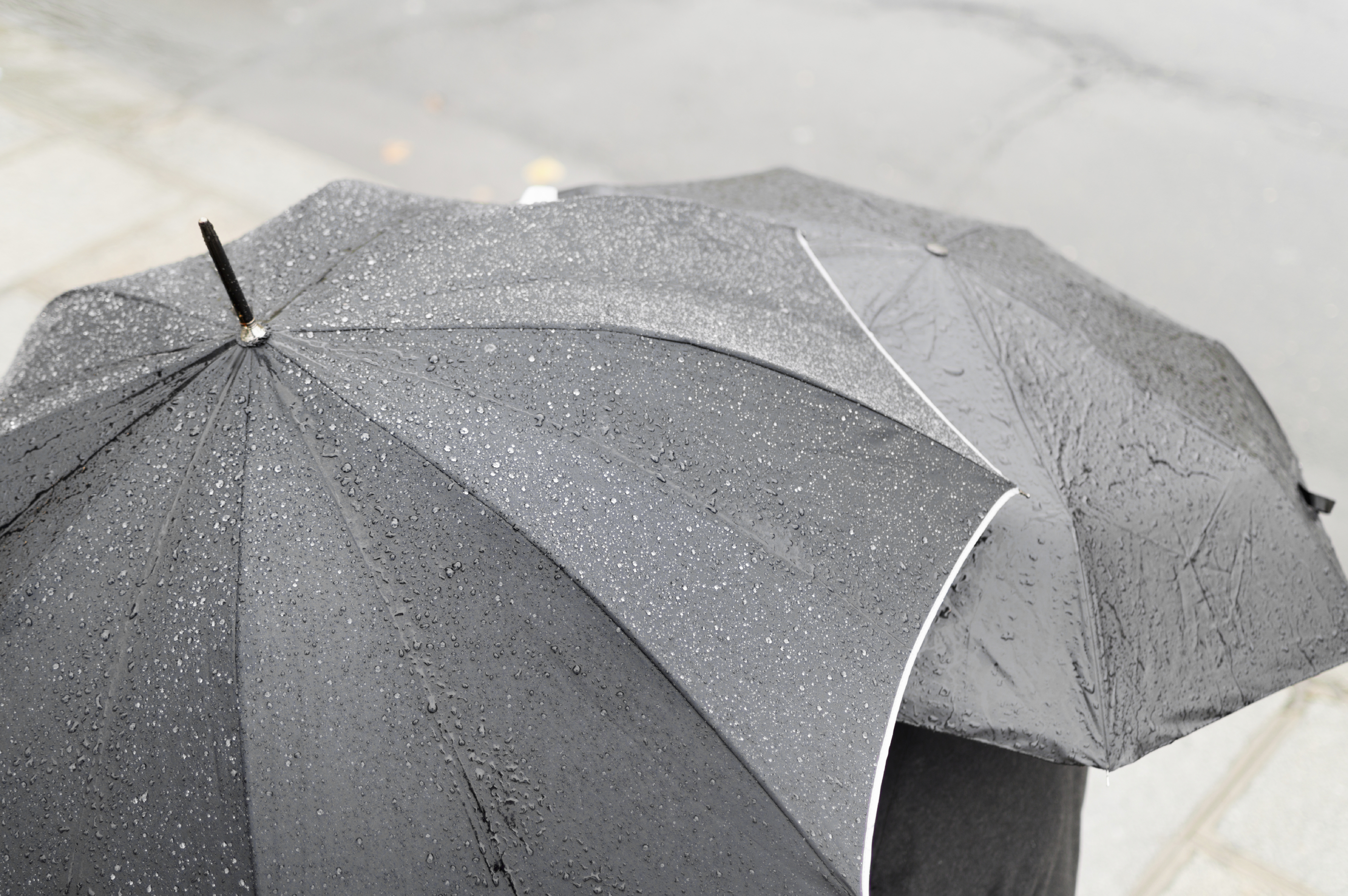
By at least one metric, California’s new year got off to an unusual start, what with Pasadena’s fabled Rose Parade experiencing its first rainfall in two decades, making it just the 11th soggy parade since the tradition began back in 1890.
So much for Albert Hammond’s assurance that “it never rains in Southern California.”
This being our first at look while lies ahead in California in 2026, let’s look at four matters that could lead to rain on someone else’s parade.
A Return to Normalcy? That’s not a reference to the late Warren Harding but rather to that conservative Republican’s political opposite: California Governor Gavin Newsom.
What’s Newsom doing this year that suggests a return to a more traditional governing style after a 2025 during which he devoted considerable time and treasure to raising his national profile (i.e., a prelude to a presidential run in 2028)?
It’s called the annual State of the State Address, which on Thursday morning returns to its traditional time (the month of January) and venue (the State Capitol and both legislative chambers in attendance) after a five-year hiatus.
Decades ago, when I helped draft such addresses for then Governor Pete Wilson, our administration chose an early January speech date for two reasons.
First, as Wilson was a Republican staring down an unfriendly Democratic legislature, giving the big speech set the tone for confrontations to come in the months ahead over fiscal and political matters.
The other consideration: By the mid-to-late 1990s, Wilson was but one of thirty-plus GOP governors nationwide, all preaching the same sermon of lower taxes, better public schools, and stricter crime statutes (one of those governors being future President George W. Bush).
Should Newsom fully return to the normal—a lengthy address with a weighty agenda—it would. mark a welcome change from past addresses when California’s governor either sounded like a one-string banjo (i.e., 2000’s address devoted mostly to homelessness) or a chief executive seemingly mailing it in (which Newsom literally did last year, in lieu of a speech, sending a letter to the legislature that was more about bashing President Trump than offering a vision of the Golden State’s future).
So what has Newsom in a hurry to give a big speech only eight days into the new year (never has Newsom offered a State of the State earlier than mid-February)?
Perhaps the governor recognizes that he too needs to set the tone for the legislative agenda for the months ahead, including how to deal with yet another budget shortfall (more on that in a moment).
Or, speaking of being in a “hurry,” it could be that Newsom’s political brain trust wants to have the address well in the rearview mirror by February 24 and the release of Newsom’s memoir, Young Man in a Hurry, about his formative years in Marin County.
As for the big speech, here’s a simple way to gauge where Newsom’s attention lies: the number of times the governor evokes the specter of Trump, his political nemesis, versus the number of times he references the Los Angeles wildfires that erupted a year ago on this date—and whose slow rebuilding process could prove to be a political liability should Newsom seek the presidency.
Fiscal (Un)Fitness. One thing we’ll also learn this week: the state of the Golden State’s annual budget, once Newsom releases his fiscal blueprint for 2026–27.
Back in mid-November, California’s nonpartisan Legislative Analyst’s Office offered a bleak outlook of the legislature facing “an almost $18 billion budget problem,” with a recommendation of addressing the shortfall “through a combination of ongoing solutions—namely, achieve spending reductions and/or revenue increases.” (As bad as an $18 billion deficit sounds, the same report speculates that Newsom’s successor could be looking a $35 billion shortfall in 2027.)
A year ago at this time, Newsom wasn’t preaching austerity. With an unexpected $17 billion in revenue, the governor forecast a $363 million surplus. But then a rollercoaster of a 2025—wildfires that disrupted Southern California’s economy, tariffs that impacted California’s trade traffic, for starters—sent the chipper outlook into the fiscal wood chipper.
So what to anticipate as the governor and the legislature come to terms with balancing the budget, as the state’s constitution requires? (Sadly, this passes for “business in usual” in Sacramento given that lawmakers solved a $27 billion deficit three years ago, a $55 billion deficit two years ago, and a $15 billion deficit last year.)
Don’t look for California’s elected leaders to take a cleaver to state spending. Newsom entered office in 2019 with a $201.4 billion spending plan signed into law by his predecessor, Jerry Brown. California’s current budget, which runs through June: $321 billion (my colleague Lee Ohanian wrote this insightful analysis of California’s spending spree last spring).
Rather, a solution adopting the concept of “revenue increases,” as suggested by the LAO, promises to fascinate lawmakers—specifically, the fate of those select few Californians with ten-, eleven-, and twelve-figure wealth and a proposed ballot initiative calling for a one-time, 5% levy on all California billionaires living in the Golden State as of January 1 of this year.
Which prompts three very cynical questions:
First, are the backers of the proposed tax—the healthcare union Service Employees International Union–United Healthcare Workers West—serious about running an initiative campaign or are they using it as leverage while a governor who doesn’t like the concept readies for budgetary triage?
Second, how does Newsom extricate himself from what could be an uncomfortable spot—standing firm on his historic opposition to wealth taxes without offending unions, who play an outsize role as Democratic presidential kingmakers? (Here’s some free advice for the governor, courtesy of celebrity attorney Alex Spiro, who warns of a billionaire exit should the initiative become law.)
Third, does the initiative improve California’s fiscal outlook other than shoring up the state’s investment in healthcare? (The proposal dictates that 90% of the revenue go to healthcare programs and 10% to programs related to food assistance or education.) Even if the initiative managed to drum up $100 billion in tax revenue over a five-year period, as its proponents claim, that does change the state’s relentless growth in spending?
Feds Fed Up with California? For all the talk about a potential Newsom presidential run in 2028, it’s Newsom’s approach to the nation’s capital in 2026 that bears watching: i.e., what, if anything, can a governor who revels in antagonizing the right get done in a town currently run by Republicans?
One such example: Newsom’s visit to Washington, DC, last month, during which he met with congressional leaders to discuss disaster relief.
To the extent the governor crossed the political aisle, it was for a meeting with Arkansas Senator John Boozman, who chairs the Senate Agriculture Committee. One Republican who California’s governor may want to chat up, if the goal is to get federal dollars moving west: Florida Senator Rick Scott, who issued the following statement upon Newsom’s arrival in the nation’s capital: “As Governor Newsom makes his pitch in D.C. for more federal tax dollars, I encourage him to publicly share exactly how the state has used the billions in tax dollars it has already received.”
During 2025, California became a focus for Scott and Wisconsin Senator Ron Johnson, who chairs the Senate’s Permanent Subcommittee on Investigations—the two Republicans not only looking into the failures surrounding last year’s wildfires in Los Angeles but also holding a November hearing in Pacific Palisades to hear firsthand from local victims.
But it’s not just Republicans demanding greater California accountability.
As the year ended, the question of how the Golden State spends its resources became a bipartisan topic when US Representative Ro Khanna, a Silicon Valley–based Democrat, suggested it’s time for Sacramento to conduct “a full independent audit” of the state budget. As with most Newsom-related conversations, presidential politics can’t be ignored—Khanna, a Bernie Sanders acolyte, might join Newsom in what could be a crowded Democratic field in the presidential race.
As for Newsom’s relationship with Trump, the two may keep their distance through 2026, occasionally firing a broadside when there’s a victory to claim (for Trump, that would be California’s abandoning a lawsuit that demands a return of $4 billion in federal grants for the state’s beleaguered high-speed rail project).
Or there could be fireworks, which could come as soon as the third week in February, assuming Newsom takes part in the National Governors Association’s winter meeting in Washington (in past presidencies, intermingled with the president and members of the administration).
Either way, 2026 could shape up to be the antithesis of global warming: an icier Sacramento-Washington relationship.
2026 Unknowns. Years ago, former Defense Secretary Donald Rumsfeld gifted the Pentagon’s press corps with this observation: “As we know, there are known knowns; there are things we know we know. We also know there are known unknowns; that is to say we know there are some things we do not know. But there are also unknown unknowns—the ones we don’t know we don’t know.”
What we do know as the Golden State begins the new year: This month marks 32 years since the last major earthquake crippled a California metropolis. It’s also 44 years since a California governor, hoping to segue into another elected office, saw his political fortunes crippled by, of all things, a fruit fly infestation.
Here’s how things went wrong back in the day for Jerry Brown, the mortal enemy of Ceratitis capitata—aka the Mediterranean fruit fly.
First, Brown was slow to react to the infestation, which angered the state’s agriculture sector. When Brown did order pesticide spraying to quell the infestations, environmentalists were none too pleased. Add the governor’s two failed presidential campaigns and an at-times exasperating “Moonbeam” governing style (first elected governor at age 36, Brown was in even more of a hurry than Newsom), and voters were in no mood to reward Brown’s eight years as governor with another six years in the US Senate.
The good news for Newsom: If there’s a presidential campaign for him starting next year, it won’t entail appealing solely to Californians.
But it would help to leave Sacramento on a high note.
That begins tomorrow, with hopefully a serious speech on the Golden State’s present and future states.

