
Africa’s Evolving Role In A New International Order
Courted by China and Russia, and dissatisfied with America’s attentions, the continent awaits clarity from Washington.
October 7, 2026
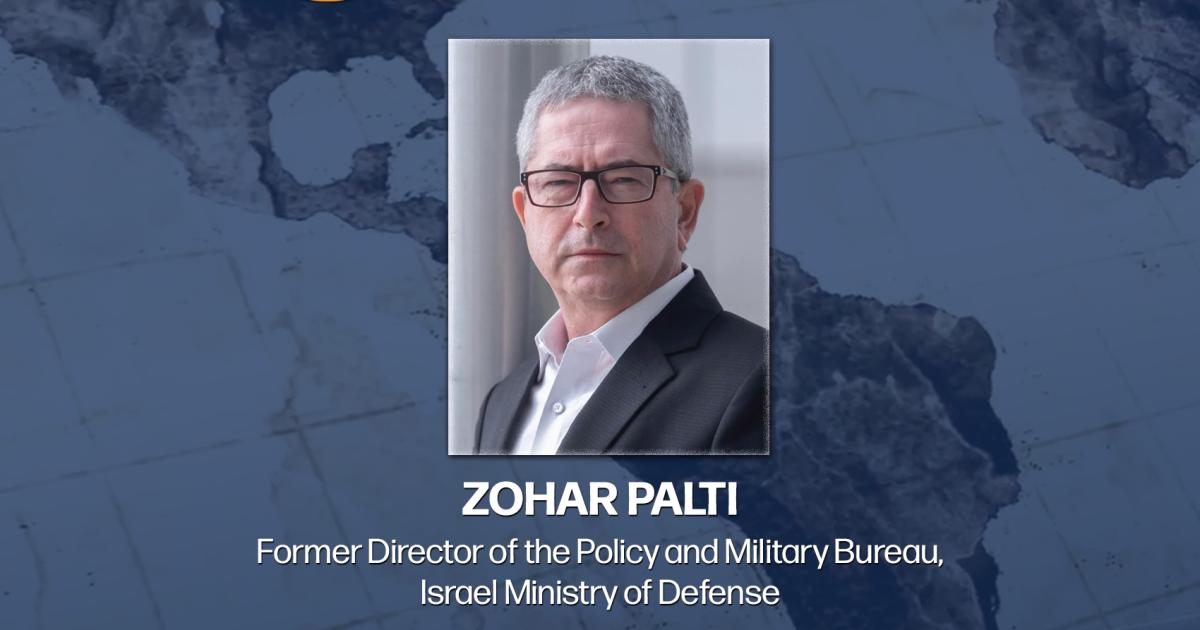
Join Mr. Zohar Palti, former director of the Policy and Political-Military Bureau at Israel’s Ministry of Defense, and Hoover Senior Fellow H.R. McMaster as they discuss Israel’s security posture after the October 7 attacks, strategic lessons of the war in Gaza, Lebanon, the West Bank and beyond, and the implications of the Trump-brokered peace agreement for Israel, the broader Middle East, and global security. Drawing on decades of experience within Israel’s security and intelligence community, Palti assesses the prospects for regional stability, the future of Hamas in Gaza, emerging opportunities and risks in Lebanon and Syria, and the critical role of U.S.–Israel cooperation in countering Iranian aggression. Palti reflects on the necessity of sustained American engagement in the Middle East and the shared responsibility of democratic nations to confront terrorist and proxy threats while upholding the democratic principles they seek to protect.
Recorded on December 15, 2025.
- And with Iran it's the same. We dominate the earth piece of Iran after 36 48 hours completely with male UUVs. We used to attack in Iran, five thou 1,500 kilometers like we are attacking like 70 miles from our borders. Yeah, that's a preparation of 20 years.
- This is Today's Battlegrounds. Our discussions with leaders from around the world consider how history produced the present, and how we can work together to overcome obstacles, to progress, seize opportunities, and build a better tomorrow.
- On this episode of Today's Battlegrounds, our focus is on Israel. Our guest Zohar Palti is the former director of the Policy and Political Military Bureau at Israel's Ministry of Defense. He previously led the Mossad Intelligence Directorate and served as the agency's chief of counter-terrorism. Following 25 years in the Israeli Defense Forces Intelligence Corps, Mr. Palti has also been a senior research fellow at Harvard's Belfer Center and is currently a fellow at the Hoover I Institution and the Washington Institute for Near East Policy. In 2022, the US Department of Defense awarded him the Medal for Distinguished Public Service for Strengthening usis Israel's Strategic Defense Cooperation. On October 7th, 2023, Hamas launched the deadliest attack in Israel's history, killing more than 1200 people, kidnapping 251 hostages and committing widespread atrocities. Hezbollah joined the conflict the next day by firing rockets from Lebanon, forcing the evacuation of more than 60,000 Israelis from the northern border region. The violence soon expanded into a six front war involving Hamas and Palestinian Islamic Jihad and Gaza and the West Bank, Hezbollah, Lebanon, and Syria, Houthi missile and drone attacks on Israel, and chipping in the Red Sea from Yemen and Iranian directed missile and drone strikes in April and October, 2024, confronting the gravest threat to its security since 1948, Israel responded with immediate airstrikes and initiated a ground operation in Gaza on October 27th, 2023, aimed at destroying Hamas and liberating the hostages, fighting persisted along Israel's northern border as Hezbollah continued to use rockets and kamikaze drones against communities in the north, igniting wildfires and displacing more civilians. On October 1st, 2024, Israel launched an offensive campaign against Hezbollah attacking into southern Lebanon to destroy Hezbollah's infrastructure and arsenals while conducting very effective strikes against senior Hezbollah commanders, including the use of exploding beepers and handsets. Israeli strikes against Hezbollah have continued even after November 27th, 2024 ceasefire in order to foil Hezbollah's efforts to reconstitute. In June, 2025, Israel struck back directly against Iran with a highly successful errand intelligence campaign against Iran's nuclear and missile infrastructure, senior Islamic revolutionary guards, core leadership and scientists associated with the nuclear program. On June 21st, the United States complimented those strikes with B two stealth bomber attacks on Iranian nuclear facilities at Forea is Fahan and Naans. The war's humanitarian toll has been severe. Tens of thousands of Palestinians have been killed in Gaza, and over 2 million people, half of them children lack adequate access to water, food, and medical care as the destruction and suffering intensified international criticism of Israel's operations grew despite Hamas' persistent and deliberate embedding of military assets within civilian infrastructure, including residential areas, hospitals and mosques. Israeli strikes against Hamas leaders in the 47% of Gaza that Hamas controls continued until the ceasefire of October 3rd, 2025, that ceasefire secured the release of the remaining 20 living Israeli hostages and the exchange of 2000 Palestinian prisoners. Under the agrees first phase, Israel withdrew to pre-approved lines while retaining security control over roughly half of Gaza, and it committed to allowing approximately 600 truckloads of humanitarian and commercial supplies to enter the territory daily. The 20 point peace plan associated with the ceasefire envisions Gaza, governed by a demilitarized transitional authority, led by an apolitical Palestinian technocratic committee, overseen by an international Board of peace, chaired by President Trump. The Accord calls for a phased Israeli withdrawal as an international stabilization forced deploys to train vetted Palestinian police units. Although the ceasefire halted large scale combat significant challenges remain notably the disarmament of Hamas, the establishment of the stabilization force, the distribution of aid and reconstruction. In November, 2025, the UN Security Council endorsed the 20 point plan and authorized the stabilization force, which Hamas then rejected. We welcome Mr. Polty to today's battlegrounds to assess Israel's security posture after the October 7th attacks. Evaluate the strategic lessons of the war in Gaza, Lebanon, the West Bank and beyond, and consider the implications of the war and the Trump brokered peace agreement for Israel, the broader Middle East and global security.
- So Har pal, welcome to today's Battlegrounds. Hey, it's an honor to host you on the show. I remember fondly the work we did years ago that we'll never be able to talk about, but I'm, I'm glad to see you. Welcome to today's Battlegrounds.
- Thank you so much for having me. It's great to see you, hr, it's really privilege. Thank you.
- Hey, well, this is a real treat for our viewers. There's so much to talk about. I don't know how we're gonna do it. It's like an impossible task in the next 50 minutes or so, we're gonna cover a lot. But hey, let's begin with a simple topic of Israeli politics. You know, so hard. You know, one of the things I joke about sometimes is, hey, when we look around at American politics and how screw it is, I just think of Israeli politics and then we should feel better about ourselves, right? But, but we're, we're, we're a critical time in Israel, obviously after Israel's been at war for the last several years, you know, now you're at the 16th year, I think of Prime Minister Netanyahu's time as prime minister and, and he's led, you know, six different governments and, and, and there's been a lot of controversies, you know, around Israeli politics, you know, recently obviously, you know, associated with the horrific mass murder, torture, and kidnapping attacks of October 7th, 2023, the war that's been going on since then on multiple fronts, but also, you know, kind of the violent efforts to expand Jewish settlements and the West Bank and the displacement of some civilians there. Our viewers might also remember, you know, the controversial judicial reform initiatives 2022 to 2023, and then the equally controversial debates about, about the reti or the ultraorthodox service in Israeli defense force. But there's a lot, a lot going on in Israel. There's an election coming up right in I think October of next year, October of 26. Can you kind of explain to our viewers the nature of Israeli politics and, and what you see, how you see Israeli politics evolving in the next year?
- First of all, thank God that I'm not a politician and I don't have to involve in this issue and four decades of spent as a civil servant in the Israeli security services. So I tried to symbolize a bit, first of all, in our tradition after curable event, an earthquake that happened to Israel like October 7th, from trying to compare it in our history, it's only to Yom KIPP or when we blew it completely back then. And in a way, not at the same scale, it's after the second Lebanon war that we thought that we've done bad. The outcome from political point of view in Israel after 73 war was that all the government, all the general chief of staff, everybody went home after second Lebanon war. Same, the word accountability and responsibility is in our kind of DNA and the prime minister after the second Lebanon er and the minister of Defense and the chief of staff and all the general staff went home, trust me, on October 7th will be the same. The government is holding right now to the chair, not in a respectable way. They have responsibility. They used to be in charge at October 7th, chief of staff went home, all the general went home, director of Shabbat, the internal service of Israel, went home with all his directors, meaning the level of the directors. And right now it's about that the politics will take, the politician will take responsibility and this is why hundreds of thousands of people are in the streets. And that's why we want a national inquiry to understand what went wrong, why we failed. And there is implication for that. Now, if we're going to election, whether we put in October or earlier, because probably this government is not going to go to election on the year side of October 7th, they'll try to do it before in September or whatever, the public, the democracy in Israel will have to decide whether they are for them or whether they're against them. But it's going to be a rough year. We are completely split between two camps over here and with the crazy neighborhood that we are living and the only vi vibrant democracy that we are. If we're not going to be unif un meaning unify all the sides left and right, fighting for the cause and things like that, it's going to be a messy year. And trust me, it's going to be really disgusting from political point of view. You are sometimes kids stuff in America, as you said, compared to our political life. But then again, there are consequences and we to deal with it.
- You know, it sohar, when I compare like US politics to Israeli politics, you know, we have two political parties that often it put forward candidates that are not appealing, you know, to the majority of of Americans. That's kind of our problem in, in Israel you have so many parties now it is sort of fragmented and very personalized in the, in the politics. And then you have the difficulty under your parliamentary system of putting together a ruling coalition, right. That so, yeah. But,
- But in - A way it's, I think it's different problems, but both, both, you know, both risk the people losing confidence in the system.
- It's not that we're losing confidence in the system. It's a completely different, you have commander in chief, we don't have a commander in chief. The president have in America, a lot of authorities over here, the prime Minister have to bring and to build coalition and in a democracy, I like the fact that some friction, meaning other parties have the ability to influence. And it used to work like that in the last 77 years, 78 years. So although it's from the outside in looking sometimes complicated, we know how to deal with it. But the main is the fact that this government is, I don't know even how to say the word responsibility does not exist over here. And based on the codes that you and I grow up as officers with authority come to also the responsibility it's going to gather. Yeah. And it seems to me that some of them don't, don't get it. The other issue is, is the fact that this government is taking some extreme measures, and you mentioned some of them, and after October 7th, I want to see more things in the middle. It's not black, it's not white, it's not extreme, right. It's not extreme left. There is also like always the gray, the middle way that we can find out how to bring all the different political opinions in Israel into something that serving the nation. And we need it. We need it right now after 2000 casualties, thousands of wooden soldiers, 255 hostages, were brought them back home. We need healing from what we passed in the last two years. And I hope that we'll have a government that will have the ability to do it.
- Sohar, can we then bridge maybe into October 7th, 2023? I'd love to just hear your analysis, you know, of of the, the, the cause of that horrible attack and then the broader war, the sixth front war that followed. But also what is your diagnosis of the reason for the strategic surprise in terms of the, you know, the scale brutality o of, of that attack?
- First of all, like in the bush, in the, in the army, like with nose, like in the Mossad, first of all, let's deal with ourself. We've been cocky, we've been arrogant, we've been full ourself. We told that we are like, have the ability to, with intelligence, technology and other stuff to control everything. And like always God show us that we're not controlling nothing. And we blew it completely in October seven as a nation and mainly as intelligence community, the internal services and the military intelligence in this case, they didn't give us a early warning. And Israel, you know, you know us, you know us very well. We have outstanding intelligence community in the last 20, 25 years. They've been really, really good about a lot of stuff. And they thought those guys, and I used to be part of them in this night, that they will know how to manage with Hamas that Hamas is not. So Iran, the nuclear, the ballistics, Hezbollah the priority. Everything is before Hama. And we made a decision to build with billions, very sophisticated technological fans in the last, let's say decade, five years, seven years. But those guys with a simple waking above the crowd. And we've been sleeping as a state, as a nation, and they took us by surprise, Serb, I'm saying it, I don't know to explain it more than that. That's why we need a national investigation. And what bother me in, I spoke about it, that it's not the generals, it's not the, I don't know, the full, or even though not the Lieutenant ISTs I'm asking. And I used to have a lot of conversation because as you know, all our boys and our girls, our children are serving in the IDF since they're 18. I said, guys, what the heck? What happened to you? Usually you don't care about ranks, about to be politically correct your all the time saying whatever, why nobody was ringing the bells. Meaning it's the whole chain from the first lieutenant till the chief of staff and the two star, three star generals something. It was a dark night for us. Dark moment that we don't know how to explain it.
- Well, you know, sohar, there's a, there's a long history of strategic surprises, you know, from, if even in our country, from Pearl Harbor, you know, to to the, you know, the Chinese intervention and the Korean War to the Tet Offensive in Vietnam. And in retrospect it always looks clear like how the hell do we miss that? You know? But, but I, your, I think your point that's really compelling and a warning to, to us as well is the over reliance on technology, you know, and, and to always, you know, question the, you know, the, the, you know, the technology because there's always countermeasures, right? To that technology. And, and I'd like to just bridge like from October 7th itself to, it's kind of the perspective of the ring of fire. I think it's really important for our viewers to understand that Hezbollah came in within 24 hours and remember fire, you of course you remember fired the rockets in northern Israel. It forced the evacuation of 60,000 Israelis. You had attacks originating in Syria, you had the land bridge there, you had the effort to bring in lots of weapons and, and to create a lot of problems in the West Bank. Then you had the houthis fired missiles. I mean, it became a multi-front war immediately. Could you maybe talk about your diagnosis of what was the objective on, on October 7th, you know, who was really behind it, of course, the Iranians, but, but how they prepared this and then the response to this multi-front war, because I mean, there was that surprise, that disappointment of that surprise upfront, that failure. But the mobilization from my perspective anyway, was extraordinary in terms of how rapid it was and the scale of the mobilization. So could maybe place October 7th in the broad context of the, the ring of fire that was lit on that day, and then the Israeli response to that.
- Okay, so first of all, as you know, Israel is basing everything about intelligence. Early warning that night we failed with early morning regarding Hamas. When we are looking in the last two years about the intelligence, we used to have all the intelligence, the writing was on the wall. It was crystal clear regarding your question about the Ringo fire. We know about the Ringo fire like 20 years, maybe more since 96 after our, one of our operation in Lebanon. And certainly after we left Lebanon in 2000, May, 2000. And we used to share with, with you and you as the Americans, because you know, the intelligence community, the US intelligence community and the Israelis are, I don't know even how to describe this. It's not cooperation. It's almost one unit because we used to serve so many lives around the world of American Israelis, Jewish Christians and nations that they don't know even that we saved them. We share it with you. And we knew that the Iranians, the mastermind behind this, the let's say call it the head of the snake, the head of the octopus are building a lot of tiny power, not tiny, you know, sub powers in the region. And they built like surface to surface r ballistic missiles in neuron of thousands of ballistic missiles, uvs and cruise missiles. In a minute I will speak about how they attack the states of Israel and they
- Invested and they were perfecting, they were perfecting this drone missile strike complex by trying it out, you know, on, on Saudi Arabia as well, you know, from the Houthis in Yemen. Absolutely, yeah. The hundred you mentioned, you mentioned the rockets, 150,000 rockets in southern Lebanon.
- Only in Heba. No, it's not south southern Lebanon. It's all over Lebanon. It's in Beirut, it's in the back of
- All over, right, right
- From the range of 30 kilometers to the range of 1,500 kilometers. But we knew it. And that's
- A reason, and I, I remember talking with Prime Minister Netanyahu about this, you know, in, in Munich at the Munich Security Conference in 2018. And his big concern at the time was retrofitting a lot of these rockets with precision guidance capabilities as well,
- The PGMs, what we call, and, but we knew about it. So we started to prepare ourself with operation at the beginning of 2000 and what we saw in Iran and in Lebanon later on, what you saw in the tv, the beers and things like that. But there've been a lot of preparation to this issue. The fact that we dismantled Hezbollah in a very short period of time, relatively, and some military expert know how to judge it, that it was this essential, it was, we prepare ourself. And with Iran it's the same. We dominate the earth piece of Iran after 36 48 hours completely with male uvs. We used to attack in Iran, five thou 1,500 kilometers, like we are attacking like 70 miles from our borders.
- Yeah,
- That's a preparation of 20 meter. Now you'll ask me how you can explain how you blew it in October six, seven at that night with poor intelligence, and as I said, arrogancy of the Israeli and outstanding performance regarding Lebanon or Hezbollah, other PLA or Iran or other places. I don't, in one, we've been, we understood that the, that the threat is imminent and serious and we prepare ourself and we came very modest and we decided, we decided to invest in it on the other side in Gaza. We thought, you know, they will launch several rockets, nothing else. We never anticipate that they will come and rape our girls. We never anticipated they will come, will kill families since that we've never seen from the Holocaust days. And it's the first time in the Arab-Israeli conflict, not in the Palestinians Israeli conflict in the Arab ran COVID that we saw scenes like that, of atrocities that the other side came without any barriers regarding children, women and, and, and old people
- And, and, and broadcasting about it and, and boasting about it. And yeah, horrific. Yeah, I, I mean in, in hu inhuman.
- So the ring of fire is based on the strategy of Q Soleimani that you have done as an America outstanding job by taking him down during Trump one period, and you save a lot of life. And he used to work simultaneously and with coordination with Hezbollah, the ties and all the other bad guys and the terrorist and created this ring of fire. But because we understood the logic and everything we were, we were trying how to find a solution, a military solution in order to deal with that. And thank God in a way, we succeeded in the running the tech Israel on the night of April, 1314 that night with 300 what we call air brier ballistic missiles, cruise missiles, and UAVs.
- And just for our viewers, quickly, this, this is the April of 2024 attack directly against Israel by, by Iran, the first time that that has happened. And that, that attack was re another large attack occurred in, in October of last year. But Sohar go ahead. Go ahead.
- And without a provocation, because we never attacked ly on Iran soil. They came out of the blue, decided to do it because so many other reasons. And over here, usually, and you know, I'm a simple guy from the Middle East American, don't understand what CENTCOM and what you as the United States have done that night. This is probably a night that for generation people in the intelligence air force and strategy will learn in academics, in the military, academics, why that night, United States of America showed that you are really the only superpower in the world. Now what general Illa, the direct, the, the commander of Sanko have done that night, only the American have the ability, because we used to have a good intelligence, meaning the Americans and Israel, and we knew they Iran are about to attack with 300 ballistic misses and cruise misses and U of EVs, the states of Israel. We didn't, meaning it wasn't like by surprise four hours before we shared the intelligence with the public in Israel and we said, guys, it's going to happen. And then the American used to call the Egyptians, the Saudis, the Bahrainis, the Qatari, the COIs, the Emiratis, the Jordanians, the Syrian, the Iraqis, the Lebanese, the Israelis, the Americans, the Europeans said in two hours, we don't want to see any commercial flight all over the Middle East. The sky will be empty after two hours. And on the screenwriters, the Americans and the Israelis saw only the bad guys when the missiles are coming through the water, the rather is empty like in the science fiction movies.
- Yeah.
- And this is America is all about and the American technology with your aircraft and your, because we are flying Americans as you know, American Jets and with our missiles, with the air defense, the air two, the David's link, the the Iron Dome and all the other measures that we are using electronic warfare and things like that. We intercepted together all the 300 ballistic missiles, vis and cruise missiles. And this is the superiority of the American Israeli technology. And that's how we need to keep it like that.
- Yeah, I'll tell you, it was an extraordinary defensive campaign. And then I I just wonder if we could just quickly summarize for our viewers, your your perspective on, on the campaign in Gaza itself before we then shift to Lebanon and the extremely successful campaign against Hezbollah, which rippled across, in, into Syria and, and wound up, I think really was the critical factor in unseating Assad in Syria as well. But in, in Gaza, what struck me is that the IDF kind of did everything that the United States asked it not to do. Right? Don't go into con Eunice, then you go into Kunis and that's where you liberate a a lot of a, a lot of the, the, the hostages don't go into Gaza City, but it's in Gaza City where you began to have an effect on a lot of the Hezbollah leadership, for example, can you maybe ex explain mobilization that's sustained very difficult urban campaign? And then, and then maybe what, where we are now, like where is Hamas now given the, given that campaign, given the ceasefire that has left the IDF in control of 53% of Gaza and Hamas still with 47% of Gaza kind of centered on Gaza City, could you maybe catch our viewers up on how you, how you saw that sustained long air and ground campaign in Gaza?
- We're trying to combine it also with the question, the, the first question you're asking me from political point of view. So Israel was, is were splitted and splitted politically completely in October 7, 6, 29 when we started to understand the atrocities and the event after 15 minutes, one hour, every Israelis that is patriot, whatever we think politically, he like the government, he don't like the government, things like that where we were wearing uniforms because we need to save our countries. We were recruiting in few days, less than two weeks, between 300,000 to 400,000 people reserves. And it was crystal clear without any declaration from the government because in the first hour the government had been in shock to us, the people that supposed to serve and not supposed that we are serving and protecting the states that we need to take Gaza down. And after we have 255 civilians over there, Holocaust survivors, children, things like that. There is not a question right now what Washington like, what Washington don't like, what the European, like, what the, first of all, we have to take care about our families. And when you ask me about how we mobilize people, you don't have to mobilize. They're coming to the units like that. We used to have 120% volunteers, people that used to leave the service and already got getaway and free out of reserves. They came to the units because I mean, it's our, it's our home now. This is the difference between Israel and other countries because we are surrounding with Gaza, with Lebanon, with the ba and right now with this lanni, I mean, we don't have the luxury in order whether we like to do it or whether not because in five minutes it will be in other cities all over all the, all over the states of Israel. So recruited the people and we went into Gaza. Now when the IDF gather himself, because in the first two weeks we've been under, in a way under shock. And I'm jumping right now what you asked me about when Washington asked not to evacuate Es or Rafa or things like that, because frankly in a way I can understand when you're sitting in Washington and you have been in this rooms and position, it sounds like crazy that the IDF will mobilize 1 million people, how they will do it without, without civilian casualties and things like that. And we say, guys, we know how to do it. We know how to do it. Trust us, it'll be okay. By the way, we won't realize twice, one five miles to the arrive, 1 million people and once five miles to the right in two different occasions without casualties with taking care of the, the, the population will have humanitarian aid, water supply and food. Not perfectly. It was a lot of criticism against the DF in this issue. But then again, it's a war. But basically they took all the measures in order to, to secure the, and we've done it. The other issue is that Gaza, since the Bible days, when you open the Bible, you understand it. Gaza is a different entity there. When you're coming right now and you're speaking about two state solution, take the last two years, for example, the Palestinian Authority Abu that is sitting in the West Bank, not even once went to Gaza, not even once spoke with the Hamas. They don't like Gaza. The Palestinians meaning there is a split right now between the Palestinians in GA and the Palestinians in the West Bank. So when people right now forget about the atrocities and the fact that it'll take like a decade to restore at least a decade to restore the trust between the Israeli and the Palestinians. Nobody knows what the Palestinians themselves wants. They're split it completely between the two parts, the 2 million over here and the other two millions in the West Bank, meaning in Gaza, 2000001.7, 1.8, almost two millions in the West Bank. They're not connected
- Component. Yeah. This, this is for our viewers just to catch 'em up on the history. This is two, after 2007, the Israeli Israeli defense forces had pulled out of Gaza. There is the first and last election that occurs in Gaza. Hamas really wins that election at the point of a gun and drives all opposition out and has, has remained in power through violence and force in Gaza since that time has used that time to divert resources into the military ca or and terrorist capabilities that you saw used on October 7th and away away from the Palestinian people in, in, in Gaza. So I, I think this is a really important point. And then of course blames other people other than themselves for the hardships they create in Gaza and has had the effect of, of really brainwashing the population over that period of time. I mean this is all the, all these factors make it so darn hard in Gaza. And I think our, the explanation why it's so, it's so difficult to get an enduring piece there as long as Hamas has the guns, right? And, and, and, and so I just wanted to provide that context because it is heartbreaking to see the Palestinian people suffering, but it's also important to, I think to recognize, hey, only living hostages that Hamas has not finally released are, are the Palestinians who are still living in that 47% of Gaza that they control
- Deeper than that. Because Hamas want to topple the pa Hamas is the Muslim brotherhood agenda. Yeah. And they're not recognizing ga Muslim and then the Palestinians, meaning they're split among each other and they can bring mass for occupation and things like that. But you mentioned in 2007 until October seven, we didn't have any, even, even one settlements in Gaza. We evacuate all of them. We didn't have even one Israeli IDF soldiers. We took all the IDF out of Gaza in 2007 and what happened, Hamas took all the fat guys and all the pa guys and used to throw, throw them from the roof of the high rise building because they want to do revolution inside the Palestinian authority. I think it's complicated. The Palestinians have to decide what they want from themselves before they're coming and having a demand from the American, the European, the Israeli, the Qatari, Theis, all the Emiratis. First of all, they have to understand that they have to short things among themself before they're coming. They don't have economy, they don't have institution, they don't have nothing. And they can blame us for everything, okay, because we're the powerful guy. But they used to have it in the last 20 years for their own. We, we haven't been, none of us in Gaza, not mentioning at the West Bank. So this issue is really something that also the Palestinians meaning is already around 90 right now. We pass it and they will have to define for themselves where they want to go right now. And it's nice that people want two state solution, but tell me what's, what state, what solution. And it's between the Palestinian and the South with the Arabs, without the Arabs before they're coming to us. Meaning they have to sort some issues among themself.
- Well, and I would just say too, you know, I mean it's, you can't talk about a two-state solution if Hamas still has the guns in Gaza because Hamas, by its charter is an organization that's committed to destroying Israel and killing all the Jews. That doesn't sound like a two-state solution to me, Sohar. So I think, you know, I think it's really important to be realistic about the expectations. So maybe, I mean, I did want to jump ahead this quickly 'cause there's so much to talk about from a history perspective, you know, and, and the, and the recent history. But hey, let's, let's just go fast forward now to the present in, in, in the, in in Gaza, but then also Gaza as connected to the West Bank and as, as as connected to, to le to Lebanon and the, and the Syrian border. What, what do you think the prospects are for enduring peace in, in and around, you know, around Israel based on the current situation, right? There's an effort to try to get an international force going, for example, for the 53% of territory that, that the IDF occupies. But of course Israelis are very concerned about that because of the lesson of il, which for our viewers was the, the UN force in, in southern Lebanon that utterly failed to keep Hezbollah out of that area. And in many ways kind of provided political cover for them to amass a lot of military capabilities oriented on, on Israel. So if you could just go around Israel, you know, from, from, you know, from Gaza to the West Bank, to Syria, to Lebanon, what is your assessment of the present and and what do you think the prospects are for an enduring piece?
- It's hard, first of all with us, so the military, the IDF have done an amazing job in Iran, amazing job in Lebanon, okay? Job in Gaza because Gaza is like crazy place beneath the surface of hundreds of miles of tunnels that they used to build and above the ground and things like that. And we have the West Bank, as you mentioned before, and we have a new regime right now in Syria, okay? The political level in Israel should bring something to the table in order to close war. It's great to speak about seven sin all the time, but we're a tiny country. Although our economy is boosting also in the last two years that this is a phenomena, nobody can explain what's happening in the Israeli stock exchange and the high tech industry. But still we need to go back. It's a democracy. We can't go to a war 24 7 till the end of the, I don't know, or eternity. This government haven't bring nothing. And suddenly we're going to miss the opportunity because in Lebanon, let's start with Hezbollah. Hezbollah got a lot of backlash from us. Hezbollah is in the worst situation since I remember the last 40 years. We have an opportunity with outstanding prime minister and president, meaning general l that you, the Americans know him so well, is willing to do it. But sadly, I will tell you, there is no quarterback, nobody is dealing right now how to lab Lebanon. Not personally the Americans, meaning the Americans are doing a lot, but it's not quarterback as we know. It's not like you have done in Iraq when other places, the Europeans are not in the game. The Saudis are not in the game, the Emiratis are not in the game. So eventually the Lebanese are alone. And when it's coming to
- What, so I just wanna make this really important. I mean this is an important point, right? Because what you're saying is Lebanon, which has been in free fall for decades, has a chance, has a chance to stabilize because of the exactly, the Prime Minister has the willingness to do it, maybe not the capability, but the willingness to do it. And the United States kind of has an idea of what needs to happen, right? You've got Tom Barrack there, this is our ambassador to Turkey. He also has this portfolio in Lebanon. And you have influence because to lift Lebanon up, you're gonna need European help. You're gonna need you help from the Gulf States. So we have leverage at this moment, right? I mean, don't you think now there is the time to prioritize the dis the
- Best time. It's the best time because we are not going to have a second chance regarding this issue because Hezbollah in Iran will try to build the force again, and then we'll have to interview her again. And it's, we'll be repeat of what we saw in the last two years. We have outstanding, and right now I don't see this quarterback that is doing the job and delivering regarding Iran. Iran. At the end of the day, we need an agreement with Iran. Not bad agreement like the J-C-P-O-A-A better one. And Iran understand that the American cement business and the Israeli mean business, they used to say all the time that we are too tiny. We don't know how to deal with them. We always tell if needed, we know how to deal with them. So for 11 days, we've done the job. Day 12, the president decided to send the B two and finish the issue of Purdue and advance dance. The Iranian understand that you are not playing games anymore. That if you've done it once, you have the ability to do it the second time. Same for the Israelis who is right now engaging with them and trying to explain them. Guys, you want better situation. They don't have water supply to their own people. Their run is drawing completely. There is no electricity over there. You want a better life. We the Europeans, we the Americans, we the international community willing, but you need to sign a deal not to develop a military nuclear bond. Simple. Well, hey,
- Let's talk, let's talk about around a little bit more for a second. Okay. You mentioned it, you just mentioned it there, there's a water crisis in Teran, right? And you had possession their, their, their president suggested moving the capital, right? Of, of what, 12 million people just move 'em out. I mean, that's crazy. And then, and this shows the corruption of this regime, which has been living off the infrastructure that they inherited from the Shah since 1979 and investing nothing in it because of their own corruption and their own prioritizing of the wars that they're fighting against their Arab neighbors, against Israel, against the United States. So could you please, 'cause you studied this for your whole career, to explain the internal dynamics in Iran. Is there a prospect, is there a prospect for a change in the nature of that government?
- Sure, but nobody knows when it'll come to a critical mass that they will do the change. Because listen, we have nothing against the Iranian or the country. We used to be LA over the Iranian till the seventies, till the eighties, meaning we used to build half of the security services back then. We used to have very serious generals and politicians that used to be born in Iran, meaning the Iranian us, we know them. It's a serious country with outstanding culture, with outstanding history. Without that meaning they have the ability to become a really positive state. But they, somebody took hostages, this country, this regime 40 years ago, more than that a bit. And they're depressing them and they're hanging people in the streets and they're making the women over there to go with the veil and everything, although be need the veil and beneath the hijab and
- Everything. And, and by the way, they're, they're blaming women for, you know, not, for not, not wearing their veils, for the, for the, the water crisis. I mean, it's, so something's gotta give there. I mean, can you, can you, can you expound on this a little bit in terms of, you know, in, in terms of the profound crisis inside, inside of the country at this moment?
- It's huge. The profound is so ma I mean in any, let's say any area or every subject that you touch right now in your own, there is a crisis from economical. The real is in the, it's a mess, the economy of the bear. But forget
- 3% devaluation in the real, in the last couple months.
- But, but forget about it. I will, how we can float with, with figure and everything, but it's not important. I will tell you why. Because if you have the rrg C and the passage, they're depressing their own people and killing their own people in the middle of the squares and hanging them. People are afraid. They're not willing to go and confront the RGC and the passage. And as long as there is not a critical mass in order to do this change in Iran, probably say the same. And Iran wants to get the military nuclear bomb. That's why. And we don't have right now any engagement with the Iranian, not the European, not the E three and not the Americans. So eventually there will be another round, I don't know when, but another one that conflict between us, and I'm saying us, I don't know if the American will be, but we'll have to take care about this issue because we have ballistic missile, the threat in Tel Aviv, Jerusalem, and the rest of Israel. Right now we can't live under this threat. So we have an issue with Iran. The other issue is the money that Iran is supplying and giving to the proxies like Hezbollah, the Houthis, and the others. And somebody have to negotiate with them in order to stop it as well.
- Yeah. So we have, so even this is important for our viewers to know. Z can you, and you talk a little bit more about this, even though they're in the midst of a major financial and economic crisis in Iran, they're doing everything they can to reconstitute Hezbollah, Hamas, Palestinian, Islamic Jihad, and also to, to reinforce the Houthis right in, in the middle of all this, right? Could you
- Exactly. Could you,
- Could you give us some of the, I mean, I don't know if how much you can share, but some of the facts associated with this. What, what are they, what evidence do you see of them trying to reconstitute at this moment?
- They're investing right now, again, billions in order to restore Hezbollah capabilities because they're lost. They used to spend hundreds of billions of dollars in the last decades in order this to build this wr of fire in Lebanon in another, we destroy most of it now. They have to restore it. And they're sending money right now to Lebanon. That's the reason that we are continuing to operate over there because we don't have the Lebanese army that is doing in dismantle, in Hez Badda. That's why they are giving, listen, the Houthis, they have industry to build surface to surface capabilities or UUVs capabilities to take down American and European ships all over the Red Sea. Theran is behind this issue. So the Iranians are like on octopus. They are doing, they want to destabilize all the region over here. They're not helpful. Not in Iraq, not in the Kurdish part, not in Syria, not in Lebanon, not in Yemen trying to topple other regimes. They use, as you mentioned before, they used to attack the Saudis in September 14th, 2019 and destroy 50% of their old production. They used to attack the Emiratis twice in 21 and in 22 and Iranian all over. And somebody have to stop it now. The Europeans are out of the game mainly because of the Ukraine, Russia war, mainly because your report, the national Secur strategy report that Europe understand that there are by their own right now. So they are an European and not in the game and not engaging this issue. They have also other political problem and disability, political point of view in Great Britain and in France and other places. So it's a, it's a big mess. So nobody have right now, although we have so many opportunities to take the region, the Middle East to a better place, nobody almost elevating ante. The president have initiative in Gaza, as you know, but then again, which form armies will send troops to Gaza to this mess.
- Well, this is the story, right? Nobody wants to go, who wants to be the mayor of Gaza, right? When nobody, when when Hamas has the guns, right? I mean, so you need a force to, I mean, this is why if you're pro-Palestinian, and, and of course you know, I I I'm telling you, I I'm sure our viewers share yours and, and my concern for the Palestinian people that agree to which so many innocent people have suffered during the war, but you know, the, until, until Hamas is destroyed, I mean, there's no space, there's no space for an alternative political order to emerge that can bring peace to the Palestinian people.
- Dennis Ross, ambassador Ross used to say the word responsibility and the accountability is not in the dictionary. The pa they're not willing to take responsibility about Gaza. So you, the Americans will read, Israeli will do it. I mean, and then now the Americans are coming with a plan who is cooperating with a plan beside the Israelis and the Egyptians. The Palestinians, of course not, they're not in the game. And Hamas is controlling Gaza completely right now, after this is fired, they're back to control almost everything, all the humanitarian that is coming, Hamas is behind it, and they're restoring and they're recruiting young generation, young children like 15, 16 years old in order to continue to fight with us. It's not that they're coming right now, I've,
- I've seen it. Hey, I've seen it fighting these, these jihadist terrorists in other places, right? They they are, they prey. They prey on young adolescents. Exactly. They steal them from their families. They systematically dehumanize them. They fill, fill them with hatred and try to use the, then use that hatred to justify violence, horrendous violence like you saw on October 7th, right? So no,
- No
- Doubt. Until you break that cycle, until you break that cycle, you can't have enduring peace.
- But then again, I'm trying to look for the positive and the positive that we have a lot of opportunities. But right now there is no somebody that have the ability to elevate motiveless if yeah,
- If,
- If I'm trying to sum up what I see. We have opportunity in Lebanon, we have opportunity in Syria, we have opportunity in the West Bank to do reforms right now because the PA are in the end, we have opportunity in Gaza after the operation and after the war that we have done, sadly. And I wish that I were completely wrong. Nothing from what I said about opportunity is going to take care in the long future. Yeah, we're going to blow it completely. And when I say we, it's all of us together. The good guys.
- Yeah. Okay. So this is, you know, we're, we're, I can't believe we're almost out of time here, but, so you're gonna have to come back on to talk more about this because it is the middle. I mean, there's a lot to talk about, but how about this, you know, this idea that it, it's time to remain engaged, right? To try to maybe consolidate some of the gains that that, that the IDF with, you know, with us and other support achieved against these elements that has surrounded them and against their main sponsor in, in Iran. But what do you say to Americans, you know, who see the Middle East mainly as a mess to be avoided? Because I'm sure listeners who listen us are like, what the heck are we gonna do about that? I mean, it's, we're not going to conciliate the Furies in the Middle East, in my view, but the, but if you disengage in the Middle East, it can get worse, right? And we've seen that. So you've seen these kind of sign waves of US involvement and disengagement and announcements that, hey, we're pivoting away, we're leaving the Middle East. What, what is your argument to an the American government, the American people for a reasoned and sustained engagement in, in the Middle East?
- Guys, I'm a friend of the United States of America. We are relying on the friendship, on the shared values with you a thousand percent. We never ask you to fight the war for us. So I'm not going to answer the question why to, to an American audience, why to come to stay in the Middle East. I can assure you one thing that with our democracy and with our values that we share with you and the friendship that the Congress bipartisan Republicans and Democrats in both of the houses are supporting Israel. We know how to do the job with our boys and our girls. We used to do it, me, my wife, all our generation and our parents generation. And we'll continue to carry it. I just want to give you a sense about what we saw right now in Australia and a devastating attack like a day ago. Radical Muslims, Al-Qaeda, and you as a general that used to spend so much of your career and your life to protect the, the United States. And you used to serve in Afghanistan and in the area of Pakistan. And please take that, the radicalism, and this is a second generation. We've done the, the terror attack against the Jewish community in Australia. Right now, you can run away from this radicalism. It's not to go out from the Middle East. The Middle East will come to you, as I remember, Australia is not in the Middle East and who have done the terrorist attacks yesterday about against the Jewish community
- Or, or Brussels. Or Marsai or Powell. Exactly. Or Paris. Right. Or, or London, you know, or, or you know, San Bernardino, California for, for that matter.
- Exactly. That's why I'm saying with smart, with courage, with responsibility with France, with partners like us and like other countries over here in the region, you don't need to send your boys in order to do the job. We are here, we will do the job. The only thing that we need is that we'll stay as we are, as our two nations that know how to work together and to protect what's good in the world. And we'll try to continue to do it. And it seems to me that we always, the American told me we're a bit fatigued after Iraq or after Afghanistan or after Pakistan said, who will take your place? You are tired. Go back home, switch batteries and come back because nobody will do the job. Only the United States in the end of the world is saving the world in first world war. It was like that in Second World War. It was like that after September 11. It was like that. And right now, even with the Iranian nuclear reactor that you took, like in the 12 day war with a courageous decision from the president, at the end of the day, you had a good guys and the, to end the job, whether you like it or whether or not, why, because that's how you grow up your children in, in the university, in high schools, in all over America. And even if you were a bit right now, hesitating, it's okay, we know how to do it and we will do everything in order to protect your democracy and the freedom of speech we hear in the Middle East.
- Well, Zohar, you know, I, I think it's important to recognize that on the same day of this mass murder attack against, against Australian Jews in Bonde Bay, we lost two American soldiers and, and a civilian in Syria who engaged in a sustained campaign to ensure the enduring defeat of isis. An organization that rose up in Syria and in Iraq after we disengaged completely from, from Iraq in, in, in, in 20 10, 20 11. So they, they took it, by the
- Way, by the 14.
- And so - By the way, by by, by, by security services of the Syrians.
- Yes. - Let's not forget that some of them facilitated by go, yeah, a year ago used to be members of Al-Qaeda. Of das.
- Yes.
- So I want to see in Syria also check and balances to see American soldiers that are getting killed from security services. This is not a startup.
- Well, and and so this is where you had this overlap, right, of course, between these groups, right? They're, they're not homogeneous or monolithic. You have Al Nora front, which is was part of Al-Qaeda that crosses over into isis. I mean, it's, it's complicated. But, but o of course, you know, I think what's really important, especially after these attacks and, and, and for I think all of us to recognize that these jihadist terrorists, whether they're in the form of Hamas or Hezbollah or Pa Islamic Jihad, or Isis or Al-Qaeda, or around unusual Israel, whatever they call themselves, they're the enemies of all civilized people. They want to make it religious. But in my views, zohar, these are irreligious criminals who use a perverted interpretation of religion to, to, to justify really their criminal acts. I mean, these are some of the biggest narcotics trafficking organizations in the world, some of the biggest criminal organizations in the world. And so what I, what I really appreciated about Trump won is what they achieved with the Abraham Accords, and especially the spirit of that being the spirit of the Abrahamic religions and what, you know, what Muslims call the people of the book, right? Jews, Christians, Muslims. And so I think what's so important, you know, and, and really, especially in the wake of the October 7th mass murders, and then the, the sustained campaign, the sustained war that Israel's been fighting is to, is to get to, to really emphasize, you know, our common humanity and to recognize that these are the, the, the enemies of all civilized people. Could you maybe just comment on that and, and then end with whatever you'd like to communicate to our, to our viewers and listeners internationally.
- I don't want, you know, we can have this conversation for another two hours or another two sessions about so many issues that we touch. But the bottom line, I want to be positive and I'll tell you why. You see the young generation over here and in America, but I speak only about Israelis. They're amazing. We found out that the young generation is not the TikTok generation. They know how to make fun, but when they need them, whether it's in technology, whether it's in a war, whether it's how to elevate the democracy and freedom of speech over here in the region, they're in the front. We are in before the revolution of the quantum. It's so important that the Americans will lead this issue. We need the secrets and the things will be with the Americans, because at the end of the day, you know how to protect it and to give it, and to serve and to do good human prayer. When I used to brief him when I was director, used to say, you know, the Americans are doing any mistake in the world till they're doing the right thing. They're the only one that always give and not take, even in Afghanistan, even in Nazi Germany, after everything, at the end of the day, you are building. That's why it's so important that the ai, the quantum, the new technologies that we have over here, the economy that you will continue as American to lead it. And you can't separate yourself from the rest of the world, whether you like it or whether not. Why? Because you're all over. You are protecting the Pacific and you are protecting the Middle East, and you are protecting South Africa, south America, and you have some issues also internally, but internally because you are 360 or 70 million Americans. And because you're biggest economy in the world and because of your virtues, that's why everybody's depending on you, everyone who wants to send on the line of the immigration in GFK or Los Angeles or San Francisco, not in Moscow, not in Tehran, and not in other places. Why? Because you are the Americans. And we are proud. And I'm telling you, as I used to serve with you guys for 40 years, we are proud that we are, we have only one good friends. And it's you, our national security is depending on the United States of America, on America and on Americans, and let's keep it like that.
- So Paul, that's a great, it's a great note to end on. Hey, on behalf of the Hoover Institution, which you're part of now, you know, thank you for helping us learn more about battlegrounds important to building future of peace and, and prosperity for generations to come. And, and you're joining us, you know, on on, on the, the, the eve of Hanukkah best wishes to you, your family, and, and all Israelis. Thank you for Joining us.
- Thank you so much. I good with you.
- So Long Battlegrounds is a production of the Hoover Institution where we generate and promote ideas advancing for. For more information about our work, to hear more of our podcasts or view our video content, please visit hoover.org.
Courted by China and Russia, and dissatisfied with America’s attentions, the continent awaits clarity from Washington.
October 7, 2026
H.R. McMaster and Francisco Sagasti discuss the lessons of Sagasti's presidency, political and economic trends in Latin America, and his new book, Knowledge is Power, which explores the life and legacy of Sir Francis Bacon.
October 7, 2026
The myriad atrocities were filmed, and yet the terrorists denied them within hours – why should we now trust they will disarm?
October 6, 2026