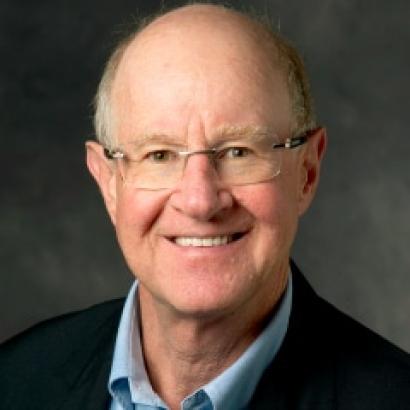
- It is Wednesday, December 17th, 2025, and you're listening to Matters of Policy and Politics, a podcast devoted to the discussion of policy research from the Hoover Institution, as well as issues of local, national and geo concern. I'm Bill Whalen. I'm the Hoover Institutions for Virginia Hobbs Carpenter Distinguished policy fellow in journalism. And while I'm the only fellow who can lay claim to that very wordy job title, I'm not the only fellow who's in the podcast game these days. And I think you should probably do yourself a favor and go to our website, which is hoover.org. Actually go to hoover.org/podcast and see what we have. We have a whole menu of excellent stuff for you. I will shamelessly plug. We also have the audio version of the Goodfellows broadcast that I have the pleasure of doing. We have a fresh one out this week with Andrew Ross Sorkin that you might wanna listen to. This is our last podcast for 2025, but fair not we'll be back in the second week of January with fresh content. But this being the last podcast of the year, it presents something of a quandary. I didn't want to devote the podcast strictly to the pursuit of holiday celebrations is, frankly, not everyone celebrates Christmas or for that matter, Hanukkah or the Feast of the Nativity or the winter solstice if you happen to be a neopagan. But what many of us have in common is New Year's Eve and that thing we like to call New Year's resolutions for getting ways to improve ourselves. My guest today, well, we're about to find out how he celebrates the holidays and if he's a fan of resolutions. But one thing I do know, he's gifted the world with many thoughts on how to lead a more personal life. It's my pleasure to introduce the podcast, William Damon, a senior fellow by courtesy at the Hoover Institution and a professor of education at Stanford University. Professor Damon's research explores how people develop purpose and integrity in their work, family, and personal life. He examines how Americans could learn to become devoted citizens, purposeful achievers, and successful entrepreneurs. Professor Damon's work has been used in professional training programs in fields such as medicine, journalism, law and business, and in programs in grades K through 12 and higher education. Professor Damon is the author of numerous books on this topic, as well as education one in particular steer you to, it's called The Path to Purpose, how Young People Find Their Colleague in Life. Professor Damon, thanks for coming on the podcast By the way, do we go by William Bill or just plain old professor?
- Thanks, bill. And you can call me Bill too. So we have two bills here talking with one another.
- I go through this too. Is it Bill, William, or Bill? And I go by Bill because Will Whalen and William Whalen is just two, two forth. I, let's start by a little backstory on you. I don't necessarily associate education professors with studying the personal life. So tell us what got you into the field of education then, how you segued into the study of how to be purposeful.
- Well, I am, it's a good question, and you're right. I'm, I'm not a common education researcher of the familiar kind. I am a, a lifespan developmental psychologist, which means I study all the different capacities that grow and develop from birth to death.
- And and how did you land on, how'd you land on that square?
- Well, there, I think I was interested in psychology all the way back to high school, and I was interested in the scientific study of people. And when I discovered there actually was a field called psychology, we did not have it in high school. But when I discovered that the summer between high school and college, I got very excited about that. That you could actually do research on the human life and do it in a way that was not subjective or confined to kind of armchair philosophy speculations, but actually interview people, observe people and find out what's going on and what, what are the capacities that people need to develop in order to have a, meet their potential and have a fulfilling life. So that's what got me interested in the general field of human development. And over the years, I drifted more and more to what I consider to be the kind of inspiring what the kind of, the kind of development, the kind of human development that I find I find to be noble inspiring, the, the best parts of life. And so I've been interested in subjects like work, good work, creativity, accomplishment, and eventually that led me to the idea of purpose because purpose is at the center of a lot of the, a lot of the successful achievements that people are fortunate to be able to make in their lives.
- Is this your niche or are there several other researchers in the United States around the world who are, who are doing similar work?
- Well, there are a lot of other people, and I will say to maybe start the podcast that I'm the last in a, not the last, but one in a very, very long line of people over the centuries who have been interested in purpose. And of course most of them have not been psychologists because the field of psychology is only 150 years old or something like that. And way back to Aristotle wrote about purpose. And in fact, I, I thought, I thought what I might do, just to begin on a kind of a humble note, because I consider myself a very minor figure in the scholarly study of purpose, when, when put up against all of the philosophers and theologians and other people that have, and great writers that have written about it over the centuries. And I thought what I'd start is just reading maybe 30 seconds worth of quotes. I I, I began my interest in purpose by compiling a bunch of readings that people had done over the centuries. And here are just a couple of quotes that I came across that maybe we'll explain why I got inspired by the idea of actually taking a scientific look at purpose and how it develops. So I'm just gonna read if you, if you give right ahead 30 seconds to read about half a dozen quotes here. Here's one from Thomas, A Keas, a life without purpose is a language drifting thing. Titi Munger wrote, A Purpose is the Eternal Condition for Success. Israeli said, the secret to success is a constancy of purpose. William Kaper wrote, the only true happiness comes from squandering ourselves for a purpose. Kenneth Hilderbrand said, strong lives are motivated by dynamic purposes. Philip Chesterfield said, firmness of purpose is one of the most necessary sins of character and one of the best instruments of success. Robert Burns said The purpose of life is a life of purpose. And Thomas Carlisle said, the man without purpose is like a ship without a rudder like, like a ship without a rudder. And then finally the last quote is from Helen Keller, who I'm a great admirer of who said, many persons have a wrong idea of what constitutes true happiness. It is not attained through self gratification, but through fidelity to a worthy purpose. So you can see lots of people over the centuries have come across this idea. And what I've brought to it, I think, is that, first of all, I've tried to study it in real people with psychological methodology, interviews, observations, and I've studied the development of purpose, meaning where it starts, what, what point in life does it begin? How do young people first find purpose? And then throughout the lifespan, how do, how do people sustain purposes or perhaps lose them and then gain new ones? How do encore purposes later in life begin? So I've studied it in populations of people using psychological science methods, and I think that's, that small addition to the centuries of wisdom on purpose is what I've brought to the field.
- I know you're a humble man, but would you say that your purpose in life is to help other people find purpose in life?
- I think that that's a maybe partially true. I mean, that's one of my purposes. First of all, one thing that we'll talk about is that there are lots of purposes in life and only some of them are vocational. So I have, I have a family purpose. One of my purposes is, has been raising children. I have grandchildren now, that's a very important purpose for me. Faith is a purpose and I do have vocational purposes and, and they have to do with my students, my teaching and lots of other things. But certainly one of them is to share with people what I've learned about purpose in my scientific studies and if that's helpful for people. That's great. And so that, that one mission is, is part, is one of my purposes in life.
- I'm glad you mentioned the family side of this because I fear that a lot of people confuse purpose with celebrity and fame and making a mark, if you will. I'm, I dunno if you've seen the movie I love baseball and I love in particular the movie Bull Dur. And there's wonderful scene in Bull Durham where Crash Davis and Annie Savoy are having breakfast. And she goes off this ridiculous tangent about, with my love of animals, I was either a horse in her previous life or Catherine the great. And then she goes, she goes, goes, who are you in a previous life, honey? He, he paused for a second. He goes, why is it that everybody was somebody famous in the past life? Why, why couldn't I just have been Joe Schmo?
- Right. Well I'm delighted that you made this point. I think one of the, there are a number of common misconceptions about purpose. It's, it's a, it's a word that maybe is, sounds a little too elevated for what it actually is because purposes are certainly not connected with status. Most purposes in the world are quite ordinary. And, and every bit is important in every kind of vocation. I mean, the word vocation itself, the root of the word vocation is calling. You are called to do some service for the world. And that service could be very important, whether it's taking care of a building or taking care of people's health or teaching or, or raising children or, or doing all kinds of ordinary things that lots and lots of people do. So it's a misconception to think that purpose is glamorous or heroic or high status or anything like that. So I'm really, I'm really, really glad that you brought that up right at the start.
- Right. Well, you know what got me to thinking about all this was the holiday seasons and New Year's Eve and the idea of resolution. So you do resolutions, by the way, I I'm not gonna put you on the spot and ask you if you, if you to give us one, but does it cross your mind come December 31st, do you look in the mirror and become interested and start thinking about yourself?
- Maybe I've done it in my, in the past on January 1st. I tend to do it these days around the Thanksgiving holiday when I'm usually with my family, including children and grandchildren. And we try to have a little bit of a, a family discussion about what we're grateful for and what we hope for and around that that, that, that always reminds me of, of how I should direct my life towards, based on gratitude and towards, towards activities that I will find worthwhile rather than just wasting my time or, or doing things that actually are, I'm, I'm not particularly happy about
- That. Thanksgiving sounds like a tricky exercise professor because it must be very tempting to go around the table and start pointing out what is wrong with everybody at the table. How you need to clean up your act. Well,
- That's right. You don't want to, you, you, you don't want to grill your children and grandchildren to come up with answers. For sure. So hopefully we do it in a more spontaneous way and it's voluntary and, and that, and that's the only way to have a good discussion anyway, is when people wanna say something they chip in.
- Yeah, it's funny, I was, I get spammed with so many ridiculous things and one was an ad the other day for a family board game and the board game is to pick up a tile and say, who in the family is most likely to rob a bank who in the family don't want you to go bankrupt? And it's, it's, the challenge is just to kind of find the worst character flaws in everybody in your family. I thought to myself, this is a healthy thing to do.
- The good part of that I can think is humor. You know, if, if it gets people laughing and sense of humor is, is always a healthy thing, especially if it's directed to yourself rather than at, at other people.
- So I'm now gonna break a, a rule that I have with podcasting and that I think podcasters should rarely talk about themselves unless they're very interesting people. And I don't like to talk about myself on podcasts 'cause I think it's just self-centered. But that said, I have been thinking about New Years and I have been thinking about 2026 and I have been thinking about ways to improve myself. And some are kind of shallow, if you will, physical. I want to do more swimming for exercise. 'cause I like that form of exercise and I think I'll feel better and it'd be good just to get my head under water for half an hour and get outta social media and politics, which I do for a living, which is just, just brutal to follow on a daily basis. You would agree. But I'm also taking a deeper dive into myself here, bill. I'm, I'm 65 years old and I am thinking about my mark on the world. I'm kind of thinking about my legacy. I'm thinking what I've accomplished in life. I'm kind of thinking, you know, if I were to pass away with the first two paragraphs of my obit would look like and things like that, I'm thinking about purpose and I want your help here in terms of doing this. Do I, how do I do this? Do I, do I need to drive out to the Pacific and climb a big rock by the ocean and sit up there like, like a Rodan sculpture and put my, with my fist on my chin and look out at the ocean and try to have a great haiku? Do I need to sit down with a piece of paper and write a list of things? How, how do I discover the purposeful life?
- Well, let me tell you some patterns that we have uncovered observing people at, at all ages of life when they find either first purposes or new purposes. And the first point is that purpose develops gradually. It's very rarely a sudden overnight flash of light. And
- It's, it's not, it's not that thing that they used to do in high school where you'd sit Bill Damon or Bill Whalen down with a piece of paper and tell me what you'd like to do. And so if Bill Damon says, I really like to repair cars, well Bill Damon's gonna work in the garage. So you're saying, you're saying it's just not as simple as that?
- Yeah, and it and, and it actually starts with activity rather than ideas. So it's not that some, it's not that somebody says, well, I'm gonna imagine what my purpose will be or what my mission in life will be, and then goes ahead and does it. It's it, it's the reverse of that. It, people you get involved in, in doing things that in some ways are services to other people or helpful or that make a difference in the world. And it can be very small and it can start fairly early. It could be chores or favors you're doing for people or or on vocational doing something for your work that you felt, well, here's something that really did provide a service and accomplish something. And gradually, and there are a lot of starts and false starts and back and forth. Gradually you do things that you discover are first of all things that you enjoy doing because there always has to be a sense of engagement in a commitment and a purpose is a commitment to actually do something. And so you do need to get some kind of personal enjoyment from the activity.
- Right? - And secondly, you discover that it matters to, to people in some way that in, in some way you've contributed something to develop a real purposeful commitment that endures 'cause purpose does endure over at least a period of time. Both of those conditions have to be in place, that that has to be something that you are engaged in and something that in some ways the world needs. And it doesn't have to be with a capital N, it could just be adding some comfort to people or beauty to the world or something like that. And, and over time, out of all the activities that you do that you experience these kinds of feelings about, people begin to focus on particular ones that they really want to commit to. And I'll give you, this is a may, maybe a good time to give you what we use as our scientific definition of purpose. And the reason I'm saying it isn't that I expect you to go out and do scientific research, but just to make the point of what purpose really is, it's, you know, it's kind of a word that a lot of people use in kind of random ways in the vernacular. Like, oh, I wanna have a life of meaning and purpose and, and this kind of thing without really thinking about is purpose the same as meaning or is it different? Is there something particular about it? And purpose is a very particular psychological capacity. And and here's the definition that we use and I'll just take you through the points of it and then you'll get some sense of what it means to actually make this commitment. So purpose, first of all, is an active commitment. That's criteria number one. It's not just walking the walk, I'm sorry, it's not just talking the talk, it's walking the walk as well. It's, it's, it's not just thinking and talking about something or dreaming, it's actually doing something. And it's a commitment. It's something you do over time. So you can do a lot of individual, even great activities. You could jump in a river to save a drowning child, which would be a wonderful, heroic thing to do, but that's not your purpose in life unless you sit by that river all the time to watch out for children, that's one thing that you did. A purpose in life is something that, that goes on for a while and you keep doing it. And by the way, you know, you could be a lifesaver or something like that, then that would be, or your purpose could be helping people or something broader like that. But just a single activity is not an active commitment. So that's why it takes a while to really figure out what it is that I can commit to. Right. And it's a commitment that has, just to finish up quickly, it has two necessary conditions. One is that you find it meaningful.
- Yes. - So it's not just that somebody orders you to do it, like the teacher gives kids homework and they'll get in trouble for not doing it. Purposeful work, if the kids are gonna find the homework purposeful, they have to believe in it. They have to themselves own it and see why that's helpful. And finally, the second thing is that, and this is, you'll see this reflecting in all the quotes that I read at the beginning. A purpose is an effort to accomplish something that contributes to the world beyond the self. That it's not all about you because there are a lot of meaningful things you can do. You can go to a movie or sing a song and that all that's lovely, but, and I don't, I'm I'm not at all diminishing those meaningful activities. They're self enlightening. They help you grow, but purpose is goes beyond that. It's, it's an attempt to actually contribute something to the world beyond the self.
- Okay. I think I, I think I get this and let me explain how I think I get this. So what I told you a few minutes ago, in terms of what I look at in 2026, I want to swim more. On the one hand that would be purposeful in that hear me out, it would be purposeful in that I am committed to something, there's a goal and I'll feel better about myself. But I don't think it passes the Bill Damon standard because if I swim a mile a day, five days a week, good for me. But that doesn't mean squat for society, who cares. So that's not necessarily purposeful. But another goal I have for 2026, which is to try to do this podcast on a weekly basis every Friday, that would be purposeful not to be vain about it, but because people listen to the podcast, God forbid they might actually learn something from listening to the podcast. So that would be purposeful. No,
- Yeah, I think that you've made the right distinction. And by the way, you know, keeping yourself in good shape and all of that, that's a, a long-term goal and it's a, it's a great goal. Self-improvement goals are extremely worthy
- And, but it's, but it's a stretch to say that it, it's for the greater good unless you really wanna do an agonized definition where, okay, I'll swim every day and I'll lose 20 pounds and I'll go buy clothes. I'm, I'm helping business. That's, that's a serious stretch.
- Or, or maybe, you know, you want to keep yourself healthy so that your
- Yeah, - Your family doesn't have to take care of you, you know, so you're thinking a little bit bit beyond the self. But I'll tell you something interesting, bill, as I said, there's nothing wrong with self-oriented goals and in fact self-oriented goals. We find that people, as they go through life, people that are high on purpose are also high on positive self-improvement goals. So it's not, it's not a trade off. It's not that you, if you're purposeful, you're a martyr and you sacrifice your yourself for the world. It's rather that you're, you're committed to something that is important to the world and that gives you vitality and health and energy that helps you pursue self-oriented goals with more zest. So it's a win-win. It's not a trade-off. That's an another, maybe a myth about purposeful commitments. It, they're not trade-offs. They're, they're, they're good for, they're good for the world and good for the self.
- Before we go further, I want to clarify here, we, when you're talking about purposeful lives, you're talking about a positive commitment. Correct. Because I could say Adolf Hitler led a purposeful life. Joseph Stalin led a purposeful life and their purpose in life was to lead to a credible amount of human misery.
- Right? Unfortunately, that's a real problem. If you read Stephen Kin's great book about Stalin, I mean, there's an example of somebody that certainly believed in certain purposes. He, Stalin believed in, as far as we can tell, really believed zealously in Marxism and so on. But he did it in a very inhumane and unethical way, and therefore caused great damage and harm in the world. And so purpose. And so I wanna say this also here, that purpose is not a, a soul answer to life. It's not, it doesn't, it's not the whole answer. It's not a silver bullet. You need other things too, to have a good life. And one of those other things is ethics, where, for example, you feel the need to pursue purposes in an ethical way with ethical means as well as ends. And so purpose is not alone among all of the capacities that people need to learn. It's one, it's one part of life, it's one very positive capacity in life, but it's, it's necessary to have lots of other elements of character as well. And purpose does not give you all of those elements, right? You need to develop all of them.
- Right? And I wanted you to, to bring this up because we live in an age where a lot of people engage in attention seeking behavior. That is the culture that is called Instagram, where everybody just has to post their lives on just an agonizing moment by moment basis. And who cares. But we also live in a very violent age right now in age of murder and assassination, where disturbed people mistake their acts of violence for notoriety. It's the mark of every political assassin. It's the mark of mass shooters as well. You've led a very miserable life. And so you decide, well, I'm gonna go out, literally, pardon the pun, in a blaze of glory, you won't intention seeking behavior. That's my purpose.
- Yeah. Well, I I certainly wouldn't call those legitimate purposes. Exactly. And I think that when we look at generally people who are purposeful, generally with rare exceptions, it's pro-social, it's people, as I said, that care deeply about their families. And most parents do and are com absolutely committed to the welfare of their children. It's citizens who really care about their communities. It's workers, good workers who, who see their work, not only, again, it's not a trade off. They, they see their work as a way of earning a living and gaining the kinds of life conditions for themselves that they desire, but they also see their work as a service in some way. And one of the inspiring talks I heard lately about the idea of service was on Veteran's Day. And Admiral Ellis gave a, a, a wonderful talk about the idea that the military has long been called the services. And we kind of forget that, you know, ha ha have you been in the service? And think of the meaning of that word service. It has a real meaning. And military life, military commitments with that sense of service is certainly a, a very noble purpose.
- You're referring to Admiral James Ellis, who's a Hoover fellow and a four star retired neighbor, Admiral and I did a podcast with him on Veteran's Day.
- Oh, that's great. That's great. Yes, I, that's who I'm referring to. And I heard, I heard his talk, he, there was a reception for the veteran fellows at Hoover and Admirer Ellis gave that talk about the meaning of the word service, which I found very inspiring
- Not to get off target, but you know, he is a career navy man, and he was a naval aviator and he went on to become a aircraft carrier skipper. So he's he's remarkable in many regards.
- Yeah, yeah, yeah, yeah, yeah. And he, he, he's far from ordinary, but as I said, lots of ordinary, more ordinary people also have great purposes. So,
- Right. You did a interview with the Stanford report not too long ago where you talked about person full and you raised six points when it comes to this topic. And I'd want to touch on each one briefly and have you explain what you meant. Let's begin with 0.1. This is not a dream,
- Right. And that's the walk the walk idea that I mentioned. We find lots of young people, especially who want to change the world and they want to save the environment and do all kinds of things, or, or even they wanna be great filmmakers, but they've actually never produced a video or they've never done anything. Right. And so there's nothing, again, it's good to have dreams when you're young, and that's a starting point, but that is not fully developed purpose by any means. Action. And an act of commitment is essential.
- Right. And you've alluded to point number two, which is you don't have to save the world a sidebar, you and I are here at Stanford for years. I have been a Stanford advisor to freshman. And what I found is that the typical freshman coming into Stanford, professor Damon is about 18 years old going on 40 that he or she is remarkably organized, very mature for their age, and they always have some huge goal in life, and it just hits right. You know, it's whoa. Which is why the school wants to put the brakes on those kids when they get here. But yeah, they wanna save the world.
- And that's why, as I mentioned, it takes a, it takes a while to sort out what can I actually do realistically in this world. That's why the development of purpose is so gradual and it takes years and years. And so yes, that first initial burst of excitement, I'm gonna change the world. When you confront the real world and all the actual problems and difficulties, it, it's a humbling experience. And it, it takes a while to sort out what value can I actually contribute to the world?
- Alright, point number three, this is good news for me. At my advanced age, you probably don't need a different job.
- Yeah, I think a a lot of people prematurely kind of give up on what they're doing because, because they have hard time. I mean, all of us have have moments of difficulty where we can't figure, we can't figure out the right thing to do or something is, feels like we're in, in a kind of a, a burned out or fallow period of our, of our careers. And I often, when people ask me what I think about that, I say, well, in my experience, you know, if you just wait it out a bit and, and maybe learn from the difficulties that you're having and, and return with a new spirit and what you've learned, you don't need to make huge changes. That doesn't mean you should never make a change, but I I always say think twice because the, the work that you're doing maybe very valuable and very suited to you and give it a, give it a chance.
- Point number four, no, you didn't sleep through purpose day at school.
- Right? Well, that's
- In, in other words, you were asleep when you were 17 years old and they told you how, how to live your life. Is that what you're getting at?
- Yeah. That, that, first of all, school is not gonna tell you what your purpose should be. And even the word purpose, I think for school age people is, is a little bit too highfalutin a word. In school you should learn skills, you should figure out what are the things that, that you find meaningful that you would want to pursue. But a lot of that is just a starting point. And if there were such a thing as purpose a in school, it probably wouldn't produce many results for sure.
- Point number five, only you can find your purpose.
- It purpose is an individual. It is highly individual. It's, it's, it's a snowflake. Every, no two people's purpose are exactly the same. Everybody goes about their work in their own particular way. They have their own kinds of abilities and interests. And you eventually, when you learn a lot about yourself by trying out a lot of things and learn a lot about the world, you will develop your own unique capacity to contribute to the world. But it's always gonna be unique. There's never gonna be anybody like you that is gonna contribute in exactly the way that you do to this
- World. But how do you deal with people in your life who you trust for their opinion, your parents, your friends, your relatives, your priest, rabbi, gurus, whatever you wanna call your spiritual advisor. Shouldn't that be part of this?
- Yes, mentors are, are really important. Most people do learn from observing, number one, observing other people, especially other purposeful people and, and taking advice from them. But nobody can write the script of life for you. You are the only one that can write your own script of life. So the mentoring relationship and the parents and the, and the people that you work for or teachers, religious leaders, all of those people are very valuable sources of guidance. But in the end, you're the only one that can make the call as to, as to what to make of all that guidance.
- And your final point, you might not find it by age 25 or 45, dot dot and I would add maybe 65.
- Yeah. I mean, a lot of people we, we find in the early years of life, meaning, you know, up to age 25 or 30 only a minority of the population really feels fully purposeful. A lot of people have components of purpose and are moving, but it can take decades for people to really settle on, on commitments that they really find fulfilling and that suit their own interests and talents. And that's the, that's the key. You know, think of all the things in the world that you could do and what are the things that actually combine something. I'm interested in doing something, I'm talented enough that I can do it well, and something that the world needs. And it takes really some people a long time to sort that out. And I always say, don't worry about it. If you're moving in that direction, that's, you don't have to, you don't, you don't have to always be assessing yourself as to whether I'm there yet. If you, if you're searching and, and moving in that direction and trying things out, that's, that's as good as it gets for, for many of us.
- Let's, let's do a case study on this. And that case study is the gentleman who has a connection to the Hoover Institution, Stanford's education school and the university in general. That's Andrew Luck. Andrew Luck was a Stanford undergraduate. He was the, I think he had a degree. He left here with a degree in architectural design, I believe in 2011. He is the number one draft pick in the NFL. So he could say, Andrew LuxS purpose in life is to throw footballs. Makes sense. He literally was born to do this. His father was a quarterback. Fine. Well that's the plan until he hits age 29 and he retires. And there's remarkable story in ESPN for those listening who are, who might be interested in this luck, you know, comes back at age 28, he has a fantastic comeback and you think, oh, he's gonna play football for 10 more years and go in the Hall of Fame. Then the next year, right on the verge of the regular season, he shocks the world by announcing his retirement. And then this story comes out in ESPN where he talks about two things. He says, number one, I've been through a me credible amount of physical pain playing professional football, and I'm just tired of hurting. I just need to heal. I just can't take this. And then secondly, what was fascinating, he said, I'm also not happy with the person I've become. His wife said that you're not the man I'm married, literally, because NFL quarterbacks have to be just sort of dominating alpha males. You have to dominate in the huddle and just be swagger larger than life. And if you know Andrew Luck, he's kind of a happy-go-lucky nerd, if you will. He's just not a swaggering alpha male. That's more John Elway than Andrew Luck, if you wanna put it in Stanford context. So here's luck. He, he's on this football path in the age in 29, he stops his path. Then what does he do? He comes back to Stanford bill and he gets a degree, a master's, master's degree in education. It's your ED school. I don't know if you taught him or not, but he was at the ed school. He gets his master's degree so he could think, okay, he's found his purpose. He wants to be an educator. Well, wait a second, Andrew then calls another audible. Stanford makes him the general manager of the football program, which he agrees to for five years. He's then, I think, just finished his second year of doing it, which means that by the time he finishes his five year stint, he'll be pushing 40 and looking to do the next thing. I ask this bill, because is finding purpose, it sounds like if you're Andrew Luck, you're kind of continually finding new purposes in life. Are you, are you saying that's how life plays out for some people every few years you find a new purpose? Or are you suggesting that maybe this just sort of a long narrative to life
- That certainly is the way life plays out for people? I won't comment specifically on Andrew Luck other than to say I'm a huge admirer of his all, all the way back from when he was a great football player to the way he's now organizing our
- Yeah, but I mentioned this because it's not like he's reinventing himself. It's not like he's an actor who goes from situation comedies to drama. Right. You know, that he is just finding new passion projects along the
- Way. Yeah. So let me comment on the story that you told in, in the general sense, as I said, I, I, I personally don't like to invade people's privacy and, and, and talk about individuals publicly at least living individuals. But, but as I said, I will certainly say I am a huge fan of Andrew Luck and I totally admire everything I've ever heard and known about him. But, but let me talk about the general point that you made, which I think is the more important thing. And the pattern that you described in your story is exactly what happens to people throughout life in, in, in infinite number of ways. And I say infinite 'cause I say every story is an a snowflake. Every story is individual. But, but what all of us do is we find things that we aspire to, we have aspirations, we try them out. Sometimes we're successful for a while, sometimes in some cases successful forever. You know, you could be a, an oncologist that very quickly in medical school discovers you wanna do that and successfully treats people for your entire career and so on. So, so that happens too. But most often people go through different periods. So even for example, if you're a parent and you raise children, well guess what? The children eventually you hope grow up and move out and have their own lives. And so the purpose that you've had all those years, no longer is a day-to-day at least, hopefully you're not micromanaging their lives when they're off raising their own families or having their own jobs. You're in touch and you're supportive, but they're no longer a primary purpose day to day. And so you feel empty for a while maybe. I certainly went through that when my third, finally, my third child moved off to college, I had a period of emptiness around the family. And, and you kinda look around, how am how am I gonna now deploy my energies, spend my time, what am I gonna dedicate myself to? There's an emptiness. And so you try something else out and maybe it'll work, maybe it won't. This periodic reinvention of yourself right along with your commitments is totally normal in life. And it goes on. We've studied people all the way into their nineties and we've seen these transitions happen where people maybe at the, maybe after having incredibly intense careers and family lives, what they do later in life is maybe they'll dedicate themselves to animals, an animal rescue or, or all kinds of things that, that are, that are sort of new. But also, as you pointed out in your story, very often the, the skills that they've developed earlier are still, are now useful in a different way. And so they're recommitting those skills or, or quote, repurposing the skills they've developed to new purposes.
- Right? I'm curious as to if people are now finding this at a younger age, which maybe is a function of today's society in this regard. I look at my beloved sister who is retired now. My sister had her first of her two daughters when she was 20. Let me do the math here. I think she was 24 years old and she had her first child and then she had another girl three years after that. So from the age of 27, her purpose in life was severalfold. It was number one to be a good mother and a good wife and to be a provider. And that worked as long as she had a job, is still married or marriage has been going for almost 50 years. Congratulations, Beth. And as long as her daughters were, you know, in the nest or in college and needed her. But then as she got older, the girls got outta college and they found their way in life and they found their own husbands and started their own families. And it all leads to her retiring at the age of, I believe 62 bill. And now she has to find a new purpose in a life and a new purpose, it seems to me is doing things that she didn't do for 40 years. So she plays a lot of tennis and she travels and socializes a lot. It's the life that she didn't have before. So I would say that's her purpose, but pardon my filibuster here, but she discovered this in her sixties. That's when she really started looking her purpose in life. I'm curious, in today's society where we are more medicated, we do much more therapy, we are much more interested in the doctor fills of the world and the people who come on TV and sell books and self-help and things like that. Or people agonizing over this at younger points in their life than they used to.
- Well, in my observation, the word about purpose is sort of out there. In fact, if anything, it's become a little bit of a buzzword in the last, over the last 20 years or so. I mean, I read at the beginning those quotes from the philosophers over the centuries, but, and they, and they've always been out there, but most of my life, I haven't heard the word purpose as often as I've heard it in the last maybe 20 or so years. Maybe one of the reasons for that, it was Rick Warren's book, A Purpose Driven Life in 2002, brought the idea of purpose way to the public's attention. And maybe that started the focus on it. And by the way, his book has one of the great first lines of books anywhere, which is, it's not about you. And I, I think that was a, that was a great refocusing because the idea that, you know, life isn't all about you, it does give you a sense of resilience that you're dedicated to something beyond yourself. So you keep going even if you're having problems. But so I think to build, I think the, the idea of purpose is out there and that people are realizing that this is something that, as I said, a lot of people use the phrase, I want to have a life of meaning and purpose. And I think they ought to distinguish those two because meaning is not purpose, but still it indicates that there is some, there is some intimations in your, in people's minds that this is a useful thing to do. And, and so I think, I think the word's out there, but I think that what is needed is opportunities for people to connect with other people, with activities, with, with opportunities to do things that then give people a feeling that they are making a contribution and that they are doing something that they, as I said before, enjoy doing, find that they can do competently and that are valuable to something somebody in the world beyond themselves.
- But there are people out there who overreact to situations. For example, bill Damon doesn't feel well, he has a headache or a stomach ache. And Bill Damon goes on WebMD and Bill Damon quickly comes to the collusion that he's dying of cancer. 'cause if you go on, you go on those sites, they always lead you to cancer and horrible diseases. It's never, never take two Tylenol and kick back to me tomorrow. But I ask this because does everybody who's examining the purpose of life, does everybody really need to examine or not? In other words, is it that dramatic?
- No, I, in fact, you know, this goes back to the purpose day at school idea, right? I think people, it's not that helpful to be that conscious about purpose and to say, oh, I need to find a purpose. And it, it's not that helpful for students. That's why I, I don't advise teachers to say, we're okay, tell your students they need to find purpose or have a purpose learning day. I don't think that's useful. And I don't think it's useful for older people to say, oh boy, I am really worried I gotta find my purpose. It's more that you need to find things to do that you find fulfilling and, and that you can commit and you believe in something that you believe in some cause or, or something that is an activity that you feel is worthwhile. That's what the focus should be on, not on the word purpose, not on a self-conscious idea that I need to be a purposeful person.
- I ask it because it's my concern about the snowflake culture and especially in higher education right now, I don't know if you saw this story or not, but there's an alarming number of students at Stanford and other elite universities who claim to have disabilities. Now, I don't mean to diminish anyone's disability, it might be people out there, but I think I saw numbers where something like one in three students and elite universities claim to have a disability. And as our colleague Neil Ferguson said, rather dry the other day, I'm guessing when they get out of college, they will not have those disabilities when they're looking for a job. But it ties into this culture of just, we call a weakness, if you will. I just, I worry that purposeless gets, gets tied into that.
- Yeah, I think there's a lot of anxiety and, and the anxiety tends to be self-focused. You worry about yourself a lot. I I do think that the way to get beyond that is just to not think about yourself so much and to, you know, to, to realize you're, you're just one person in this whole world and maybe a little humility, you know, the old definition of humility that I like is it's not thinking less of yourself, it's thinking about yourself less.
- Yeah. You know, one thought is maybe Bill, people need to unplug more. I don't know how close you followed the news, but I had a hard time sleeping the other night, and that was because it was Sunday night and the weekend had brought us the news of the shooting at Brown. It had brought us the news of the mass shooting in, at Bondy Beach in Australia. Then it brought us as a, as a climax, an exclamation point, the, the tragic stabbing death of Rob Reiner and his wife in Los Angeles. And I thought, this is just, just incredibly despairing and it so bothers in the middle of a holiday season. So maybe, maybe it's just kind of getting away from the visit of the world. And this is my final question, since we are moving in the holiday season now and people are starting to become introspective, what is your advice to people who are becoming introspective in the holidays and are thinking about per this, what, what do you tell them?
- I'm not the, the necessarily the, the best advice giver in terms of helping people block out all of the things that, that are disturbing in the world. But I can only say for myself and what I do is try to think of the great examples. The holiday season, of course is a time of faith across all religious traditions. And there have been incredibly inspiring noble faith figures, leaders in, in all of the religious traditions. And, and some of them, they're, I mean, all of them, they're, they're beautiful stories and including, including all of the art and music around those stories that can lift your spirits. And the more you can focus on that, on the people that you do find inspiring on the whole idea of serving some higher power or, or believing in something beyond yourself and becoming absorbed in all of the celebrations of that, that include, as I said, music and art. I, I think that's very healing and, and, and is, is a way to focus on things that are uplifting. And, and that's what I do.
- Some people, some people would say just watch, it's a wonderful life. But that's a complicated buoy.
- It's been a long time since I've seen it, so I
- Like it has an incredibly uplifting ending, but there's a lot of darkness that precedes it.
- Yeah. Well I think the, you know, the, the answer to darkness is to try to focus on the light and whatever the context is, you, you know, you have to, you have to admit that there's darkness in the world and that's part of it. But the more you can focus on the light, I th I I think the, the more you'll feel uplifted.
- Okay. Our time is up, professors. Anything else you'd like to add before we sign off?
- Just thank you very much. You've challenged my own thinking. I'm, as I said, I'm trying my best to understand all of this human condition myself and hopeful that perhaps a a little bit of what I've learned can be useful to other people.
- And it is a new year coming up. Do you have any projects in the works on, on this topic, on purposefulness?
- Well, I am, I am beginning a study of great work and creativity and genius and the, what I hope is some of the great achievements in life. So I'm trying to learn about something a bit new myself at this stage in my life, at this late stage in my life because I'm, I am actually at this point in my eighties, and so I'm on, on a track to, to move on to my own encore purposes as I re as i, I will be retiring from Stanford and moving on to other, looking for other purposes, just like the people we've all talked about.
- Okay. Do me a favor, if you tell our colleagues that you're doing work on geniuses, I want to know how many people volunteer for the project.
- Fair enough.
- Okay. Bill Damon, it has been an honor and a pleasure. I hope you have a great holiday season, and thank you very much for your wise words.
- Thank you, bill. I really enjoyed speaking with you.
- You've been listening to matters of Policy and Politics, a podcast devoted to the discussion of policy research from the Hoover Institution, as well as issues of local, national and geopolitical concerns. You've been enjoying this podcast. Please don't forget to rate, review, and subscribe to our show. If you wouldn't mind spread the word. Tell your friends about us. We'll be back in 2026, as I mentioned, with regular podcasts. So maybe that is indeed my purpose in life. My other purpose in life is to get you to check out more of the Hofer institutions. So this is my reminder that we do have Facebook, Instagram, and X feeds are, x handle is at Hoover. I nst at Hoover inst. And if you wanna learn more about Bill Damon and his work on the Purposeful Life, you'll find his bio at the hoover institutions website, hoover.org or there, sign up for the Hoover daily report, which keeps you updated on what Bill and his Hoover colleagues are up to. That's delivered to your inbox weekdays for the Hoover Institution. This is Bill Whalen. I wish you the best this holiday season. Look forward to talking to you again in the new Year. Until next time, take care. Thanks for ing.
- This podcast is a production of the Hoover Institution, where we generate and promote ideas advancing freedom. For more information about our work, to hear more of our podcasts or view our video content, please visit hoover.org.