
Articles
Tokenization Of Real-World Assets: A Market Taking Shape
Managing the profound change demands harnessing advantages, mitigating risks, and creating careful legislation.
October 21, 2026
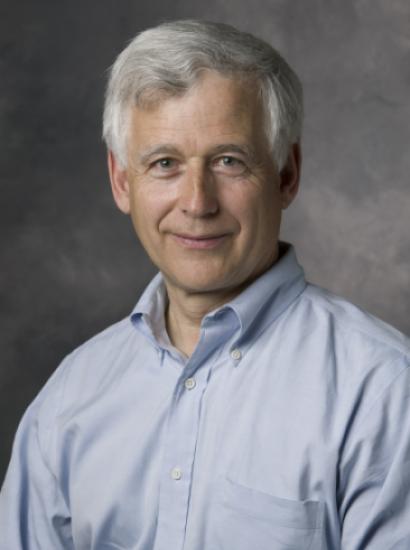
Jon Hartley and David Henderson discuss David’s career as an economist, the role of property rights and market competition in economic growth, as well as the UCLA School of Economics, Armen Alchian, Harold Demsetz, and the New Institutional Economics.
Recorded on November 15, 2025.
- This is the Capitalism and Freedom in the Twenty-First Century Podcast, an official podcast of the Hoover Institution Economic Policy Working group, where we talk about economics, markets, and public policy. I'm Jon Hartley, your host Today. My guest is David Henderson, who is a research fellow at the Hoover Institution and an emeritus professor of Economics at the Naval Postgraduate School. He's also an editor of the Concise Encyclopedia Economics. Welcome, David.
- Thanks, John.
- So great to have you on and really wanna talk about your amazing career in economics and in in communicating economics to the public, which I think you do so well. Thank you. And I wanna start with where you grew up, like when you grew up in Canada, you grew up in Manitoba, Canada.
- Yeah. - How did you first get interested in economics and make your way to study at UCLA with Harold Deitz, who's, you know, a legendary figure in study of property rights, the Nirvana approach. Tell us more about your, your early life and how you got interested in economics.
- Oh, okay. So like you, I'm a Canadian. I grew up in two small towns in Canada that you've never heard of. And I went to the University of Winnipeg. I started when I was 16 because I'd skipped a grade and my birthday's in November. So I was about a year and a half of, ahead of most people. And it was a three year degree in Canada. And there's a reason that matters. I was a math major and I was really good at it. I ended up winning the gold medal in math at the University of Winnipeg at graduation. Math didn't grab me though in, in any really fundamental way. And so what, anyway, my first year I read The Fountainhead by Ay Rand and it just, I was obnoxious for six months, you know, kind of thinking you should be self-interested about everything. And my mother wants me to go get metaphor, and I say, that's altruistic, you know? But anyway, I got past that and started reading more of what she was recommending. People like La Van Mes and so on. So I, while I was doing math part of the day, I was educating myself in other parts, reading Henry Haslet Economics in one lesson. And I started feeling comfortable enough with the economic reasoning that I got in arguments with my calculus professor, my favorite professor there who was a British socialist. And I remember one time I kind of backed him into a corner pleasantly, but he said to me, David, you won this argument, but I'm an eco, I'm a calculus professor. Why don't you go to the economics department and see how they handle your arguments? And I thought, you know, you're absolutely right. Now, this happened in my second year, and as I said, it's a three-year degree. So I didn't start an economics course until my third year. And at University of Winnipeg, it was the whole year you did one course starting in the fall and writing your exam in May. And I knew halfway through that whatever I wanted to be in life. It was not an economist because it was so boring. We learned the Keynesian Cross model. We learned about perfect competition where everyone produces the same thing. No advertising, no, no differentiation. It just sounded perfect. Competition sounded boring to me. And then my libertarian club that I joined had, we used our whole annual budget on hiring someone from the University of Chicago. We tried to get Milton Freeman, we couldn't afford him, and we were recommended to try Harold Descents. And he gave three talks in two days. And it just opened my eyes to what you could do with economics and be at a good school, namely University of Chicago. So he had one talk, one talk in which he talked about how property rights can help solve the problem of pollution. He talked about how free markets raise the cost of discriminating on racial grounds, making it expensive to discriminate and therefore causing less of it than I than if you don't have free markets. And this was just so exciting to me. And I, I calculated, I must have spent between 10 and 15 hours with him, both in the talks at lunches, driving him to the airport and we drove him to the Winnipeg Airport and he turned to me and said, you ought to come to Chicago and get a PhD in economics or business. And with my typical Canadian humility, which wasn't put on, I said, I don't know if I'm good enough. And he said, you're good enough. And what I learned later was that if you didn't think, if he didn't think you were good enough, he said that too. I heard from other people. So anyway, that's what got me kind of in that direction. I went down to visit him af two weeks after graduating in May of 1970. He recommended that I get all the past issues at the Journal of Law and Economics. So I did, and I was gonna start at the University of Western Ontario in the fall of 1970, because that was recommended to me as the best kind of undergraduate program. I wasn't gonna get a degree just as a year of advanced undergrad courses and maybe a, a grad course or two. And then something pretty awful happened that summer. My brother was 22, I was 19, and he committed suicide. And I didn't want to go anywhere. I just wanted to stay around my friends. So I contacted the University of West Ontario, explained the situation, could I come down a year later? And since they weren't giving me money or anything, that was fine. And then I spent from eight to 12 every morning working my way through back issues of the Journal of Law and Economics. And that was just eye-opening. And every time I read an article by someone I thought was really good, I wrote the person's name and where the person was. And five college universities kept coming up, Chicago, UCLA, duke, university of Virginia, and VPI, which is now Virginia Tech. I applied at all of them, got accepted, all of them. And UCLA gave me the best offer. So I ended up going to UCLA. By then, Demsetz had moved to UCLA. Anyway, that's, that's how I got into it.
- Wow. And and Arm Alkin w was there at that time.
- Yeah. And I kept writing his name down. So when I was in my second year at the University of Winnipeg, I read this article he'd written called The Economic and Social Impact of Zero Tuition. And it was just so beautiful, just such good reasoning. And he laid out how the idea of subsidizing people to college to go to college doesn't make sense when the fact that they can go to college means they're already kind of gonna be in the upper rungs of the income distribution. And his analogy was, if some, if an oil, if someone's sitting on a, if on a patch of oil and doesn't have the money to drill you, don't give him the money. At worst you'll lend him the money because he's gonna be a wealthy guy once he drills. So your brain is like the patch of oil. And I, and so there was this, there was this commission to look into what they should do about university financing. And I just wrote it out, not even using a typewriter, just wrote out that argument, quoting him, also, putting it in my own words and submitting to this, this committee, why should they, why they should be charging us higher tuition and not subsidizing us. So that was my first attempt to kind lay out some economic reasoning.
- That's fascinating. I know at some level, UCLA has been, in many respects, a home for many Chicago School of Commerce. At one point, I think they were calling it Chicago West. Well,
- When Sam Peltzman, who I went to visit when I first got there, 'cause I, he was there as last year before he went back to Chicago, he had a bumper sticker on his door, the University of Chicago at Los Angeles.
- Oh, that's great. That's so funny.
- Yeah, yeah.
- Well, I'm, I'm curious, you know, like one, I I know many other legends of economics legends have been through there as well. Certainly, you know, Hoover's very own John Hogan, as well as now past John Ian and, and Eddie Lazier. Eddie Lazier attended as, as an undergrad. And John Ian and John Hogan were there for their PhDs. Many Hoover, Hoover luminaries have, have been through UCLA as well. Yeah. So I'm just curious, what, if you could define, like, you know, what did they mean, you know, what were the ideas about property rights that folks like Harold Demsetz and Arm Elian we're coming up with? Explain like what exactly, you know, is the Nirvana approach? Yeah. And, and and what exactly does that mean?
- I'll start with Elgin and then go to Demsetz. So the way I once summarized Elgin's work is you tell me the rules and I will predict behavior. And so, you know, you tell me the particular property rights regime or absence of property rights, and I will predict behavior. And one of the things that was so great about Elsin is that, you know, the, the, the profession had become pretty mathematical by then. I went there in 72 and he didn't do that. He could do math, he was good at it, but he thought you could be rigorous with words. And I learned that when, when he graded me, how I, I would just use words very loosely and he would kind of write in the margin, no, that's, you know, you don't want to minimize this and maximize that 'cause you can't do those at the same time, you know, stuff like, and, and so he just, that was just a great thing to learn from him. Dem sets was along the same lines. Dem sets wrote a piece in the a ER papers and proceedings. It would never be published now to called towards a theory of property rights. And it was, it's one of the most read articles in the a ER. And you know, it's just all about how in Canada when the various Indian tribes were, were catching beaver. And they didn't, you know, they, they wanna make sure they didn't, someone didn't encroach on them and they had a kind of a kind of property rights set up. So he did all of that stuff. Also, I, there was this book on the UCLA economics school that I did with a fellow economics, a fellow graduate student at UCLA. And it was published by Fraser Institute. And I pointed out that if you look at the timing of the, of this article he wrote where he, he talked about what happens when you have things in common. It proceeded by a year, the famous article, tragedy of the Commons by his name's not coming to me, it's the most read article in Science magazine ever. And, and so anyway, he, he, he, he beat him by a year, but he didn't come up with that term. So it's just those kinds of insights that, and so dem sets, it's the same thing. You tell me the rules, you tell me the property rights, and I will start predicting behavior.
- Garrett Harden's fascinating.
- Garrett Hardin was the author of the Peace and Science.
- That's fascinating. I know that this is sort of also a, a, a big, really critical to what I would say is the, you know, founding of of new institutional economics, which, you know, folks like Drone Edge, Moog and others are, are, I think part of, in just arguing, you know, how much property rights, having good property rights is, is essential for economic growth. Yeah. And it's interesting, you know, how many others I, I guess, have gone through UCLA over the years, whether it's, you know, Jerry Jordan who became president of the Cleveland Fed, I think Bill Sharp, you know, for the sharp ratio. He, he went through UCLA,
- Walter Williams got his PhD a couple years ahead of me. We didn't overlap. He left just, you know, months before I got there. So yeah, there were a lot of a, a lot of heavy hitters. Could I get into the dem sets and the nva? Absolutely. So, so he wrote an article in the Journal of Law Economics called Information and Efficiency, another Approach. And what it was, was essentially a critique of this piece by Kenneth Aero, where he basically was saying, you know, Kenneth Aero is using what he called the Nirvana approach. You look at problems with the free market and then you say, therefore we need government, but you don't examine how government works. So people now call it the Nirvana fallacy, but it was really Nirvana approach and it consisted of three fallacies, according to dem sets, the grasses greener fallacy, the people could be different fallacy and the free lunch fallacy. And he laid out how Arrow did all of committed all of those fallacies in, in his famous article. So that was, that was huge. And that was one of the ones that, that we highlighted in our Fraser book on the UCLA school.
- That that's fascinating. It's amazing how at some level, economists have been become so obsessed with market failure and at some level kind of forgotten about government failure. Yeah. And, and I, I think at some level you have to sort of balance those two up. But I think it, in economics 1 0 1 classes, I think very, very few actually teach any concept of government failure. Or, you know, what if you overcorrect for these externalities, what, what kinds of dangers? What if you can't really measure social marginal costs? What, what happens from the, the government intervention that that's maybe overdoing it in, in response?
- And what happens if the government officials don't have the right incentives? And the way I've often put it, and this is quite in line with dem sets, is okay, you laid out how incentives in the free market can lead to bad results. When I'm not taking account on negative externalities, I over pollute, et cetera, you forget to even look at the incentives the government officials have. And so it's just like, it, it it, it's just basic. You know, George Stigler who picked up on, he was a colleague of dem sets at Chicago before Demes was at UCLA and George Stigler said, you know, when you're looking at free markets versus government, it, it, most pe most economists are kinda like the judge in a beauty contest who sees contestant one and that's it. And on that basis gives the award to contestant two in words. You aren't even examining the way, the way government works. So that was a, a big thing with dem sets.
- Well, well that's, that's quite something. So, so I wanna, I wanna get back to some of your career and yeah, you, you were a professor at University of Rochester and you also were part of the Cato Institute very early on. I think a lot of people aren't, may not realize that the Cato Institute actually started in San Francisco on, on the West Coast. Yes. I mean, tell us about some of those early days and, and, and what it was like being an economist at, you know, at a time that was so before the Reagan revolution. Yes. You know, free markets, you know, wasn't totally something that I'd say was maybe fully embraced by the GOP at that point. I mean, the Nixon saw, you know, a lot of different things from price controls to you name it, you know, which is very, very different from sort the, I'd say free market policies of the, of, of the Reagan administration. I'm curious, what, what was that time like for you and you, you obviously also went to serve in the legendary Reagan CEA that many others had worked in, including Hoover's very own John Cochrane as well as Paul Friedman and Larry Summers. And, and Marty Feldstein was the chair for part of it as well as Bill Kin. And who, tell us about that sort of early career in, in economic policy for you.
- Well, I want to start by talking about how I decided that I wanted to do more popular writing and less academic writing. I was at University of Rochester and I was doing academic articles and having trouble getting them published. 'cause I was trying the top five journals. Shouldn't have done that. But anyway, I did. And I remember I was on a call with a friend of mine one day and I was talking about this article, this academic article I was working on. And then I told him about this piece I'd done on the minimum wage for Libertarian review. And he said, David, I wanna point something out to you. When you talked about your minimum wage article, you sounded like the young, vigorous excited David, I've come to know and love when you talked about your academic work. You sounded like an 80-year-old man who is about to die. And, and I sat with that for a week and thought, you know, he is right. And a friend of mine named Roy Childs, who was editor of Libertarian Review, we were talking on the phone then a week or two later, and he said there was an opening at the Cato Institute for a policy analyst. So I applied for it, I got it. I was not a very good bargainer. And that's a whole story about the wage i, the salary I accepted. But anyway, it got me writing every week for a general audience. And then I went back to kind of thinking about elsin. It's like, how do you write clearly and accurately for an general audience, even to under, even to explain kind of complicated points. And I got pretty good at that. And so I was writing, I was applying, I was every once in a while submitting things to the Wall Street Journal and not even hearing back from them or hearing back that it was a no, you know, that's when you sent things in letters. You remember letters tell, you sent them them Anyway. But also, I, I should go back to one other thing 'cause this is all kind of setting the stage for how I decided to specialize in, in writing for a general audience. Fines Welch, who was this famous labor economist at UCLA, he's the one who John Cogan and John Razin studied under. I didn't, but I was sitting in his labor economics class and he one day asked us to guess the number of readers, number of average, the average number of readers of a journal article in an academic journal. And we started a hundred and worked our way down. And finally the answer was four. And I went home that night and said, do I want to spend my life writing articles that four people will read? Let's say I'm three times the average quality. So it's 12, let's say it's a non-linear relationship, so it's 30 like still. So that was actually when I started submitting articles to the Wall Street Journal when I was a graduate student. And I kept getting rejections. But anyway, that set the stage. So Reagan gets elected and there's a whole story there about, so, okay, when I was, when I was the editor of Policy analysis, I wrote a, a defense of all these deregulating economists, people like Murray Weidenbaum because the, the Village Voice had a really scurrilous attack on them. And I wrote a, my editorial was titled A Reply to the Voice. And I sent copies to every, every economist who was pushing deregulation just so they would know if someone was defending them. And Murray Weidenbaum wrote back a nice note. He was like, Mr. Deregulation at the time. So one day I'm driving home, I quit Cato and ended up work teaching at Santa Clara University. I'm driving home from San Santa Clara to, to San Francisco. And I find out on the radio that Wheaten Baum's just chose, been chosen as the chairman. So I get home, I call his office to remind him who I am. 'cause I wanted to be a senior economist and they say he is gone home for the day. So I just called the the St. Louis phone book 555-1212. And got his number at home called him. And this is funny, it funny in a funny kind of way. His wife answered, and I later kind of friends with her, but she answered and I said, I heard Murray's gonna be the chairman of the council. And she goes, he is. So he had, he'd accepted without telling her that's like, that wouldn't work in my marriage. But anyway, so he called me back and then he said, yeah, he'd be back in touch. And then they were dealing with the budget and tax policy. He had no time to be back in touch. Meanwhile, Kogan, John Kogan we talked about had become Assistant Secretary of Labor and he hired me to be one of his assistants. That's how I got closer to Kogan. It's also how I got closer to John Raisin, who became a very good friend when we, 'cause we knew each other in graduate school, but he was a year ahead of me and, you know, we didn't know each other well anyway, so I went there and then once I was there, Weinbaum invited me over for an interview for Senior Economist, made me the offer and I was gonna be working under him. And Bill Neon, bill Neon was one of the members. But then Murray quit in July of 82. I was coming in in August. So he and I overlapped for only a few weeks. That was another interesting story. I had left the labor department on a Friday. My wife to be had moved from Santa Clara where we'd met. She was a, an English composition lecturer. And we're planning out our, our next, our our week of vacation before I start that job. And I get a call from Murray and he says he's talked to Marty Feldstein his replacement, and Marty has asked him to invite all the people he's made offers to not to come. Well, I'd been a summer intern at the Council of Economic Advisors in, in 73 under Herb Stein and, and Nixon. And so I knew the kind of the, the rule, the gentleman's rules, which is the person making the offer. It's good no matter who comes in and replaces him. So I said to Murray, could you please tell Marty I respectfully declined his, his invite. I'm coming. So I got there and, and overlapped with Murray for two weeks and then Marty came in and so it, it kind of worked out well. That was another thing, like I, I looked around, I, I knew he was bringing in Paul Krugman, he was bringing in Larry Summers. And I thought, well, they're not health economists. And I looked around, there was no one doing health economics, it seemed to me. And I hadn't done it, but I'd read a lot of it and I liked it. So I spent two weeks just boning up on health economics to be ready to make my pitch to Marty. And so I would, you know, I'd, there was, you know, health Economist named Joe Newhouse, everyone's heard of. And I'd read his work and I'd call him up to ask him a question about it and he'd take my call. 'cause I'm calling from the Council Economic Advisors. And I could tell by the way he answered that was not a dumb question. And so anyway, Marty, the day after Labor Day was his first day, and he had all of us in this little room, maybe these like 12, 15 senior economists, junior economists like John Cochran and Greg Manchu, I mean, you know, all these people that turned out to be heavy hitters. And Marty said, I want you to go around the table and say your name and where you came from. And I thought, you know what? I'm gonna, I'm gonna take a chance here. So when it got to me, I said, David Henderson labor department, and I'd like to be the health economist. And I see Larry and Paul just kind of whispering and laughing like, who the hell's this guy? I go back to my office an hour later, I get a call, the chairman would like to see you. It was his, it was Marty's secretary. And I went down there and Marty says, I hear you're somewhat of a health economist. And I thought, do not over promise. I said, well, two weeks worth, but I'm a fast learner. And he goes, you got it. So I was the health health economist under Very good.
- Well what, I mean, what was it like, I guess you, you people like Paul Krugman, Larry Summers, I mean, I'm sure there were probably others around I maybe Greg Manchu came later and, and
- No, he was there as a junior. Okay. He was there as a junior. Yeah.
- And was it clear that these folks were all pretty ascendant, I guess, and in macroeconomics at the time and, and
- Paul Crewman was already known for his thing that helped win him the Nobel Prize, which is the monopolistic competition thing. Like I, I think it kind of, the way I think he posed the question is why is it when we talk about specialization across countries, why is it that Sweden produces cars and United States produces cars and Japan produces cars? Like what's this specialization thing? And he had this whole model and that was, that was part of, of it. And people knew about it. And so I had a friend who was a, for a fellow UCLA graduate a couple years ahead of me, Ted Frack who visited me, and we were in the cafeteria and he looks over and he sees Paul and he gives me a nice summary of what Paul had written, you know, and so yeah, and everyone knew Larry was really sharp, very different personalities by the way. Like Paul kind of kept to himself. Larry was outgoing. If you wanted to go into his office and talk about something, he was very welcoming in a way that say Paul wasn't. But anyway, so it, it was an interesting group. One thing, by the way, Marty and Bill did not get along. And so the health economics was fine. That was Marty. But I, Marty made me an offer to stay a second year and I wanted to accept, because I could always say no, no, he didn't just inherit me. He wanted me. So I accepted. And then Ben Zeer had been the energy economist left, and I, and I asked if I could take on that portfolio 'cause Energy was dialing down. Reagan had done the good thing by ending the price controls. And I felt like I can handle both. And Marty and Bill said yes. And it was on tho that issue where I was answering to both of them. And I had to learn how to do that without getting in the middle and getting both of them disliking me. And I, I think I ended up doing that pretty well.
- That's fascinating. And and what a, what a time to be there during the, the Reagan CEA and Yeah, you know, through a, you know, there are a couple amazing tax reforms that, you know, brought marginal rates down substantially and was the one change to the business tax code really in, in 30 years. And, and it wasn't until the Tax, tax and jobs act of, of 2017 that the US was able to, to cut the corporate tax rate again. I wanna just talk a little bit about, you know, your interest in getting into, you know, communicating economics to the public. And I know we talked a little bit before about shifting from, you know, writing academic articles, which maybe a few people read to, you know, writing more, more for, for the public. I mean, I think you were very early in, you know, communicating to the public online and, and you know, you've been involved with Econ Log, you have a Substack now. Yes. You have the Concise Encyclopedia of economics, which you, you've been working on for, for a long time. I'm curious, you know, what piqued your interest in, in these various groups and and how did that all start?
- So it really started with writing for Fortune. When I was at the Council of Economic Advisors, ed Meese was a, you know, major figure in the Reagan administration. And he asked either Bill Neon or, or Marty, I can't remember who as a favor, could, could he kind of assign one of his senior economists for a few hours to help him with this speech? He was making critical of industrial policy. And I thought, yeah, I'm very critical of industrial policy. And when I started researching it, I went, oh my God, like I've learned so much. And one of the big things was what I ended up calling the myth of meaty, that meaty, the Ministry of International Trade and Industry in Japan didn't plan the economy that much. And to the extent they tried, they failed. And so I wrote some of these things up for Ed Mesa's office and I thought this would be a great article. And meanwhile, I was talking to the Washington Bureau chief for Fortune, whom I'd met at a conference a few years earlier, and he'd said, when you get an idea right up a couple of paragraphs. And I did, he sent it up to New York and they said, yeah, let's get David, let's get Henderson to do this, this, this piece on it. And they offered me an amount of money I'd never heard of. This is in 1980 $3. They offered me three grand with a 10% kill fee, 300. So kill fee, meaning if they don't use it 'cause they don't know who I am. And a two week deadline I thought, don't bargain about money, bargain about time. So I asked for three weeks and I just kept writing and rewriting and honing again. I got the economics, I got the facts. The whole thing was make this sucker sing. And the first two paragraphs were so powerful and I, I don't know, I don't think I can kind of quote them, but I can kind of, okay. In 1954, a small Japanese electronics firm asked the Ministry of International Trade and Industry meaty for permission to buy $25,000 in US dollars in order to buy technology from Western Electric Meaty. Turned it down, the company tried again, meaty, turned it down the third time it, it, it, it approved it. They bought the technology, it was the transistor and the company Sony went on to great, you know, great profits, something like that. And, and so I, I said it really well, but I real, and I remember when the fact checker couldn't find that, I went, oh my God, there goes my paragraph. So I tracked down the executive at Western Electric who was way beyond retirement, who had made the deal. And, and I showed her, no, he, here's what he said, and you can call him. And I saved that paragraph. And anyway, so that's what kind of led me there. And then we were moving out here to the Naval Postgraduate School and to be able to ever afford a house, I needed to write four to six book reviews or whatever for Fortune every, every year. And I made a deal with Dan Salman, he was a great, great editor. And, and so I did that for a few years. And then in 1990, time, time and Warner merged became Time Warner and they wanted to do a joint project, some kind of encyclopedia of economics. And they asked Dan Salman, he was very economically literate, very good writer. And he said, I can't do it. And they said, well, who can? He said, David Henderson. He, they said, who else? And he said, no one else. So they contacted me, he contacted me to tell me. So by the time the, the editor at Fortune Woman named Ann Morrison called me, I'd had two weeks to really think it out, an outline. And then when she called me, I just cord dumped. I just told her everything. She goes, well, we're looking at some one other proposal, but I think this is it. And so anyway, that's what led to, led to it. And I got really good people in there. I got Paul Krugman, I got Larry Summers, I got James Tobin. I, I, and, and I wanted it to be mainstream, even if it's a little bit of a free market kind of tint to it. It's the kind of things that economists across the board except sometimes in macro could agree to. And I think it was very successful in that respect. And then it, it sold really well for that kind of book, over 10,000 copies and closer to 15. But it, that's not the kind of book Warner Books should, should have. And so probably would've sold 30 if it had been the right publisher. Anyway, the rights reverted to me and then later on Liberty Fund came along and said, how about we put it online and then how about you do a second edition? So we called it the Concise Encyclopedia of Economics first edition, and then the new edition, which was way more work than I expected, was the second edition. So that's kind of how that worked out.
- Well that's amazing. And you know, to your credit, I mean, working with people like Ed Ed me, it's amazing 'cause he really transformed the consider of legal movement. He, the Reagan, DOJ in the OLP or when he was Attorney General, you know, he was really began this process of hiring or, or or appointing originalist judges. And I think that was a huge turning point, certainly for the conservative legal movement. And there's a great book, recent book called The, the Me Revolution by Gary Lawson and Steve Calabresi, that that documents and details all this. But that's really one that the conservative legal movement started to get into your and totally makes sense that, that he'd be interested in, in account like yourself helping to, to write a speech on, on industrial policy, which, which again is very timely and, and relevant again today. Well, I I really wanna thank, well, can I add one more thing about that?
- Because I got going on industrial policy and I don't, I'm not, I don't want to take too much credit, but I do know that there was this discussion of whether we should have a chapter on industrial policy in the 19, in the 1984 economic report of the President, which was the major thing we put out. And I remember arguing strongly for it and, and, and we ended up doing it. And I wrote big hunks of that, of that chapter. Yeah,
- That, that's fascinating. I, I I guess in terms of arguments against, I mean industrial policies obviously in the, the news again today, and I'm curious if you have any sort of thoughts. I mean obviously a, you know, many economists are, are, are, are post-industrial policy, you know, because of these arguments about picking winners and losers. I mean, one I guess challenge that, that I sort of have with industrial policy is like c certainly, you know, one, and this is, this is less of a challenge, you know, the at, at some level if there's some sort of foreign foreign policy case or defense security case that trump's you know, economic concerns, you know, absolutely. I mean, there was a time when, you know, the US didn't trade much with the, with the USSR, that's why they called, you know, they called the SSR blocked the, they called it the second world. And you know, they called, you know, Africa, the poor world, the third world and, and you know, the free world was the first world and, and so they didn't really trade or communicate right. And of course, you know, that that might not be in the best interest, but there may be national security concerns, why, why one may wanna do that, why one may wanna use government subsidies to reshore chips and so forth. But, you know, apart from that, you know, I I, I think at some level, I, I think for, for the folks that, that wanna really get on industrial policy, I, I think one challenge there is that I don't think there's necessarily enough ideas that I think people have to, to even subsidize. Yeah. I mean, at, at some level, you know, one could make the case that industry subsidies would be superior to simply just tariffs for, for I think that there, there's some reasons why one might wanna do that just in the sense that you're, you're not increasing prices on, on your own, your own population. But I, I'm just curious, you know, I've always thought that maybe education policy is the, is the best industrial policy in capital policy, but I'm, I'm just curious what your thoughts are now, given that industrial policy is kind of reignited this, the, the interest of, of, of economic policy people. I'm curious where you stand on these sorts of arguments and what your, what your favorite arguments are.
- So the industrial policy being pushed in the early eighties is very different. A very different motive from the policy being pushed down In the early eighties, there was this idea that the government could choose winners, that somehow they could make good decisions. And that's why the myth of media was so important in offsetting that view that it was a myth. So you had Mondale who'd made it a major part of his campaign in 1984 against Reagan. And I saw him, I saw Mondale coming, and that's another reason I was pushing for having this chapter. This is how we can help our president and be saying things that we believe and that are important. So now it's more 'cause, and it wasn't about national security, not really, now it's a different kind of argument. It's a messier argument that somehow we need to subsidize, as you say, say computer chips or whatever in order that we don't depend on certain supply chains that are, that could be at risk in a conflict. And that's a messier one. And it's, I still don't think the government has really good information or really good incentives. So I would still argue against that kind of industrial policy, but it's a different argument. I mean, the argument is the same, but I'm arguing against a different thing.
- Yeah, absolutely. And, and that's, that's a, a, a great historical context to, to our, our comparison to draw on. Well David, I really wanna thank you for coming on. This is a real honor interviewing you, learning about the history of property rights, Harold Demsetz, arm akin there thinking that UCLA, what your journey has been like as a, an economist, as an academic, as a policy maker, as a a communicator. I really wanna thank you for coming on. This has been a real honor.
- Well, you're welcome. Can I also just push for a minute, my substack Absolutely. David R. Henderson substack dot Substack and I call it I blog to differ. And anyway, so it's been a real riot doing that for about the last year and a half.
- Well, thanks so much for David for coming on.
- Thanks.
- This is The Capitalism and Freedom in the 21st Century podcast, an official podcast of the Hoover Institution Economic Policy Working Group, where we talk about economics, markets, and public policy. I'm Jon Harley, your host. Thanks so much for joining us.
Articles
Managing the profound change demands harnessing advantages, mitigating risks, and creating careful legislation.
October 21, 2026
Videos
The Fed, inflation, and the economic case for long-term price stability.
October 20, 2026
Articles
Scott Kirby wants a national wealth tax and inheritance taxes near 100%. Among those who would pay are the investors he ultimately works for.
October 20, 2026