







- Middle East
- International Affairs
- Determining America's Role in the World
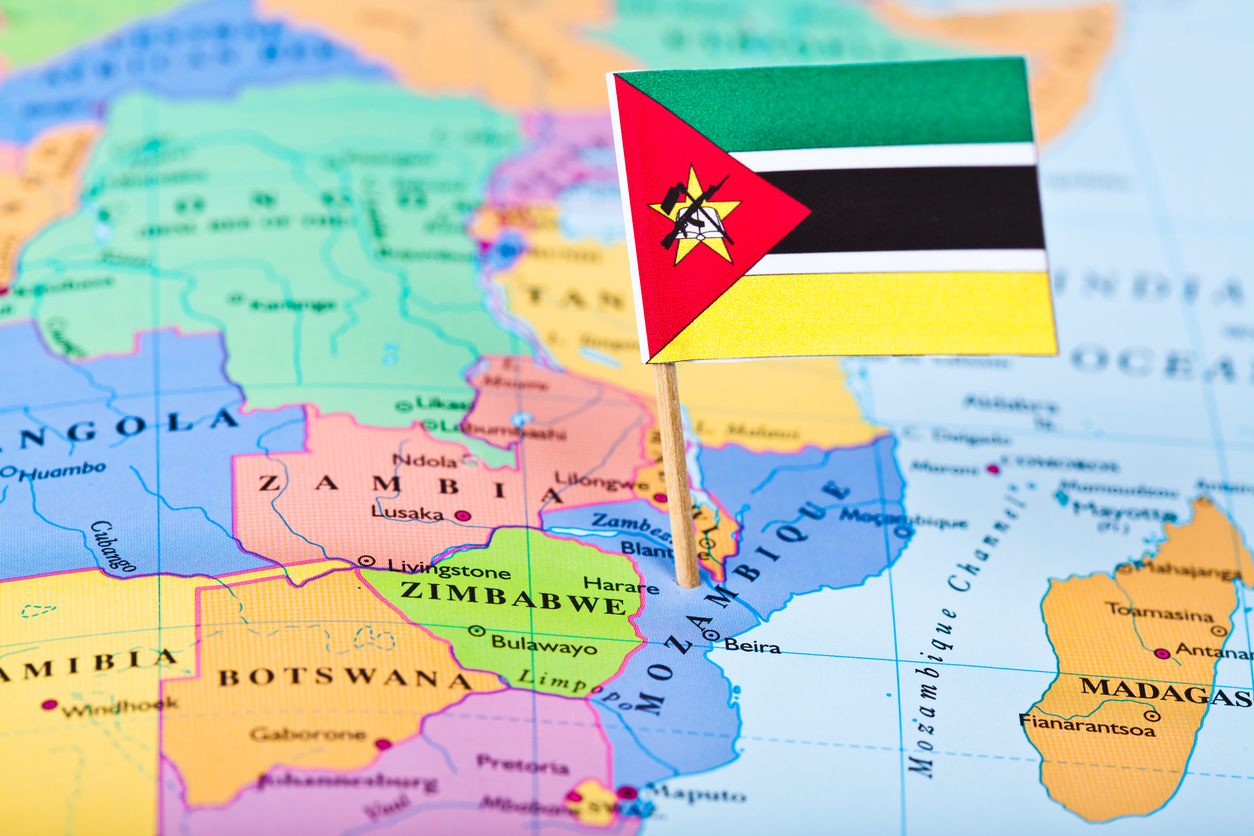
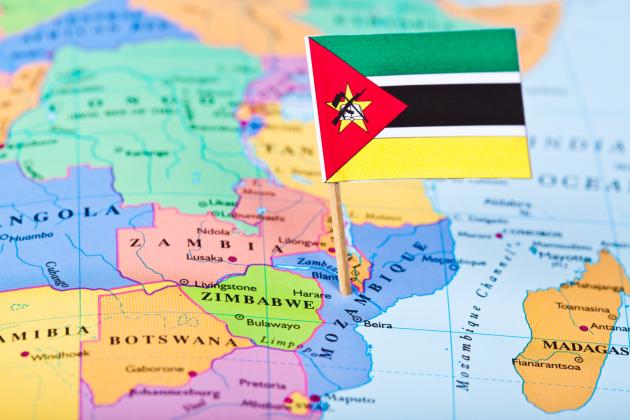
Christians are being killed in northern Mozambique. A jihadi insurgency that began in 2017 conducts regular attacks against the state and its population. It has already killed thousands of Mozambicans, including many Christians. Evangelical churches and pastors talk of the “persecution” of Christians. The Islamist armed group makes references, for its part, to a historical conflict between Christians and Muslims. What is going on?
Christians under attack?
Insurgents took up arms on 5 October 2017 at the cry of “Allah Akbar”. It is now eight years of fighting, taking place mostly in the province of Cabo Delgado. The insurgents fight against the state and society which they claim are corrupt. Their goal is to establish a caliphate in which Islamic law rules supreme.[1]
Many Christians have been murdered in the conflict, but probably even more Muslims. The area’s population is half Christian and half Muslim, distributed unevenly between the Swahili coast and the interior. The insurgents operate predominantly in the coastal Muslim areas where they kill “bad Muslims” just as easily as they kill non-Muslims.
In 2018-19, the group became an affiliate of the Islamic State of Iraq and Syria (ISIS). Since then, it has made many claims, through ISIS media, about the waging of a war for Islam and against Christians. References are made to the Crusades and attacks are claimed against “crusader forces”. Photographs of burning churches illustrate many articles about Mozambique in the ISIS magazine Al Naba.
Some Christians, particularly evangelicals, have developed a discourse symmetrical to the insurgents’, about the “persecution” of Christians at the hands of Muslims. In 2023, evangelical pastors, mobilised by the non-denominational militant organisation Open Door, launched a campaign called ‘Arise Africa’. It asks believers to pray, speak out and petition governments against the “persecution of Christians” on the continent.[2] The campaign includes Mozambique and news articles about persecution in that country have thereafter multiplied in newspapers such as Christian Today and Evangelical Times.
The truth of what happens in Mozambique, however, is quite different from a “religious war” or the “persecution of Christians”. The conflict is a complex affair which does not simply pit two religions against each other and the role of Christian and other religious figures is much more forceful and hopeful than just being victims.
ISIS-Mozambique and Christians
The armed movement that emerged in 2017 in Mozambique has clear jihadist ideas and ideals. It emerged out of groups of Mozambican and Tanzanian Muslims who coalesced in their desire to only live under Islamic law.
At first, the insurgents were extremely violent and killed indiscriminately, not only all the Christians they encountered but also all “bad Muslims”, defined as those who do not agree with their Islamist ideals of establishing a caliphate through war.
The movement grew steadily in 2018 and 2019, becoming bolder in 2020 by attacking villages and small towns. In 2021, it daringly overran the town of Palma next to the international mega-project for the exploration of LNG gas led by TotalEnergies and ExxonMobil, focusing a great deal of media attention on the situation in Mozambique.
This attack led to an international intervention, with troops from the Southern African Development Community (SADC) and Rwanda moving into Mozambique to help. The insurgents were soon pushed back, many of their bases destroyed, and many of their soldiers killed.
Divisions ensued within the jihadi group. A year after the assault on Palma, the existing leadership was demoted and new leaders enthroned. In concert with ISIS, the latter decided to give a new orientation to the group in 2023.
Among others, efforts were made to relate better to local communities and to establish some form of governance. Regarding Muslims, this meant not killing all “bad Muslims” but trying to convert them to the jihadi cause through Dawah (proselytism). Regarding Christians, it meant asking them to submit and pay jizya, a tax for non-Muslims who live in a Muslim-ruled state.
Since 2023, the level of violence in northern Mozambique has decreased as a result of this new orientation, even if the number of attacks has risen overall. In areas they control, insurgents perform Dawah and tax non-Muslims; in areas they do not control, they continue to attack and kill Christians, doing so ostensively for propaganda purposes, to give substance to their claim of waging a religious war for Islam.
Christians and Muslims against the armed conflict
While some individuals, organisations and the insurgents engage in discourses about a “religious war”, “crusades” and “persecution”, a majority of Christians and Muslims, individuals and organisations, make efforts to avoid this language. When they use it, it is to oppose it. Various prominent sheiks have gone public to say this was not a religious war and the insurgents have nothing to do with (proper) Islam.[3] In 2022, the Bishop of Nacala declared that "Terrorists want us to believe that this is a religious war, but it is not".[4]
Since the start of the conflict, faith leaders and faith organisations have prayed (and asked people to pray) across the country for victims of this conflict – just as much if not more than evangelicals. Muslim and Christian leaders join force regularly in interreligious and ecumenical meetings to show unity and ask for peace. During the latest 2025 bout of attacks in border areas of the province of Nampula, the head of the Catholic Episcopal conference gave an interview next to the Muslim governor of the province and asked for prayers, dialogue and compromise.[5]
Materially, faith organizations have an ever more important role in providing aid to victims of the conflict. Various Islamic organisations (CISLAMO, CIMO, Comunidade Islamica, etc.) provide shelter, food and other assistance. The same is true of the Catholic church and its organisation Caritas, the Adventist Development and Relief Agency (ADRA), and the Methodist church, to cite only a few. They all provide internally displaced people (IDPs) with tents, provisions, and even psychological support.
This is no small feat. Half of the province of Cabo Degado has been displaced (over one million individuals) and the government is in a difficult place financially to look after IDPs. International organisations and the United Nations’ organisations are also under severe financial pressure after the United States and various European governments cut their contribution and reduced their foreign aid and development assistance. That leaves religious organisations, particularly local ones, as the key players to help IDPs – Muslims and Christians.
Finally, religious organisations are active in trying to re-establish peace. The Salafi Islamic Council of Mozambique (CISLAMO) has made attempts to mediate a dialogue between the government and insurgents – unsuccessfully so far. It also takes part in grassroot “peace clubs” across the country with Christian churches and other Muslim organizations. In Cabo Delgado, it is involved with other Muslims in an organisation called CIPAZ set up by a priest to promote grassroot dialogue and help end the conflict.
Dealing with an armed movement that believes it is doing God’s work, religious organisations and individuals are particularly well placed to help bring peace. Clerics are well equipped to communicate and build bridges with the other side and to convince them to return to a peaceful way of life and reform. This is not an easy path, but it is one the government has declared in June 2025 it was willing to explore.[6] It is a path that will take time to develop and one that will demand tact to avoid discursive logics of enmity and to navigate effectively the conflict’s complexities, nuances and subtleties.
***
In conclusion, the reality of northern Mozambique is far from a religious war. Some actors have an interest in pushing such a narrative, but the truth is that most religious clerics, Muslim and Christian, are opposed to the conflict as well as to the narrative of a religious war. The majority of religious figures actively work at helping the victims of the conflict and try to find solutions to this armed conflict. One should support them by avoiding simplistic narratives that may lead to counter-productive plans of action.
Eric Morier-Genoud is professor of African history at Queen’s University Belfast. His research focuses on religion, politics, war, and conflict resolution in Southern Africa. His latest book, entitled Towards Jihad? Muslims and Politics in Postcolonial Mozambique, is published by Oxford University Press, 2023.
[1] For a history of the insurgency and its dynamic, see Eric Morier-Genoud, “The jihadi insurgency in Mozambique: origins, nature and beginning”, Journal of Eastern African Studies, Vol.14, n°3, 2020, pp.396-412 and Saide Habibe, Salvador Forquilha and João Pereira, Islamic Radicalization in Northern Mozambique. The Case of Mocímboa da Praia, Maputo: IESE, 2019, online at: https://www.iese.ac.mz/wp-content/uploads/2019/12/cadernos_17eng.pdf
[2] See the details of the “Arise Africa” campaign here: https://www.opendoors.org/en-US/getinvolved/arise-africa/ (accessed 05 November 2025).
[3] See for example, Rosa Inguane, “Nampula/islâmicos descartam religião para justificar terrorismo em Cabo Delgado”, Agência de Informação de Moçambique (Maputo), 21 April 2024, online at: https://aimnews.org/2024/04/21/nampula-islamicos-descartam-religiao-para-justificar-terrorismo-em-cabo-delgado/ (accessed 9 November 2025)
[4] “I terroristi vogliono farci credere che questa sia una guerra religiosa, ma non lo è” afferma il Vescovo di Nacala”, Agenzia Fides (Vatican), Saturday, 8 October 2022 (online at https://www.fides.org/en/news/72907-AFRICA_MOZAMBICO_I_terroristi_vogliono_farci_credere_che_questa_sia_una_guerra_religiosa_ma_non_lo_e_afferma_il_Vescovo_di_Nacala, accessed 05 November 2025)
[5] Cremildo Alexandre, “Moçambique. CEM apela à oração e realismo perante os ataques terroristas em Memba”, Vatican News, 28 October 2025, online at: https://www.vaticannews.va/pt/africa/news/2025-10/apelo-cem-oracao-ataques-terroristas-memba-nampula-inacio-saure.html (accessed 09 November 2025)
[6] José Machicane, “Chapo desfaz tabu e admite diálogo com os ‘terroristas’”, Carta de Mocambique (Maputo), 9 November 2025, online at: https://cartamz.com/carta-do-fim-do-mundo/43942/chapo-desfaz-tabu-e-admite-dialogo-com-os-terroristas/ (accessed 9 November 2025).

