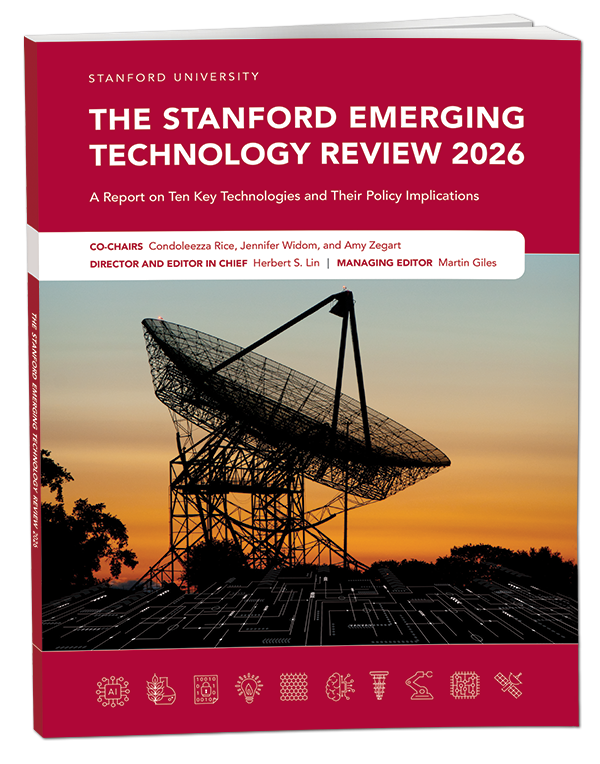
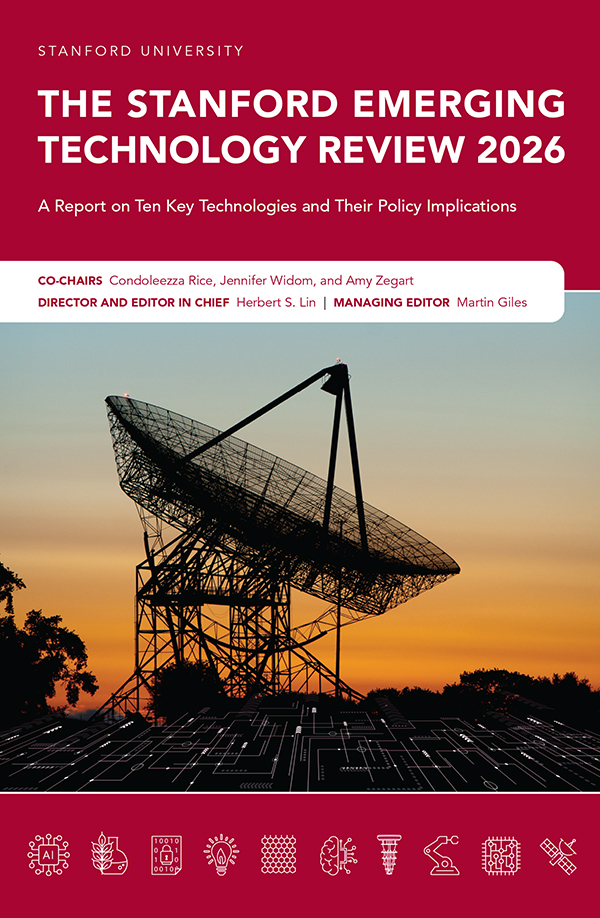
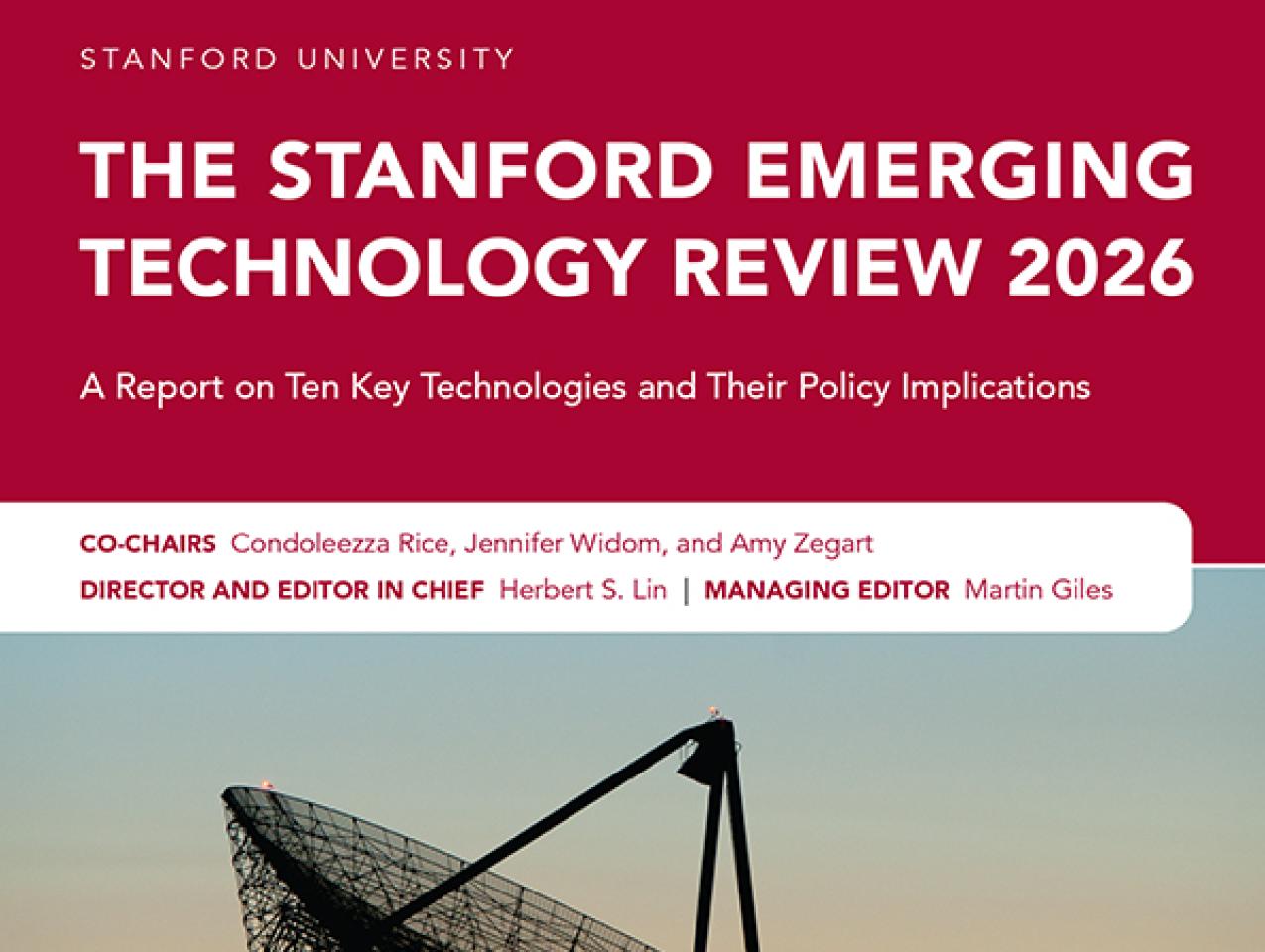
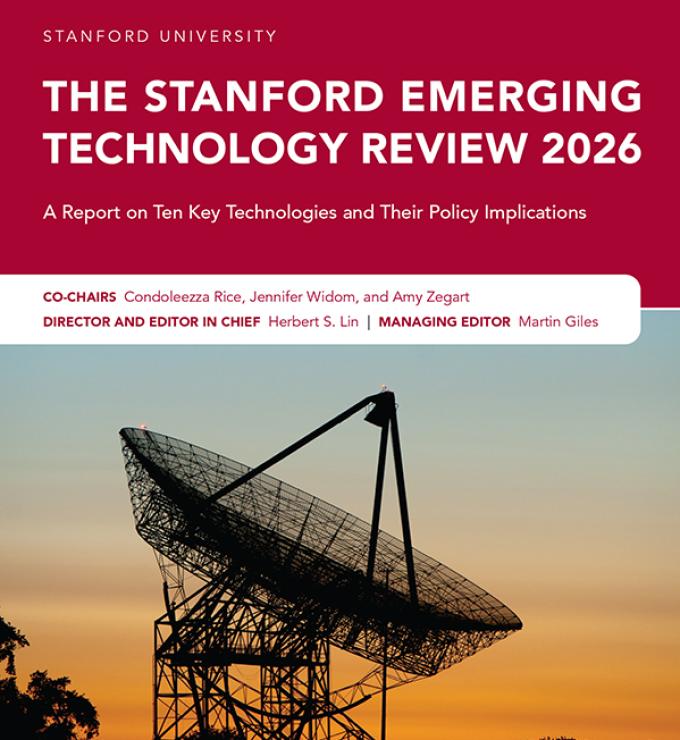
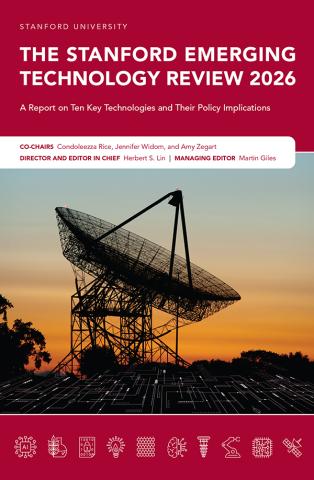
Hoover Institution (Stanford, CA) — The 2026 edition of the Stanford Emerging Technology Review (SETR) report is now available, offering American policymakers and business leaders a comprehensive overview of how ten frontier technologies, from artificial intelligence (AI) and biotech to robotics and space tech, are transforming the world.
A collaboration between the Hoover Institution, the Stanford School of Engineering, and Stanford’s Institute for Human-Centered AI, the report—based on leading research from Stanford scientists, engineers, and policy experts—serves as a one-stop primer into state-of-the-art innovations in these key domains, and what to look out for in the future.
This third annual edition of SETR continues to explore the implications of the rapid development of AI and the global race to lead in this and other groundbreaking technology areas, including cryptography and computer security, energy technologies, materials science, neuroscience, and semiconductors. It also contains a new chapter providing an in-depth review of quantum technologies, including quantum computing and quantum sensing, which have the potential to impact multiple sectors, from healthcare to energy and national security.
In addition, this new report expands its coverage of critical themes that cut across frontier technologies, adding analysis of topics such as the strategic importance of developing a strong domestic manufacturing base and of engaging in national and international efforts to establish technical standards.
The efforts of the Stanford Emerging Technology Review initiative are guided by three observations:
- America’s global innovation leadership matters and is vital to maintaining a dynamic technology innovation ecosystem as well as in securing its benefits.
- Academia’s role in technological innovation is essential in providing fundamental research without regard for profit and foreseeable commercial application—and faces growing risks.
- Stanford University has a unique vantage point in discovering and analyzing technological trends and their implications owing to its location at the heart of Silicon Valley and its well-established history of fueling the innovation ecosystem.
“Today we face another hinge-of-history moment” said Hoover Institution Director Condoleezza Rice, who co-chairs the SETR initiative along with Engineering School Dean Jennifer Widom, and Hoover senior fellow Amy Zegart.
“Breakthroughs in artificial intelligence, biotechnology, quantum science, advanced materials, and space technologies are reshaping economies, societies and geopolitics at breathtaking speed. Never before have so many technologies advanced so quickly, or with such far-reaching consequences. The question before us is not whether these changes will occur. It is whether they will unfold in ways that strengthen or undermine freedom, security, and human dignity. This is the central motivation behind the Stanford Emerging Technology Review.”
The 2026 SETR surveys ten frontier technologies: AI, biotechnology and synthetic biology, cryptography and computer security, energy, materials science, neuroscience, quantum technologies, robotics, semiconductors, materials science, and space. These fields are widely regarded as pivotal to shaping societies, economics, and geopolitics today and into the future.
In this crucial moment, we must do even more to connect emerging technologies with policy,” said SETR co-chair and Hoover Senior Fellow Amy Zegart. “And we are proud and excited to continue this unprecedented cross-campus collaboration at Stanford to bring policy analysis, social science, medicine, and engineering together in new and dynamic ways.”
The report draws on the scholarship of more than one hundred Stanford and Hoover scholars across forty departments and research institutes at the university. It is written to be timely and accessible to nonexpert audiences.
Beyond the report, the goal of the larger SETR partnership is ambitious: to transform technological education for decision makers in both the public and private sectors so that the United States can seize opportunities, mitigate risks, and ensure that the American innovation ecosystem continues to thrive.
“Stanford Engineering has been at the forefront of technological advances for a century, and we are driven to extend that knowledge wherever it can make a difference” said Jennifer Widom, the Frederick Emmons Terman Dean of the School of Engineering and SETR co-chair. “This year’s Stanford Emerging Technology Review comes at a time when technology is advancing at a faster pace than ever and staying informed is critical for policymakers and private sector leaders.”
Each chapter of SETR provides an easy-to-understand explanation of a frontier technology’s foundational concepts, important recent advancements in the field, key developments to look out for in the next few years, and an overview of technical, policy, legal, and regulatory issues.
Additionally, the report identifies key themes that impact all emerging technologies, including how policy needs to account for the fact that different domains impact one another and how social, economic and other factors can influence a technology’s adoption. It also analyzes the technologies’ implications for economic growth, national security, environmental and energy sustainability, human health, and civil society.
Available in print and online formats, the SETR report is the flagship product of the Stanford Emerging Technology Review initiative. In the past year, SETR experts have briefed senior officials across the White House, US Congress, federal departments and agencies, and the US Intelligence Community. They have also organized bootcamps for congressional staff, roundtables with national media and representatives from partner and allied countries, and workshops with leaders across tech sectors.
Additionally, the Hoover Institution has advanced SETR research in formats that are accessible and engaging to the attentive public, including short videos, articles, and social media.
On Wednesday, January 28, the 2026 edition of the Stanford Emerging Technology Review will debut in Washington, DC, with events and briefings, including a public event at 4pm. Remarks will be given by Rice, Zegart, and Senators Dave McCormick (R-PA) and Chris Coons (D-DE). Speakers will also include Widom, SETR director and editor in chief Herbert Lin and SETR contributors and faculty council members Fei-Fei Li, Mark Horowitz, and Steven Koonin.
Download the 2026 Stanford Emerging Technology Review here.
For coverage opportunities contact Jeffrey Marschner, 202-760-3187, jmarsch@stanford.edu