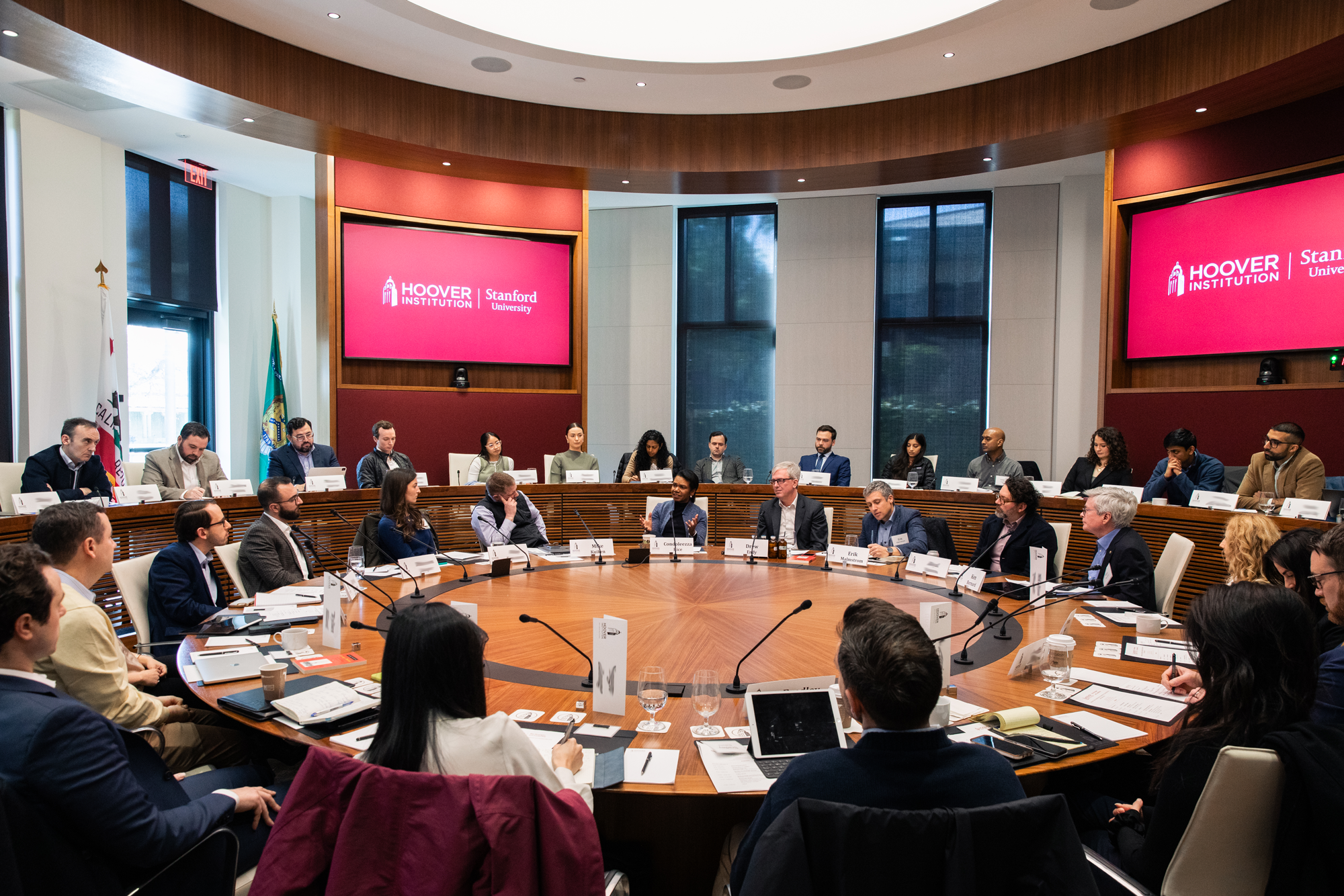
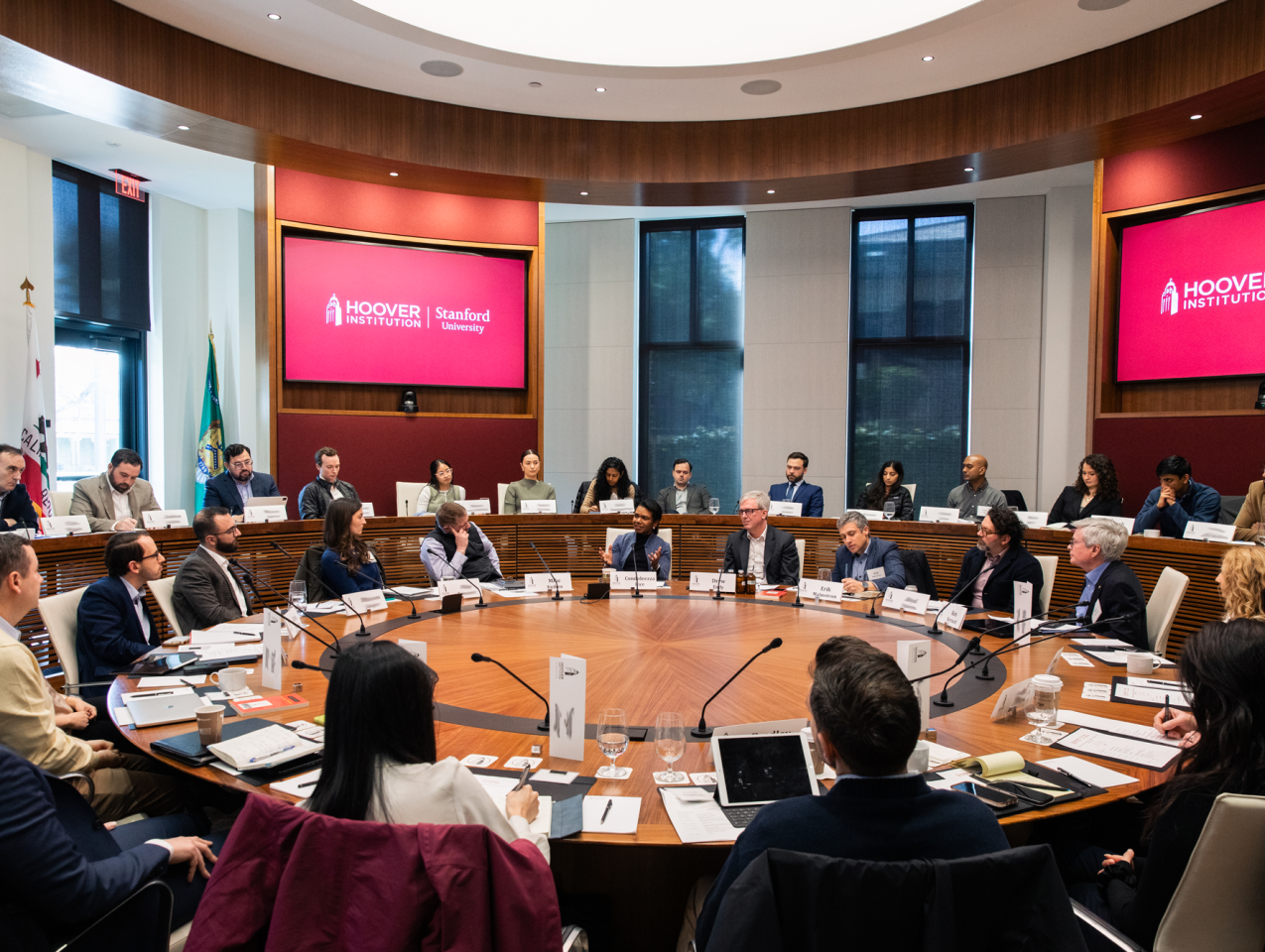
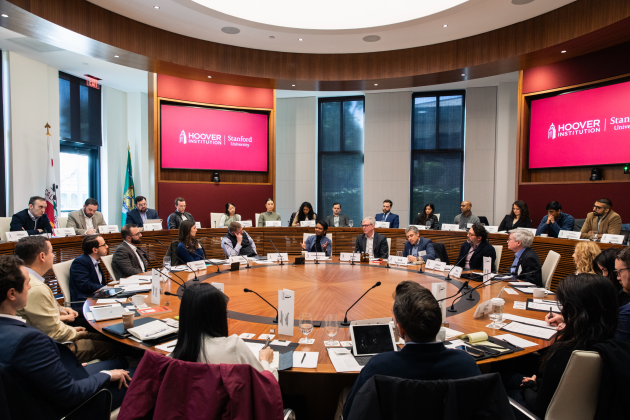
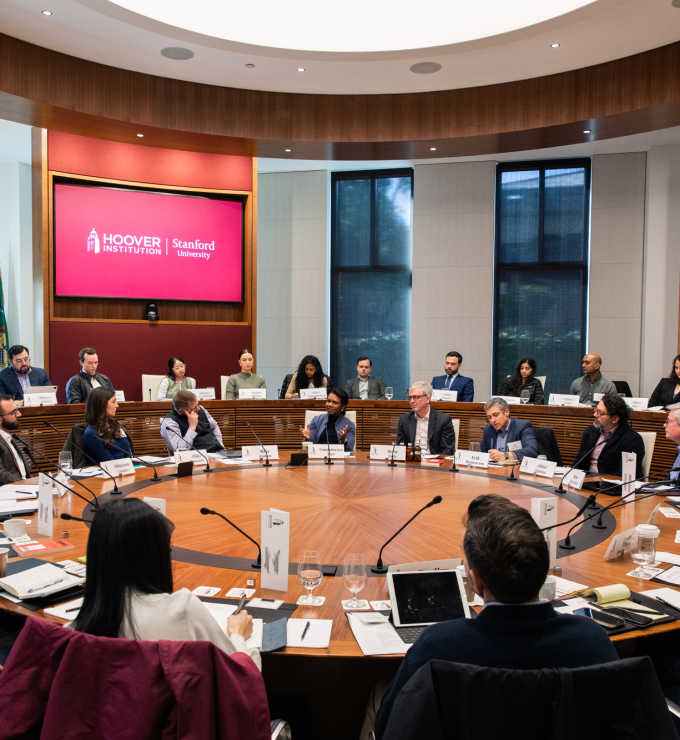
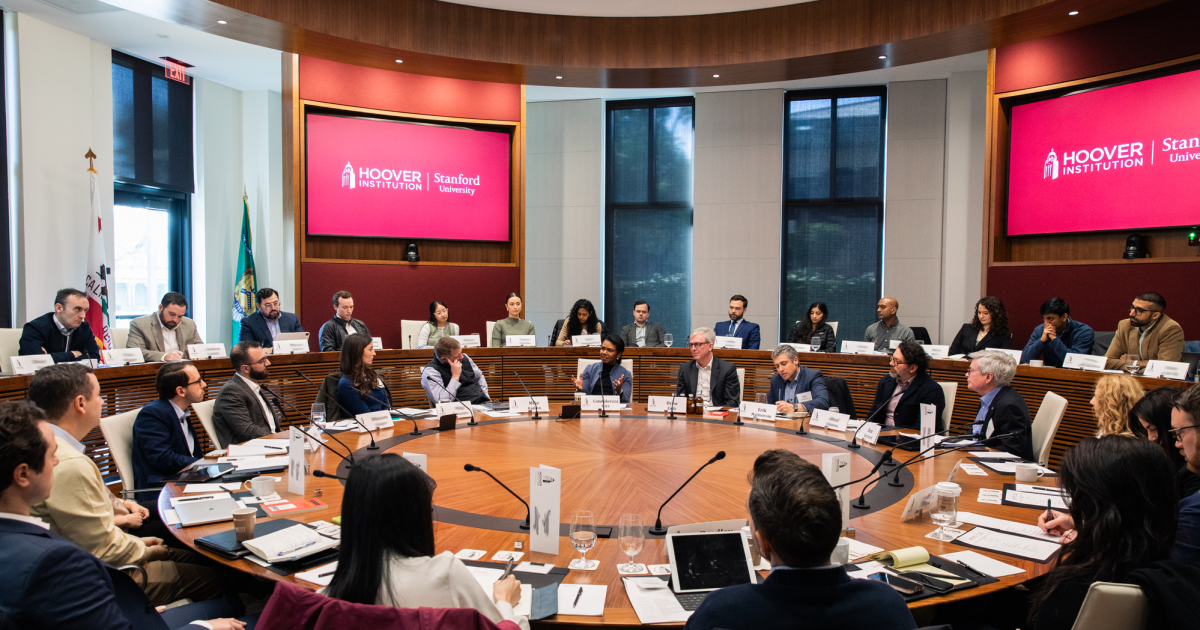
Hoover Institution (Stanford, CA) — Twenty mid- to senior-level congressional staff from both parties, both chambers of Congress, and relevant committees attended two days of intensive biotechnology discussions at Stanford University.
Bio-Strategies and Leadership (BSL) at the Hoover Institution hosted its second “bio boot camp” (formally known as the Congressional Leadership Accelerator for Biotechnology, or C-LAB) February 19–20, 2026, Participants represented more than a dozen personal offices as well as the House Select Committee on the Strategic Competition Between the United States and the Chinese Communist Party, the US-China Economic and Security Review Commission (USCC), and the Senate Select Committee on Intelligence.
The mission of C-LAB is to equip congressional staff with the knowledge needed to act on pressing biotechnology and biosecurity issues while there is still time to shape outcomes. Presentations and discussions covered the most important topics, including biosecurity, generative biology, DNA synthesis, gene and genome construction, synthetic cell engineering, competition with China, bioeconomic growth, and education and workforce development.
“The Congress has made extraordinary progress over the last two years coming to understand biology as a strategic domain,” Hoover Institution Science & Senior Fellow Drew Endy said. “Now more than ever, it is urgent that the Congress continues to strengthen its knowledge of how biotechnology already impacts the everyday lives of all Americans and what will be needed to secure a flourishing and democratic biotic future.”
Thirty-three additional industry, academic, and government leaders held forth as well, including Professor Kaihang Wang of Caltech, Assistant Professor Brian Hie of Stanford University and the Arc Institute, CEO and cofounder of OCOchem Todd Brix, former Secretary of State Condoleezza Rice, senior associate vice provost for research and professor of bioengineering at Stanford University Jennifer Cochran, vice president of security at Google Royal Hansen, National Security Commission on Emerging Biotechnology policy advisor Zeena Nisar, and Janet Standeven of the Georgia Institute of Technology and director of iGEM High School.
Participants toured Professor Vayu Hill-Maini’s lab at Stanford University and heard directly from researchers working with fungal systems, exploring their potential to address challenges ranging from food security to materials manufacturing. Participants also received an operational tour from the leadership at Antheia, a Menlo Park-based company leveraging biology and advanced manufacturing to produce biosynthetic key starting materials and active pharmaceutical ingredients for essential medicines.
“The United States is at the forefront of innovation and discovery, and our policies should evolve to support that growth. If you are seeking a comprehensive view of the world of biotechnology and biosecurity, the Congressional Leadership Accelerator for Biotechnology is your place to be,” one congressional participant said. Another added, “The experience was substantive, practical, and a valuable reminder of why sustained American leadership in biotechnology is foundational to long-term economic strength and national security.”
C-LAB is part of BSL’s broader effort to strengthen bio-literacy among policymakers and elevate biology as a strategic domain. Biotechnology is expanding rapidly beyond medicines and agriculture into materials, manufacturing, and national security applications. As these capabilities grow, informed leadership will be increasingly important. Programs like C-LAB help equip congressional offices with the context and confidence needed to engage emerging biological technologies thoughtfully and strategically.
For more information about BSL, visit victory.stanford.edu or email Sarah Moront at smoront@stanford.edu.
To learn more about the Hoover Institution’s Technology Policy Accelerator and its work across all critical and emerging technologies, visit tpa.stanford.edu.