






Note from the Project Directors Terry Anderson & Dominic Parker
The Hoover Project on Renewing Indigenous Economies (RIE) continues to work toward finding new ways to support economic regrowth in Indigenous communities consistent with respecting their cultures. This first 2026 RIE Report updates the progress of the RIE project and shares resources that tribal leaders, scholars, and policymakers can use to rebuild prosperity for Indigenous people. We welcome your input, so please stay in touch at indigenousecon@stanford.edu.
Recent and Upcoming Events
2025 Indigenous Student Seminar
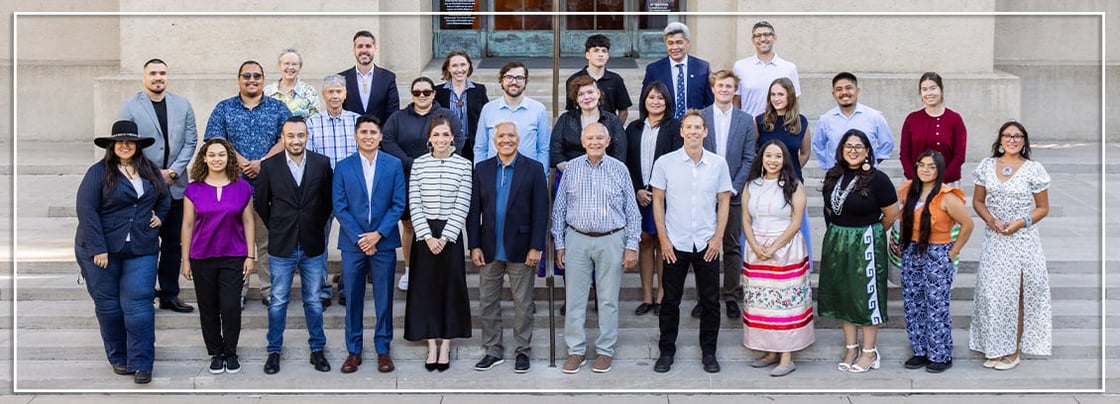
Congratulations to participants of the 2025 Hoover Institution Indigenous Student Seminar, held on the Stanford University campus from August 4–8 and directed by Daniel Stewart, a professor of entrepreneurship at Gonzaga University. The fifth annual weeklong gathering brought together students and recent graduates from the United States, Canada, and New Zealand to reinvigorate the entrepreneurial spirit demonstrated by Indigenous peoples for millennia and to propel regulatory changes to help Indigenous groups chart their own economic paths. The participants engaged in lively discussions with each other, with the faculty of university professors and industry professionals, and with program alumni Haley Rains and Aldo Aragon. Ron Goode, chair of the North Fork Mono Tribe, gave an inspiring keynote speech on the “Perseverance of Indigenous Cultural Practices,” earning him a standing ovation.
Overall, the workshop was a crash course in why and how participants can help their communities continue rebuilding economic prosperity. As one student put it, “I used to believe that our language, culture, and land were the core of our strength going forward, and while they are incredibly important, we can’t protect or sustain those things without a strong economy to support them. A thriving economy provides the foundation needed to preserve our identity and create opportunities for future generations.” Click here to learn more about the 2025 seminar.
Keynote Lecture at the Inter-American Development Bank
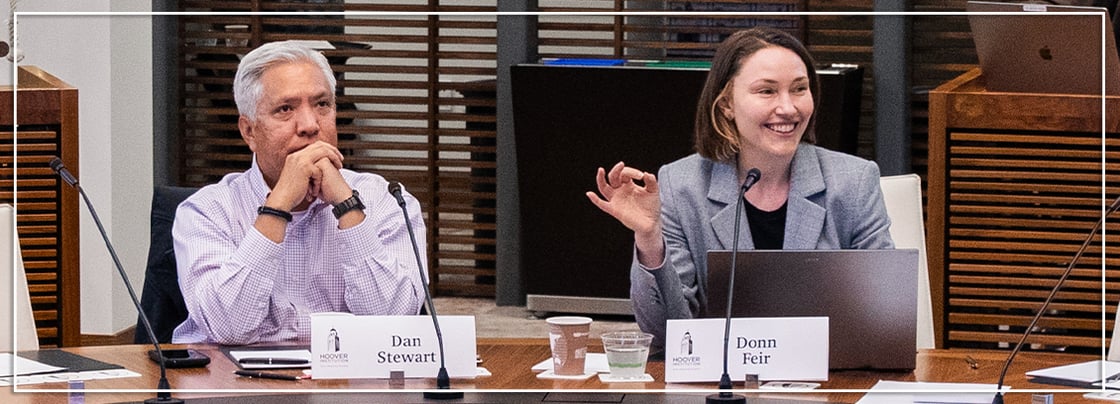
RIE contributor Donn Feir, a professor of economics at the University of Victoria in British Columbia, gave a keynote lecture in October for the Inter-American Development Bank’s conference on Indigenous Peoples and Development. Feir’s presentation surveyed the recent academic literature on the causes and consequences of economic development for Indigenous people in North America and highlighted areas where more research is needed.

Markets and Society Panel on Indian Country Law and Economics
In October 2025, RIE contributors Adam Crepelle, Robert Miller, Dominic Parker, and Thomas Strattman spoke about the law and economics of Indian Country development to academics at the annual Markets and Societies meeting in Washington, DC. Crepelle summarized his new book on Becoming Nations Again: The Journey Towards Tribal Self-Determination (Cambridge University Press, 2025). Crepelle, an assistant professor at Loyola University Chicago School of Law, focused on chapters describing modern legal constraints to tribal sovereignty and prosperity. Miller, a professor of law at the Sandra Day O’Connor College of Law, Arizona State University, shared excerpts from his book, coauthored with Crepelle, Reservation Capitalism: Economic Development in Indian Country (Bloomsbury, 2026). Miller listed nine conditions for economic success in Indian Country. Parker, the Ilene and Morton Harris Senior Fellow at the Hoover Institution, presented his research on how legal and policy uncertainty in the aftermath of McGirt v. Oklahoma has accelerated oil and gas extraction in the newly recognized Indian reservations of eastern Oklahoma. Stratmann, a professor of economics at George Mason University, presented empirical research on the large and positive relationship between broadband infrastructure development and incomes in Indian Country, focusing on a case study of the Colville Indian Reservation.

2026 Indigenous Student Seminar
Applications for the 2026 Indigenous Student Seminar are open, and we encourage you to help us recruit excellent students. The seminar will take place the week of August 3–7 on the Stanford campus. Applications are due March 4. Click here for more information and to apply.
Alumni and Contributor News
Two recent alumni of the Indigenous Student Seminar have joined research teams with RIE faculty to study economic and political development in Indian Country. Alena Crandall (ISS class of 2025), a senior at Haskell Indian Nations University, is working with Dominic Parker on an effort to assess voter turnout in tribal elections. The goal is to learn how turnout has trended in recent years and to understand if, where, and why it has increased within Indian Country. Billy Mitchell from the University of Hawaiʻi (ISS class of 2024) is working with Dustin Frye, an assistant professor of applied economics at the University of Wisconsin, Madison, to build a historical dataset to help illuminate how policies like federal boarding schools and the rise of oil development affected Native communities and economic life at the turn of the twentieth century.
We are saddened by the passing of RIE contributor Jonathan Lear, an esteemed philosopher at the University of Chicago. Lear studied resilience by visiting the Crow Reservation to learn from the Apsáalooke people. The result was Radical Hope: Ethics in the Face of Cultural Devastation (Harvard University Press, 2008), which explores how culture and kinship create resilience. As our colleague Nina Sanders put it, “Our dear friend Dr. Jonathan Lear has departed this earth to be at Other Side Camp with Plenty Coups and the other leaders who preceded him.”
Reading Recommendations

Entrepreneurship in Indian Country
American Indians have much lower rates of entrepreneurship compared to other ethnic groups in the United States. While Native Americans comprise 2.9 percent of the population, they own only 1.2 percent of firms. In “Doing Business on Indian Reservations: Tribal Business Owners’ Perspectives on Entrepreneurship” (Indigenous Business and Public Administration 3, no. 2), Terry Anderson and Thomas Stratmann examine why low rates of entrepreneurship persist despite strong histories and cultures of innovation and risk-taking among Indigenous communities. They conducted eleven focus groups with 104 Native American business owners across five Montana reservations to understand opportunities and barriers to business operations and success. This was a first-of-its-kind congregation for many entrepreneurs to discuss business climates and conditions on their reservations. Click here to read a summary of the study.
Reservation Capitalism: Economic Development in Indian Country (Bloomsbury, 2026)
In this revised, updated, and expanded edition of the groundbreaking original, RIE contributors Robert J. Miller and Adam Crepelle address new, long-lasting challenges to economic development in Indian Country. This edition includes many updates, including new chapters on emerging opportunities in the energy sector and e-commerce. These additions show how, after COVID-19, tribal communities are moving beyond their formerly vulnerable economies predicated almost exclusively on gambling to launch broader and more sustainable economic development to improve standards of living and sustain their self-sufficiency and self-determination. Click here to read more about the book.
About the Renewing Indigenous Economies Project
The Hoover Project on Renewing Indigenous Economies is dedicated to understanding how the rich history of governance, entrepreneurship, and trade allowed indigenous peoples to thrive before colonization and how restoring these traditions can help rebuild indigenous economies, cultures, and communities from the ground up.
Learn More About the RIE Project