








- History
- Military
- Revitalizing History
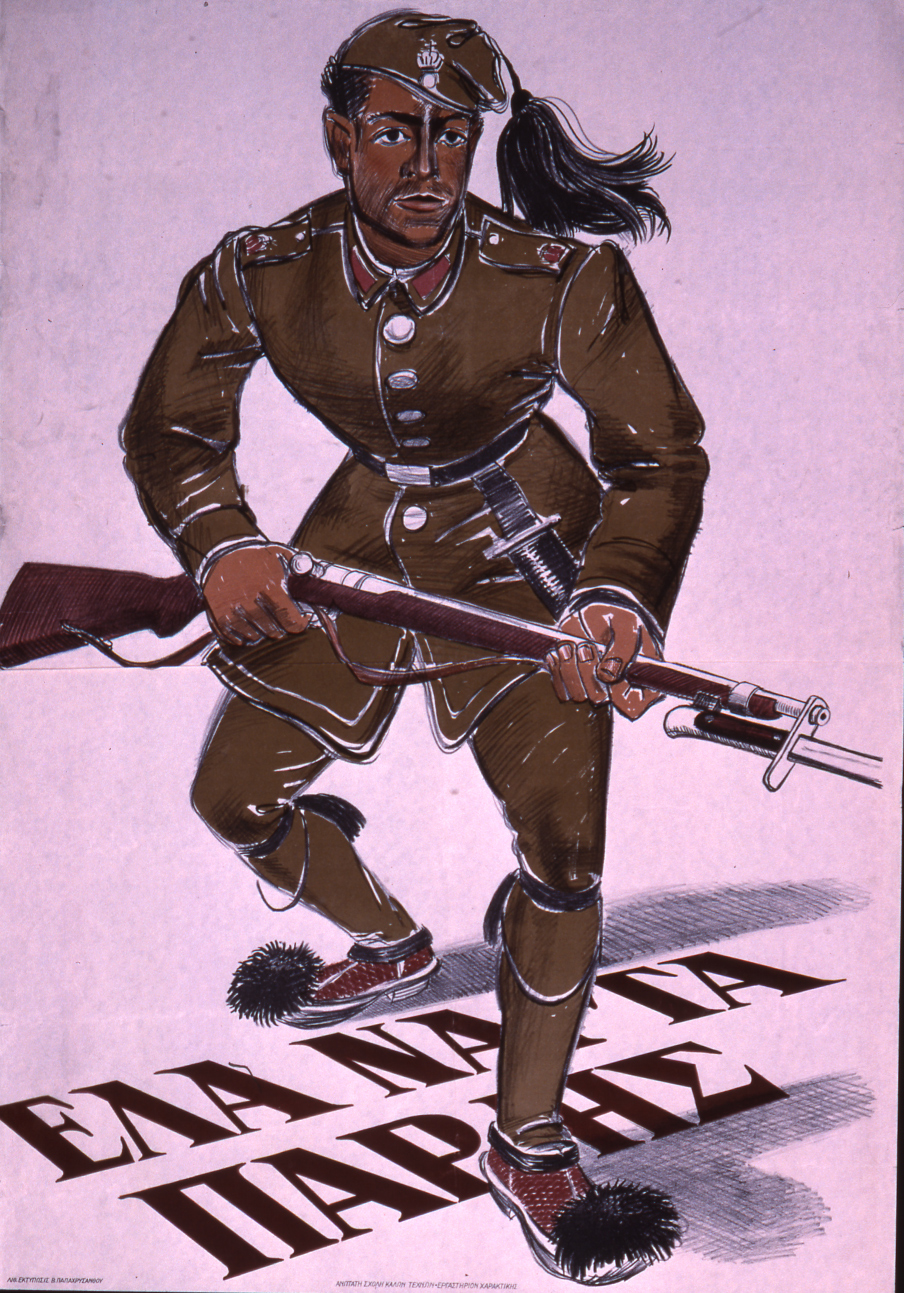
Although the Greek Civil War ended 77 years ago, it continues to be the subject of study—not only for historians, but also for theorists and practitioners of counterinsurgency warfare. To begin with, it is one of the very few cases in the twentieth century of a lasting victory against an insurgency (see the successive, but unsuccessful, uprisings of the Kurds in Turkey in the 20th century).
The Greek Civil War was the opening episode of the Cold War and triggered a chain of events whose significance transcended the narrow confines of the Balkans.1 It was the first time after the Second World War that the United States intervened in peacetime to support a third country threatened by a communist insurgency—a prelude to the emerging strategy of containment.
In addition, the newly founded United Nations appointed, for the first time in its history, ad hoc observers to monitor a conflict within the borders of one of its founding member states. Britain, for its part, was forced to withdraw its protection from Greece, despite Greece belonging to its recognized sphere of influence in the Near East after the war. Finally, the Greek Civil War irreparably damaged Stalin–Tito relations, contributing in part to their break in 1948.
The victory of the legitimate Greek government greatly affected strategic thinking in the United States and Britain regarding the handling of communist insurgencies. The United States sought to replicate its successful intervention in Greece in other cases of “small wars.”2 The British also drew valuable lessons about strategy and tactics in unconventional warfare, applying them with notable success during the Malayan Emergency.
Above all, the Greek Civil War proved to be a catastrophe for Hellenism. The nation had already suffered two devastating demographic shocks: in 1922, after the defeat in Asia Minor, and during the Second World War and German occupation. During WWII, Greece lost between 8 and 11% of its population.
According to official sources, the communist guerrillas suffered 24,235 dead, 9,781 insurgents who surrendered, and 16,289 captured during the conflict. Government forces sustained 16,753 dead, 40,398 wounded, and 4,788 missing, in addition to 4,288 civilian deaths. Approximately 5,000 more individuals were executed, and hundreds of refugees died from hardship in camps.
After the war’s end, tens of thousands of Slavic-speakers who had sided with the communists fled en masse to Yugoslavia.3 Their descendants in today’s North Macedonia later championed nationalistic and irredentist rhetoric against Greece after the dissolution of Yugoslavia.4
In total, Greece suffered a demographic loss of roughly 150,000 people, if refugees and exiles in Communist Europe and the Soviet Union are included.
A lesser-known aspect of this demographic disaster is the story of several thousand children whom the communists abducted from territories under their control, in order to pressure their parents to join the rebellion. These children were initially taken to neighboring communist countries—Albania, Yugoslavia, and Bulgaria—and after the war’s conclusion, they were dispersed more widely to states such as Hungary, East Germany, Poland, and the USSR.
To counter this practice—which recalled the Ottoman “child levy,” or paidomazoma, the forcible removal of Christian children for service in the empire5—the Queen of the Hellenes, Frederica, created children’s towns (paidoupoleis), where children from areas affected by the insurgency were sheltered. There, they enjoyed safe living conditions, schooling, and healthcare. The Greek government also denounced the abductions at the United Nations—with predictably negligible results.
For decades after the war, the Greek state undertook a massive effort to repatriate these children. The author personally met several of them, as well as their descendants, during his tenure in Croatia (2005–2009).
1 Nevertheless, it was overshadowed by other asymmetric conflicts after 1945 (e.g., Vietnam).
2 President Lyndon B. Johnson called Vietnam the “Greece of Southeast Asia” and promised to defeat the Viet Cong using exactly the same policies as his predecessor, President Harry S. Truman.
3 They sought the secession of northern Greece from the state and the creation of a socialist republic, within the framework of Yugoslavia and under the aegis of the USSR.
4 One of them is also the former long-serving Prime Minister of FYROM, now North Macedonia, Nikola Gruevski.
5 The paidomazoma was the forced conscription of Christian boys under Ottoman rule for military and administrative service, most famously in the Janissary corps.

