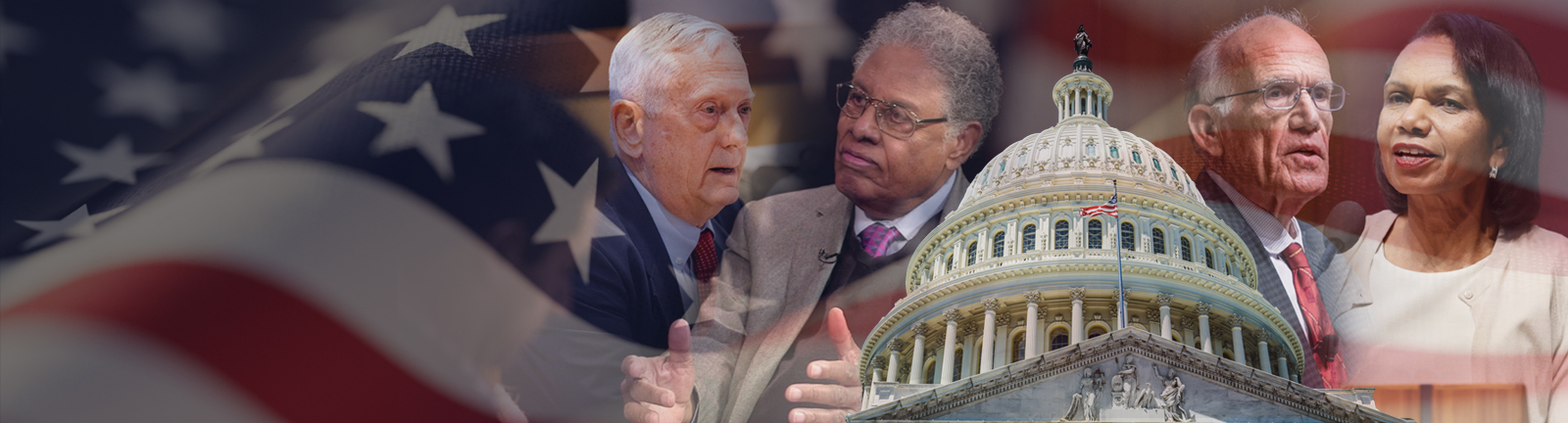
I was invited to testify at the Subcommittee on Monetary Policy and Trade of the House Financial Services Committee on Wednesday. I had only done this once before and it was a very interesting experience.
The subject of a monetary policy strategy for the Fed came up in Congressional hearings I testified at today and last week. Today the hearing focused on the bill to require the Fed to describe its strategy or rule for the systematic adjustment of its policy instruments.
A recent New York Times article on the cybersecurity posture of the U.S. government (U.S. vs. Hackers: Still Lopsided Despite Years of Warnings and a Recent Push) had the following paragraph: Even senior White House officials acknowledge how much remains to be done. “It’s safe to say that federal agencies are not where we want them to be across the board,” Michael Daniel, Mr. Obama’s top cybersecurity adviser, said in an interview.
It may seem easy to dismiss capital gains taxes as just a “rich person’s problem.” Popular wisdom holds the wealthiest among us generate essentially excess wealth largely through well-timed investment trades, making capital gains nothing more than icing on their income cakes.
Bringing an historical bent to the business of blogging is a temptation to, if not necessarily a manifestation of, schizophrenia. Nonetheless, President Obama’s desire to bypass the Congress in favor of the United Nations in ratifying his Iran deal marks a moment to reflect upon the relationship between legislatures and executives when it comes to making strategy.
You don’t have to be a diehard liberal to believe that it’s nuts to wait until kids—especially poor kids—are five years old to start their formal education. We know that many children arrive in kindergarten with major gaps in knowledge, vocabulary, and social skills.
The now-concluded Iran nuclear negotiations predictably reflect ancient truths of appeasement. While members of the Obama administration are high-fiving each other over a deal with the Iranian theocracy, they should remember unchanging laws that will surely haunt the U.S. later on.
Donald Trump justifies his almost daily provocations by claiming he speaks for the "silent majority" -- Americans who share his outrage about illegal immigration, but are afraid to speak up.
The Federal Reserve has finalised its capital requirement rules for the most important US banks - in the jargon, America's GSIBs (for Global Systemically Important Bank).
The MacArthur Foundation has announced that it will close its Moscow office following the introduction of several laws limiting the activities of nongovernmental organizations in Russia.
Contrary to its well established reputation, monetary policy has been anything but dull of late. The Federal Reserve has simultaneously been blamed for causing the financial crisis, and for being too interventionist to correct its mistakes.
Marines have long dreamed of the day beloved retired Gen. James Mattis ‘finally’ takes residence in the White House, but they shouldn’t get their hopes up this campaign season.
Nearly 11 million Americans who receive federal disability benefits risk seeing their checks reduced unless Congress acts by next year to replenish the system's trust fund, the Social Security trustees reported Wednesday.
Big social changes tend to happen first in trickles of lone pioneers, then in a sudden flood of general adoption. For a case in point, look at Mother Jones' animated map of US states where gay marriage is legal. The same seems to be happening with the effort to raise the wages of the lowest paid.
The Medicare and Social Security trust fund trustees reported on the long-term solvency of the country’s two largest entitlement programs on Wednesday, and as usual, provided projected insolvency dates for the various funds under their supervision. Then, they asked everyone to try not to pay very much attention to those insolvency dates.