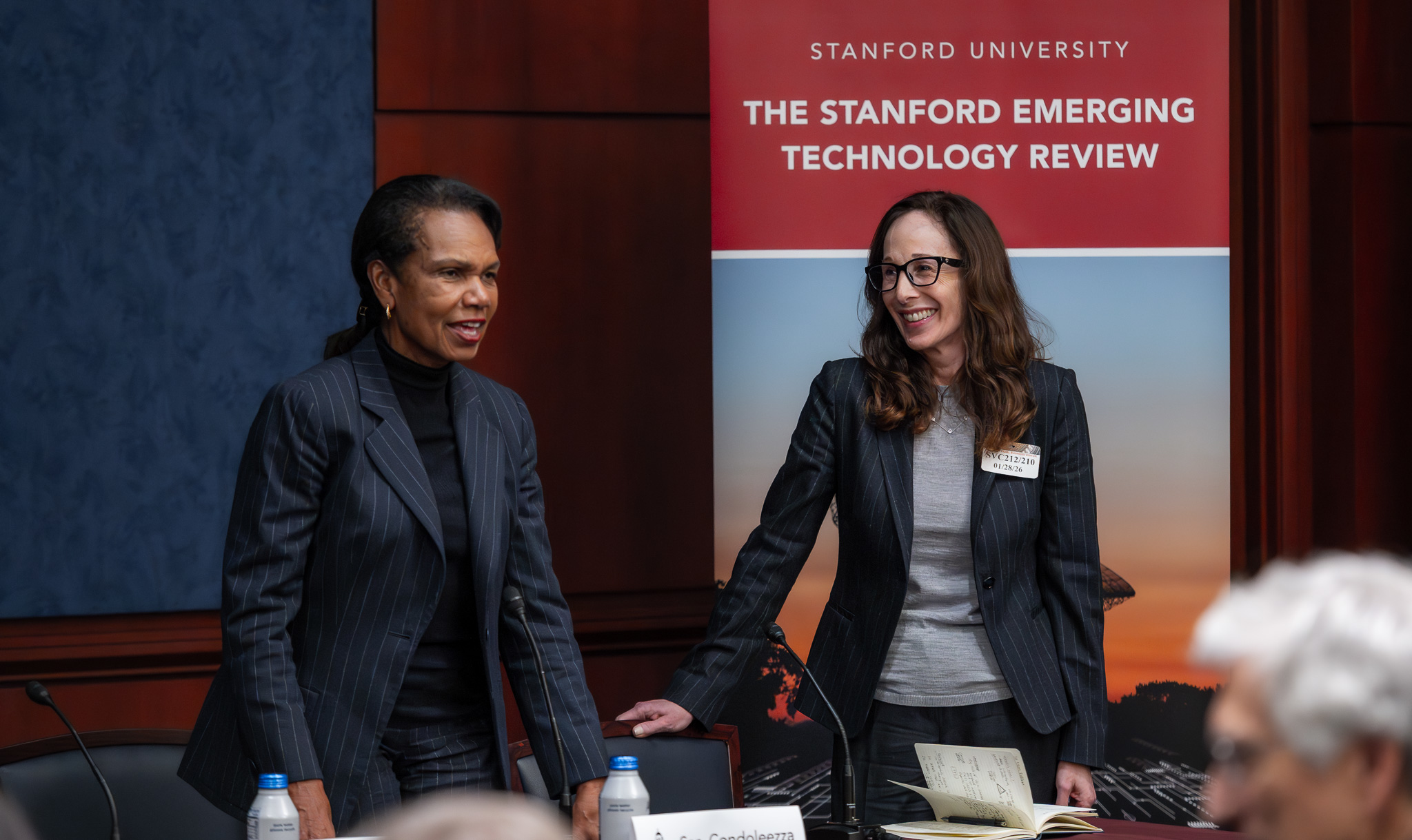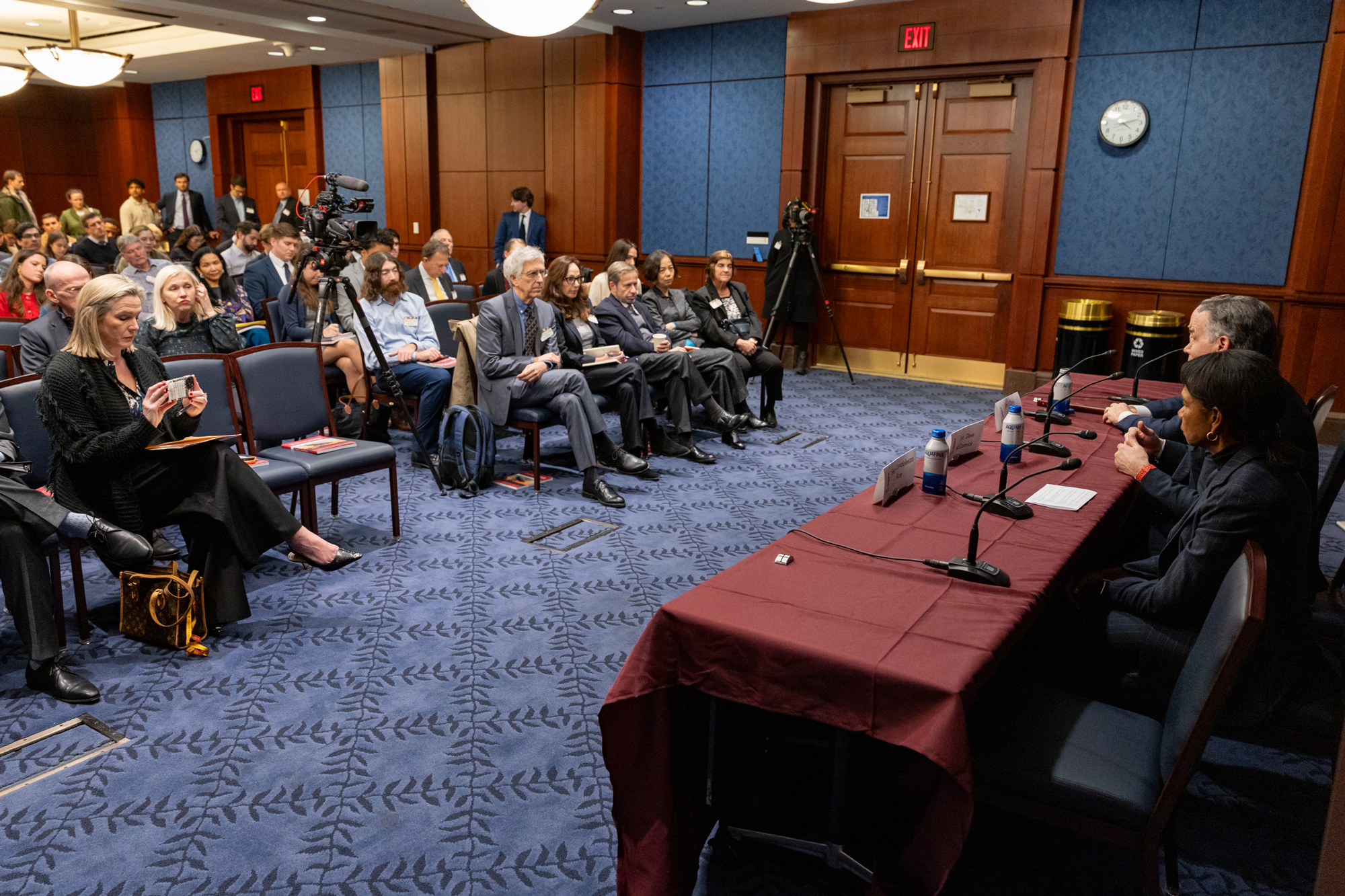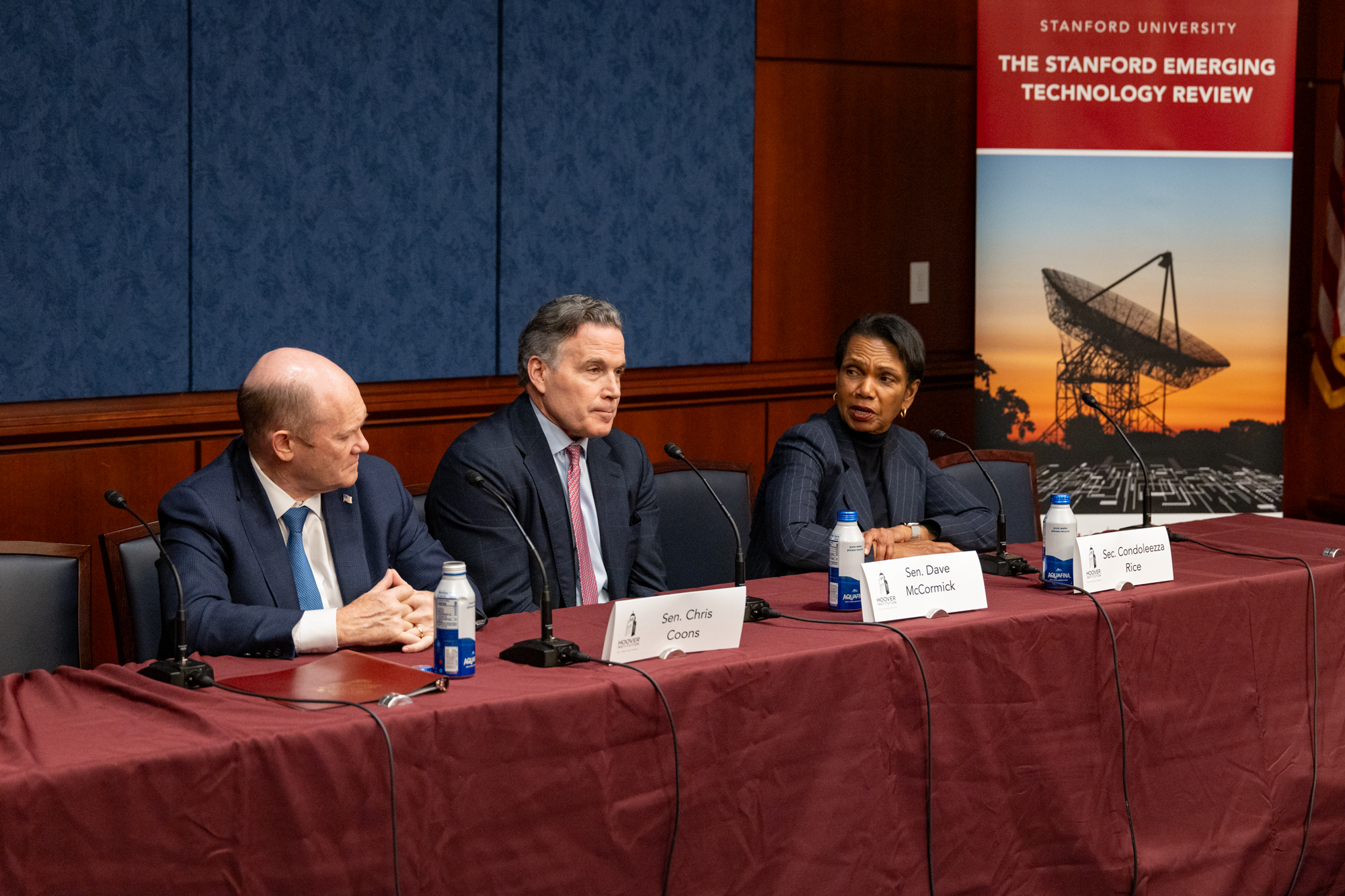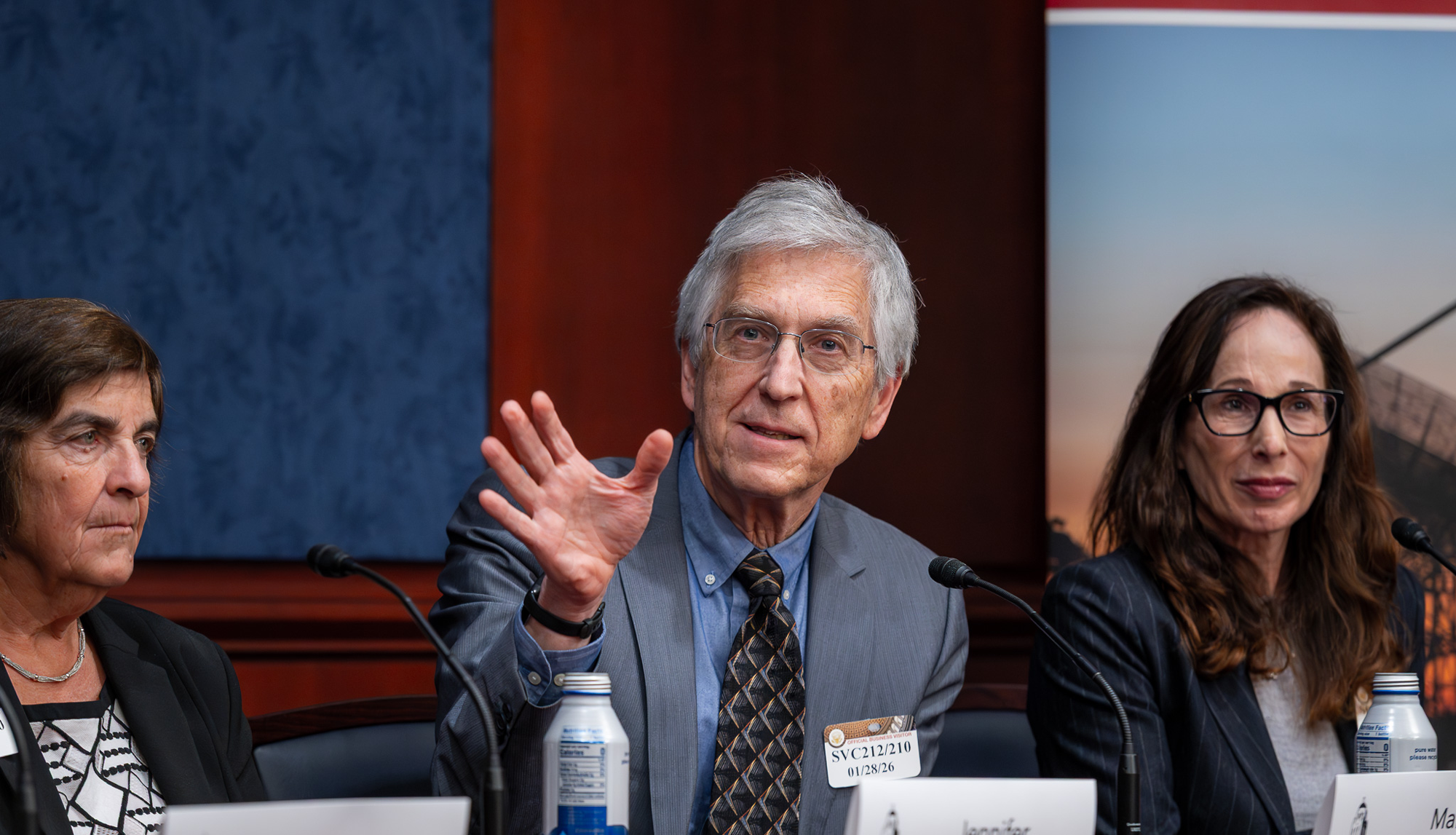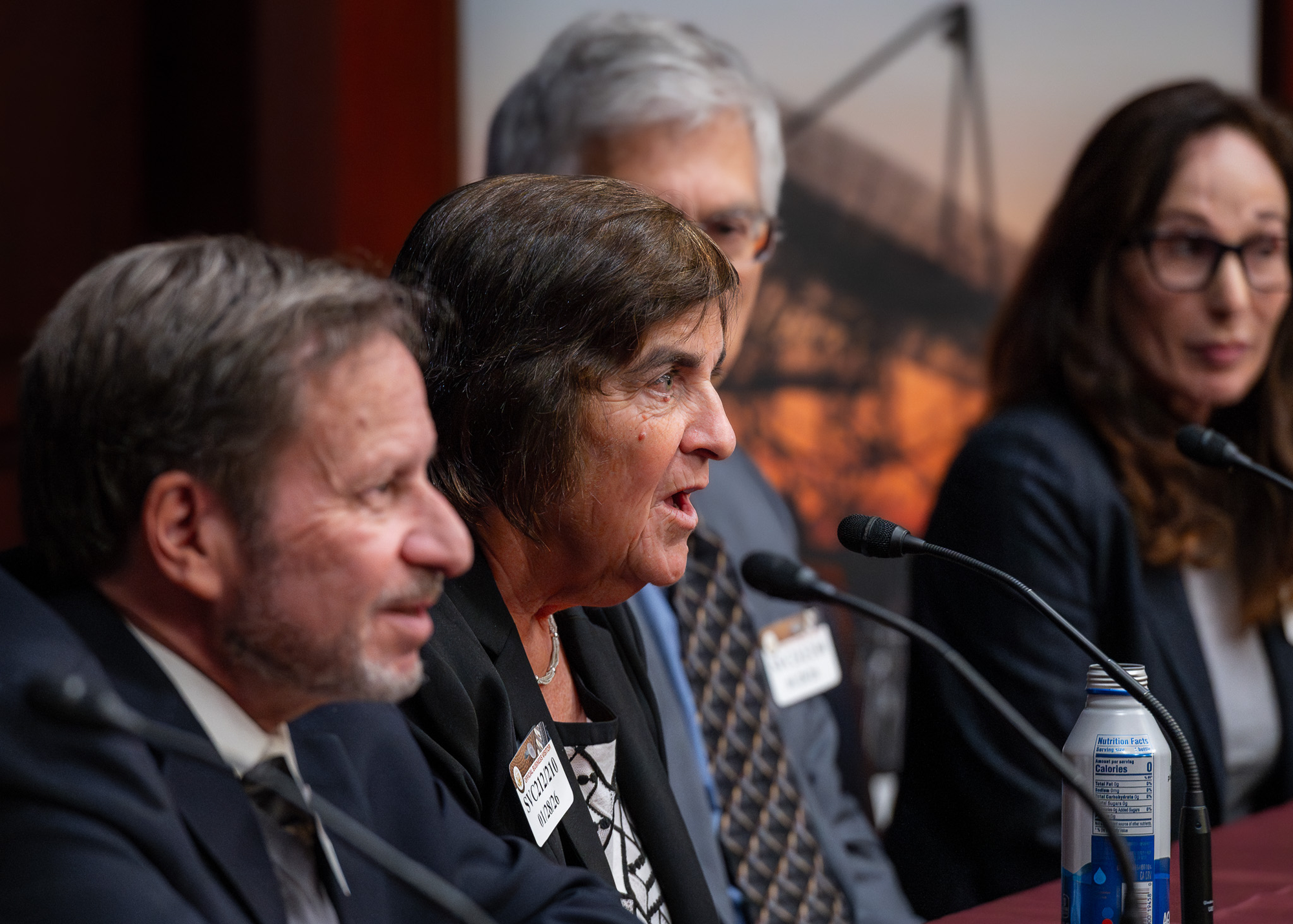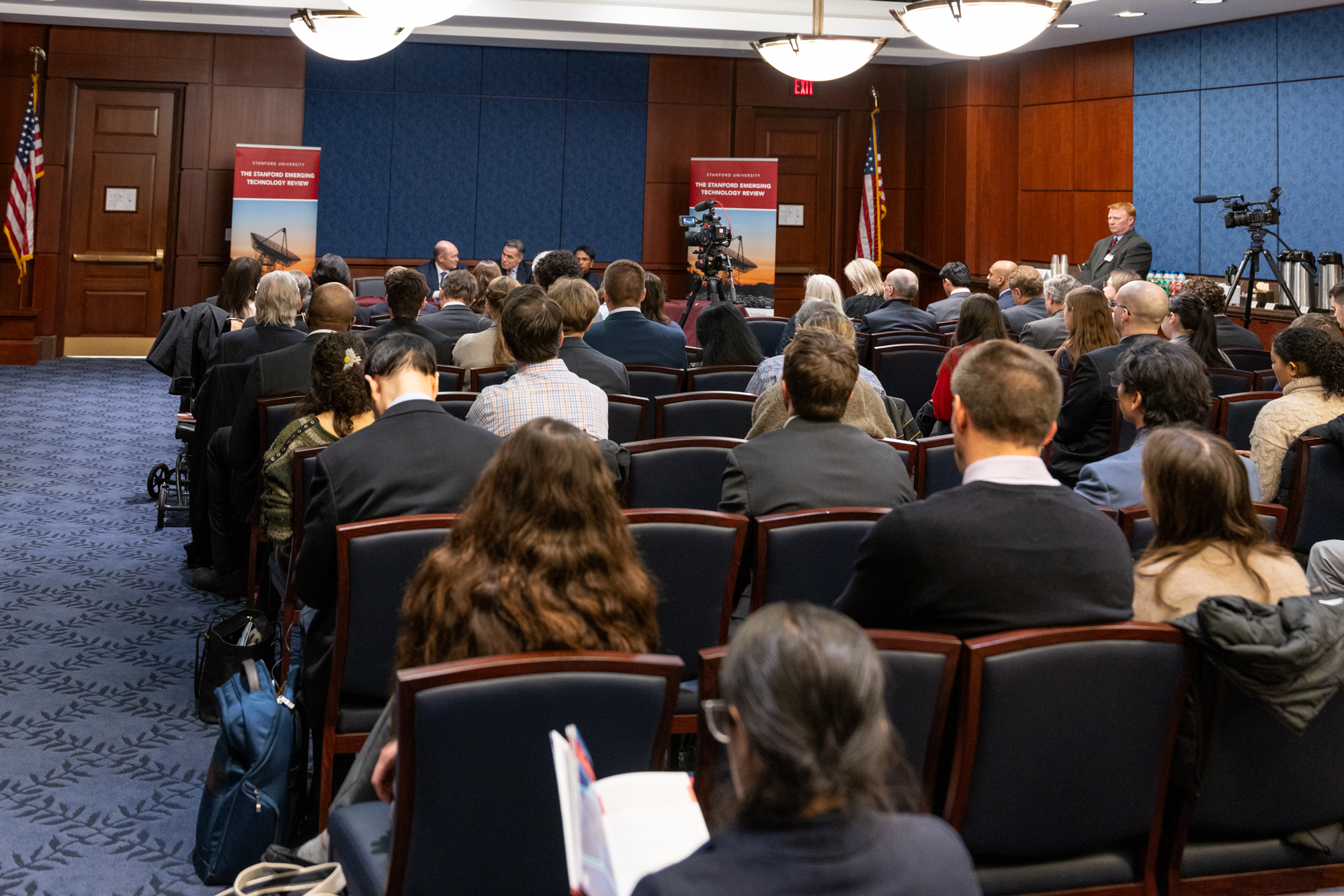
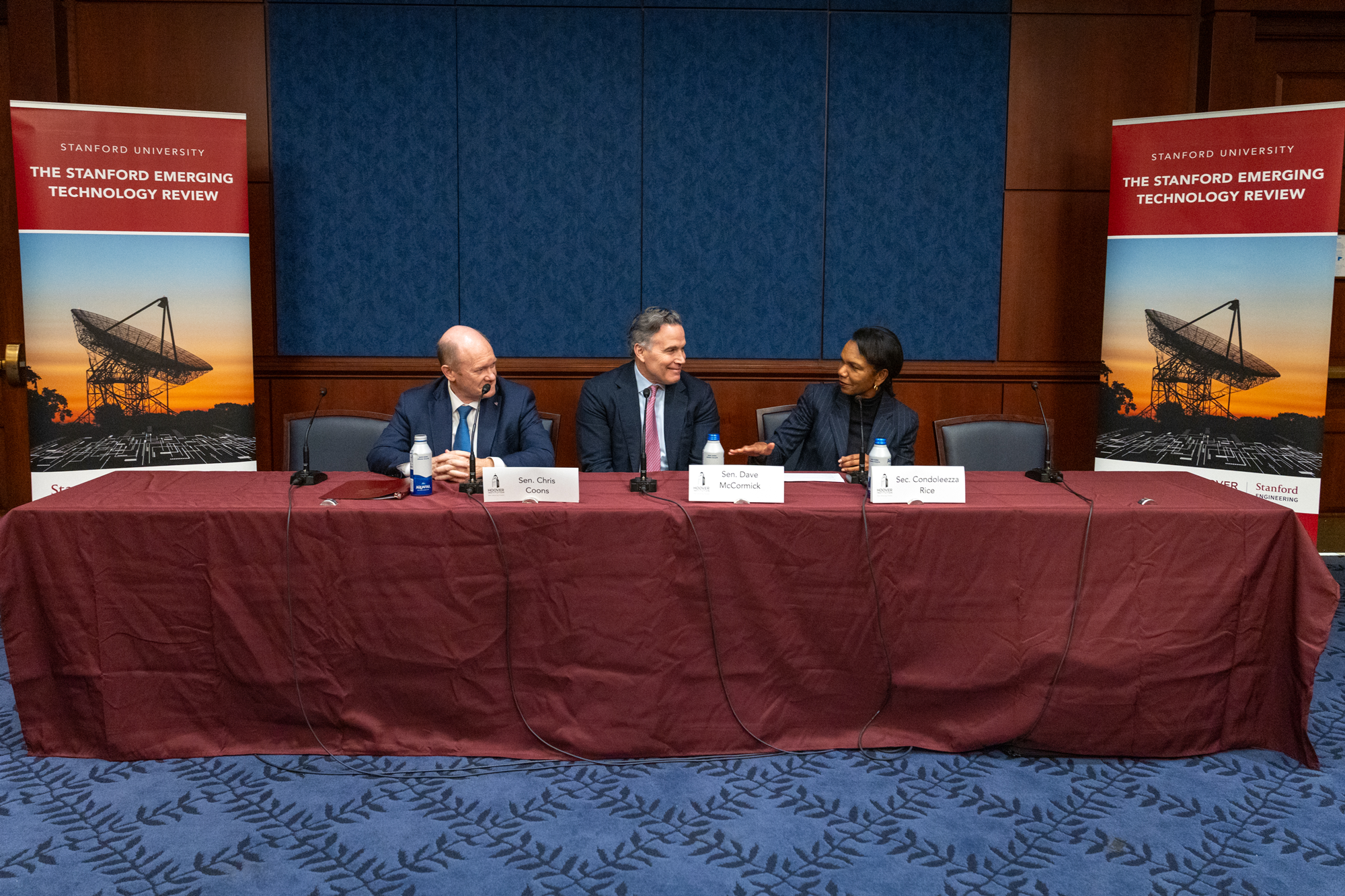
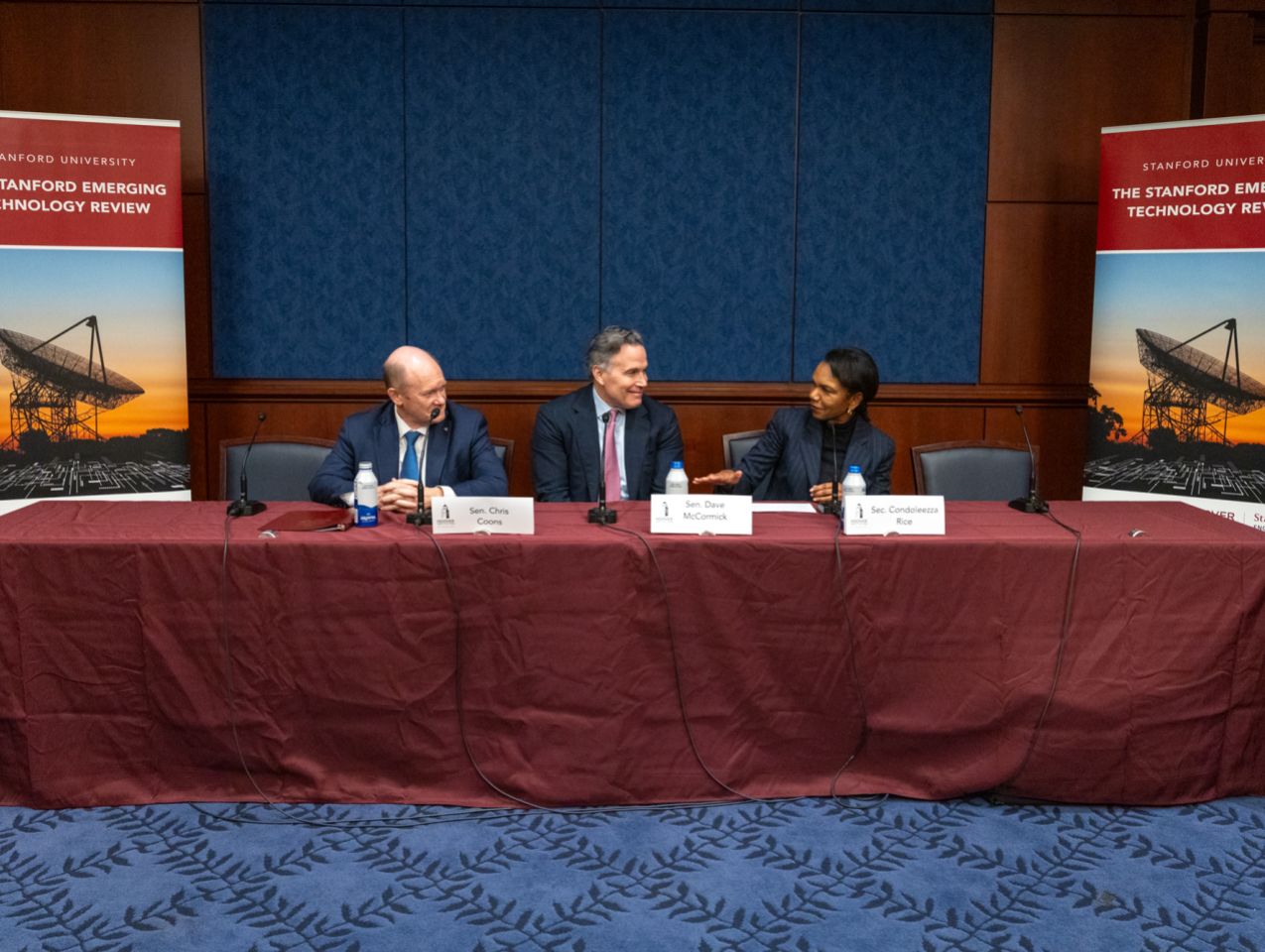
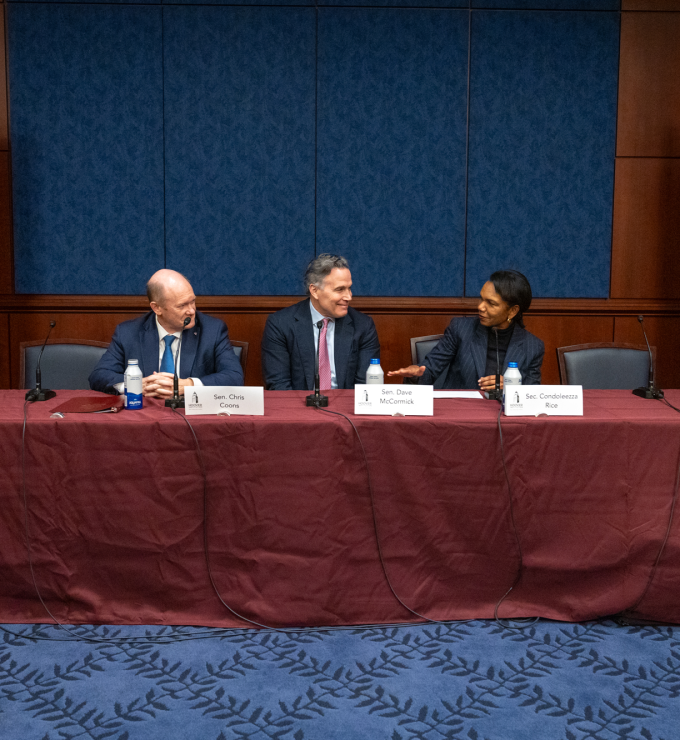
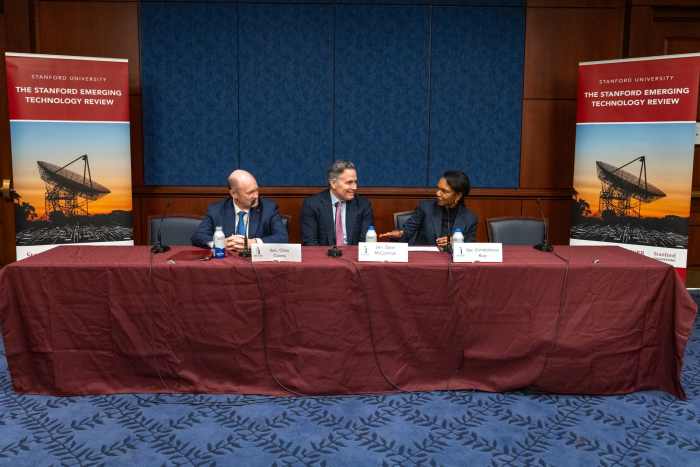
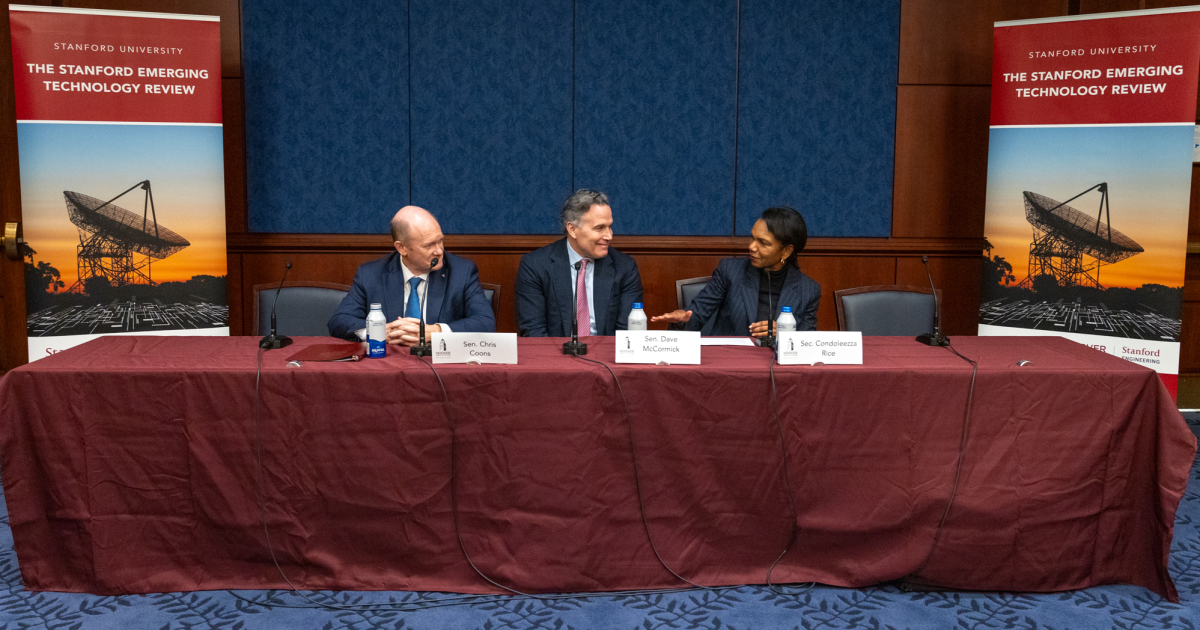
Hoover Institution (Washington, DC) — Senators Chris Coons (D-DE) and Dave McCormick (R-PA) joined Hoover Institution Director Condoleezza Rice, Stanford School of Engineering Dean Jennifer Widom, Senior Fellow Amy Zegart, and contributing scholars at an event in the US Capitol on January 28 to mark the launch of the 2026 edition of the Stanford Emerging Technology Review (SETR).
A collaboration between the Hoover Institution, the Stanford School of Engineering, and the Institute for Human-Centered Artificial Intelligence (HAI), SETR—based on field-leading research from more than one hundred Stanford scientists, engineers, and policy experts across forty departments and research institutes—serves as a one-stop primer on state-of-the-art innovations in ten technology key domains and what to watch for in the future.
The report “is not about policy recommendations,” emphasized Director Rice at the launch event. “This is about understanding the technologies themselves, and we believe that with that understanding we will make better policy.”
Rice stressed the fundamental differences between democracies and autocracies in developing and deploying advanced technologies, noting that in the former, the people have the ability to ask questions—and maintain accountability—via a free press and elected representatives. This is “another reason the leadership for these emerging, transformational technologies needs to be with the United States of America.”
Senator Coons noted the remarkable progress of emerging technologies across fields and industries, and how the United States government is actively investing large amounts of resources into studying the national security challenges posed by new capabilities in quantum computing and artificial intelligence.
Senator McCormick said that continued American leadership in the emerging tech areas covered in the SETR report remains “within our grasp, but it depends a lot on whether we make the right choices in terms of regulations, and talent, and immigration, and funding for basic research.”
In a panel discussion, project cochairs Senior Fellow Amy Zegart and Dean Widom were joined by AI researcher and Stanford professor of computer science Fei-Fei Li, Senior Fellow Steven Koonin, and Mark Horowitz, chair of the electrical engineering department at Stanford.
Zegart highlighted three main trends in technology over the past year: accelerating rivalry between the United States and China across domains; greater realization of the need for the US government to better avoid strategic surprises (like last year’s launch of Chinese AI model DeepSeek); and a growing recognition of the need for more investment in basic research and in the universities at which such research is conducted.
Calling AI a “civilizational technology that can help discover a cure for cancer and better materials,” among other applications, Professor Li called on all stakeholders to technological innovation—teachers, scientists, policymakers, journalists, medical professionals, and more—to avoid an overly negative perspective on AI in particular.
Dean Widom made the case that “AI is absolutely going to change education, from K–12 through higher education.” She noted that teaching and coursework will have to be fundamentally rethought. “I actually think that’s super exciting,” Widom said, while acknowledging the significant effort that this will require from educators and school and university leaders.
Professor Horowitz said that over the last decade, innovations in computing have “been leveling out” and that as a result, accomplishing more computing “actually costs more real dollars.” This marks a departure from trends toward ever-lower costs and greater efficiencies that had held over previous decades. Horowitz noted that this economic and technological fact explains why so much private capital is now required to build the infrastructure underlying the AI revolution.
“We often think about energy systems in three dimensions: They need to be reliable, they need to be affordable, and they need to be sustainable,” said Koonin. “For the last thirty years, the world has promoted ‘sustainable’ above the other two qualities.” Koonin argued that recent increases in the cost of energy—and the substantial deindustrialization of major economies like Germany and the UK—as well as decreased grid reliability amid rising demand (including from AI data centers) have brought about a pivot in global energy policy.
“I believe that if we really want to reduce emissions, then nuclear power needs to play a big role in future energy systems,” Koonin said, noting the promise of small modular reactors. Koonin also stressed that “the climate threat is nowhere near existential, the way it had been portrayed” in recent decades.
Dean Widom also reflected on how conversations about the Stanford Emerging Technology Review (SETR) initiative have changed since she first began discussing the project with various officials in the nation’s capital two years ago. Back then, about a third of questions were about AI. “Now it seems to be 95% AI,” she said. But Widom encouraged audience members to take a copy of the SETR report and read up on biotechnology, because in her view, current developments in the field raise important questions about types of research we should—and should not—engage in.
Beyond publishing an annual report, the SETR initiative has the ambitious goal of “transforming technology education for decision makers in both the public and private sectors so that the United States can seize opportunities, mitigate risks, and ensure the American innovation ecosystem continues to thrive.”
Learn more about the project’s scope and aims and view the full report here.
The Stanford Emerging Technology Review (SETR)
The Stanford Emerging Technology Review, a campus-wide initiative housed under Hoover’s Technology Policy Accelerator, helps America’s public and private sectors better understand transformational technologies so that the United States can seize opportunities, mitigate risks, and ensure its innovation ecosystem continues to thrive. The product of a major Stanford education initiative, its clear explanation of pivotal tech domains, recent developments within them, and what to watch for in the future makes it an indispensable guide to tomorrow’s world.
Learn more about the Stanford Emerging Technology Review and download the 2026 report at setr.stanford.edu.
Technology Policy Accelerator (TPA)
The Hoover Institution’s Technology Policy Accelerator (TPA) conducts research and develops insights that help government and business leaders better understand emerging technology and its geopolitical implications so they can seize opportunities, mitigate risks, and advance American interests and values.
Learn more here at hoover.org/TPA.