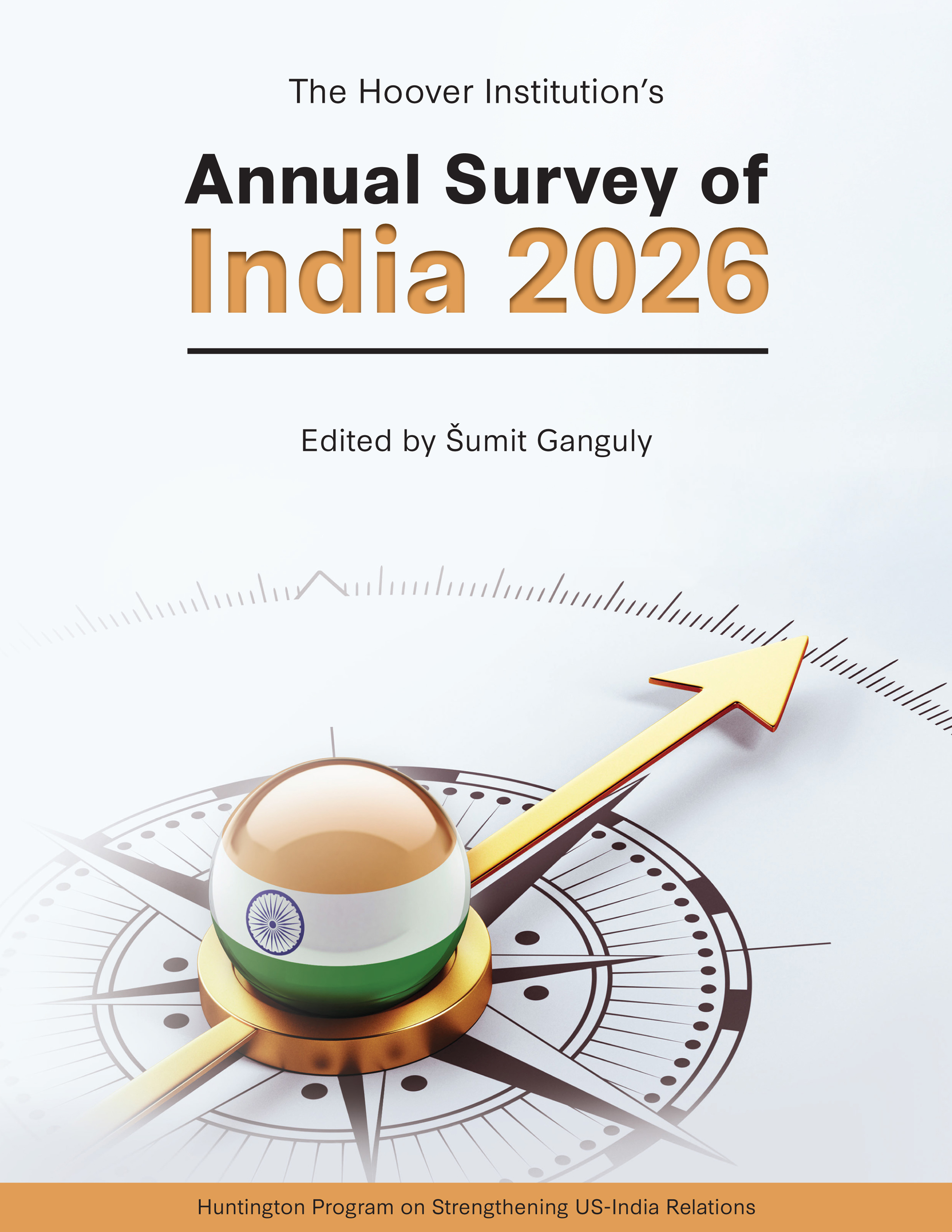
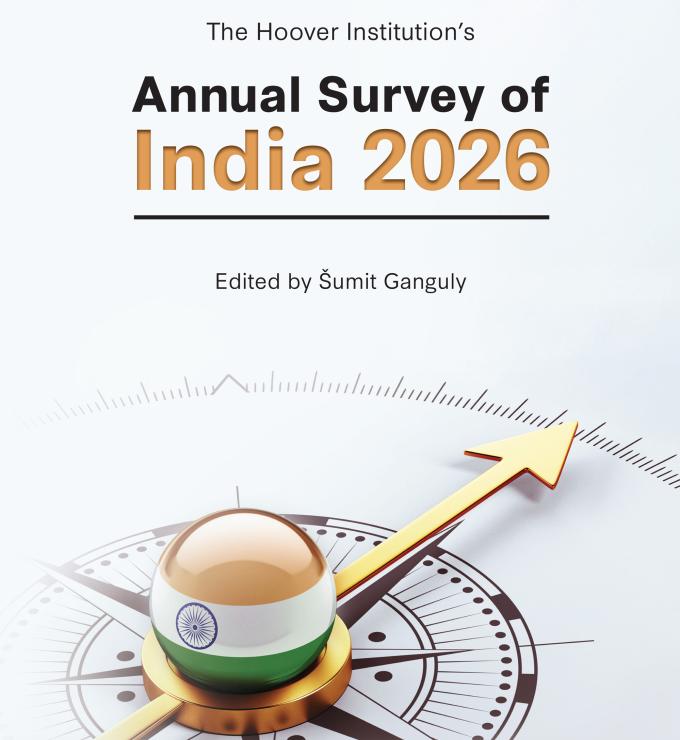
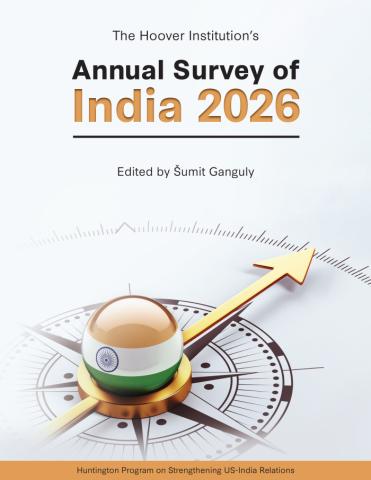
Hoover Institution (Stanford, CA) — The Hoover Institution’s Survey of India returns for 2026 with a host of insights and policy prescriptions on offer for leaders working to navigate a unique period in US-India relations.
The Hoover Institution’s Annual Survey of India 2026 provides a detailed examination of the country's current landscape, focusing on political, economic, social, and environmental challenges. It addresses key themes such as governance, economic growth, foreign relations, defense policy, education quality, healthcare accessibility, and sustainability. This comprehensive analysis aims to inform readers about critical developments and emerging trends that are shaping India’s future.
The report was edited by Senior Fellow Šumit Ganguly. Chapters are written by leading specialists in each field and include historical context, the state of current policy choices, and possible future developments that could include enhanced cooperation with the US.
In 2026, India appears to be at a crossroads. It confronts a challenging foreign policy environment characterized by unpredictability on several fronts. President Trump’s return to power, escalating tensions with Pakistan, and China's assertiveness pose significant obstacles to India's efforts in maintaining strategic autonomy. The deterioration of relationships with key nations and the imperative for robust domestic economic growth complicate Prime Minister Narendra Modi’s goal of enhancing India’s global stature.
As its economy continues to grow and diversify, India aims to become a developed nation by 2047, striving for a growth rate of about 8 percent. To realize this ambitious vision, India must focus on transforming its education system. While India has made significant educational progress, quality of learning is still a pressing issue.
Though there are challenges, India has shown remarkable ability to raise living standards for its people and enforce a level of political stability not thought possible in the recent past. It now increasingly looks outward, working to build stronger relations with the world’s major powers, especially the United States.
This report, which will return with updated versions in the coming years, was produced with the support of Hoover’s Huntington Program on Strengthening US-India Relations.
Contributors: Azad Singh Bali, Shreekant Gupta, Ian Hall, Venni V. Krishna, Rishikesha T. Krishnan, Shreyas Ramkumar, Nirvikar Singh, Eswaran Sridharan, Arzan Tarapore
About the Editor:
Šumit Ganguly is a senior fellow at the Hoover Institution and the director of the
Huntington Program on Strengthening US-India Relations.
For coverage opportunities, contact Jeffrey Marschner, 202-760-3187, jmarsch@stanford.edu.