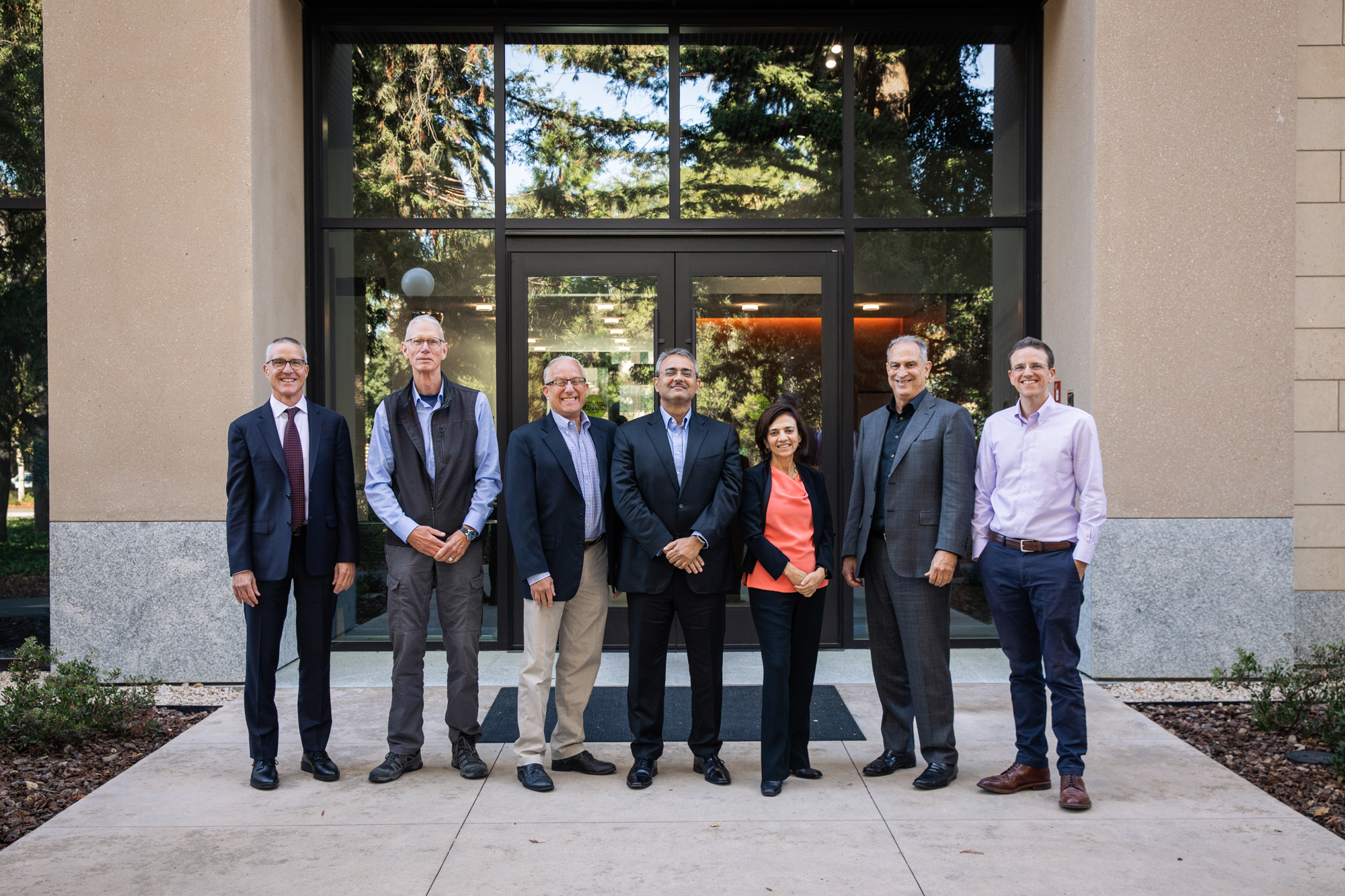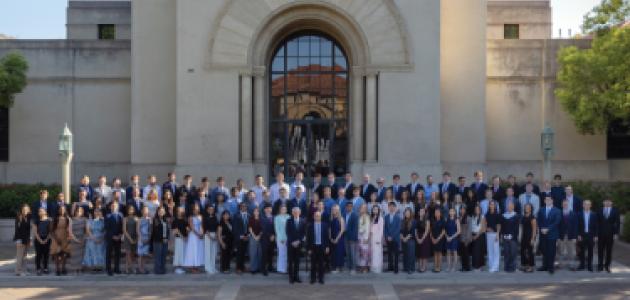









Hoover Institution (Stanford, CA) — Scholars including Stanford President Jonathan Levin gathered at Hoover on November 6, 2025, to explore the promises and challenges associated with decentralized governance structures, with blockchain technology and modern US universities used as examples.
The gathering brought together Hoover and Stanford Graduate School of Business (Stanford GSB) scholars in the fields of economics, political science, and technology policy to discuss how US universities could adjust in the wake of recent public criticism, and how new technologies, such as blockchain, could broaden and encourage participation in the governance of complex organizations in business and other sectors.
Also attending were Susan McCaw, chair of Hoover’s Board of Overseers, vice-chair John Kleinheinz, and vice-chair Robert Grady.
The Promises and Challenges of Decentralized Governance conference was made possible by a partnership between Hoover’s Program on the Foundations of Economic Prosperity and the Stanford GSB's Business, Government, and Society Initiative.
The day’s presentations saw explorations of two very different structures—the modern American university and the emerging ecosystem of decentralized autonomous organizations (DAOs) via the blockchain. The first panel of the day focused on the promises and challenges of the decentralized governance structures of American universities.
“Universities have played a crucial role for economic prosperity and social mobility for longer than there has been a United States,” said Hoover Program on the Foundations of Economic Prosperity director Stephen Haber. “But now their role is under considerable scrutiny by society at large.”
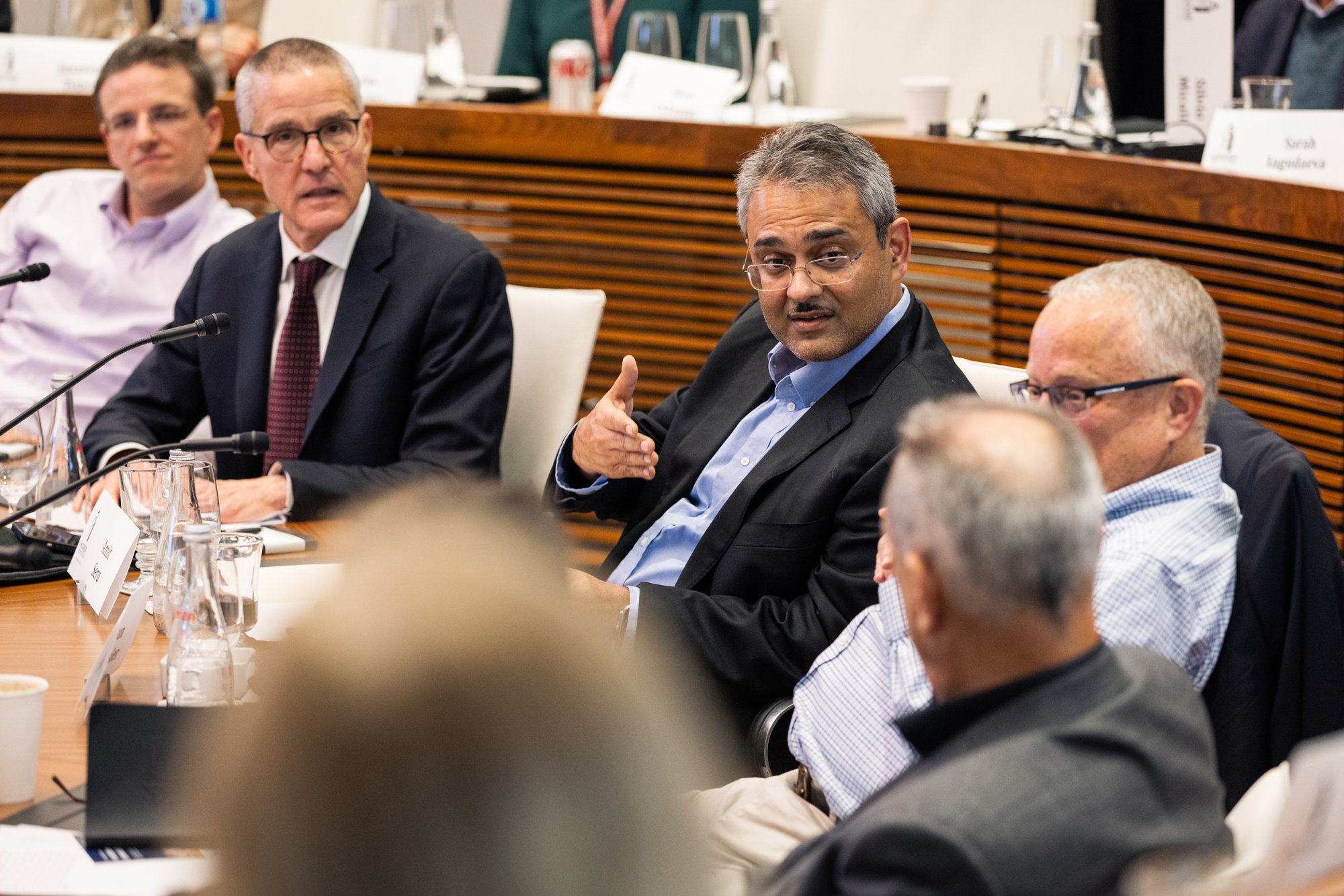
Amit Seru, Hoover Senior Fellow and professor of finance at Stanford GSB, presented joint research with Hoover senior fellows Haber and Daniel P. Kessler and other coauthors on how the political ideology of US university board members has evolved over the past forty years.
Using data from nearly six hundred public and private US universities, spanning from 1980 to 2022, including the confirmed political contribution histories of more than thirty thousand university board members, they found that the relative ideological orientation of private university boards has, on average, shifted left over time, particularly among the boards of elite private universities.
Nevertheless, most private university board members remain ideological centrists. A similar shift was not found, on average, among public university boards.
Jiawen Wu, William Wygal, and Junyan Yu are additional coauthors on the working paper "The Changing Political Ideology of University Boards of Trustees."
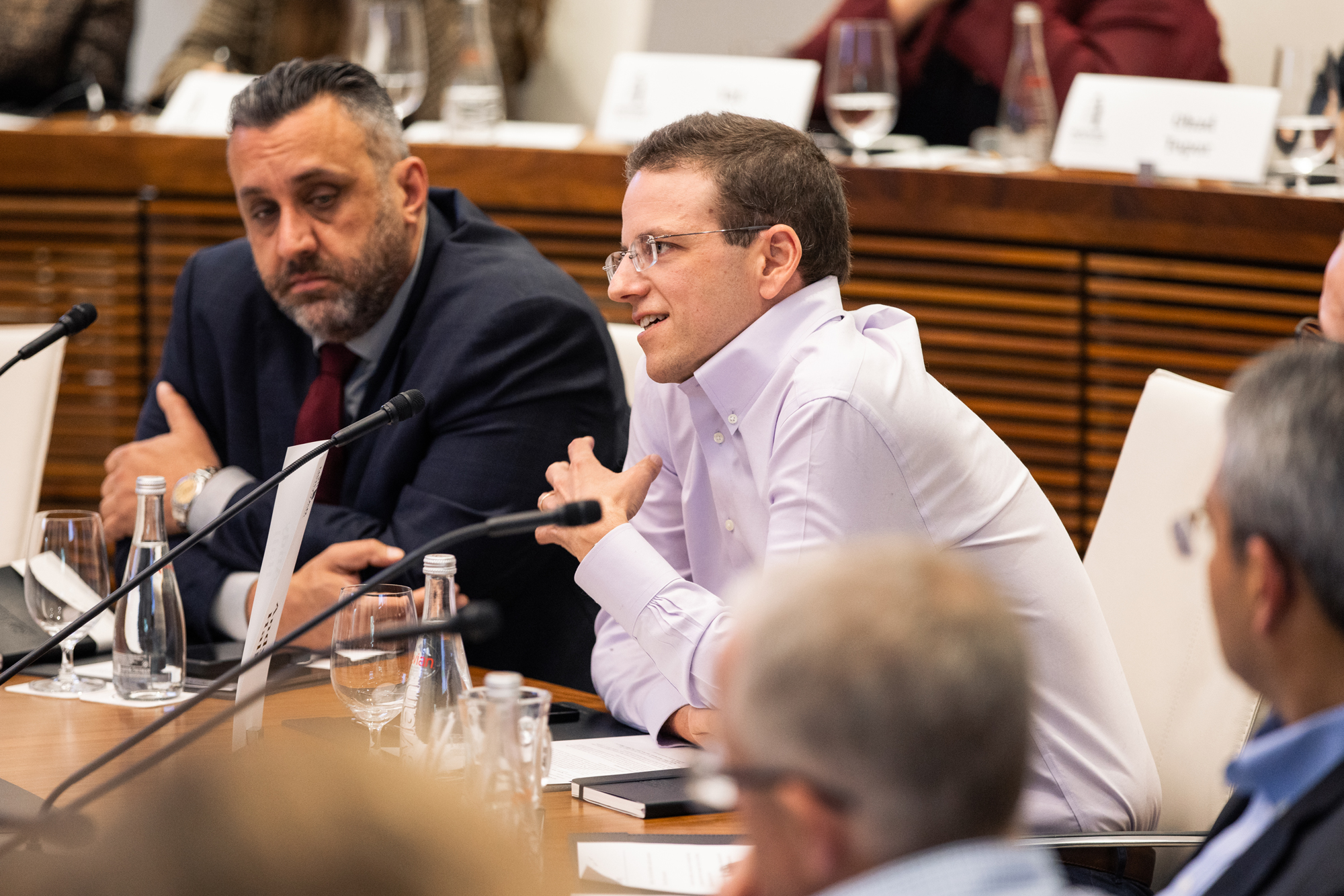
After the presentation, attendees discussed the appropriate roles of trustees, administrators, and faculty members in the governance structure of modern universities. Participants also discussed the selection mechanisms for board members.
While views differed among the group, there was a general agreement that of the different options facing universities, federal intervention was the least preferable way to balance universities’ research and teaching mission with demands of citizens for greater accountability and transparency regarding the use of public funds.
The second panel focused on the governance of DAOs. Hoover Senior Fellow and Stanford GSB Professor of Political Economy Andrew B. Hall presented his work, coauthored with Stanford GSB colleague Sho Miyazaki, on the use of liquid democracy in DAOs.
Liquid democracy refers to a decision-making system where even the lowliest participant can become a representative, tasked with making decisions on behalf of a broader whole.
But it is “liquid” in the sense that other participants in the system can deselect their representatives at any time and pick new ones.
Hall and Miyazaki found that using such a system could potentially benefit participation rates in certain decentralized organizations in the future, but that current rates of participation in such organizations is low.
The day saw robust discussion about these two systems of governance, the tradeoffs associated with each, and ways to ensure the successful use of both systems.
Seru closed the conference by noting, “I think one lesson that emerged was that decentralized governance is dependent on who’s at the helm: trustees in universities, validators in crypto, and so on. Change the people, and you are likely to change the consensus; change the consensus, and you are likely change the governance.”