


- US Foreign Policy
- International Affairs
- Security & Defense
- Middle East
- Determining America's Role in the World
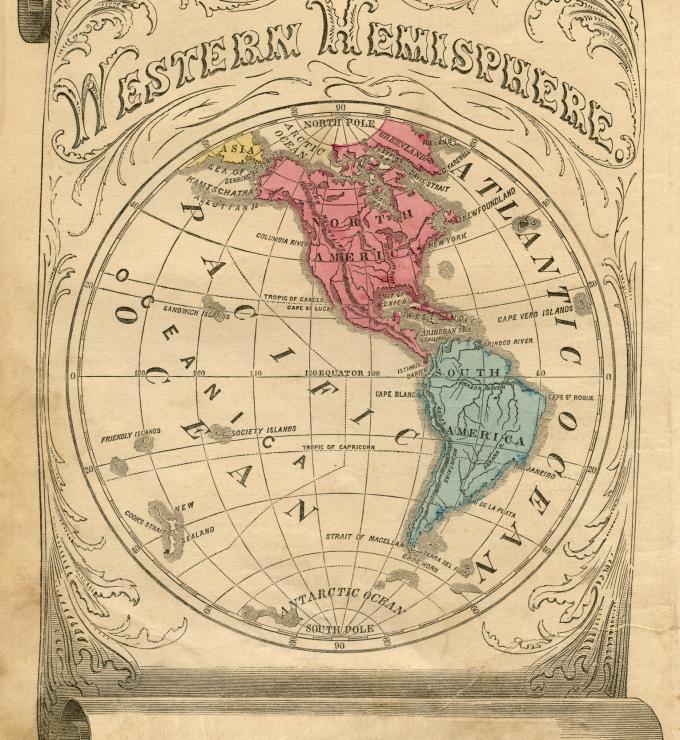
The Trump administration’s newly released National Security Strategy elevates the Western Hemisphere to a priority region. Under an “Americas First” policy, the Trump administration is pivoting to the Americas and returning to hemispheric defense. In doing so, the United States must engage Israel as its partner of first strategic choice to achieve its objectives of a free, prosperous, and stable hemisphere.
Why partner with a Middle Eastern power to solve Western Hemisphere problems? The United States and Israel indeed share mutual security interests in the hemisphere, especially countering Iran and its main proxy, Hezbollah. Recent reporting on the attempted assassination of Israel’s ambassador to Mexico by the Iranian Revolutionary Guard Corps’ Quds Force, together with the Senate hearing on Hezbollah’s extensive narcotics-trafficking enterprise in October, underscores the pervasive threat.
The persistent challenges of Iran and Hezbollah, alongside other hemispheric dilemmas like the crisis in Venezuela, create new opportunities for US-Israeli collaboration amid a fundamental shift in US grand strategy. Israel’s innovative prowess and qualitative edge in key business and defense sectors can augment American power and resources across the region, redounding to the benefit of Latin America and the Caribbean. Israel can be a vital force multiplier in America’s campaign against transnational criminal organizations (TCOs) and malign foreign actors in the hemisphere.
The Western Hemisphere is just one of many theaters, from the Indo-Pacific to the Middle East, where US-Israeli cooperation can yield economic and security gains that serve not only the American and Israeli national interests but also those of allies and partners. The geopolitical situation could not be more conducive to such a reciprocal partnership.
Pivoting from Gaza to the Americas
The Gaza War has wrought Israel’s international isolation. Jerusalem’s historical ties with European partners have frayed under intense scrutiny of civilian casualties and the humanitarian toll of the Israeli Defense Forces’ justified war against Hamas. The Gaza campaign, meanwhile, exacerbated partisan divisions over Israel in the United States, as antisemitism surged in the wake of the October 7, 2023, terrorist attacks. Support for Israel within the Democratic Party has eroded, and segments of the American right question both the liability and reliability of Israel as a partner of the United States. Young Americans in general have soured on the US-Israeli relationship. Israel, in turn, finds itself in a vulnerable position of heightened reliance on America at a time of increasingly negative public sentiment.
Regionally, however, the Abraham Accords, now ripe for institutionalization and expansion, offer Israel a normalization pathway to transcend the conflicts with its Arab neighbors that have defined its strategic doctrine. As the Gaza campaign transitions from war to reconstruction, Israel must seize the small window of opportunity to reorient and redirect its power beyond the Middle East. Israel can fortify American hemispheric defense and demonstrate its strategic value as a partner while taking advantage of new avenues for economic and diplomatic expansion beyond its own region.
Latin America and the Caribbean have traditionally been a tertiary arena behind Israel’s priority security concerns in the Middle East, followed by Jerusalem’s economic and political relations with the United States, Europe, and then Asia. Yet the Americas are consistently the soft underbelly for Israel, where its enemies sustain partnerships, earn profits to finance terrorism, and launch successful attacks.
For decades, the Islamic Republic and Hezbollah have exploited Latin America’s porous borders, its large Levantine diaspora, and its political instability to assault Jewish targets. Together, Iran and Hezbollah organized and executed the most infamous acts of terrorism against Jews in Latin America: the March 17, 1992, bombing of the Israeli embassy in Buenos Aires and the July 18, 1994, bombing of the Asociación Mutual Israelita Argentina (AMIA) Jewish Community Center in the Argentine capital.
Iran’s regional friends made it a permissive environment for anti-Israeli activity, especially since the “Pink Tide.” Leftist governments facilitated Tehran’s intrusion into the hemisphere, where it made common cause with states that shared animus toward the United States and Israel. In the early 2000s, the rise of Hugo Chávez in Venezuela, Rafael Correa in Ecuador, and Evo Morales in Bolivia, all of whom deepened their countries’ relations with Tehran, reinforced Iran’s long-standing ties with the Nicaraguan and Cuban regimes.
Consequently, Iran and Hezbollah operate throughout the hemisphere. They use the Tri-Border Area between Paraguay, Argentina, and Brazil as a hub for their lucrative criminal activities, such as illicit trade, money laundering, and arms and drug trafficking. Iranian and Hezbollah operatives are welcome guests of the Nicolás Maduro regime in Venezuela, where they carry out their nefarious regional strategy against Israel, the United States, and its partners.
But Israel has not been friendless. As with the foiled attempt on the life of Israel’s ambassador to Mexico, Latin American governments have acted to thwart several attacks in recent years. Most notably, the Brazilian Federal Police, in coordination with the Mossad, disrupted Hezbollah’s planned assaults on São Paulo synagogues and the Israeli embassy in November 2023.
Israel’s relationship with the hemisphere parallels that of the United States. Latin American countries were among the first to recognize the Jewish state upon its independence. Still, Cold War fissures between Washington and Latin America affected Israel, foreshadowing its twenty-first-century regional standing. In September 1973, Fidel Castro severed diplomatic relations with Jerusalem, a month before the Yom Kippur War, in which Cuba intervened. The Sandinista regime cut ties over Israel’s invasion of Lebanon in 1982. Fueled by third-world solidarity, these Soviet-allied states viewed Israel as an imperialist outpost of America. Such sentiments returned with “Pink Tide” leaders Chavez, Morales, and Daniel Ortega, who suspended their countries’ relations with Israel.
Today, Israel faces implacable opposition from the usual suspects. Cuba, Nicaragua, and Venezuela remain ardent foes. Colombia’s left-wing president, Gustavo Petro, has denounced Israel and downgraded bilateral relations, banning coal exports, terminating Colombia’s free trade agreement, and expelling Israeli diplomats. Other Latin American countries, including Brazil, Chile, and Mexico, have strongly condemned Israel’s military campaign in Gaza and accused Israel of committing genocide against the Palestinians.
Despite staunch left-wing opposition, Israel has nonetheless maintained and advanced its diplomatic and economic partnerships in Latin America. The Americas have been at the forefront of relocating embassies to Jerusalem. Guatemala moved its embassy to the Israeli capital two days after the Trump administration’s decision in May 2018. Paraguay followed later in the year, and Honduras opened its new embassy in 2021. Paraguayan President Mario Abdo Benítez subsequently reversed the decision, but President Santiago Peña returned the embassy to Jerusalem in 2024.
Goods and services accompanied diplomatic gains. Jerusalem signed free trade agreements with Mexico in 2000, MERCOSUR (Argentina, Brazil, Paraguay, and Uruguay) in 2007, and Panama in 2018.
Now, the ebbing of the “Pink Tide” presents a more welcoming hemisphere for both Israel and the United States. In conjunction with Daniel Noboa’s presidency in Ecuador, the election of Javier Milei in Argentina marked a broader resurgence of conservative leadership in the Americas. Rodrigo Paz’s victory in Bolivia and the inevitable triumph of José Antonio Kast in Chile, combined with the prospect of similar outcomes in Colombia and Honduras, open additional doors to American-friendly governments. These like-minded countries will be inclined to engage with Israel on agriculture, cybersecurity, defense, medicine, and technological innovation.
Recent developments reflect the cautious optimism for Israeli-Latin American relations. This week, Costa Rica announced a free trade agreement with Israel and the establishment of a diplomatic-status office in Jerusalem for trade and investment. This follows last week’s inauguration of Ecuador's Center of Innovation and Entrepreneurship in Jerusalem, further signaling Noboa’s bid to deepen the Israeli-Ecuadoran partnership. Even the previously antagonistic Bolivia has changed course, with Rodrigo Paz easing visa restrictions for Israeli tourists.
Milei’s Argentina has become the most stalwart supporter of Israel. Milei announced plans to relocate the Argentine embassy to Jerusalem in 2026. He has also undertaken the ambitious program of building the Isaac Accords, which seeks to bring the spirit and initiative of the Abraham Accords to Latin America.
Partnering in the Western Hemisphere
For the United States, partnering with Israel in the Western Hemisphere makes good strategic sense. American policymakers have deemed the region a priority theater and the paramount arena for competition with China. The security challenges are manifold. TCOs destabilize the Americas and endanger the homeland. Across the hemisphere, Beijing has advanced its malign influence, making significant economic, diplomatic, and military inroads. Likewise, Iran and Russia maintain ties with authoritarian regimes allied against the United States.
Since taking office, President Donald Trump’s actions in the Americas reflect the priorities set forth in his National Security Strategy, from combating TCOs and pressuring authoritarian regimes to strengthening regional partnerships and challenging China in critical sectors. The Trump administration recognizes the dangers posed by both hostile foreign powers and TCOs, acknowledging that hemispheric security is a prerequisite to deterring America’s enemies and supporting America’s friends.
Fortuitously, hemispheric defense has returned amid institutional changes in the US-Israel relationship. As negotiations soon begin for a new Memorandum of Understanding (MOU), Israel seeks a deeper level of partnership and synergy with the United States. Reports indicate that the next MOU will include military aid as well as funding for joint research and development projects, including defense technology and artificial intelligence. These joint ventures can also benefit American partners in the Western Hemisphere.
Proven on the battlefield and in the marketplace, Israel’s capabilities can amplify America’s regional presence. Israel is home to the world’s leading companies in agrotech, biotech, cybersecurity, and defense technology. For governments eager to replace Chinese companies, Israel has superior, viable alternatives, many of which Latin American countries happily purchase already. Israel can immediately scale ventures upon closer engagement with hemispheric customers, new and old.
Israel has considerable room to expand its presence, especially in security cooperation. In 2024, Israel’s defense exports to the Americas represented only one percent of its global total. The surge in cartel-fueled crime has increased demand for Israeli drones, surveillance systems, and specialized training for law enforcement and counterterrorism units. Given Latin America’s growing need to safeguard its critical infrastructure, Israeli cybersecurity technology also proves a significant asset that can benefit the entire hemisphere.
Israel, however, has more to offer than security assistance. Advanced Israeli agricultural technology, coupled with the latest cultivation and irrigation techniques, can deliver cutting-edge solutions to farming challenges and increase crop yields.
MASHAV, the Israeli Foreign Ministry’s agency for international development cooperation, has served as a mechanism for both distributing disaster relief and sharing Israel’s agricultural and technical knowledge throughout Latin America, training local farmers and civil servants to implement best practices. Israeli expertise in desalination and water technology is also desirable in the region. Such know-how and technology could significantly boost Latin American economies, improve livelihoods, and minimize environmental harm.
Proving the Partnership in Venezuela
Solving the Venezuelan crisis would give renewed impetus to the US-Israeli partnership by achieving mutual security aims. American and Israeli interests intersect in Venezuela, a nexus for all the major threats destabilizing the Americas. To be sure, the end of the Maduro regime would be the beginning of a new hemispheric order, not least because it would remove Iran’s sanctuary for conducting operations against the United States and Israel.
The shared goal of eliminating Iran’s presence in Venezuela likewise unites the democratic opposition movement and Israel. In July 2020, the Vente Venezuela Party inked a cooperation agreement on geopolitics, security, and strategy with the Likud Party. After receiving the Nobel Peace Prize, Venezuelan opposition leader María Corina Machado phoned Israeli Prime Minister Benjamin Netanyahu and said “she appreciates the relentless struggle against the Iranian axis of evil, which is active not only against Israel, but also against the people of Venezuela.”
Machado’s team has prepared a blueprint for the days and months after Maduro. As the Trump administration appears set on bringing about a democratic transition in Venezuela, Israel stands poised to assist the democratic opposition in post-conflict stabilization.
In the likely event of Maduro’s removal, Israel could provide security and humanitarian assistance to a free Venezuela. Crucially, Jerusalem would be uniquely positioned to share intelligence and vet personnel. Israel could also offer third-country training and capacity-building for the armed forces and police. Israeli companies could help in ripping-and-replacing Venezuela’s Chinese-built digital infrastructure, providing robust cybersecurity defense capabilities against the expected foreign interference from China, Russia, Cuba, and North Korea. Moreover, Israel could send field hospitals, deploy medical missions, and distribute agricultural recovery kits to bolster the recovery effort.
While Maduro sings lines of John Lennon’s “Imagine” in a farcical plea for “peace,” the novel strategic thinking that will actually shape Venezuela is taking place far from Caracas.
In Washington and Jerusalem, American and Israeli policymakers now have a historic opportunity to build a deeper alliance that establishes Israel as America’s partner of first strategic choice in the Western Hemisphere. The United States can utilize Israeli intelligence as well as technological and scientific capabilities to complement American power, advance American interests, and support America’s neighbors.
Joseph A. Ledford is a Hoover Fellow and the Assistant Director of the Hoover History Lab at the Hoover Institution at Stanford University, where he also serves as the Vice Chair of the Hoover Applied History Working Group and leader of the Western Hemisphere Initiative.
Jesse R. Weinberg is a Researcher at the Institute for National Security Studies (INSS) and coordinator of the institute’s program on Israel and the Global Powers.