







Capstone Projects 2025‒26
View Veteran Fellows Capstone Projects By Year
Capstone Projects 2025‒26
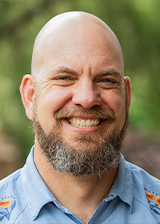 Stacy Bare is a National Geographic Adventurer of the Year and a pioneer in promoting time outdoors as health care. He is currently the executive director of Friends of Grand Rapids Parks. His work focuses on increasing access to parks, trees, and trails for all. He is a US Army veteran with deployments to Bosnia and Iraq. He conducted land mine clearance in Angola and the Republic of Georgia.
Wild West Michigan
Challenge Addressed: Data confirms that outdoor recreation and its infrastructure improve multiple health outcomes, social cohesion, civic behavior, environmental resilience, economic sustainability, and responses to extreme weather events. Yet inadequate and fractured systems—combined with current efforts to defund and privatize public lands—prevent realization of these opportunities.
Capstone Goal: Enable improved health and well-being for individuals and their community with greater access to recreational opportunities. Establish incentives, investment, and planning mechanisms that encourage outdoor environment expansion across multiple landowners and agencies.
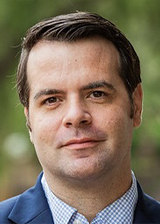 Dwight Boddorf is the borough manager of Tarentum, Pennsylvania, and a Marine Corps veteran of Operation Iraqi Freedom. A Purple Heart recipient, he focuses on strengthening local government through practical improvements in public services, community development, and regional cooperation.
Local Government Preparedness Project
Challenge Addressed: Small towns and counties across the country struggle to find qualified, mission-driven leaders. Meanwhile, thousands of service members transition out of the military every year with the kind of experience local government needs: team leadership, crisis response, logistics, infrastructure operations, and a deep sense of responsibility. There is no structured pipeline to connect the two.
Capstone Goal: Address the long-term leadership capacity gap facing small and mid-size municipalities in western Pennsylvania. Develop a sustainable and replicable pathway of training and field placement for veterans and emerging professionals to successfully enter municipal management roles.
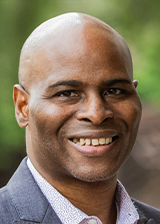 Allen “AJ” Edwards, CBCP, MEP, is a resiliency practitioner, veteran, and founder of AJ Edwards Consulting. With over fifteen years of experience in emergency management, CBRN defense, and business continuity, he has advised military, government, and educational institutions on resilience and crisis preparedness. Through his consulting practice, Edwards develops innovative strategies to strengthen school safety, continuity planning, and organizational resilience in the face of complex threats.
The Mental Health Continuity Project (MHCP): Building Human-Centered Resilience in K–12 Schools
Challenge Addressed: Most schools lack formal plans that integrate mental health recovery into crisis management plans following active threats or disasters. The lack of comprehensive mental health support leads to long-term issues impacting recovery, learning, and trust among those most affected.
Capstone Goal: Strengthen community resilience by integrating mental health recovery into school crisis management plans. Develop a digital platform to test how emotional, psychological, and operational recovery can occur simultaneously after a crisis to validate how schools can embed these approaches into their emergency protocols.
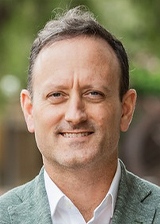 Dan Futrell is the founder of Polymath University—a new nonprofit university that is interdisciplinary, apprenticeship-based, and debt-free. Futrell previously served as CEO of the Pat Tillman Foundation, is a former local elected official, and served as an airborne ranger-qualified infantry officer at home and abroad for more than five years. A former foster youth, he now holds bachelor’s and master’s degrees from Gonzaga and Harvard Universities, respectively.
ROTC for the Private Sector—Building a New On-Ramp for Education and Employment in America
Challenge Addressed: Higher education has been a traditional pathway to the middle class, but student loan debt exceeding $1.7 trillion nationally places the American dream largely out of reach. Working-class students are priced out of higher education while graduates face substantial financial obligations that delay home ownership, entrepreneurship, and family formation. A parallel challenge exists in the talent pipeline: Employers struggle to source reliable professionals for knowledge-economy roles.
Capstone Goal: Establish the Zero Gravity Program among an initial group of higher-ed institutions to develop and test a debt-free, apprenticeship-based degree model that addresses both the student debt crisis and the employer talent shortage. This model aligns institutional capacity, employer needs, and student access in ways the traditional tuition-and-debt system cannot and creates a national standard for “ROTC for the private sector.”
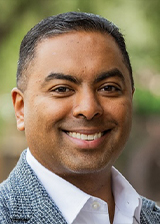 Vishaal “V8” Hariprasad is the cofounder and CEO of Resilience, a cyber risk management start-up. He is a lieutenant colonel in the US Air Force Reserve, serving as a cyber effects operations officer. He cofounded Morta Security (acquired by Palo Alto Networks) and was a partner at the Pentagon’s Defense Innovation Unit. Hariprasad holds a BS in mathematics from the US Air Force Academy and multiple cybersecurity patents.
Digital National Guard Framework for State and Local Critical Infrastructure
Challenge Addressed: Many local and state critical infrastructure organizations have insufficient cybersecurity protections, leaving them vulnerable to cyber threats. These entities often lack the resources and expertise needed to conduct effective risk assessments and keep up with federal intelligence on foreign state actors. This gap creates disparities in cybersecurity readiness and jeopardizes the safety and continuity of essential services in communities.
Capstone Goal: Strengthen cybersecurity readiness of state and local critical infrastructure entities against foreign actors. Organize and connect existing cybersecurity resources via a marketplace/clearinghouse that connects local critical infrastructure operators with state-level defensive teams equipped with federal-level intelligence.
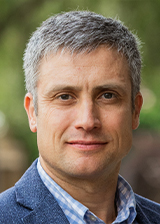 Erik Malmstrom is CEO of SafeTraces, a leading dual-use technology company focused on predicting, detecting, and preventing biological threats. Previously, he cofounded CrossBoundary and is an alumnus of Cargill, FBN, and the White House Fellowship. Malmstrom is a combat veteran and graduate of US Army Ranger and Airborne schools. He received his undergraduate degree from the University of Pennsylvania and a joint MBA-MPP from Harvard Business and Kennedy Schools.
Modernizing and Reforming US Early Warning System for Biological Threats
Challenge Addressed: US early warning systems for biological threats have repeatedly and consistently failed, most recently during the COVID-19 pandemic and the H5N1 outbreak. Policy, institutional, and technological shortcomings, along with a lack of urgency, create significant vulnerabilities in our ability to protect people, animals, and plants from natural, accidental, and weaponized threats.
Capstone Goal: Modernize and reform US early warning systems for biological threats. Develop and advocate for a multipronged policy proposal that integrates institutional architecture, civil-military coordination, and targeted public-private investment in critical technology capabilities.
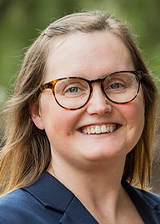 Jennifer (Jenna) Moffit served four years in the US Air Force as an air traffic controller. She currently serves as a congressional fellow in the House of Representatives and as a program manager at the US Department of Veterans Affairs. Moffit holds a doctorate in law and policy from Northeastern University and is dedicated to advancing thoughtful, inclusive policy for female veterans, military families, and youth caregivers.
Invisible Duty: Strengthening Institutional Support for Caregiving Youth in America’s Schools
Challenge Addressed: An estimated 5.5 million children in the United States are quietly serving as youth caregivers, many within veteran and military-affiliated households. Many educators—and therefore most of the US education system—are unaware of the unique challenges these students face. The inability to identify and support youth caregivers hinders academic engagement, impedes cognitive and emotional development, and accelerates long-term health disparities.
Capstone Goal: Empower US educators to recognize and meaningfully support caregiving youth. Create professional development opportunities and a practical toolkit that build educator capacity to identify and support these students effectively.
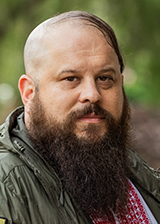 David Plaster is the founder of NGO Anomaly and cofounder of the Kyiv Center for Defense Policy. Based in Ukraine since 2012, he has led initiatives in tactical medicine, demining standards, and veteran transition while advising on NATO-aligned defense reforms. His work bridges frontline implementation with strategic policy to strengthen Ukraine’s resilience.
Scaling Prolonged Casualty Care for Nonmedical Personnel in Drone-Contested Environments
Challenge Addressed: In wars like Ukraine, drones, artillery, and electronic warfare often delay evacuation for hours. Many standard Western training models assume fast evacuation and strong medical support. In reality, the first person helping the wounded is often not a medic. That gap leads to preventable deaths and avoidable complications.
Capstone Goal: Reduce preventable death and severe injury by building a simple, doctrine-aligned “nonmedical execution layer” for prolonged casualty care in drone-contested environments. Produce practical tools, short training, and quick verification checks to help nonmedical personnel.
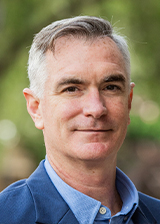 Nelson Rouleau is the CEO and cofounder of VetScore, an AI-powered platform transforming how veterans prepare for VA disability claims. A retired Air Force colonel with thirty years of strategic leadership, he has commanded at multiple levels and served twice in the Pentagon, helping craft the 2022 National Defense Strategy. He now advises senior leaders and coaches executives across defense and industry.
Modernizing VA Disability Claims Preparation for US Service Members and Veterans
Challenge Addressed: The VA offers a range of disability benefits but the eligibility and claims processes are often confusing and demoralizing. Outdated and inaccurate service treatment records frequently lead to denied claims, financial hardships, and prolonged wait times for benefits. Veterans are forced to turn to under-resourced services, prohibitively expensive companies, self-education via the internet, or, most devastating of all, give up on earned—and needed—benefits.
Capstone Goal: Measurably improve how individual service members access VA disability support. Create an early-intervention model providing free documentation support throughout a service member's career and through transition to civilian life
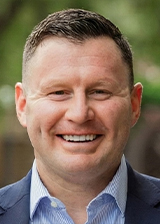 Jansen Weaver is a leader at the intersection of technology, finance, and national security. He is the chief business officer of Peripheral, an AI decision intelligence start-up, while also serving as a Marine attaché in the Marine Corps Reserves. His leadership is informed by active-duty Marine service and a corporate background in investment banking, consulting, and tech. He is a term member on the Council on Foreign Relations.
AI Playbook for State and Local Governments
Challenge Addressed: Many government entities hesitate to adopt AI support tools due to concerns over public trust, transparency, and ethical implications, leaving decision makers uncertain how to navigate adoption without clear guardrails or best practices.
Capstone Goal: Enable improvements to state and local government effectiveness. Develop and share widely an actionable playbook that helps government decision makers to responsibly integrate AI support tools while maintaining public trust and ethical standards.
