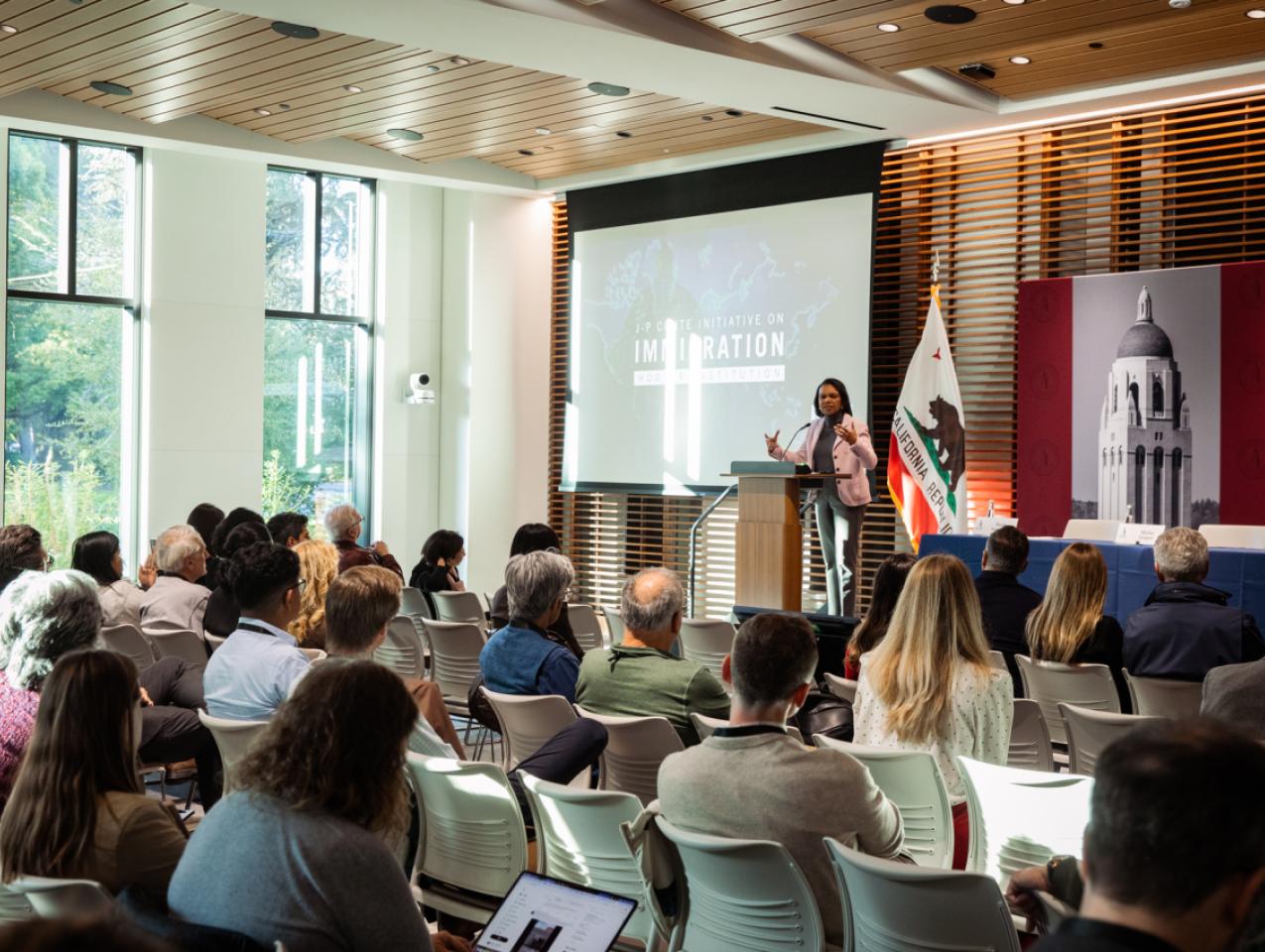
Hoover Institution (Stanford, CA)—The arrival of highly skilled foreign workers into the United States generates a range of positive gains for trade, entrepreneurship, and innovation—benefits that other nations will snap up an increasing share of if the United States continues to tighten its immigration rules.
Those were the findings indicated by a trio of papers presented at Hoover’s 2026 Immigration Policy and the Economics of Innovation conference.
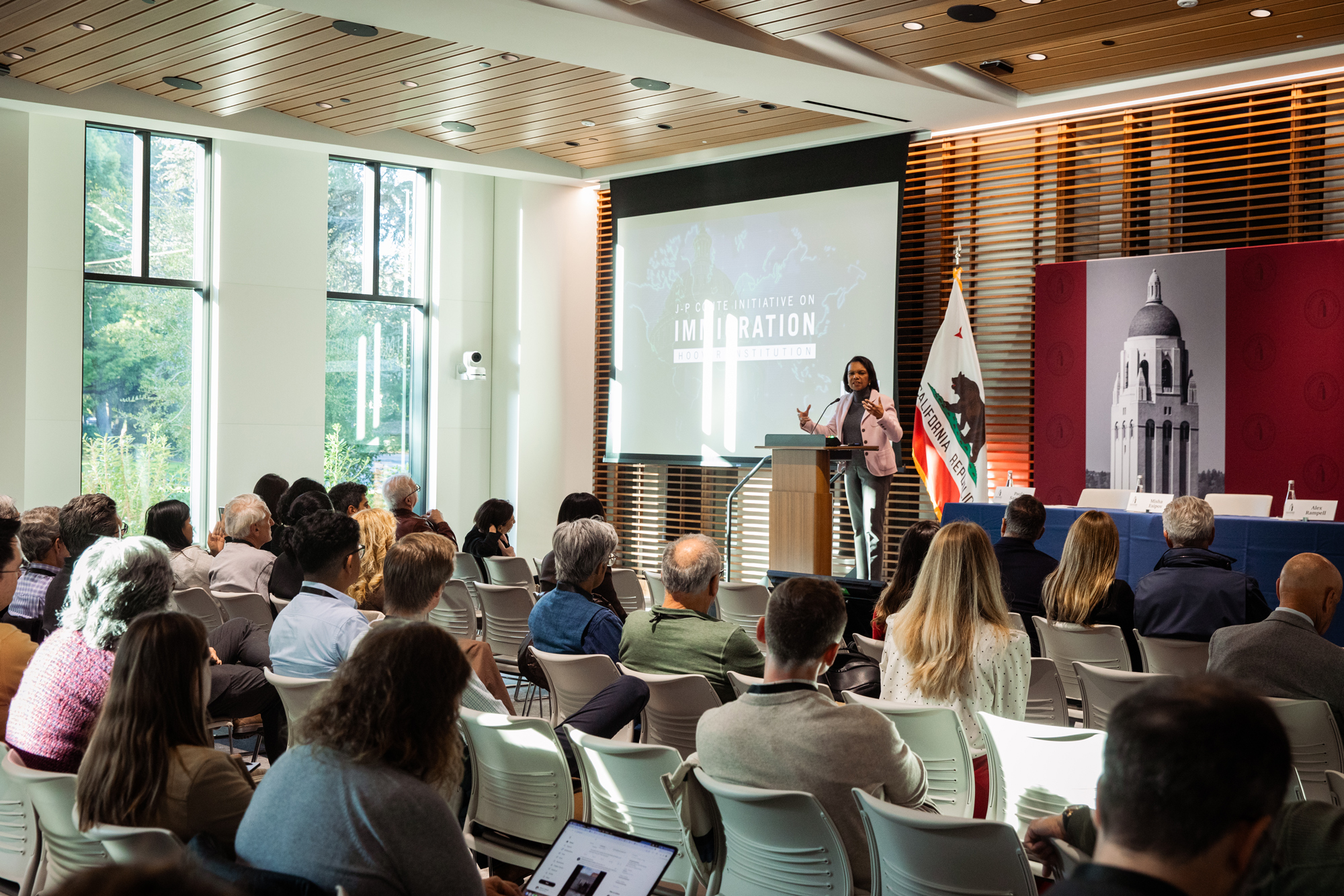
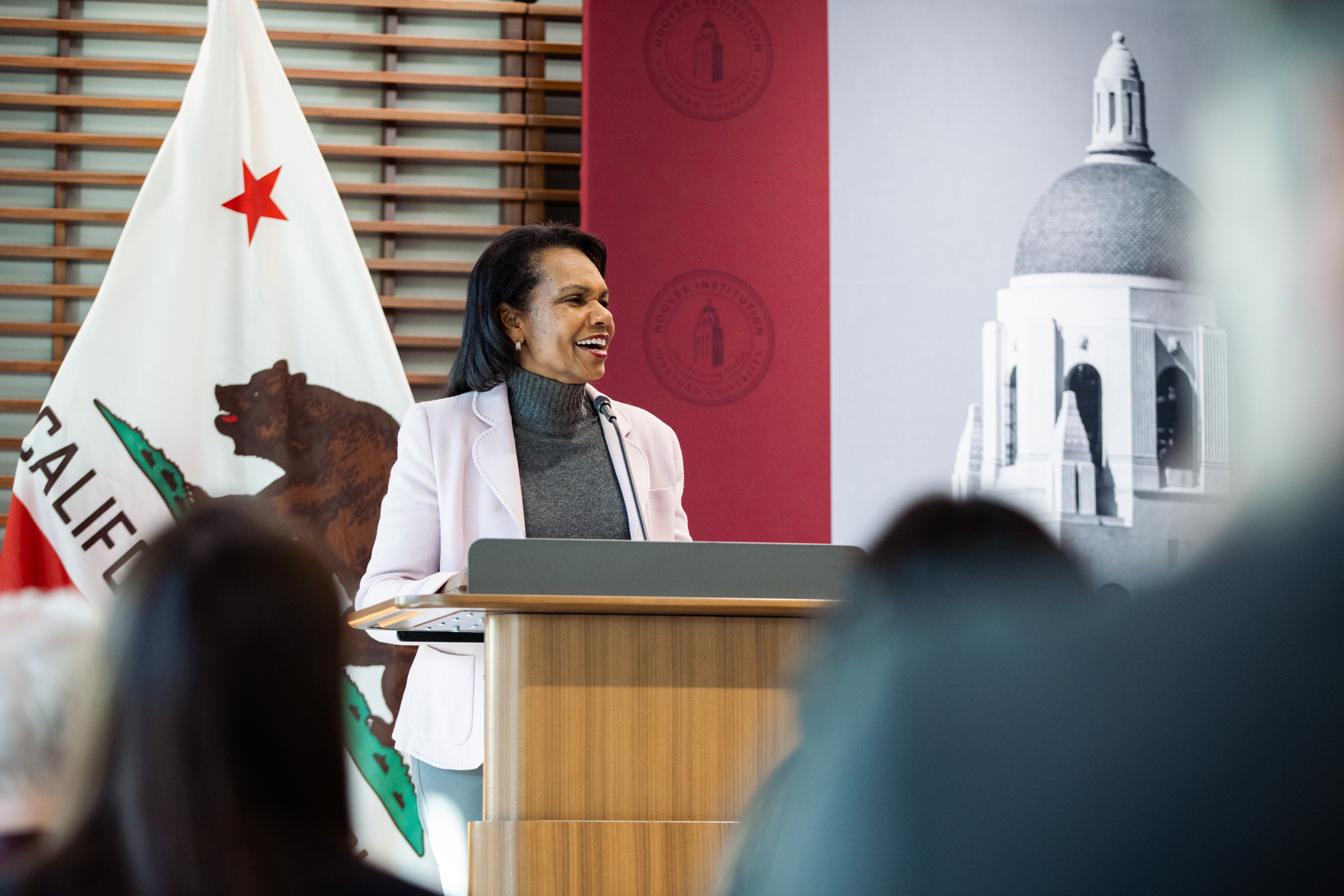
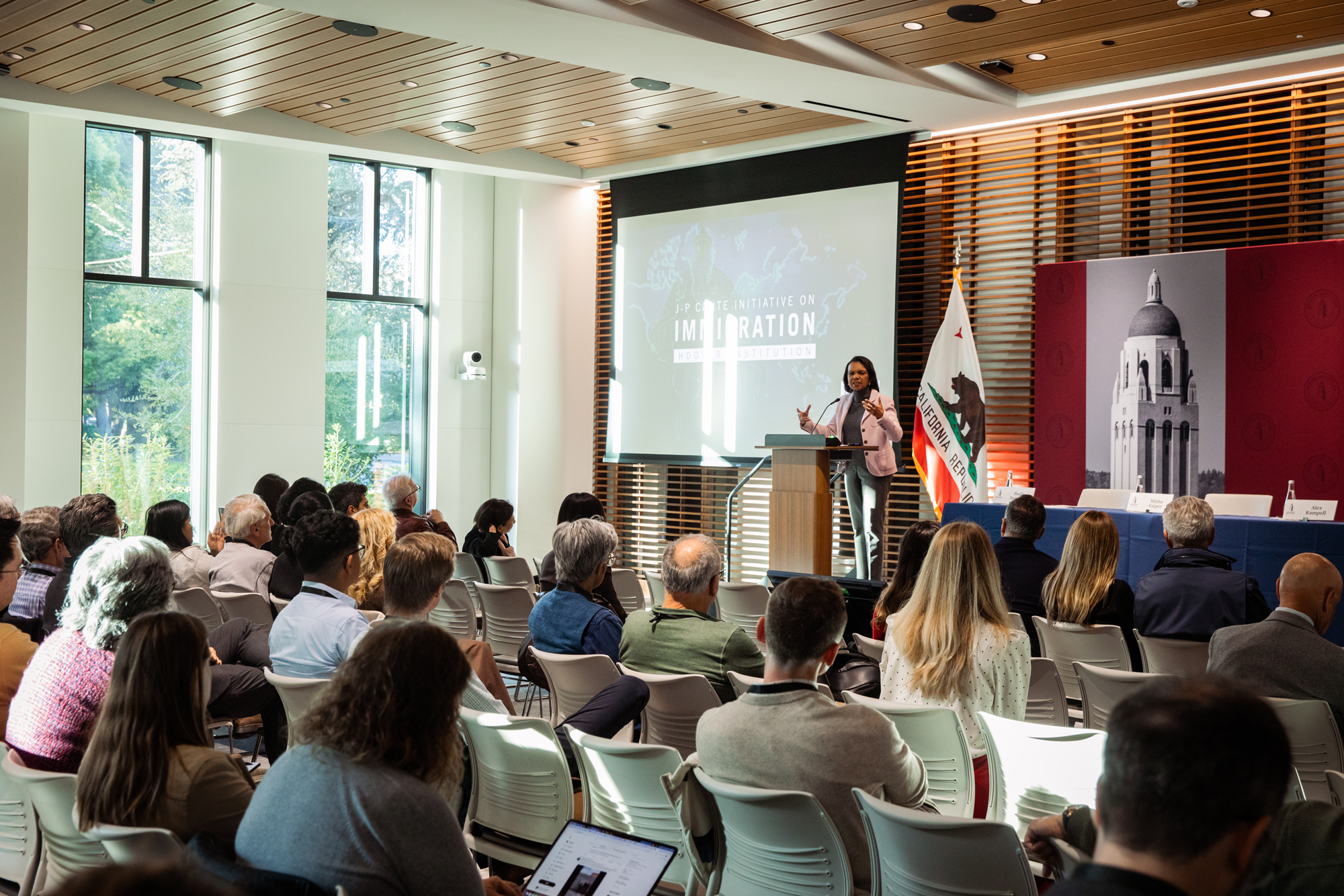
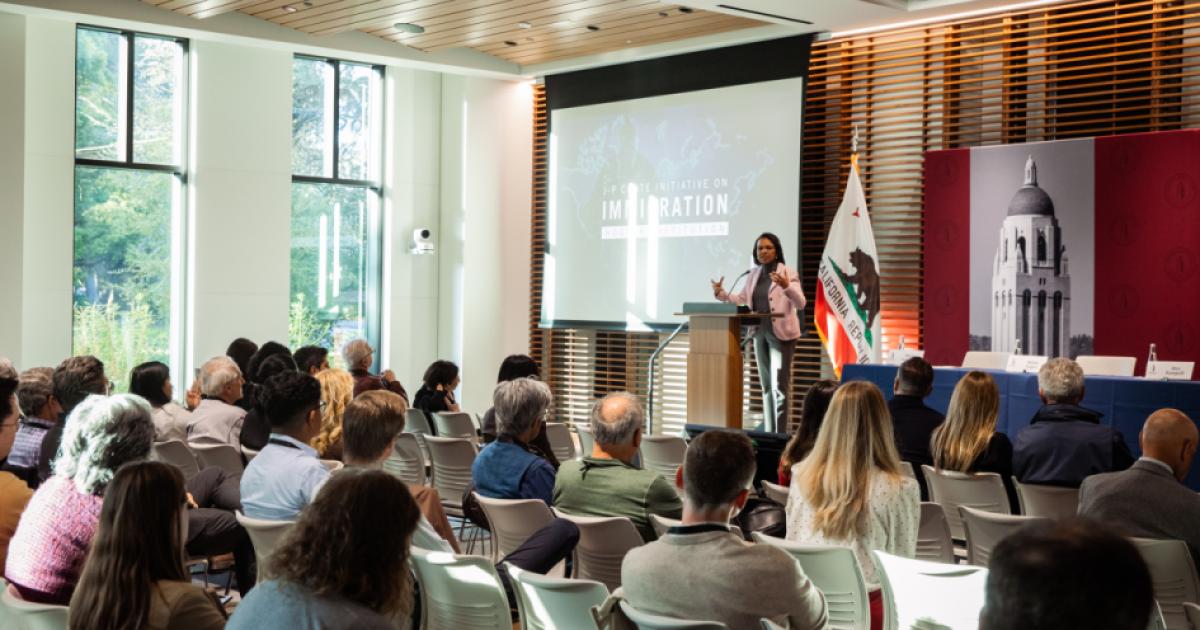
Hoover Institution Director Condoleezza Rice told attendees that it’s imperative the US remain the leading destination in the world for bright students to study and create things.
“We have always been able to welcome the best students from around the world to the USA, because they were free here, free to think outside of the box,” she said. “Don’t we want to be the place where the best and brightest want to come? Yes, we want to be that place and perhaps business leaders understand that the most.”
She said the conference was yet another way academics and industry leaders could find “sensible approaches to solve the immigration dilemma.”
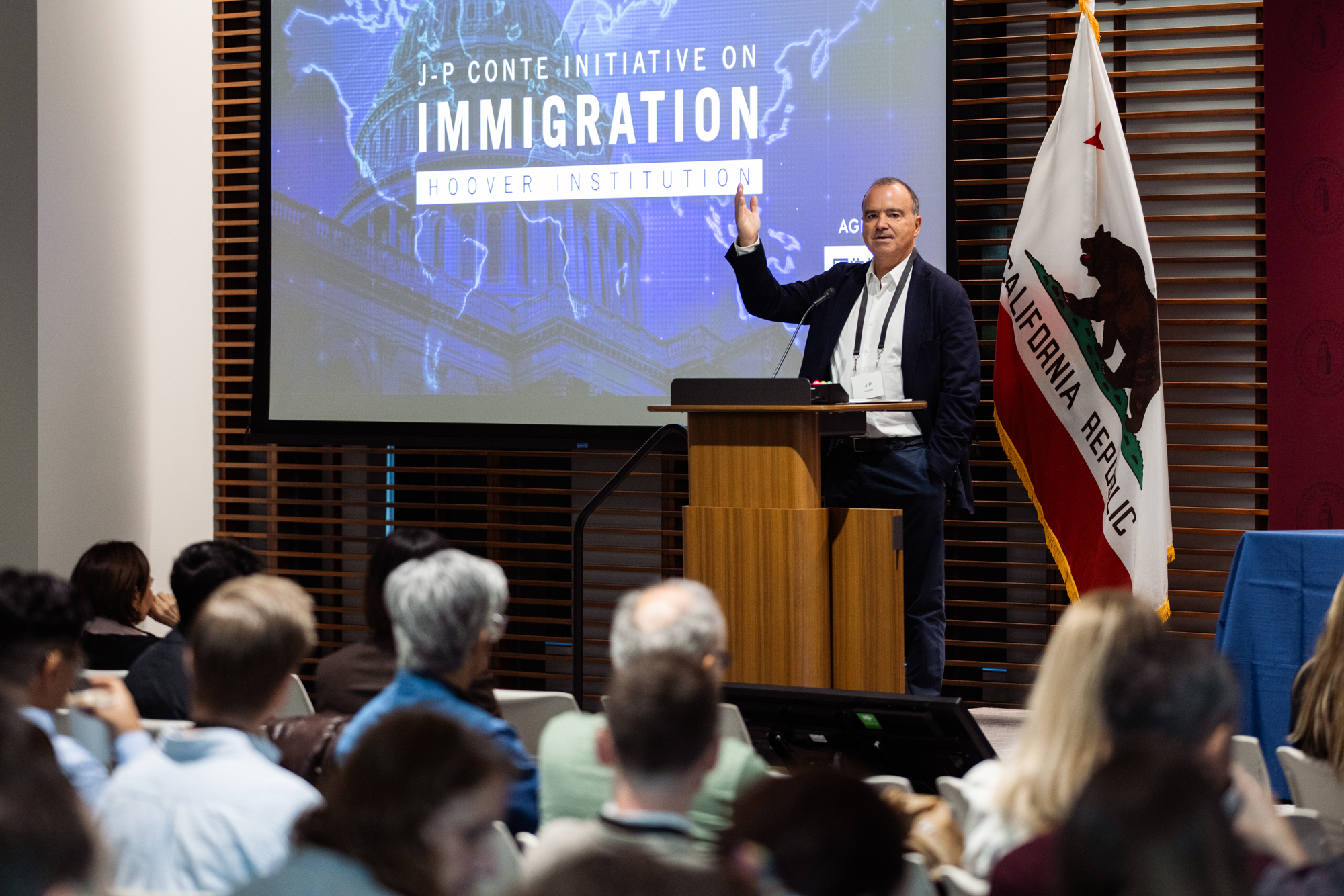
Jean-Pierre Conte, chairman of Genstar Capital, who sponsors the J-P Conte Initiative on Immigration at Hoover, which funded and organized the conference, recounted for attendees his own origin story: His mother fled the violent and repressive regimes of Fulgencio Batista and Fidel Castro in Cuba to come to the United States, and his father left post–World War II France. He asked attendees to envision a Silicon Valley where founders like Elon Musk or Jensen Huang were not allowed to settle and study in the US.
“Just think of a scenario where none of those people were here,” he said.
The purpose of the day’s presentations was to highlight the strong link between high-skill migration and the health of the innovation ecosystem within the US.
“The beauty of America is immigration and innovation,” Conte said. “And immigration is key to that innovation.”
The papers presented at the conference focused on the impact of immigration policy on economic conditions both inside the US and in countries such as India and Canada, which serve both as sources of high-skill labor and as alternative destinations for highly skilled workers who are refused entry to the United States.
The papers and discussions centered on visas dedicated to high-skill labor, of which there are currently two million active across the US workforce, as well as business founders who are sometimes able to obtain entry to the US after completing an advanced degree here.
University of Chicago economist Agostina Brinatti presented evidence she compiled alongside Xing Guo of the Bank of Canada showing that tighter US work-visa eligibility requirements and higher US denial rates beginning in 2017 diverted some skilled workers who might have immigrated here to jobs in Canada. Using data on H-1B applications, Canadian permanent residence filings, and trade, they found a rise in Canadian applications and admissions, with secondary effects of boosting Canadian exports.
In another presentation of research conducted by Gaurav Khanna of the University of California at San Diego and Nicholas Morales showed that the rising US demand for foreign tech workers starting in the mid 1990s helped catalyze a computer science boom in India.
The growing demand for computer science workers in the US spurred a massive increase in students enrolling in that field in India: A potential job offer in the US would have offered pupils a more than 300 percent premium in wages versus what was on offer in their home country at the time.
Khanna showed that most of these computer science grads who came to the US did so through the H-1B visa program, which typically allows workers to remain for up to six years. After those six years passed, many of the Indian tech workers returned home and set up new computer science and software businesses in India, leading to a massive boom in Indian software exports.
Today, India is a greater exporter of software than the US. Khanna said his paper demonstrated the ways immigration raised welfare in both India and the US.
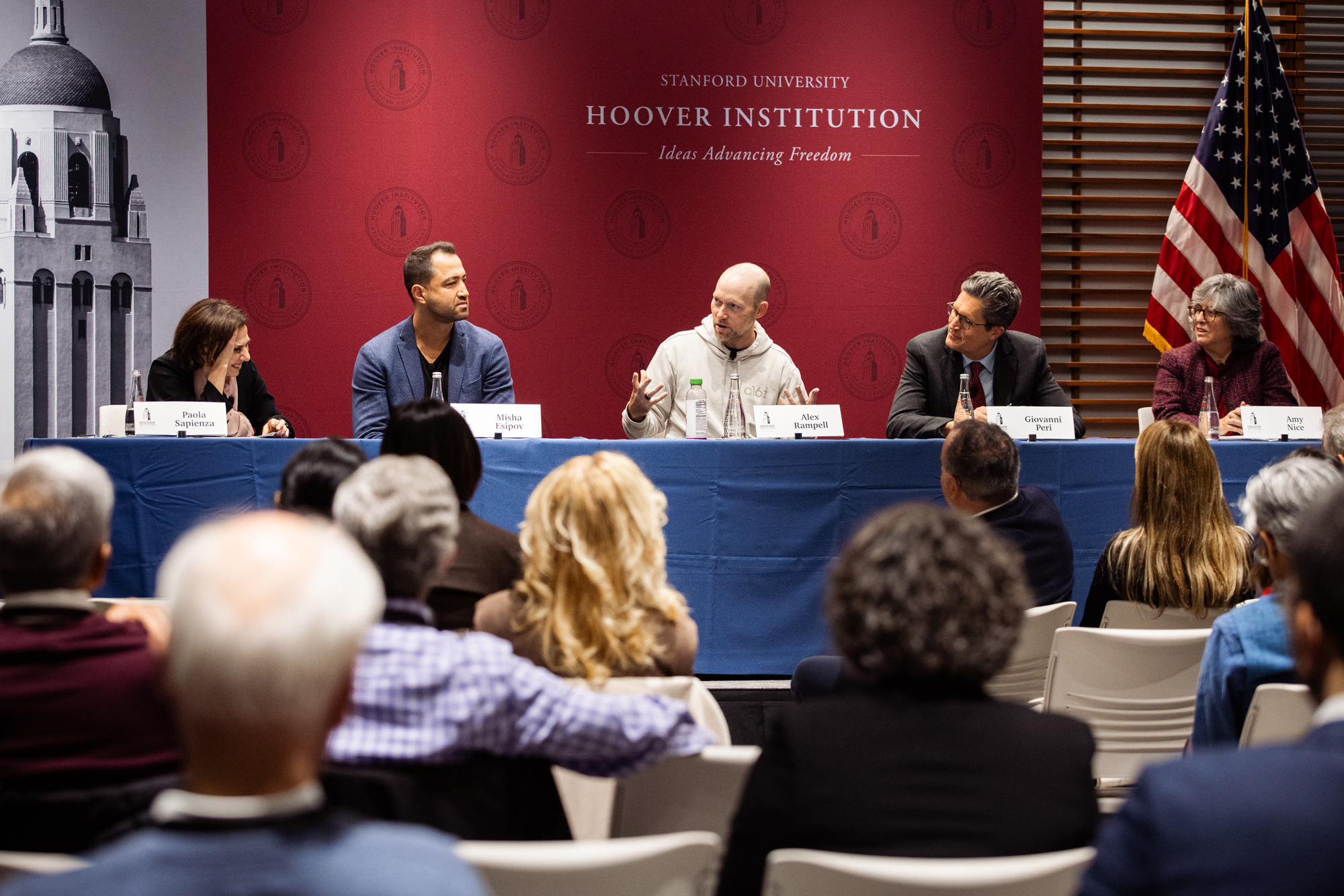
In the third presentation, Giovanni Peri of the University of California at Davis showed research he conducted with Michel Beine and Morgan Raux that assesses whether studying alongside international students in US master’s programs makes American students more likely to start businesses after graduating.
Using data from much of the past twenty years, they found that studying alongside foreigners increases the likelihood a US grad student will decide to start or cofound a business themselves.
Attendees at various times expressed concern about the recent decisions to tighten and restrict immigration pathways to the US, especially those typically used by high-skill workers.
A tech industry recruiter in the audience told presenters that a large number of his peers and former colleagues of Indian origin have left the United States in recent months. He said the fact that holders of H-1Bs and other visas have a very limited amount of time to get a new job once they are laid off, in conjunction with the new $100,000 fee for new H-1B applications and other tightening measures enacted this year by the Trump administration, is pushing many Indian tech workers—a majority of whom have advanced degrees—to return home, move to Canada, or pursue opportunities in Europe.
The day also saw Silicon Valley founders and immigration experts discussing the current US approach to immigration and its impacts on innovation.
Misha Esipov, who came to the US from Russia at the age of three, founded Nova Credit in 2016. Nova acts a credit bureau and underwriter that uses international sources of credit data, making it easier for migrants to the US to establish their creditworthiness.
He spoke about the early days of his company, which he was then founding with a UK national who needed an “O-1” visa, reserved for those who can demonstrate “extraordinary talent” that would benefit the US.
Esipov said his colleague was approved on paper for the visa but needed to travel to the US embassy in London to finalize it. In London, US immigration officials denied her, despite the prior approval. He said that for the next five months, his cofounder could not return to the US.
The ordeal slowed down the establishment of Nova and demonstrated how important “speed and certainty” in the US immigration system is for startup founders.
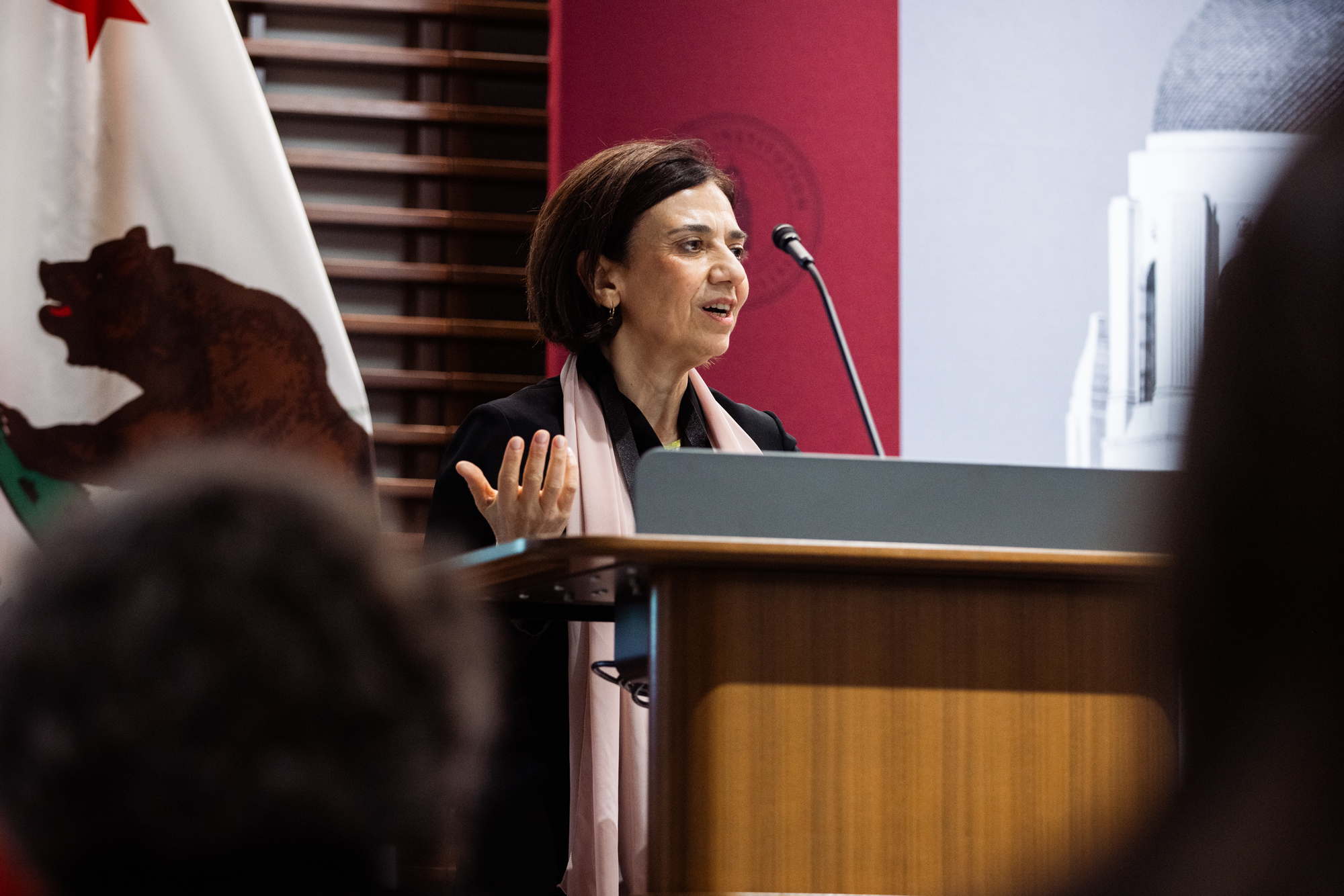
Apart from the three papers, researchers also discussed new ways to measure immigration, its impact on innovation, and recent trends. Heidi Williams, professor of economics at Dartmouth College, described how even though a variety of evidence suggests that changes in immigration are likely to matter for growth, that we currently lack some key data that is needed to project how the types of immigration policy changes currently being considered would affect economic growth.
She pointed to how a sharp increase in foreign nationals entering the US between 2021 and 2024 was first flagged by the Congressional Budget Office using nontraditional sources of information, such as Department of Homeland Security border encounter data, work that was subsequently extended and validated by other researchers using information such as work authorization filings, and court records. Without access to those types of nontraditional data sources, she suggested, measurement of the boom in migration and our understanding of its consequences would likely have been less well understood for a substantial period of time.
She also cited a July 2024 CBO counterfactual analysis exercise that asked what the economy would have looked like had net immigration stayed at historical, pre-2021 rates, concluding that the surge of immigration led to faster labor force growth, and increased capital investment by raising the expected return on capital.
Learn more about the J-P Conte Initiative on Immigration at Hoover here.