












- Military
- History
- Security & Defense
- Determining America's Role in the World
Perusing photos from the ongoing war in Ukraine, one is struck by the visual clutter of modern battlefields: villages and fields crisscrossed with fiber-optic cables, forming dense wartime spiderwebs. These networks of sensors are critical to defending against, and directing, drone attacks. They reveal a central (and now obvious) feature of contemporary war: cheaper and plentiful weapons like armed drones enable precision strike at scale, at relatively low cost, across both strategic and tactical levels of war. Energy infrastructure, military bases deep in the rear, individual soldiers, and armored platforms are all vulnerable. Movement has become perilous. Massed assaults have become extraordinarily costly.
These weapons illustrate how the character of war continues to evolve, as new technologies and the systems they enable reshape the continuum of tactical, operational, and strategic considerations. One such consideration is the age-old principle of mass in war. Long understood as the concentration of forces to achieve decisive effects, cheaper, capable weapons are now changing mass in three fundamental ways that in turn are reshaping modern conflict. Mass is increasingly decentralized, democratized, and deliverable at scale.
Mass has traditionally been a key consideration in war—whether explicit or not. Although he did not appear to use the term formally, Thucydides, in the History of the Peloponnesian War, repeatedly shows that numerical superiority, concentration of forces, and the ability to sustain manpower shaped outcomes. Mass required a combination of scale (numbers, in this case men) and focus: where to direct those soldiers. Carl von Clausewitz later formalized this insight, arguing that mass was fundamentally about concentration at the decisive point. For him, the central problem of command was determining where to concentrate force: “The best strategy is always to be very strong, first in general and then at the decisive point.” Over time, the U.S. military codified mass as a principle of war, defining it as “the concentration of the effects of combat power at the decisive place and time.”
Today’s proliferation of cheap, precise weapons enables the application of mass across far more dispersed areas of the battlefield. Mass is no longer primarily a single decision point for a commander—as Clausewitz famously framed it—but increasingly a swarm of decisions. Cheap, precise systems can now apply mass simultaneously at multiple points, potentially overwhelming enemy centers of gravity through cumulative effects rather than a single decisive blow. Some have described this phenomenon as precision mass.
Ironically, today’s decentralization of mass is reminiscent of Soviet General Mikhail Tukhachevsky’s Deep Operations (gluboky boi) concept. For Tukhachevsky, mass did not mean a single concentrated strike. Rather, it meant the deliberate distribution of forces (mainly different types of tanks) across time and depth to collapse the enemy system simultaneously at the front, in the rear, and against reserves. As one expert later observed, the “heart” of gluboky boi lay in mechanized forces exploiting breakthroughs aggressively, driving deep into the enemy rear to encircle enemy formations, and striking vital rear-area centers. Although many of Tukachevsky’s ideas were adopted only later (after his execution during Stalin’s purges), the conceptual resonance with modern drones is there: they enable a similar logic, but with far greater precision, persistence, and speed.
Mass has also been democratized. Precision strike is no longer the exclusive domain of a handful of advanced militaries. Today, more than 90 countries and numerous non-state actors operate drones. While many initially acquired them for intelligence, surveillance, border patrol, or disaster response, over half are developing or procuring armed variants.
This diffusion has fueled debate. One camp argues that drone proliferation is inevitable and highly consequential for international security. Another contends that drones are non-transformative—that they merely replicate capabilities already possessed by advanced militaries and remain beyond the reach of most states in sophisticated form. Yet Ukraine suggests a different conclusion: even relatively cheap systems, when integrated into operations at scale, can reshape battlefield dynamics and impose significant costs on superior forces.
Mass today also depends on deliverability: the ability to field, replace, and adapt weapons rapidly as conditions change. Cheaper, precise systems only translate into greater combat power if they can be delivered at speed. Their advantage is not inherent in low cost alone, but in the capacity to put them in the hands of warfighters quickly and to modify them just as fast when adversaries adapt. That requirement, in turn, demands acquisition processes and organizational models fundamentally different from those built around bespoke, high-cost platforms.
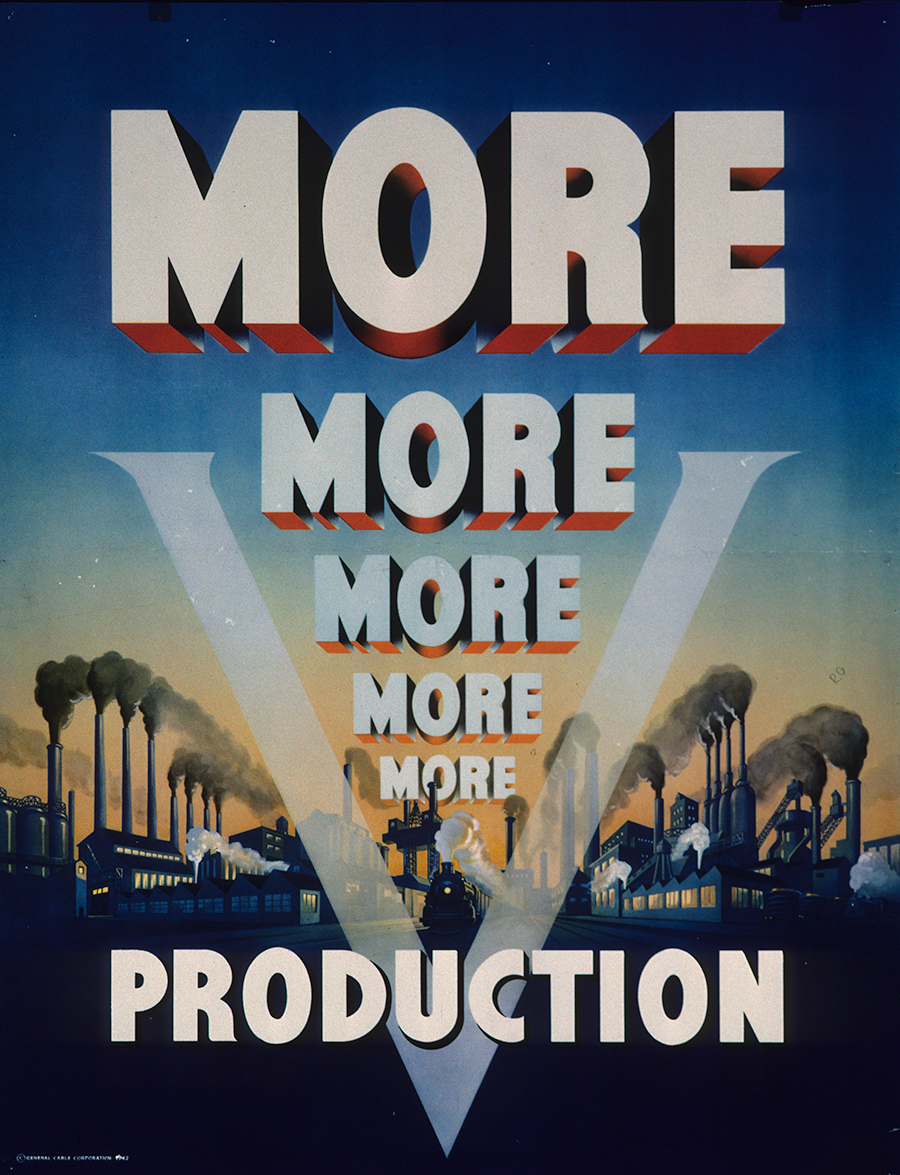
This is not simply a production challenge. It requires accepting attrition as a design feature rather than a failure. Some have called this “attritable by design.” Systems must be deliberately engineered to be expendable, widely deployed, and rapidly replaced. Procurement, force design, and industrial policy must adapt accordingly, on a scale not seen in decades. Production lines themselves must be adaptable by design, enabling rapid iteration in response to battlefield feedback. As Bryan Clark and Greg Little observed, we are entering an age of adaptability, one in which advantage accrues not to the side with the most exquisite platforms, but to the one that can iterate, modify, and reconfigure systems fastest in response to battlefield feedback.
Revisiting Old Debates
Debates about capacity versus quality are not new. More than two decades ago, Martin van Creveld argued that the traditional industrial-era conception of mass was becoming obsolete.
Large formations and sheer numbers, he claimed, were increasingly vulnerable in an age of precision, surveillance, and advanced firepower. Concentration created targets rather than strength. Van Creveld emphasized mobility, adaptability, and organizational effectiveness over raw numbers. He argued that smaller, better-commanded forces can defeat larger ones if they move faster, communicate better, sustain themselves, and apply force precisely.
Yet today’s proliferation of precision systems introduces a different challenge. Rather than eliminating mass, it redistributes it. Defenders are now vulnerable across multiple domains and locations simultaneously. The problem is not whether mass matters, but how it is generated and applied.
Either-Or Is Not War
The lesson is not that cheap, distributed systems replace high-end capabilities. Ukraine’s experience reinforces a caution emphasized by analysts such as Michael Kofman: drones intensify attrition and shape how wars are fought, but they do not deliver strategic victory on their own. Wars are still decided by manpower, industrial sustainment, organizational depth, and the ability to integrate capabilities into combined operations.
Nor is this a moment to abandon exquisite systems. Drone swarms cannot neutralize hardened or deeply buried targets. Precision mass does not eliminate the need to hold high-value systems at risk. Adversaries such as China continue to invest heavily in advanced air defenses, hypersonic weapons, and nuclear forces. Hollowing out these capabilities would invite exploitation rather than deterrence.
War rarely presents clean choices. The irony of asymmetry is that it is never static: privileging one class of capabilities at the expense of others simply creates new vulnerabilities. The United States will continue to require a balanced force—one capable of combining mass, precision, adaptability, and technological sophistication across the full spectrum of conflict.
This is not merely an academic debate. At stake is how militaries prepare, what they acquire, and for what purposes. Mass has not disappeared, but it has changed form. In the past, it was about concentrated formations; today it resides in systems, organizations, and the ability to generate and regenerate combat power over time. The challenge ahead is not choosing between “lots of good weapons” and “fewer excellent ones,” but building forces and institutions capable of integrating both in a world defined by rapid technological change and prolonged competition.

