Islamism and the International Order Working Group

Explore Research

Filter By:

Topic

Type

Author

Enter comma-separated ID numbers for authors

Support the Hoover Institution

Join the Hoover Institution's community of supporters in advancing ideas defining a free society.

Support Hoover

Featured AnalysisAnalysis and Commentary

Iran Thrives In The Levant On Weakened States Threatened By Sunni Radicalism

by Fabrice Balanchevia The Caravan
Tuesday, December 12, 2017

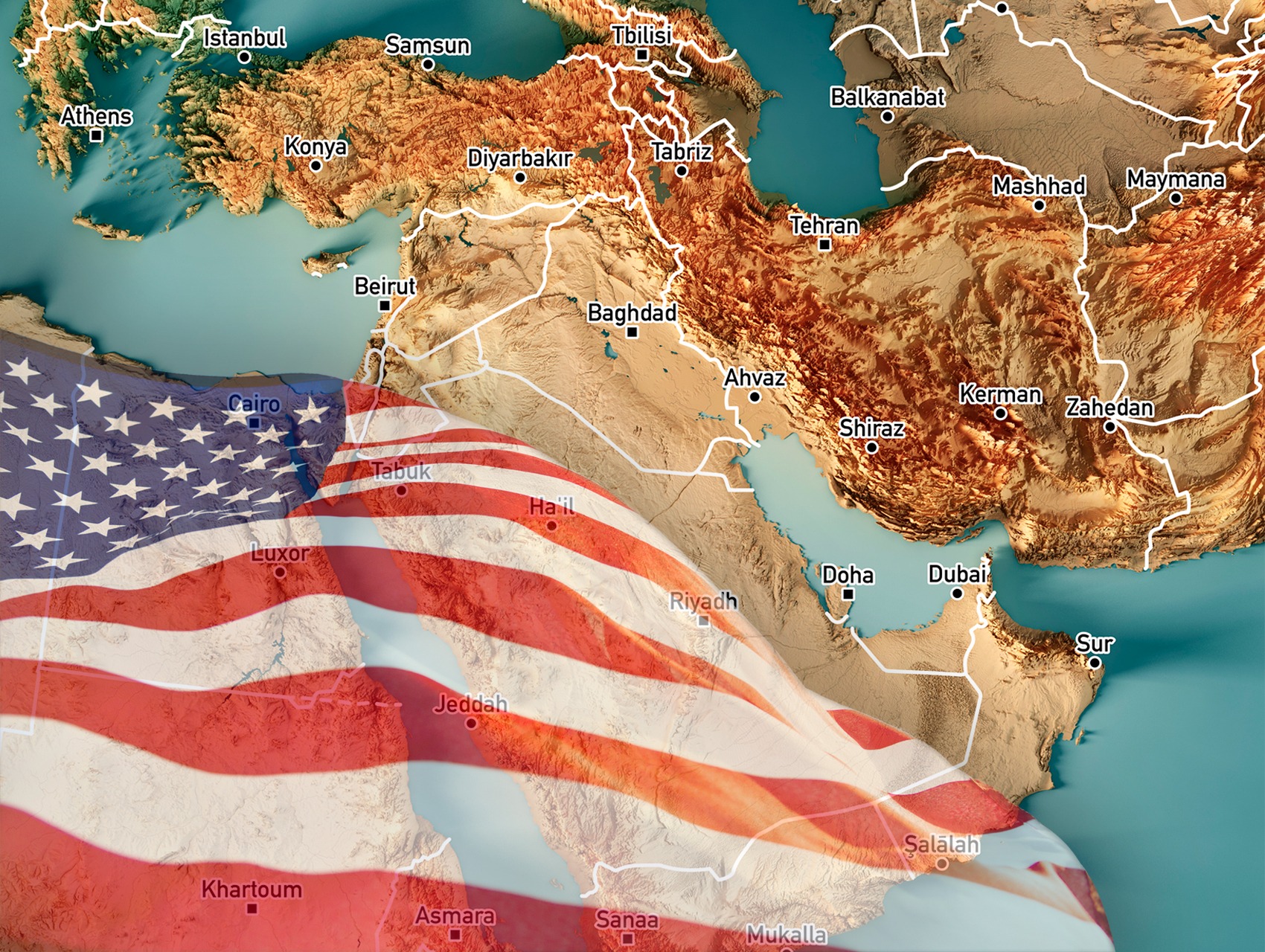
The announced defeat of the Syrian rebellion and the Islamic State is favoring the extension of Iranian influence in the Levant. The Iranian corridor between Beirut and Tehran via Baghdad and Damascus is now a reality. Territorial continuity was achieved symbolically at the end of May 2017, when Iranian-funded Shia militias joined on both sides of the Syrian-Iraqi border north of al-Tanf. In Iraq, Iranian allies Syria and Lebanon dominate; people support them out of fear, default, or sympathy. If the West wants to fight against the Islamic Republic's influence in the Levant, it must understand the root causes pushing more and more Lebanese Christians, Iraqi Shiites, and Syrian Sunni Arabs into the Iranian camp.

Featured AnalysisAnalysis and Commentary

Repackaging Trump’s Iran Strategy

by Sanam Vakilvia The Caravan
Tuesday, December 12, 2017

The Trump administration has articulated a much-needed strategy designed to pressure and contain the Islamic Republic of Iran’s malign regional influence, which spreads throughout Afghanistan, Bahrain, Iraq, Syria, Lebanon, and Yemen. While reducing Iran’s imprint and leverage throughout the Middle East is indeed imperative for regional stability, the Trump administration’s methods and means will not prove successful because its strategy is zero sum against Tehran and a perpetuation of the traditional American approach to dealing with the Islamic Republic.

Featured AnalysisAnalysis and Commentary

The Limits Of The Indirect Approach

by Tony Badranvia The Caravan
Tuesday, December 12, 2017

In October 2017, the Trump administration rolled out its long-anticipated policy to counter Iranian expansionism in the region. The policy pays significant attention to Hezbollah, Iran’s principal instrument of regional power projection. After eight years of American courtship of Iran, which drastically elevated its regional position, pushing back against Tehran and its proxies was always going to be a formidable challenge.

Featured AnalysisAnalysis and Commentary

Countering Iran While Retreating

by Reuel Marc Gerechtvia The Caravan
Tuesday, December 12, 2017

Time has almost run out for the United States to deny the Islamic Republic hegemony in the northern Middle East. The clerical regime has the high ground and the Americans are, at best, slowing Iranian advances. The approximately two thousand troops Washington has reportedly deployed to Syria, mostly in the north and the southeast, have prevented the Tehran–Moscow–Damascus axis from dominating all of the strategic locations in the country. But if President Trump really did tell Turkish President Recep Tayyip Erdogan that he will cut military aid to the Syrian Kurds, the most reliable of America’s disparate anti-Islamic State “partners on the ground,” and he meant it, it’s a decent guess America’s military presence will diminish.

Analysis and Commentary

‘A Truly Gordian Knot’ Awaits Trump

by Fabrice Balanchevia The Cipher Brief
Friday, October 13, 2017

The end of the Islamic state puts the United States in an uncomfortable geopolitical situation. When it comes, the United States will enter a new phase of the conflict. The Syrian regime is back in full force in the east of the country, and the Iranian corridor from Iran and Iraq to Lebanon through Syria is now becoming a reality. The United States therefore faces a cruel dilemma and has the obligation to urgently define a post-IS strategy.

EssaysBlank Section (Placeholder)Analysis and Commentary

Syria-Iraq: Limiting Iranian Influence Implies Returning To Realpolitik

by Fabrice Balanchevia Hoover Institution Press
Thursday, October 5, 2017

Destroying the Islamic State (IS) and limiting the influence of Iran is a difficult project. The United States has more capabilities in Syria than in Iraq to destroy IS and limit Iran. The Sunni Arab tribes of the Euphrates Valley no longer support the Islamic State and are ready to join those who will liberate them, which explains the effectiveness of the Syrian Democratic Forces (Kurdish-Arab) against IS. Thus the liberation of Raqqa could thus take place in fall 2017, provided Turkey does not launch an offensive against the Syrian Kurds.

Featured AnalysisFeatured

Whither Indonesia?

by Ambassador Paul Wolfowitzvia The Caravan
Wednesday, September 27, 2017

The news from Jakarta last April 20 presented a very sad juxtaposition. On the one hand, there was US Vice President Mike Pence, expressing his admiration for Indonesia’s tradition of religious tolerance and moderation and reassuring Indonesians on behalf of the Trump administration, that the new visa restrictions would not apply to Indonesians.  At the same time, the Acting Governor (equivalent of Mayor) of Jakarta, Basuki Cahaya Purnama – commonly known as Ahok – was facing a court in that city on the criminal charge of blaspheming Islam. 

Featured AnalysisAnalysis and Commentary

ISIS In Mindanao: A Threat To The U.S.?

by David S. Maxwellvia The Caravan
Wednesday, September 27, 2017

We should be clear: Mindanao is not Syria, Iraq, or Afghanistan.  We cannot approach a province of our longest standing treaty ally the same way we do in Syria or any of the other 18 or so countries to which the ISIS virus as spread.

Featured AnalysisAnalysis and Commentary

Chinese Citizens Beyond State Borders And The Perceived Threat Of Islamism In China

by Kelly A. Hammond via The Caravan
Wednesday, September 27, 2017

Islam came Islam came to China in the seventh century when Muslim envoys in the service of the third Caliph Uthman traveled to Guangzhou (previously Canton) to discuss trade and diplomacy with the Tang Dynasty (618-907). The Emperor Gaozong had a mosque erected in their honor, and for the next few hundred years the majority of Muslims in the Chinese empire were sojourners traveling from Arabia and Persia as merchants. It was not until the Mongol Yuan Dynasty (1271-1368) that Muslims really started to settle permanently in China. The Mongols imported Persians and Central Asians to work as administrators and bureaucrats, while also deploying large embassies to places like Bukhara and Samarkand to facilitate trade and diplomatic relations. 

Featured AnalysisFeatured

Islam, Islamism And US Strategy In Maritime Southeast Asia

by Russell A. Bermanvia The Caravan
Wednesday, September 27, 2017

Maritime Southeast Asia, the area circumscribed by the Malaysian peninsula, the Indonesian archipelago and the Philippines, is vital to US strategic concerns for two primary reasons. First, this region includes the South China Sea where American and Chinese ambitions may be heading toward direct conflict as China continues to press forward with its agenda of extending its reach.

Pages

The Caravan | A Quarterly Publication


Visit the Caravan, a quarterly publication on the contemporary dilemmas of the greater Middle East.

Caravan Notebook | Essay & Podcast Platform

Caravan Notebook


A platform featuring essays and podcasts on current events to current trends in the Middle East and Islamic World.

Featured Essay Series


Featured Books

The Herbert and Jane Dwight Working Group on the Middle East and the Islamic World highlights the importance of studying both a region and a culture, while also addressing challenges outside the Middle East itself.

Chaired by Hoover fellow Russell Berman, the group draws on a wide network of scholars and practitioners, from within the United States and abroad, to support changes that enhance economic and political freedom, and foster personal liberty and rule of law—developments that are critical to the very order of the international system.


Visit The Caravan, a quarterly publication on the contemporary dilemmas of the greater Middle East.