- We will prove that there is no problem too large for government to solve and no concern too small for it to care about.
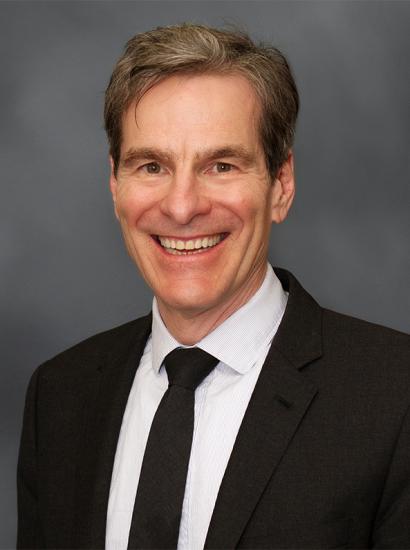
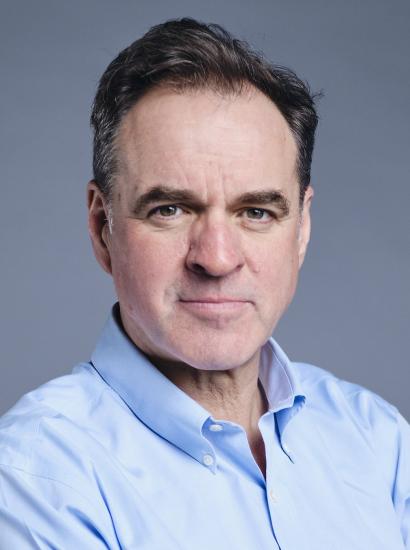
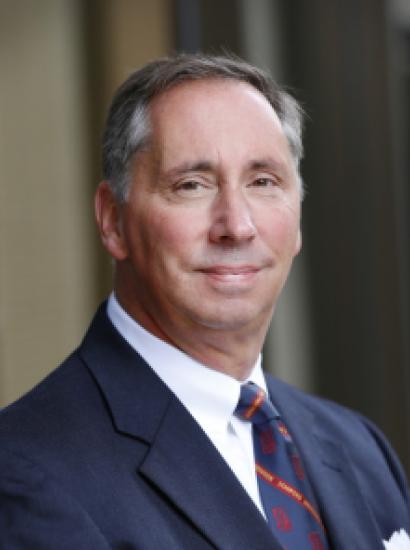
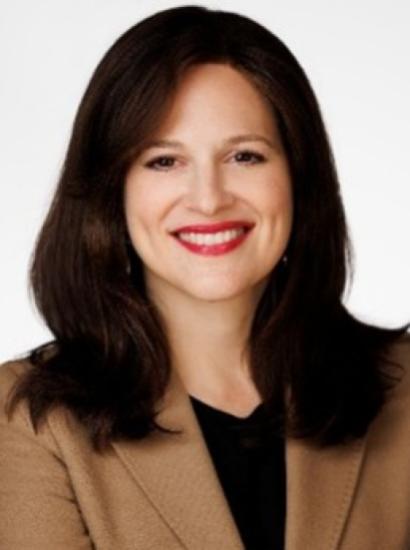
- It's Wednesday, November 12th, 2025, and welcome back to "GoodFellows", a Hoover Institution broadcast examining history, economics, and geopolitics. I'm Bill Whalen, I'll be your moderator today, joined by our full fleet of GoodFellows. That means that we today have in the house the historian, Sir Niall Ferguson, the economist, John Cochrane, and former Presidential National Security Advisor, Lieutenant General H.R. McMaster. Niall, John, and H.R. are all Hoovers Institution senior fellows. Gentlemen, two segments today. In the second part of our show, we're going to do a little game we call Big Deal, Little Deal, No Deal At All. I'm gonna give you a bunch of items in the news, and you tell me their relative significance. But first we're gonna kick off the show with the segment on war, not current wars, necessarily, but wars of tomorrow, wars of the future. And joining us for this conversation, making her debut on "GoodFellows", I might add, is Anne Neuberger. Anne Neuberger was recently named the William C. Edwards Distinguished Visiting Fellow here at the Hoover Institution. She joins us after serving as a national security advisor for cyber and emerging technology in the Biden White House, her field of expertise being national policy around cyber warfare, cybersecurity, and emerging technologies, that includes components of AI policy, and Neuberger also worked at the NSA and the Pentagon. And it's great to meet you. Great to have you on the show. And I gotta say, when I see that somebody worked at the NSA, I'd love to find out what you did, but you'd probably have to kill me after you told me, right?
- Thanks so much. It's wonderful to be here with you. And in short, at NSA, I was the deputy head of global operations. I served as their first chief risk officer after Snowden and stood up their cybersecurity directorate. As we saw, geopolitics and cyber threats fundamentally changed, and recognizing that the NSA and intelligence community response had to change along with it. So, I think that summarizes it, and you seem to be alive and well, Bill.
- Thank you very much. So Anne, let's talk about the wars of tomorrow and the future of war. If we look back, I'm gonna play amateur historian for a second, Sir Niall and H.R. If you look back to the 20th century and World Wars, World War II, the lesson, the winning side did a better job of mastering technology. The Allies were better at radar. The Allies were better at air warfare, long range bombers. If you look at World War I, Niall Ferguson's "The Pity of War" I recommend to those who wanna read about the war, both sides tragically in taking technology, but using 20th century technology with 19th century strategy. And here we are in the 21st century. We hope we don't have a global conflict this century. But if you look at the major combatants right now, if you look at the superpowers, China and the United States, and you look at how they are both thinking militarily toward the future, but embracing technology at the same time, is the strategy concurrent with technology, and or is technology outpacing strategy?
- I think undoubtedly, technology is outpacing strategy, for the simple rule that technology has brought an asymmetry to the way war is being fought. And there's also a silent war that's being fought in spectrum, in cyber, and in RF. And that's really changing on the ground the way wars are being fought. What do I mean by technology asymmetry? When you think of fundamentally drone warfare, Ukraine, without having a navy, disabling Russia's Black Sea Fleet, and even more importantly, undermining Russia's overall strategy of preventing Ukrainian exports of grain, which they know is a key source of their economy. That drone strategy, the fact that they could use several thousand dollar drones to undermine million dollar platforms, the fact that they could scale production, the fact that they could repair drones in the field, changes the asymmetry and the power of those platforms. We certainly saw it as the United States, where a lot of what has made the US the most powerful military in the world was our precision targeting, GPS-driven precision targeting. Well, over time, the effectiveness of some of our most powerful platforms, from JDAMs to HIMARS, declined significantly because of Russian jamming of GPS. So what we saw was that even these high-end platforms could be disabled. That's in the asymmetry that now advanced tech, notably drone warfare, is introducing, and we can certainly talk about in the context of, as I mentioned, the silent war and what's going on in spectrum, which is increasingly congested and contested, and where the US' strategy remains mired in a very different world than we see on battlefields happening today.
- Hey, and you know what? The way I think about this, you know, in terms of technological change, is the continuous interaction, right, between forces in war, but also between various technologies. You know, you have countermeasures that are developed, and when you see these kind of new capabilities, could you just give us kind of an appreciation for what you've seen in terms of the action-counteraction dynamic in cyberspace, in the very important electromagnetic spectrum that you've highlighted, but also in other domains, including the space domain, 'cause I think what we've seen is so much of the RF collection, radio frequency collection, as well as imagery, is happening in low earth orbit. It seems to me like the next war is gonna go right to space right away. But, yeah, I know there are a lot of countermeasures under development. Can you maybe describe what we're doing, what you see the US doing, and what you helped put into place in terms of cyber defense and defense against these emerging capabilities? Drones being one of them, but as you pointed out so clearly, drones connected to a lot of developments across other areas.
- Absolutely, and I think you asked one of the most profound questions, which is there's a significant difference between offense and defense, and the pace of adoption and the pace of change is a key play in battles of the future as well. What do I mean on offense versus defense? One drone is very hard to defend against. One needs a far more broad-based defense. And the cost of that defense often exceeds that. Similarly, when we think about cyber, right? We are a democracy up against authoritarian governments. You know, when you think about the evening before Russia's invasion of Ukraine, they conducted a cyber attack against a commercial company providing satellite services to Ukraine's military, right? That cyber attack would've disabled the Ukraine's military's ability to communicate securely but for a commercial satellite provider, Starlink, becoming a platform upon which Ukraine's military ruled, right? So, every element of that countermeasure was significant there. I wanna highlight one more piece before I summarize. It used to be that US space-based assets were a source of unique imagery. Today you have commercial providers, companies like Maxar, companies like Planet Labs, providing deep insight and intelligence pictures in a very precise way. In fact, one of the things we did, to your point, during, you know, following Russia's invasion of Ukraine and Russia's debilitating strikes against Ukraine's electricity and electric infrastructure, was essentially say that commercial imagery we were purchasing could be shared with Ukraine to enable Ukraine to rapidly try to recover from that. When we think about the Houthis, some of their intelligence as they tried to disable commercial shipping in the Red Sea area indeed came from Iran, but a lot of it came from subscription-based commercial services. So, those three factors coming together, the ability of cyber to disable, you know, broad-based satellite and other military capabilities, the role of commercial imagery, the role of commercial satellite services underpinning military capabilities, and how to think about that, are significant. Now, one of the challenges we have as a US military, which you saw I think very much uniquely, and I'd love to hear your perspective about, is the pace of adaptation. When a new platform comes on, to adapt the defenses quickly enough is one of our most significant vulnerabilities. When you think about, for example, you know, protecting every stadium in the United States against a drone attack, we can certainly jam, but there are countermeasures to jamming. So how we as a country adapt our defenses rapidly enough to meet the asymmetry that offense has I think is a key area of vulnerability, and one we really need to rapidly learn lessons from Israel, from Ukraine, to adjust to that.
- Yeah. Yeah, and just to respond to that quickly, I think one of the ways we have to do it is imagine what people could be a really bad day, and think about what we would do the day after, and do that now instead. I think that's what the Israelis did, you know, with Iron Dome, for example. But hey, thanks so much for your leadership and what you've done to kind of, you know, try to keep us ahead of this. I think also, you know, you mentioned the creative adaptation. It's astounding how fast or the speed of it in Ukraine, and I'm encouraged a little bit by the current administration's approach of maybe contracting drone capabilities, for example, as a service, so that private companies, as you mentioned, who are much more agile, can continue to update those platforms with kind of an open architecture kind of design. But, yeah, hey, thanks. What a great explanation of this dynamic.
- Can I ask two questions? They're related. One is, are we moving fast enough? It's very clear that in Europe, and I'm speaking from London, there's still a real disconnect between what's happening in Ukraine, where the Ukrainians are producing 3 million drones a year, and the Russians, 4 million, and what's happening in German re-armament, where they're simply not thinking in those terms or those quantities at all. I worry that we might still be, as it were, enamored of a revolution in military affairs that now lies quite some way back, and are having trouble adjusting to the new revolution in military affairs, which creates an enormous challenge because of the cheapness and quantities in which drones can be produced. So, question one, do we really appreciate how many drones the Chinese could deploy in the event of a Taiwan contingency? That's question one. Question two has to do with supply chains. In any protracted conflict, it seems clear that the chokeholds that have been revealed in the trade war with China, particularly rare earth elements, would be of enormous importance to US defense production, which would have to be scaled up in a conflict. Could we even do it under present circumstances? So those are my two questions. Are we moving fast enough into the drone age, and are we aware of the implications of the recent rare earth elements moves by China for our defense industrial capability?
- We're taking real steps. There's no one step, it's the pace of adoption and continuously evolving. So the Department of War recently made some very interesting announcements related to changes in acquisition, and each of those components speak to the things that we learn through the now accelerated pace of drone warfare. First, work to adopt commercial first. If it's out there, don't build it bespoke. That's one key lesson. Second is ensure that the acquisition team is incentivized for speed. Sometimes, you know, as we look across cost, schedule, and performance, we didn't necessarily put a focus on get things out there quickly, 'cause they're only gonna last for a certain period of time. If you look at Starlink satellites, right? The constellation is remarkable for two things. The number of satellites, thousands of systems, which makes it much harder to jam, 'cause there are thousands of systems networked together, and that each satellite is only expected to be up there, I believe, for a maximum of four years. So as a result, you know, the way we've traditionally built unique satellites, with the expectation they'd be up there for 30 years, there's a huge amount of engineering and resilience. When instead you're building many for smaller periods of time, that's a far different acquisition pace, approval, and speed that is very much needed. So that's the second component. And the third is enabling people in theater to adjust and build by having open architectures, so that they can reprogram, they can adjust. So for example, if you're in an electronic warfare environment, like we were talking about a moment ago with H.R., and you see a new signal of a new platform that shows up, you can adjust your defensive and offensive platforms to identify it, strike it more quickly, or defend against it. And in fact, you know, to the point H.R. made regarding Israel's Iron Dome, what was most powerful about the Iron Dome is, yes, there are advanced interceptors, but it was more the software and technology that understood by the arc of a given, you know, item coming in, Was it a missile, was it a rocket, was it a drone? Based upon that, how should we respond? If there's, you know, 100 coming in at one time, and there's only so many interceptors, which way do you do that? That advanced kind of system, looking across the platform and defending against it, is a key part, to your point, not only of adapting to drone warfare, but also adapting to a swarm of drones and how one defends, and how one also conducts those operations. We now see more and more autonomous swarms, where they can adjust based on what they see a platform there. So that's the first piece. And to your question, do we appreciate the number of drones China could bring? I think we appreciate more and more how much drone swarms change the battlefield and bring real risk to our primary platform in the Indo-Pacific, which is aircraft carriers, and the degree to which we rely on them to forward deploy and the risks that they operate in in this new environment. And second to your point about chokeholds. You know, it's interesting. The first role, I came in at the Pentagon, I was a White House fellow working for Bob Gates. And at the time, he made a commitment that he would deploy MRAPS at speed and scale in order to... Because the V-shaped hulls really protected service members far more quickly. And I recall at the time, he used the Defense Production Act to accelerate and really get first dibs on the specialty seal that were needed to actually meet that commitment of accelerating the deployment of these special vehicles that could really save lives, and respond to the IEDs that were taking so many lives. That required that we had the production in the country. So what we've learned about Chinese chokeholds in various metals and in various minerals require us now, with those new insights, to map those supply chains. I think that underpins some of, you know, the Trump administration's work with Argentina, to say, where can we build those alternative supply chains either in the US or in allies or other reliable countries, because we recognize they're a key part of war and of the resilience of fielding our platforms?
- Well, as the economist here...
- Great.
- I'd like to hear that cost effective, flexible, and open are important to you, but of course, those are usually not things we associated with the military. And there's a danger once you say supply chain. You don't necessarily have to mine rare earths. Stockpiling them would get you through the military needs of a war. But there is a strong protectionist impulse in our industries to say, "Oh, no, no, no, we're important for national security." You'll have to fight that too. I wanna ask you to look hard a little bit, as H.R. keeps telling us, every measure has a countermeasure. What will be the anti-drone technology? They're individually very vulnerable. If you have any speculation how that'll work. What is the equivalent of the cavalry of World War I? You mentioned aircraft carriers and drones. Of course, ballistic missiles are also a big danger for aircraft carriers. Are they the cavalry of World War I, the huge, expensive thing that is not gonna work out? Surely half of our military investment will turn out to be useless in that once the first shots are fired, if you have any ideas what is. But the big question, so I'm the economist, and you're the cyber expert. I worry about the first day of a war, our financial system. If there is even a rumor that the bank accounts at Chase have been hacked and emptied, you're gonna have the bank run of all time. I sort of have a vision of the computers going dark, all that Chinese malware that's been sitting there all these years, which would just be a catastrophe for the country. I hope as an SA person, you can reassure me that's not gonna happen, or maybe that I should be keeping some gold bars and beans in the basement just in case. And cash.
- So, a lot there, and I'll talk about the last one first. You know, there's a reason that banking is, I would say, the most secure critical infrastructure sector, and that's because banks spend the money and actually exercise the risk, 'cause they recognize they're a trust-based system, right? At the end of the day, when you're a trust-based system and a system that's keeping debits and credits largely electronically, the potential impact on trust in the system by a cyber attack is significant. And indeed, you know, we've seen cyber attacks against banking systems. There was one in Iran during the war, and you saw the immediate impact it had in terms of citizens trying to take their money out and that impact. So I will say, the US banking system both has one of the best partnerships within the banking sector, so that if one sees a particular threat, if one sees a new type of offensive technique, they'll share it with the others so they're all secured against it. It's one of the most sophisticated ones. In fact, after we saw China's compromise of the telecom sector in the United States, we really tried to bring in the telecoms to the White House, to the Situation Room, to teach them, to learn from the banking sector and how to build a partnership, build the trust across the sector. And there's extensive sharing of intelligence information with that sector as well. So one never says never in cyber, but what I will say is they work hard to build continuously resilient defenses to partner across, and frankly, to start using AI, which is a huge help on offense and defense, but a particularly huge help on defense in finding misconfigurations, in finding a particularly vulnerable system, and in modeling potential cascading impacts of one entity in a interconnected system on the others.
- And two items I'd like us to get into is cyber warfare and AI, and they have this in common, China. You wrote a piece in which you say that, quote, "China is winning the cyber war." And here we have Jensen Huang, the CEO of Nvidia the other day saying, and I quote, "China is going to win the AI race." Now, Mr. Huang says China has the advantage because it has less regulation, cheaper energy. John can speak to the economics of the two power competition. But cyber warfare, and is there a cyber gap between the United States and China? And if so, how does the United States close the gap?
- Yes, there is. And I've had the opportunity to lead teams conducting both offensive and defensive cyber operations, and I really reflected deeply in writing that piece in foreign affairs, because the real source of the gap is the difference in our systems. China's an authoritarian country, the Chinese government, not only much of its critical infrastructure is in state owned enterprises, but China also monitors its networks through a system called the Great Firewall, system of firewalls, that essentially both monitors all communications in order to censor communications, but also has visibility on networks across the country and is thus positioned to actually potentially detect and block cyber attacks. And indeed, in the intelligence community, China's networks are viewed as one of the toughest set of networks to hack into for just that reason. In the United States, we're a democracy, and as such, the US government does not monitor private sector communications. However, where the rub is, is that virtually all of our critical infrastructure, our pipelines, our power, our water systems, our railroads, are all run and operated by private sector networks. So as such, you don't have the US government actually positioned to detect and block attacks, and there's an asymmetry in that that really plays out strategically. You know, people often ask me the question, "Anne, why do we care about, you know, the gaps in defense? We have offensive capabilities, we can, you know, do things to them." And I said, "Yes, as a country, we have offensive capabilities, but as I've seen in, you know, numerous exercises," you know, and again, H.R. is here, so he certainly can speak to this, you know, the first strike is the first strike. From there, it only starts. And given the real asymmetry in our defenses, because as a democracy, we're not monitoring our critical networks that our citizens rely on, we're not actively defending them, you know, the second retaliatory strike, we are far more vulnerable. And in practice, that means we're more constrained on the offensive side. So, you know, one of the big things the last administration did was really reverse decades of both Democratic and Republican policy, to really have no regulation in terms of minimum cybersecurity requirements for the nation's most critical networks. And in the Biden administration, we recognize that the Hill really, since the 2015 Lieberman Collins Act, hasn't been able to put in place cybersecurity legislation. So as such, we essentially went and reinterpreted safety rules sector by sector, for airports, for pipelines, for rail, to say those companies have to have the minimum practices in place, so that at the very least, we're not leaving the doors and windows wide open. But the alarm and monitoring system, there's still a gap between that as a democracy and what China has in place as an authoritarian country. And I will note, and I'm happy to go into it, you know, in the article, I talk about some ways to tackle that. You know, building digital twins of our most critical systems, to identify and fix the most important vulnerabilities, identifying cascading things in order to see where we spend our money in the most impactful way, because there is a lot of tech debt occurred over the years.
- Just to clarify, what you're saying here, and so I was worried about the banks going under, you're saying don't worry about that so much, but do worry that air traffic control might fall apart and stoplights might not work. Water systems, the pumps might stop working. So sort of you're painting a picture of civilian chaos behind the lines that is the thing we ought to worry about.
- One of the things we've seen is China prepositioning in critical civilian infrastructure in the US and around the world, in Europe, in the Middle East, in Asia. And we believe that prepositioning is with the goal of disrupting it or showing they could disrupt it during a crisis or conflict. Those are relatively vulnerable systems for the reasons I talked about, and as such, those are the ones that while we now have minimum regulations that's really significantly improved them, it's brought them to the baseline that we still need to build upon. So, yes.
- Hey, Anne, a lot of our listeners, you know, have responsibility for critical infrastructure, you know? And could you maybe just talk about kind of the NIST categories a little bit, like a quick 101, you know, and the importance of kind of a, you know, kind of a layered act of defense from a cyber perspective? But also, you know, the importance of being able to recover. As you mentioned, you know, these dual systems, right? And what we need are systems that degrade gracefully, like, hopefully as the old guys on this podcast hopefully are doing, rather than fail catastrophically. And what questions should executives ask of their CISO or board members about the companies that touch this critical infrastructure?
- So there's a small set of cybersecurity practices that really drive down risk. In the last administration, we put in place that small set of cybersecurity practices across all federal government. It took a solid three years with regular meetings I would host with deputies of agencies to ensure those were in place, 'cause there were so many old systems, it's things like encrypting data. So if data's stolen by, you know, ransomware attackers, it can't be used to blackmail the company. Or if it's sensitive IP, the data's encrypted, it can't just be... You know, there's nation state actors who try to steal that data. So that's one. It's things like multifactor authentication, because spearfishing is still one of the most prominent ways that companies or entities get compromised. It's, you know, monitoring the network. 'Cause if you're monitoring, then you're more likely to detect anomaly. And frankly, to your point, even if an attacker gets in, 'cause we often say it's pretty hard to be monitoring every door and window, but at the very least, if you're monitoring the network, if they do get in, you can contain it quickly. You know, that's one of the failures, frankly, that we saw across many of America's telecom networks, was once China got a foothold, hid that foothold, they were able to move across the network and really get visibility and turn those into a SIGINT system. Ideally you're segmenting the network, so there's multiple opportunities. Think of it as like if you're deploying a unit, you have them throughout a given area, so you're more likely to catch an intruder moving across. It's having a security operation center. And really, it all boils down, at the end of the day, in addition to the technology, to people. And AI does make it a lot easier for cyber defenders to both find issues on a network, to do more summaries across all the data coming in, to work with that and alert off there. So that's a key area that I would say is important to think about. I also think as we think about us as a country, that's kind of an individual's, we think about it as a country, one key part is we are often hesitant with, you know, to actually red team or test live networks, for the obvious reason that we can't afford if something goes badly wrong, to the point you made about a really bad day. So, creating a digital twin or a virtual replica of our most important networks, like an air traffic control system, like a given pipeline or electricity grid, and then exercising what we know about Chinese or Russian offensive cyber capabilities against that to actually know, would the system fail? How long would it take us to recover? What needs to be fixed so we're confident that if it failed, that we could recover within 24 hours? Those are the things we can do to get the national level resilience that we really need.
- And Dwight Eisenhower leaves office almost 65 years ago, and on his way out of office, he warns about a military industrial complex.
- We must guard against the acquisition of unwarranted influence, whether sought or unsought, by the military industrial complex.
- Now, he is speaking in very 20th century terms, he's talking about aerospace and ship building and their effects on Washington and spending. But here we are in the 21st century. Is it time to redefine the military industrial complex, including technology, including tech companies we see involved in warfare? And if so, is there a danger about the tech companies becoming overpowered?
- You know, it's so interesting, this is a question I'll answer, but I'd love to hear others' thoughts on it as well. The reality is that the most promising and most interesting technologies are often produced by the private sector. Think about our major AI companies, or think about the companies that are helping deploy AI across different sectors. Frankly, think about SpaceX and Starlink, and that global communications platform, and what that's enabled. So, I think the reality is that we want to ensure that we're broadly adopting the most advanced technologies, but we also wanna think about what our military should be able to produce on its own. Because, you know, for those that... I think about, I mentioned earlier, the evening before Russia invaded Ukraine, they conducted a cyber attack and disabled a US satellite company called Viasat that was providing satellite services to Ukraine's military, as well as to, you know, French homes and German electricity and windmills. And the company that stepped in to help Ukraine's military was, again, an American company. And for those who criticized and said, "Well, we don't really want one particular CEO making decisions about which militaries have support," that's a very well reasoned criticism. The US military didn't, or any of our allied countries, did not have an alternative secure satellite, secure communications mechanism, to make available within 24 hours. So, clearly what we need to do is ensure that we have that kind of resilient, advanced, innovative technologies, ideally in the national security system itself, but the reality is that the pace of the private sector, where there's competition, where there's innovation, is going to be faster. So what we need is a way to both build that in and bring it in with all the things we talked about earlier, open ecosystem, so that our own people in the US government, in the military, can learn to adapt and work with it and customize it in the most effective way. But I'd be curious, I wanna throw that question back at the other participants here, how you all think about, you know, Eisenhower's comment, and today, when there's different technologies, more software based, and the reality that government often lags industry in its speed.
- Eisenhower originally intended to refer to the military industrial congressional complex, but struck the word congressional out. Actually, he should have kept it in, because a distinctive feature of the way the US worked in the Cold War was that a lot of decisions about where military bases and military contracts were allocated were political, and it had to do with the forces of congressional politics. Now I think we have a different problem, which is that we don't really have the connections that we used to have between the military, the industry, and politics. And that is partly why we allowed over 20 years a withering away of our defense industrial capability. It stopped being as politically important as it had been in Ike's day. Part of what we have to try and do is to create political incentives for the kind of smart upgrading of our defenses that we urgently need to achieve. And I'm not sure that the political incentives are particularly strong anymore. It's not, seems to me, a top priority for many people in Washington, particularly in Congress, to be worried about this stuff. I'm worried more now than I was at the beginning of our conversation, Anne, because I can't really tell which is more vulnerable. Is it our kind of domestic infrastructure and ability to keep society functioning under relatively decentralized cyber attacks, or is it that we're very vulnerable in space, because so much hinges on our satellite communications, which are, at least to some extent, Elon's to provide? So, I'd love to ask you a question right back. You know, where is the real vulnerability? Is it kind of on the ground, in our society, in our critical infrastructure, or is it actually in space?
- I would say it's both, because they're often a backup and resilience for the other. So when we'd have discussions with the Taiwanese or Japanese governments about communications resilience, you know, Taiwan heavily relies for its communications on undersea cables, you know, as an island. As undersea cables that are very vulnerable, we've seen the rise in cable cuts, notably Northeastern Europe. We have a shortage of cable repair ships as a globe, as a world, which means that when a cable is cut, it may take some time to also recover. Well, the biggest resilience to those undersea cable cuts, whether intentional or just, you know, poor seamanship, is our satellite communications. And as a result, you know, as countries like Taiwan grapple with that, they have to think about, you know, building, can they deploy their own satellite constellations with adequate satellites for resilience to advance Chinese hacking, or do they need to adopt a system, you know, and if so, do they need to be concerned about the ideologies of those commercial entities? So, you know, the reality is that they are resilient to each other, but as our societies are more connected, you know, as our weapons are tied to GPS for navigation, as ways, the way we go to work is tied to satellite communications, we need to really think about what are the worst cases, and frankly, invest in ensuring that they're resilient as we need them to be. And those investments can be made. The good part is there's nothing that can be broken with technology that can't be fixed with technology. And I say that having worked both offense and defense. But often we get, you know, the offensive investments are far sexier, the defensive investments, it's harder to see the return on investments sometimes, and that's why we often don't make them. And I think our goal should be defending against our own offensive capabilities. We should try to use our offensive capabilities against ourselves and ensure that anything we know we can do to others, others can't do to us, or at the very least, we can recover in an acceptable time period.
- Well, I wanna pick up on the Eisenhower issue. Niall's right. Since we stopped spending on the military, people are going there, but Americans are very innovative, and when Washington starts eventually spending money, they're very good at knowing how to go to Washington to get the money. And you mentioned cost effectiveness, private sector, flexibility, quick, oh! That doesn't describe defense, and it certainly doesn't describe Washington. So the same crowd that has gone to Washington for ridiculously ineffective rat holes of green energy subsidies, for example, could be very quick to wrap themselves in the flag and become subsidized, become protected, and so forth. So, really, how to change that culture around how we do any kind of spending seems like a big question if we're going to ramp up defense spending.
- And just to kind of tie this up with your question back to us, you know, I think certainly, it is past time that we got beyond this model of procuring fewer and fewer, more exquisite systems, that could prone to catastrophic failure and get to, you know, more, you know, systems in greater numbers that are less expensive, right? And to change that cost dynamic that we see with, you know, a very low cost drone being shot down by like a Patriot missile or something like that.
- Expensive and delayed. You can't wait 20 years for the new drone, right?
- But at the same time, you know, I'm all for exquisite capabilities, you know? I mean, what you don't want is a fair fight. And the way you get a not fair fight is to go beyond what you can get commercial, off the shelf. And, you know, our defense primes, you know, in their defense, I would say here, have developed tremendous capabilities that you have seen give the Ukrainians a tremendous differential advantage, give the Israelis a tremendous differential advantage, and I benefited from it, you know? Going back early in my career, when I was in this, you know, 70 ton killing machine called an Abrams tank. And so, you know, if you see, obviously, what we did against Iran with B2 bombers, that's an exquisite capability. What the Israeli Air Force did with F-35s, you know? And were impervious to the air defense systems that the Iranians had. So, there is a case to be made, I think, for this combination, a combination of cheaper, systems that can be procured largely commercially in greater numbers, in combination with these exquisite capabilities. And so I think, and I'd love to hear your thoughts on this, we have to incentivize the industry to be more agile with multi-year contracts. You know, we have this shutting down of the government, continuous resolutions, you know, we're not really giving a predictable sort of, you know, demand signal to our defense industry. And, you know, they're not charitable organizations, right? They're for-profit companies. So could you talk a little bit about what you see on the horizon maybe? 'cause it was under the Biden administration where you had this commission, right, on the reforming defense contracting. Any thoughts on that topic?
- So first, I very much agree with you that we need a broader spectrum of capabilities, and the technological asymmetry that drones have introduced also bring new risks to some of our ground-based platforms, right? And so fundamentally, I think the goal is exactly as you put it, purpose-built military use. You know, one of the things we saw with the Houthis' attempts to shut down commercial shipping, right? Using, essentially, drones. They had some advanced missiles which the Iranians had either given them or taught them, and or taught them to build on their own, and some degree to which they were using drones, and both the asymmetry of that tech, that a drone could have that kind of global economic impact in disabling or causing them to take the longer route of shipping, but also that the defense was often platforms that were far more expensive than the offense that was being used. So I think the key thing we need to do now is kind of model what we learned and say, what is the cheapest, most effective platform to be used in a given point in time, right? Ukraine's most effective strike platform today is often grenade-equipped drones. Where is that appropriate? To your point, if you're doing long range operations, whether it's in the Indo-Pacific or whether it's Israel against Iran, then you need the most advanced fighters, and frankly, you need people who are trained and have careers doing that as well. Another example of that I think about is Israel's pager operation against Hezbollah, right? Those kinds of operations take years to build, but they are asymmetric, they disabled the key leadership and combat force of the Middle East major terrorist group. So I think it's recognizing that there is now, A, an asymmetry, B, this power in swarms versus individual unique capabilities, and C, there are still rare, unique cases where large scale platforms, exclusive platforms matter, but being sure that we're considering where that's appropriate and where cheaper commercial scaled really works better. And today, the system advantages the smaller number of unique platforms, and what we wanna do is take that reason broad-based approach. And the incentive somebody mentioned earlier matter a lot, particularly the incentives in the acquisition community related to speed, related to commercial, as well as the companies and the broad base.
- Anne, this is a fascinating conversation. It's an honor to have you at the Hoover Institution, and please come back on the show, and let's pick up where we left off.
- Thanks so much for having me, and looking forward to continuing it offline with all of you. Be well.
- Thanks, Anne.
- Thanks, Anne.
- So Niall was not here the last time when we went trick or treating, so, since Sir Niall is back, let's play another game that I like to call Big Deal, Little Deal, or No Deal At All. Gentlemen, I'm gonna read you something in the news, and you tell me if it's significant or not. Let's begin with this. Zohran Mamdani is now the mayor elect of New York City, meaning a socialist is in charge of the city that's the center of American finance. Gentlemen, big deal?
- Huge deal. And bad deal. Terrible deal for New York. But, you know, this is what happens in the generational war that is American politics, where a very substantial proportion of young voters now are supportive of socialism. We've talked about this at Hoovers for some years. There was a huge increase in turnout of the under 30 voters. Massive increase. That was why he won. And of course, you can debate why they voted for a socialist Muslim candidate. What's not really debatable is that this will be bad for New York's economy, and I would predict that we'll rerun that very protracted cycle of decline that began in the mid '60s, in 1965, and didn't really end until 30 years later, when Rudy Giuliani was elected. And that was because a liberal Republican became mayor. This could be worse. So it's a big deal.
- John, the Wall Street Journal columnist, Matthew Continetti, has a great phrase for this. He calls it the barista proletariat.
- Yeah.
- These are young people that are overeducated, underemployed, and hungry for free stuff.
- A medium deal. You know, the other news was the sort of moderate Democrats winning governorship races, which I think is more the future of the Democratic party than Mamdani. But very revealing about what's happened. In some ways, you know, they got what they always hoped for. In the 1980s, the skill premium, the credential premium, exploded, and that was a lot of income inequality. Then we responded with subsidies to college and everyone going to college to get useless degrees. And now here they are, you know, Mamdani supporters were typically $150,000 a year, 30-year-old female and college educated, and that is who's, you know, losing from AI, and, you know, the plumbers are doing great in the new economy. So, you know, that has come to roost, I think is the story, and that class, the slightly overeducated with fairly useless degrees and aspirations to not be plumbers is gonna be a very dangerous political force going forward.
- We're gonna get more into this with Tyler Carroll when he's on our show next year, as he writes a lot about socialism. But H.R., do you wanna add to the real estate portfolio with a little pied-a-terre in New York? What a time to be a buyer.
- I think you need to wait till the property values go way down, after the flight of businesses and everything outta there.
- You know, to making it affordable. He may make it affordable. Everybody leaves, the prices go down. Let me tell you about supply and demand.
- I do think it's connected, as Niall alluded to, this kind of the, you know, the logical outcome of the curriculum of self-loathing, where young people are taught that, you know, all the ills of the world prior to 1945 are due to colonialism. All the ills of the world after 1945 are due to capitalist imperialism. So, you know, don't be surprised, you know? And the older generation should say, "Okay, well, I'm glad I paid, you know, $60,000 a year so my kids could go to school and be indoctrinated with an ideology that makes 'em think Mamdani's a good choice for mayor."
- On the non-socialism front, this is our second item, we have this headline in Politico, which reads, "Trump's Economy Looking More and More Like Saudi Arabia." Subhead, "Top-down capitalism is on the rise in both countries." Gentlemen, do you agree? And if so, big deal, little deal, no deal at all?
- Silly analogy, given the enormous structural differences between the Saudi economy and the US economy, it's almost not worth discussing, which you could say is that President Trump has in common with Gulf monarchies a tendency to conflate public and private interest, which one day may come back to haunt him. But of course, the really interesting thing about the US economy is how diversified it is, unlike the Saudi economy, much more diversified than it was even 50 years ago, when the Saudis could inflict an oil shock on us, and it really hurt. So, I'm not sure this is a particularly useful analogy. John?
- Well, a little bit of moving in that direction. I agree with you. The economy isn't anything like that Saudi economy, but there is now foreign governments essentially giving Trump money, hundreds of billions, to invest as he sees fit. We are sort of crony capitalist in many ways. So, lots of people want industrial policies, including the government. And you seem to, you know, buy favor with the administration in order to get that kind of deal. So, we're a long way away from trying to build a, what is it, 50 mile long, mile high apartment building in the desert, but we have those tendencies.
- I mean, hey, I'm just like the washed up general here, man, but I'm watching what seems to be kind of like a feeding frenzy around, you know, crony capitalism. I mean, get it done while you can. And I think it's gonna intensify, because there's this perception, you know, that the Trump administration is gonna give deals to friends and so forth. And so there are a lot of industry leaders trying to get sweet deals from the government, you know? And I don't think that's good for us in the long term.
- All right, moving on. Eric Schmidt of Google fame, and also a past guest of "GoodFellows", I would add, has now been in the New York Times pointing out that Albania is the first country to take a real step toward what he calls algocracy. This is replacing a corrupt democratic system with algorithmic one. Gentlemen, big deal?
- We'll find out who knows about Albania's procurement systems.
- Yeah, this is giving AI a role in the government. Seems like a little premature given the relatively early stage we're at with large language models. But I think the point about algocracy, the rule of the algorithms, is well taken. Eric Schmidt is always a canny commentator on technological trends. But I'm a little tempted to say that we had Algocracy long before Albania did. The power of algorithms on our network platforms has been shaping our politics for a long time now. I'm shocked to reflect on the fact that it's getting on for eight years since I published "The Square and the Tower". I was debating today with a well-informed person, the impact of YouTube on the radicalization of American politics. You may have noticed, I'm sure you did, that we now have not only antisemitism on the left, but there's been an outbreak of antisemitism on the right. And I would say that this is a direct consequence of algocracy, because the algorithms on platforms like YouTube have enormous power in shaping the content that young people in particular consume online. So I think-
- And podcasting, Niall. Don't forget podcasting.
- I'm glad to say I don't think podcasts are quite as pernicious an influence in disseminating content, because you can record a podcast, mentioning no names, Tucker Carlson, but it's YouTube that monetizes your content. And without YouTube, these podcasts would be little better than green ink letters of the sort that people used to write to newspapers. No, it's the platforms that make the content accessible, and it's the algorithms that promote the likes of Nick Fuentes.
- But the question wasn't about social media, it was about government by algorithm, decisions concerning what private suppliers will provide goods and services will be by algorithm. And the answer is, well, who wrote the algorithm? Computer programs are programmed by people. Ai computer programs are simply summaries of what other people have written. To some extent, the algorithm can say, you know, we're gonna put it in their hand, but we have government by algorithm now. Who gets food stamp benefits? Well, there's a set of rules. If your income is below X and X, Y and Z, that's an algorithm. Now, maybe you're gonna say you're gonna defer to it being written in a machine to help it implement a little more honestly or something of the sort. But who writes the algorithm?
- H.R.?
- Yeah, I just think, you know, this is something to watch carefully. And, you know, we've got the HAI center at Stanford, and the Cyber Policy Initiative. So I think that, you know, this is certainly something they're tracking, and I'll just try to keep track of it through them.
- It could be a way, actually, to implement anti-corruption things, that instead of saying there's the H.R. office of who's going to buy tanks, you know, that we're gonna say, "Well, you have to buy tanks by algorithm. That lets me control it better." But I'm just making this up 'cause I don't know anything about Albania and its purchasing algorithms.
- You know, hey, this is something, this is something we might pay attention to, guys, and maybe have somebody on to talk about. You know, what was the Doge experience, and what is it, you know? Because there have been, like, extreme examples of kind of counterproductive actions that they took, but they actually, I think, did achieve some efficiencies and upgraded some systems, identified some, you know, they called them bad payments, but they were like fraudulent payments and so forth. So, yeah, there is a lot of space for improving government effectiveness and reducing corruption. And then maybe we should have somebody on to talk about what that experience was as part of the Doge effort.
- Or Estonia's government, they've really-
- Yeah, global-
- The whole government. They seem to be running it fairly efficiently. I'd like to learn how they did that and bring it to the DMV.
- Right, question for Sir Niall Ferguson. How far are you right now from the BBC, as you're in London, Niall?
- But a short stroll, and if you're asking me a big deal or small deal, the crisis that the BBC is a very big deal in the United Kingdom, and it may be a big deal globally given the reach that the BBC still has through its world service and its foreign language.
- Can you explain briefly, Niall, what the controversy is over the BBC and the editing of Trump?
- Well, the specific issue that has blown up the leadership of the BBC was an episode of the long running series, "Panorama", in which there was some strategic editing of Donald Trump's January 6th, 2021 speech.
- We're gonna walk down to the Capitol, and I'll be there with you. And we fight. We fight like hell. And if you don't fight like hell, you're not gonna have a country anymore. We're gonna walk down to the Capitol. And we're gonna cheer on our brave senators and congressmen and women. And we fight. We fight like hell. And if you don't fight like hell, you're not gonna have a country anymore.
- The editing was clearly intended to make it seem that the Trump speech incited the occupation of the Capitol by the protestors. But the reason that this has blown up and led to two senior figures resigning is that for some time, we have debated whether the BBC has a political skew to the left. I've been spending a lot more time in the last couple of years back in the UK after more than two decades working in the US, and one of the first things that struck me when I came back was just how biased the BBC's coverage of the crisis in the Middle East was, with routinely Hamas statistics on casualties being broadcast on BBC News bulletins as if they were reliable information. So, I think the reason that this thing has blown up the way it has is that there's been for some time a growing sense that the BBC skews a pretty hard left on a number of issues. Transgender rights is one, too. And so I have to say, it's what happens. Go woke, go broke. The BBC's the latest casualty of the we are all on campus now problem, where if you gradually and systematically hire people who lean left, then you as an institution lose your credibility, lose your reputation for objectivity. And, you know, whether President Trump sues the BBC or not is I think not really the key issue. The key issue is whether the people who lead the BBC can understand why this happened and do something about it. If they don't, then I think the BBC is going to go the way of NPR. I mean, for years, I'm sure you'd agree, gentlemen, NPR became increasingly lacking in objectivity, increasingly aligned with the progressive end of the Democratic Party, to the point where one no longer could listen to it and expect to get an unbiased reporting of the news. The BBC is not quite as bad, but it's gone down the same path, and this is a very damaging thing for a news organization, just as it's damaging for a university.
- John?
- So I was in London recently on Hope4Business. I turned on the BBC for five minutes, and they referred to an event going on in Gaza as a prisoner swap. A prisoner swap? I turned it off immediately. But this is part of the larger question. Will there be accountability for the incredible amount of, how can I say lie politely, that all our media did? Holman Jenkins has a great op-ed in today's Wall Street Journal on it. You know, Russian collusion, Biden laptop, the mostly peaceful protests. Our media went along with all of this, and there hasn't really been an accounting, at least a truth and reconciliation about what happened. So, it's beginning of a big deal, that hopefully we will see what went on, at least, and do something about it, which may be competition. BBC is supported by taxes directly. If you own a television set in the UK, you have to pay this tax. That's a lot worse than NPR.
- And H.R., I believe its charter is coming up too, I believe, H.R.
- Yeah, I'll tell you, I really, you know, it's a combination of what we've been talking about. It's the algorithms and the degree to which they show people more and more streamed content based on their predilections to get more clicks, you know? Combined with the lack of credibility of our media, right? This makes it just... I worry about it as a national security threat, because it makes us vulnerable to cognitive warfare by our adversaries. So, I mean, I think we need more authoritative media. This is what certain media platforms are trying for. I mean, I think this is why CBS has acquired the free press, for example, you know? And anyway, I think that, you know, there are some opportunities for media platforms and organizations corporations that are, you know, kind of studiously, you know, trying to be unbiased, provide multiple, you know, sort of sides of every story, and help improve their ability to be authoritative with a broad swath of Americans, instead of doubling down on maybe a more extreme or biased, narrow audience.
- All right, final item, and let's make it a quick one since we're running outta time. Since we began the show talking about the future of war, let's talk about what might possibly be the next war for America. H.R., the United States now has an aircraft carrier in the Caribbean. We very quietly forward deployed some stealth fighters to Puerto Rico the other day. Are we going to war with Venezuela?
- You know, I don't know. I mean, I'd like to hear more about kind of what the objectives are associated with, for example, the strikes against, you know, the narco trafficking boats and so forth. I mean, are we in a deliberate campaign now to weaken Maduro and to remove him from power? I mean, there are reasons why we would like to see that happen, but I don't really... I've not really heard kind of an explanation of what our overall goals and objectives are. And maybe enough about what is the just cause here, you know, to use the, you know, the phrase from Thomas Aquinas that was also applied to the Panama invasion, you know? You know, what are the key issues affecting Americans that the Trump administration is protecting us from? I think there are many associated with the Maduro regime. I'd just like to hear more about it.
- Mm-hm. John?
- I wanted to hear more about it, so I was hoping H.R. had the answer. You know, we got an aircraft carrier, all sorts of stuff going on there. You're shooting up boats, you know, what's the long run strategy? Now, maybe, you know, maybe you don't tell everybody, 'cause that would tell your enemies what the long run strategy is, but that's clearly the question of the moment.
- There's a Western hemisphere strategy. It is to make the United States a far more influential force in Central and South America than it has been for some decades to counter the growing influence of China. And one of the most important steps that could be taken to this end is to get rid of the entirely corrupt and depraved criminal regime of Nicolas Maduro. If that's the goal, I'm supportive of it. It can't happen soon enough. And hopefully it will be part of a positive trend which we can see in other countries, not only in Argentina, but elsewhere, America extricating itself from the kind of catastrophic policies that led Venezuela to the brink of ruin and depopulation. So I'm all in.
- Do you think we can... So this is the idea to spark some sort of internal coup, or do you think we're gonna go in and get rid of the guy? What's the plan there?
- We don't know. We can't know. But clearly, if there's to be regime change there, you have to create a credible threat of intervention to persuade people to defect from this regime. The reason it's kept going is that like a lot of criminal rackets, it can enrich all the people with the guns. It can enrich the security forces. I think policy is designed to drive a wedge between Maduro and his military lieutenants. We can only hope that it succeeds, because this agony of a nation has gone on for years. It has led to mass displacement of population. It doesn't get nearly the coverage that crises elsewhere in the world do. So, in many ways, I think the kind of disquiet that I see in some of the media coverage I think is misplaced. We've left this for too long to fester as a regional sore, and it's long overdue that there's a change of regime in that country. If this is what it takes, then this is what it takes.
- So he's got a great reign of terror against the military. Nobody dares oppose him. But I think your hope, then, is that if somebody were in mind, we've got jets saying, "We've got your back, we will at least support you if you want to do this," is the idea of deploying the military there.
- Yeah, I mean, just to Niall's point, I mean, the guy's destroyed the country. He's driven 8 million of his own people outside of the borders of the country. And he's the nexus for the axis of aggressors in the hemisphere. His illicit economy, which is not benefiting his own people, is, as Niall mentioned, sustaining his security forces and these kind of Brownshirts to keep him in power. But he's also financing the far left kind of progressive dictatorship in Nicaragua, the Cuban regime, and he's financing kind of, you know, far left political movements that produced Petro in Columbia, that has supported da Silva in Brazil, for example, that has unsettled politics in Peru and Chile. So, Venezuela really is the nexus for a lot of what's wrong in the hemisphere. I'd just like to hear more about, like, what is the strategy? Because, you know, raids from aircraft, from ships, they should be only part of a broader, you know, application of other tools and other instruments of power.
- I also like what you're saying, Niall, is that there's a general statement here, sort of an old Monroe Doctrine. Latin America will not sign up with China, Russia, Iran, and so forth, because we're just sitting asleep and not gonna do anything about it.
- And as H.R. omitted to mention in an excellent survey of the problem, China and Russia have been sources of support for Maduro's regime for years. So, I call it the Donroe Doctrine as opposed to the Monroe Doctrine. I think it's kind of an overdue reassessment of our policy in a region that we went through a period of neglecting, in the belief that if we did anything there, it would somehow go wrong. I think this is an important turning point, and I'm hoping an H.R., one can only hope, 'cause we can't know, that there is a coherent strategy to turn all of this show of military strength into an effective regime change that restores the legitimate democratic forces that ought to be running Venezuela.
- Yeah, 'cause the long history of US meddling in coups and so forth in Latin America, without sufficient follow through or whatever, is not particularly encouraging, so let's hope it gets done better, right?
- This is why the language is really important, and I know we gotta move on, but just quickly, you know? I think the language ought to be that we're in support of the sovereignty of the Venezuelan people, and that we're in favor of the restoration of their constitution. And I think, you know, clarifying that message is really important for the Trump administration as they continue this campaign of pressure.
- Okay, gentlemen, we're gonna have to cut it off. There will be a continuance of this at some point, I imagine. Good conversation today, and it's great to have the three of you back. Let's try to do more three man shows if we can. So, safe travels. Look forward to seeing you for our next show, which will be at the end of November, and it's going to be viewer mail, solely your questions. So, this is my last time to remind you slash nag you, if you have a question for any or all of the GoodFellows on any topic you want, send it to us. You do that by going to the following website, which is hoover.org/askgoodfellows. That's hoover.org/askgoodfellows. Send in a question, we'll try to get it on the air. Obviously, the sooner you get it in, the better chance you have of getting your question answered. On behalf of the GoodFellows, Sir Niall Ferguson, John Cochrane, H.R. McMaster, we hope you enjoyed this show today. We'll be back soon with another one. Until then, take care. Thanks again for being a part of "GoodFellows".
- [Narrator] If you enjoyed this show and are interested in watching more content featuring H.R. McMaster, watch "Battlegrounds", also available at hoover.org.