Public Choice And Politics Without Romance Featuring Mike Munger
Would you give the politician you trust least the same powers you want government to have?
September 28, 2026
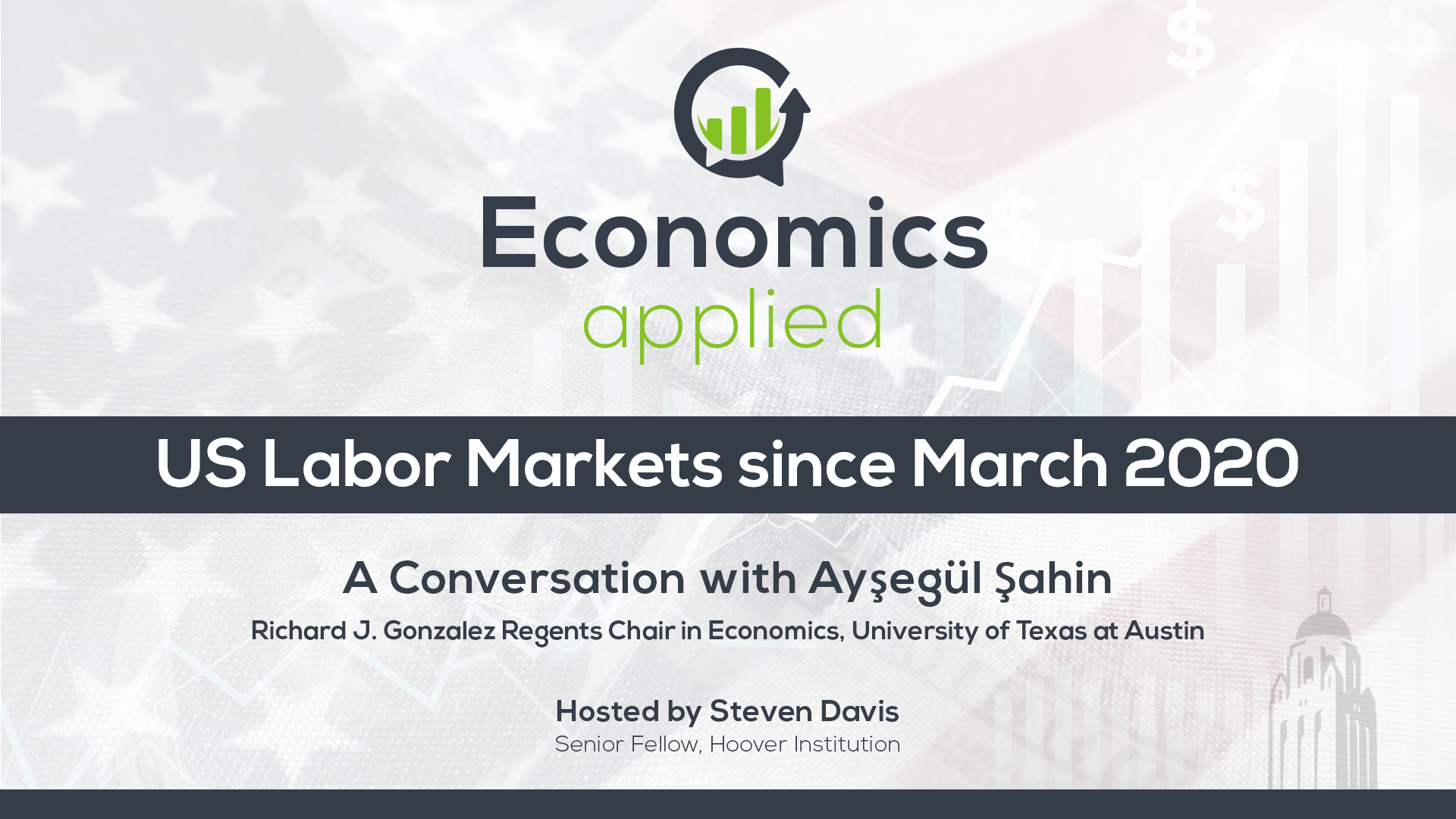
Host Steven Davis and guest Ayşegül Şahin explore the extraordinary behavior of US labor markets since the onset of the COVID-19 pandemic. They explain how the global crisis spurred remote work, instigated the "great resignation," drove job vacancy rates to all-time highs, restrained overall wage growth, and altered the structure of wages. Steve and Ayşegül also discuss how the recession and recovery since March 2020 really was different than earlier cyclical episodes, making it harder for the Fed and other policymakers to assess the state of the labor market. They also remark on how the rise of remote work presents new challenges and options for employers and workers, including the opportunity to expand labor-force participation among women with young children and people with physical impairments. It’s an episode packed with insights for economists, journalists, policymakers, and anyone curious about the post-pandemic job market.
Would you give the politician you trust least the same powers you want government to have?
September 28, 2026
Articles
Interest-paying electronic money, completely safe without deposit insurance, would be a great thing. For example, Silicon Valley Bank would never have had huge uninsured deposits that ran if there had been an easy safe place for large depositors to put their money.
September 22, 2026
Videos
Ken Rogoff says he was right about secular stagnation, real interest rates, and what it means for fiscal policy.
September 25, 2026