Videos
The Great Fertility Collapse With Jesús Fernández-Villaverde
For the first time in human history, we're not having enough children to keep the world's population from falling.
October 12, 2026
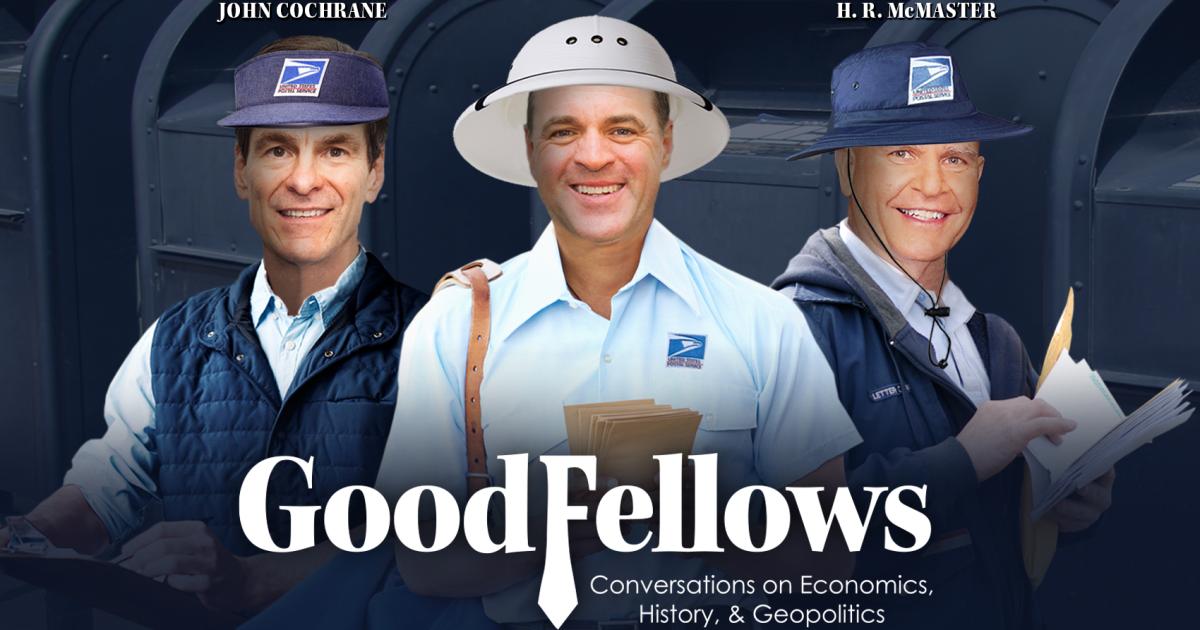
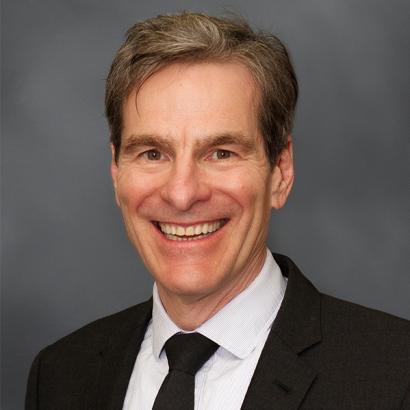
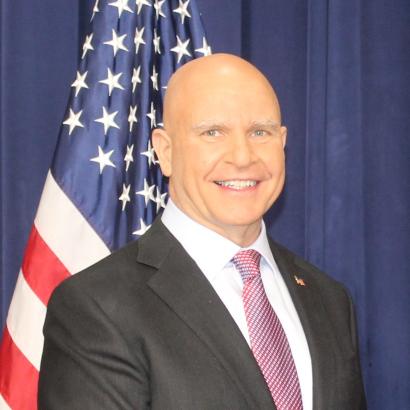
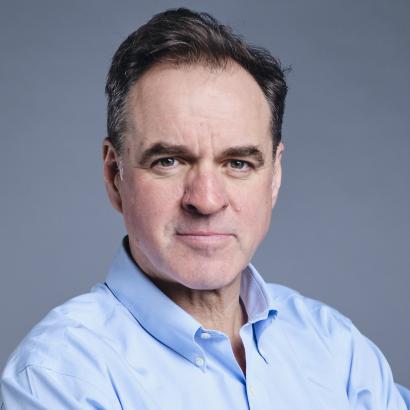
Is the bitter war in Ukraine soon to wind down now that a peace settlement is being negotiated (think a Panmunjom-style compromise, not Munich-style appeasement), and how should America prepare for economic and military parity with China? In an episode devoted solely to viewers’ questions, Hoover senior fellows Sir Niall Ferguson, John Cochrane and H.R. McMaster delve into matters ranging from those somber (allaying twenty-somethings’ climate alarmism, “ideal” interest rates, the future of tank warfare as well as AI’s redesign of future workforces) to those more lighthearted (H.R.’s service nickname, the artist behind John’s wall hangings, and how the fellows would ride out a future pandemic). Finally, on the eve of America’s Thanksgiving holiday, the fellows count their blessings – especially “Papa” Ferguson, who recently joined John (aka, “Blah-Blah” to his grandchildren) and H.R. (likewise, his grandkids’ “Papa”) as a first-time grandfather.
Recorded on November 25, 2025.
- It is Tuesday, November 25th, 2025. And welcome back to GoodFellows, a Hoover Institution broadcast, examining matters of history and current events, economics and geopolitics. I'm Bill Whalen. I'm a distinguished policy fellow here at the Hoover Institution. I'll be your moderator today joined by our full fleet, our full compliment of good fellows as we jokingly refer to them. And I'm referring of course to the historian Sir Niall Ferguson, the economist, John Cochrane, and former Presidential National Security Advisor, Lieutenant-General H.R. McMaster. Good to see you guys. So fellows, today we're going to answer viewer mails. We've been badgering our listeners for weeks now to send in questions, and I wanna thank everybody who bothered to do so. It's a reminder of the scope of this show. We receive questions from no less than six continents in numerous countries. Smart questions I would add. And if your questions, I've got to duck get answered this round, I apologize. Simply too mad, too many to get to in this limited amount of time. So, gentlemen, let's get to it. And our first question comes from Edward and Brit, New Jersey. He writes, is the proposed Trump Putin agreement on Ukraine's fate more like Chamberlain, Hitler, deciding on Czechoslovakia as 1938, or Stalin, Hitler on Poland in 1939? I would note that as we record this on Tuesday morning here, right now, the 27 point, I believe has been slimmed down to 19 points. Ukraine reportedly has agreed to core terms of this, of this deal. Neil, what do you make of it?
- It's not like either of those things. For very obvious reason that in 1938, a part of Czech, the Baia was handed over without a fight, and then the rest of it was swallowed up without a fight. And in 1939, Poland was partitioned very rapidly indeed by Nazi Germany and, and Stalin, Soviet Union. Whereas what is happening here is that a compromise piece is being negotiated after nearly four years of conflict in which Ukraine has inflicted huge losses on the Russian army and prevented the Russian army from achieving a objective, which was of course, to take he and overthrow Ukraine's independent Democratic government. So I think this analogy from the late 1930s is deeply unhelpful here. And I would suggest to you instead, considering the end of the Korean War situation, though our involvement was much more direct in Korea than it's been in Ukraine. But the negotiation of a compromise piece is something that is preferable to Russia grinding out victory, which is something conceivable. It's hard for me to imagine Ukraine winning this war after nearly four years. So compromise peace is a good outcome and one that we should
- Pray for. I, Hey, I I I would just say, hey, well, the analogy doesn't work perfectly for Molotov Ribbon Trough. I'm glad the viewer brought it up because I think the original version of that 28 point plan was throwing Ukraine under the bus. It was odious, in my view, to present that as a US plan when it was clearly authored, you know, in, in, in Moscow. Now, what's happened since then, I think is quite wise by members of the Trump administration. I would put Secretary Rubio at the, maybe at the top of that list, which is to agree with it kind of generally in principle, make a few modifications, and then make clear again once again that the, the intransigent party is Moscow the aggressor in this war. And so I, I think that, you know, what we'll see at this point is, is, is is Moscow reject, you know, the, the, the proposal. And we'll be pretty much back to where we were a week ago. I
- Think this one makes 1938 look good. I went, went back to look it up. Remember that time Poland and Hungary were in on it too? They wanted bits of Czechoslovakia. Britain did not have the means to do anything about it. If, if, if Hitler did want to invade Czechoslovakia, it was not written by Germany. It was not same old, same old, completely unacceptable. Like no troops, no nato. You get to have extra territory and, and quickly walked back, clearly an unserious plan. And I also read the beautiful Cha Churchill's beautiful eulogy for Chamberlain, where he pointed out this was a good man thinking hard, trying to save us from horrible things who happened to be wrong in a, in a good insensible process. That's a, it's worth for rereading.
- Yes or no question for you guys, will there be peace in Ukraine, Russia in 2026?
- No, no, there won't be. And then the reason there won't be is even if there's a ceasefire, Russia will continue the war through subversion and other means use of unconventional forces. Remember, you know, Putin started on Ukraine by poisoning and permanently disfiguring a, a presidential candidate in Ukraine in 2004, right? So, so this war already in the hot war has gone on since 2014. Putin will not stop until he's physically stopped or concludes that he cannot continue his aggression at an acceptable cost and risk. And I think the sooner we recognize that, the better
- I'll go with no, there may be a ceasefire. The Ukrainians want their country, they want to be part of Europe, they want to be part of the civilized world. They're not gonna give up on that quickly. And, and neither is Putin gonna give up. Putin cannot survive an end of this war. So he has every reason to keep going as well. Europeans may well step up. This is now the Europeans war.
- I'm going to disagree respectfully with my colleagues. I think you no, you would, I think you haven't read the 28 point plan closely enough because the media misrepresented it wildly in reality. It, if it were Russian authored, we don't know. It contains remarkable concessions by Putin, a NATO like guarantee, security guarantee by the United States of Ukraine, a 600,000 strong Ukrainian army in peace time. The Russians previously talked about 85,000 and above all the prospect of reconstruction of Ukraine with part of the frozen Russian assets. This is the real story. The, the Russians are moving and they're moving because of the pain being inflicted on them by Ukraine's deep strikes against their oil infrastructure and the threat of secondary sanctions, which is causing Russia's oil exports to India through its gray fleet to dry up. I think this, this has been very badly misreported in the media. It's a highly significant shift. I think hr, you are right that Putin probably disavows it. I think the modified 19 point plan, which we haven't yet seen, will probably be rejected by Putin. But I think this represents the beginning of the end of the war because the cost to Putin of continuing this war is starting to look dauntingly high. And remember, he's also awakened the sleeping giant of Germany, which is now re-arming. So I think there will be peace next year, certainly not this week or this year. I think it will be a compromise piece. I think there will be many parts of it that will be painful for Ukraine to accept. It will be hard to be entirely compatible with Ukraine's dignity to quote President Zelensky. But Ukraine needs peace. It needs a security guarantee, and it needs an agreement that upholds its sovereignty. And all of these things now seem to be on the negotiating table. So I'm more positive than new gentlemen
- Is a sec. If the security guarantee with no troops in the country, if the US is not willing and, and Europe is not willing to fight, now what possible, what possible good is a security guarantee If pain is working, why would it not inflicting a little bit more pain, work better and is not the cost of ending it high for Putin as well? You know, hundreds of thousands of soldiers come home and say, my God, what, what a waste this all was.
- It's been obvious for some time that NATO membership is not happening. This is a NATO like security guarantee. That that language is used in the draft 28 point document. That is a pretty significant win for Ukraine, for the United States, for the Trump administration to contemplate that for Vice President Vance to be willing to lend his name to it. That tells me there's also some, some significant movement happening in Washington. So the best, as I said in social media, the best is the enemy of the good here. Ukraine is not gonna get all that it wants because in the end, Russia still occupies 20% of its country and has superior economic and manpower capabilities. So the compromise pieces, I, I think is now visible. The outlines are visible. It will take, I suspect, many weeks and months to negotiate a final istic agreement. But I think it's now doable in a way that I haven't thought for a long time.
- Real, real quick, bill, I'm sorry. I know you wanna move on. That's okay. Hey, I agree with Neil that there are provisions in, in this, you know, the original 28 point plan that, that are not negative, you know, 600,000 troops for example, that's not negative. How do you define those troops? Are the reserves? They can, Ukraine can probably only sustain a 500,000 person, you know, active force anyway, so it's not all bad. Okay? But, but I do want to say that there will not be peace because Russia, even if it, even if it signs onto agreement, will continue the, the war much like it did after the Minsk agreements as well. So I, I just think it depends on how you define peace. If you define peace, just signing a document, maybe it'll, that will happen. But I don't think Russia will stop in. Its in its various forms of aggression, maybe forms of aggression that fall below the threshold of what might elicit a concerted response against them if they in in violation of the agreement. Okay, sorry.
- That's okay. Moving on to question from John in Lakewood, Ohio, who writes, I used to think the phrase free minds and free markets meant that political freedom and economic freedom could not exist one without the other as the success of Chinese economic development while continuing to suppress political freedom and validate this. John, why don't you take that?
- Well, I'll start with that one that needs historians and military minds too. You know, just wait a while. There's plenty of examples of well-run autocracies for a while, Singapore, there's nothing as good as a good king and there's nothing as bad as a bad king. So many of our ancestors spent entire lives waiting for the king to die. So I think it's not as quick as, as some optimists had said, but it, I think it remains true that in the long run you cannot be prosperous without freedom, both political and economical.
- So that's an easy one to agree with, and I think it will become increasingly apparent in the next 10 years then an economic system that is predicated on one party rule, a party that's above the law, no private property rights that the party respects, no representative government, no accountability has to and will fail the way it fails. We can already begin to discern in the collapsing property market, the collapsing fertility rate, the excess of debt burden, and the increasingly manic efforts of the regime to keep the show on the road by mass producing, manufacturing, and dumping it on the rest of the world. So I, I can see a kind of 10 year path to zero growth. The deflationary process is already at work. Now, one shouldn't mistake the, the shiny successes of China's economic system for underlying health any more than the successes of magneta gors in the 1930s Soviet Union were a sign that the economic future had arrived and Stalin had built it.
- I, I agree with Neil completely, not much more to say except that would add, you know, the demographic time bomb that is a large measure result of the one child policy.
- Alright, we talked about China. If we start losing our political and economic freedoms, we will also stagnate. So this is a great temptation to go that direction. Let us not fall into that temptation.
- Demographics in fertility rate are a nice segue to a next question that comes from Tomas and p Czech Republic. He writes, when I talk to my 20-year-old students, many say they don't want to have children because of climate change. What brief but compelling message would we give them to change their minds? I'd love to hear all three fellows perspectives on this. I would add that at least two of you are grand grandparents with kids in their twenties. Actually, all three of you're kids are, nope,
- I just became a grand parents and they have news first grandchild, my dad granddaughter Romi yesterday. And I have to say, and my eldest son couldn't agree more, this is the best thing you can do in your life. The most fulfilling thing you can do is to be a, a parent. I, I struggle to understand why so many members of his generation are holding back. But I'm very proud of him for having followed my example. He is become a father just around the same age as I was when I became a father. And he was my first child. God bless them. And Tom ask, you know, just tell people, tell young people this is the most fulfilling thing that life has to offer. Get on with it.
- I'll, I'll say one, read the IPCC reports, or if you don't have time read our, our excellent colleagues, Steve Koonin and Bjo Berg, who summarized the actual science. There is nothing in the actual science that says the climate is gonna burn Western. The earth's gonna burn, the oceans will, will boil, Western civilization will end the, the issue is, will we be three times better off than today or 2.9 times better off than today? Just read the actual facts. There's plenty to worry about climate's a problem, but it is not a civilization ending problem. Second, go have children and have children young. And if you do, you will discover there are things far more important in life than doom. Scrolling what your fellows say on social media.
- Hey, I would just say, I would ask add to that, you know, hey, also call for education reform so that we're not teaching young people about, you know, you know, about this sort of appending catastrophe. And then, and then robbing them of agency and, and the belief that they can be authors of their future and build a better future for their children and grandchildren.
- Alright, we have a question from Gati in Milan, Italy who writes in the Anglosphere The term Antifa is increasingly used by pundits on the right as a slur towards the extreme left while leftists described Trump Musk and others as fascists. Do the goodfellows think there is a danger in losing the historical and cultural awareness of what fascism and anti-fascism really were? Or are we Italians too obsessed with the memory of these terms? Ps warm congrats to deal for his excellent taste in cities and food?
- Yeah, it drives me crazy to hear fascism being misused as a term. All too often it gets leveled at people who are conservatives. Even classical liberals these days get smeared this way. And it's important to remember what the true nature of fascist regimes was and is. 'cause they do exist today. I think Russia has one, one characteristic feature of fascism is, of course there isn't a rule of law cases don't get decided in courts. There is no judicial process. There are camps, there is interment, basic civil rights are, are, are eroded as well as political rights. The political opposition is in turn locked up. And the other, I think defining characteristic of fascism is that it militarize society. That the ultimate goal of society becomes preparation for war and then ultimately fighting war. And these, these are the defining characteristics, which is why I say we can see what fascism looks like by looking at Russia today.
- Hey, as as, as our viewer mentioned, you know, fascism, the term really came into vogue during, you know, during Mussolini's rule. It's exactly as, as as Neil described. And I think it, it, it occurs on the far left and the, and the far right. You know, when I, when I look at some of these far left progressive regimes, especially that of Maduro for example, I think you could describe that as fascist as well.
- I, I think the, the pointer to be historically aware, I think is a good one. 'cause the terms are now used in ways that are completely different from what the actual systems in the 1920s and thirties in, in Italy and Germany were like, actually there's a, a current in Italy that is a little bit nostalgic and for fascism. And let's not forget how many Italians thought Mussolini was pretty good and the trains did run on time. And, and so what about that other stuff? It is, it's more tempting than it seems. We, we just instantly think how terrible and the Ps I'm sorry Neil, how can you, how can a reader possibly prize your taste in cities and food greater than my love for fi? And I got re la
- Hey, just, hey, one last thing too. You know, there are elements on the far right in the US that fetishize Vladimir Putin for the same kind of reasons that that, that John brought up. But it just blows my mind, you know, about how many people, you talk about how, how Russia works so well or see Putin as a anti woke warrior on, on horseback. This is why Russia is offering cultural visas to Americans who want to go, who, who who want to enjoy, you know, the benefits of living, living in Russia. It's just insane.
- Can I ask, can, can I add one small point which I, I I meant to say Antifa anti-fascist as a term has become something of a cover for the most intolerance, illiberal, downright violent elements on the radical left. And shout out here for the journalist Andy go, who's been pretty bravely tracking the activities of these so-called Antifa groups. They are a menace and there's only one comparable menace on the right. And that's the far, far right that we now see trying to resuscitate antisemitism as the basis and racism as the basis for their politics. So yeah, I mean, the tragedy is that there are people who are willing to revive the terms, the ideologies of the 1930s. It's incredible that anybody could wish to do that after what they led to in the 1940s. But part of our job as, as scholars as well as public intellectuals, is to keep reminding people where those toxic ideologies lead it is to the path to hell.
- And, and let me just add the use of Antifa anti-fascism ought to bring us the, the memories of the incredibly courageous people who stood up against fascism in Italy in the nine and Germany in the 1930s. And, and they, they were not people out throwing, throwing bombs on the streets. They were people really putting their lives in danger and, and usually losing them for, for a, a very difficult principle.
- Hr speaking of angry words, the word sedition is being thrown around Washington DC these days. I'm curious as to your thoughts briefly just on the president's use of this in response to democratic lawmakers telling members of the military. They don't necessarily have to answer to the president when it comes to orders, but also perhaps we could explain what the protocol is for officers when it comes to taking orders from the president.
- Well, hey, first of all, the actions of those, those six congressmen, I think what was deplorable, you can refuse illegal orders.
- You can refuse illegal orders.
- You must refuse illegal orders. Because really the subtext of that was, hey, you could disobey the, the commander in chief and they could even, they didn't give an example of what they meant by an, an unlawful order. So what they were suggesting on almost the 250th anniversary of our founding is that the military should be a check on executive power. And guess what? That's what the founders feared more than anything else. And, and we have imputed into our military, this, this professional military ethic that puts a bold line between the military and partisan politics. We owe it to the commander in chief to give our best advice. Hey, Mr. President, I don't think this is a good idea, Mr. Secretary. I don't think this is a good idea, but it's not our role to cross the line between advice and advocacy for certain policies. You know why? 'cause generals and admirals don't get elected and sovereignty lies with the people. So this was extraordinarily irresponsible and actually it seeded the high ground, you know, to, to President Trump, who of course in his reaction, his overreaction to it encouraged in, in my view, political violence. It was terrible to say, you know, this is sedition that, you know, maybe he could say that. But then to, to say, well, and it should, you know, the punishable by its sedition is punishable by death. So I mean, come on. So why, why, why don't we just demand of political leaders on both sides that they do their jobs and stop compromising confidence in our institutions, in our military, in this case to score partisan political points, which is what these grandstanding, six congressmen are doing. Hey, guess where the check on executive authority exists in Congress in Article one? So do your damn job.
- But HR a a military person is supposed to refuse an illegal order. Is that
- Correct? Yeah, that's obvious. We all know that. We all
- Know. It's not obvious to everybody,
- But the explain that the way they said it, I mean the context for this was
- Not in this context.
- Yeah, right. The insinuation what, what, but but also, you know, that's only really extreme circumstances, you know, I mean, if somebody tells you, Hey, shoot this civilian or, or something like of course you're gonna disobey that order, you know? So, and, and, and, and, and, and the standard for declaring a, a law, an an order unlawful on your own, you know, as a, a subordinate in a military organization is pretty darn high. You know, what you don't want is in combat to be issuing orders and then have people debating its legality, you know, because I mean, they think, I mean it's, so anyway, you're right John, but, but the way that, that
- I just wanted to give you chance, say that
- That was put forward was meant, I think to to grand stand and to undercut, undercut the president.
- Neil, anything you wanna add?
- I couldn't agree with HR more
- Easy enough. We had a lot of questions directed to you individually. Let's begin with HR David and friend Nadina Beach Florida writes question for hr, are tanks obsolete?
- Hell no, they're not obsolete. And again, try to think of a problem you can't solve with a tank. You can't, no. So I actually, I've written about this in, in, in the great who, well, the drones wire strategica. And, and really you have to think about the function for a tank. The function for a tank is mobile for protected firepower. And you always need that, right? Because in close combat that you have a choice of either having mobile protective firepower or just like wearing your, your body armor or your flag fest, right? I mean, so it, a tank does, as oddball said, you know, in, in Kelly heroes, it does give you a nice edge, but it has to be used in combination with other capabilities like tier to layer air defense. Because there is the drone threat. You're gonna see more, more, you know, top oriented armor on armored vehicles. You're gonna see directed energy laser capabilities on armored vehicles that can identify and shoot down drones. So again, this is the continuous evolution that you see in the development of military capabilities. You know, machine gun, tank tank, anti-tank missile, you know, tank drone. And you're gonna see a, a whole range of countermeasures to these latest developments, which make it difficult to sustain mounted offensive operations. That's what's different I think about in Ukraine. And there's gonna be an effort to restore mobility to the battlefield and the tank mobile protected firepower will be a critical element of that.
- Yeah. Gerald, we also got a question for Lionel of Columbus, Georgia, who writes, many in the military have a nickname, for example, storm and Norman Mad Dog Raising Cane. What was, what is HR McMaster's nickname?
- You know, I didn't, I don't really have one at least that I knew of. You know, of course soldiers always have nicknames, but, but, but you know, in just in in Desert Storm, they started calling me heat round 'cause of HR and, and, and I had a tendency when I, when we identified in, in a, an, an enemy what we thought was an enemy object in the distance, I would roll forward in my tank and just put a heat round into it to help discern, you know, really what it was. So that was the only one I really had that was a transitory nickname heat round.
- That is the best thing I've learned today.
- Alright, Neil Ferguson, what's your nickname Keeping in Mind as the Family Show?
- I was gonna say, I gotta watch what I say here. Well, now, now I'm Papa because you have to decide what you're gonna be called as a grandparent. My mother's father, I always call Papa and I much prefer that to grandpa. So I guess my new nickname is Papa.
- Papa John nickname.
- Well, there's two. My, my glider nickname is Bravo, Bravo. 'cause that's the call sign on my glider from my, my granddaughter named me. Blah blah. Somehow that's how grand. So
- I think we're all blah blah
- In some, yeah,
- Hopefully not something, not
- Reflector for watching this
- Show. Hey, Neil, I'm Hey, I'm Papa also. Good goodness.
- It's good. It's a, it's it, that's a good ring to it.
- John, let's stick with you. A question from Athena in Boston, Massachusetts, Athena writes, is, there's such a thing as an ideal interest rate, should rates be left alone, perhaps even at zero, letting the economy self correct through brief downturns? Or does sound economic policy require active rate adjustments based on unemployment and inflation? Does LA for economics apply to interest rates? Or do they need constant fine tuning?
- That is a great and, and
- Smart questions.
- She is absolutely right that your free market sensibilities ought to be offended by the idea that there's a government agency that sets a price. Her government can't figure out the price of strawberries relative to blueberries. How can it figure out the most important price of all today's consumption versus tomorrow's consumption? That's the interest rate. But as long as we're using a, a government provided money, and let's not go down the libertarian fantasy hole for a moment on alternatives. Someone's gotta set the value of that money. And, and it would be nice for that to be automatic and let interest rates do what they want. And that's the, that's what we had a gold standard for. Well, we'll just, you know, it's so many bars of gold done, but that didn't really work. Or what Milton Friedman's idea, we'll just control the money supply it goes 4% a year. We're didn't do it done that, that didn't work either. So we are kind of stuck right now, sort of the way institutions evolve with the Central bank nudging up and down interest rates. And that's highly unsatisfactory. I've been thinking about this. I think there are better ways, I'll, I'll pitch the idea of a, of targeting the, the, the in inflation expectations directly so that the difference between inflation protected, non-protected interest rates is always whatever you want, 2% and then the level can go down. So some way to let the market determine the level of interest rates would be great. But that's on the long, long run I, you know, ideas to be worked out yet. So I, I don't know if I got to a good answer, but at least you know why the question is so hard.
- John, we also got a question from Kathleen at Sarasota Florida who's obviously a viewer and not a listener because she writes John Cal, and please share with me who the artist is of those amazing portraits I see on the wall behind you during your Zoom sessions.
- These are all from Sally Fama Cochran. Look her up on Instagram or her website and you can see all sorts of wonderful paintings.
- Neil, you're a musician. Are there artists in the, in the Ferguson clan, in the painting medium?
- Certainly. Ah, my daughter Freya Douglas Ferguson is an artist who works in all kinds of media. Her website reveals some startling jewelry extraordinary designs that she's come up with. So yes, we have an artist in the family. All family should have one. Hr,
- Well, gosh, my Uncle Chester was a, was a, this was my grandfather's brother was a, a fantastic actor and musician. And my cousin Bobby Sickinger was a, was a a a a Broadway director and and producer. But, but none of that, none of that was transferred to me. I guess I I I am a huge fan of art and artists and music, but, but have a real dearth of talent in that area.
- Yeah, I know John. I don't see any price tags on the art behind you.
- These ones will, you'll have to fight us for that. Sally does take commissions. You just have to promise to pay her twice what she asks. 'cause though she's the daughter of an economist, I can't get her to raise the prices enough.
- Okay, so Neil, you're up to questions for you. First one comes from Mark in Northbrook, Illinois who writes, and bear with me, this is a little lengthy and cold War I, the US and US SR had military parody but not economic parity. When Reagan announced that he intended to break the military parity, the USSR collapsed because it didn't have the economy to meet the challenge in two. Oh, we almost, we almost have economic parity, but not military parity. My questions are one, if China intends to reach military parody with the us will it have enough economic resources to do so? Question two, sir Neil, what should the US be doing to avoid the situation when the two superpowers have both economic and military parody?
- Great questions. I think it's not quite true that there was military parity in Cold War I, because the Soviet only caught up in terms of nuclear capability in the 1970s and then overtook the United States. They always had a superior conventional forces which had to be offset by the technological superiority of US and allied forces. So military parities are a stretch, I think, but what's certainly true is that the Soviet Union never got close to having an economy the same size as the us whereas China has got close on a purchasing power parity adjusted basis. It's got a larger economy. I think most of us regard the current dollar measure of gross domestic product as more telling. And on that basis, the US still has the largest economy and China's is about, oh, I don't know, 70% roughly speaking on a current dollar basis. Parity is something that the Chinese are striving for in the military domain. There's a fantastic book Arsenal Democracy coming out or just out co-authored by Hoover fellow, Ike Fryman showing all the different ways in which China has closed the military gap or is in the process of closing it. China's still way behind in nuclear weapons, but building them at a frantic rate, it has numerically a larger navy. But here's the key, and I'm probably talking hrs book here. The quality difference is huge because of the lack of experience of China's armed forces compared with the very considerable experience that the US armed forces have. And I think that would be a decisive factor in any conflict. What can we do? What should we do? What That's actually quite straightforward. The United States has to make sure that it doesn't allow its defense budget to be squandered on legacy technologies and continues to maintain a technological edge in armaments. I think that's the critical thing. In order to do that, of course we have to do all the things that John talks about. We have to have growth, we have to prevent our debt becoming too large. It already is too large. We have to do something about that. But yeah, that's the best thing we can do to maintain the lead that I think in qualitative terms we still have over China.
- I I want to chime in on the economic half of that question. The other thing we can do is, is let our economy surge. And there's some contrary temptations. Today's Wall Street Journal had a great one on how China is using AI to, to get rid of workers in factories and, and have their manufacturing be even better and cheaper. And they're, they're ahead of us in all sorts of manufacturing. The US' temptation is to protect, to have manufacturing jobs and, and to protect manufacturing, make it less efficient and and less productive. Remember, if you do more of anything, you have to do less of something else. So the more we do industrial policy kinds of things that force us to do things inefficiency, the less we can do of other things. So we, we have to maintain our innovative competitive free market economy and not give into the temptations.
- Yeah, I'll just, I'll just, I'll just add to this, you know, there's a, there's a, a huge financial aspect to this in terms of the defense budget, which is that historic lows. We're spending less on defense now than we have at any point since the 1930s. As, as a, as a percentage of, of GDP. Bing West has a, an, an essay out on this recently, as well as Ike's book is very good on this as well. So as China's surging forward, we're reducing defense spending at a time when we do, as, as Neil alluded to, we have a bow wave of deferred modernization and we also, the lack depth in a lot of our military capabilities, depth in terms of the size of our forces, but then also depth in, in our industrial base and the resilience of our supply chains. So we, we, we have a really serious situation, but we're not acting seriously about it, especially when we have continuing res resolutions, which, which prevent a lot of the investment in the new capabilities to which Neil referred.
- Neil, we had a question to for you from Ed in Dallas, Texas who writes as an Anglican with an interest in history. I have a question for Sunil about whether his philosophy of history was affected by his becoming a Christian atheist and many others throughout history of taken the position that there is no God directing history to any particular end Christians. Take the view that God does indeed direct history to a specific end. What is his view and did that change with his becoming Anglican?
- That's a great question. I, I think I had always studied the history of the 20th century with a keen awareness that evil was abroad in the world in the mid 20th century and, and took many hideous forms. So even before I became a Christian, I thought a good deal about the evil that arose in the Soviet Union and Hitler's Germany and, and elsewhere. That's really one of the ideas that lies behind the book War of the World. I don't think a good historian would simply throw aside any concerns about causation and say, well, it's all God's will. I'm not sure that would be a particularly helpful intellectual contribution, but I do think that as one writes history, one is inevitably engaged with morality as well as with causation. That was a point made by the great German historian, Friedrich Meer in a brilliant essay. So in a way, I think becoming a Christian has aligned my historical practice rather better than was previously the case with my own personal philosophy.
- Hey, Neil, now we've just gotta get you back into GK Chesterton and, and see if we can get you converted to Roma Catholicism, man,
- That, that is, as they say, a red line in the Ferguson
- Family. I bet it is. I bet it is. So that'd be, that would be a stretch for Ser
- Neil. I don't want my grandfathers to come back, come back down from heaven to, to, to haunt me.
- I'll hold that as the remaining atheist on the show at at least don't, you know, you can pray to God to choose your football team, but don't count on divine intervention for the future of our country. Count on human agency.
- I just pray that our wifi holds up in the 60 minutes that we do this show. We had two reading related questions from you three gentlemen, the first from Thomas in Massachusetts who writes, I'm always impressed by the volume of information and books, purportedly, purportedly, purportedly read by the Good Fellows. My question is, do you have a discipline schedule of time set aside for the reading of books, articles, papers, approximately how much time do you set aside to read a reg on a regular basis? And this ties into a question from Dean in Australia who writes, can each of the good fellows share their most influential books on any subject fiction and nonfiction they have read?
- Well, I'll go first having just written an essay recently on the extraordinary importance of, of literacy and the written word for our civilization. I don't just purport to read a lot. I do read a lot, I read Every Night Without Fail, but I also have a set, set of books that I, I want to read piled up. And I will try to get myself through that pile, even if it means sitting down and setting aside what, three hours. Some books are tremendous page turners. It wasn't hard to read Andrew Ross Alkins 1929. Other books are harder going, but they're good for you. So you get through them. I think the key to sanity as well as to civilization is to make sure you are reading a part of every day and setting targets, having a list of books that you want to read, buying them, and then of course filling your house with them, which I'm afraid I do. As for, as for which book has been the most influential on me, it'd be hard to pick just one. But I, I've recently talked quite a bit about war and peace and its influence on me and it's a, a book that somehow resonates today in this time of war in Eastern Europe. I think it's one of the greatest works of literature, but it's also the reason I became a historian.
- Hey, I'll, I'll just say that. Hey, I used to be a lot more disciplined about it 'cause I was a contributing editor to Survival Magazine and ha and did the, and did the book reviews for war politics in the, in the military. But now what I have is, is this huge stack like Neil does, and I try to get through it as, as quickly as I can. And then at times when I'm frustrated with how far behind I am, I allocate several hours when I'm writing actually is when I'm more disciplined because I'll write until I can't write effectively anymore because I'm kind of dire and then read a book or parts of a book that's relevant to what I'm writing to kind of generate ideas. But, you know, I I'll tell you that in terms of, you know, the, the books that I enjoy most, it's sort of synthetic works of history that still move you through the book and that move between humid experience and, and the highest levels of political discourse or diplomacy or, or strategy. And I'm thinking of like Don Higginbotham's, war of American Independence or Gerhard Weinberg's Magisterial World at Arms, gosh, or McPherson's Battle Cry of Freedom on the Civil War or Michael Howard's war in European history. Or, you know, these kinds of works that impart so much historical knowledge, but do it in a way that that, that, that is entertaining and, and moves you through it and tell stories that you remember and illuminate some of the themes in the book for books that I'm, that, that I'm reading for just like a, a practical purpose. I think it's really important to know how to break a book and you break a book by reading the introduction, the conclusion, the first and last paragraph of every chapter. And then when you go back, you can read purposely through the book with the questions you have in mind that you want to answer. And, you know, some sentences are more important than others, like the first and last sentence in each paragraph. And so you can get through a book in a couple hours that way. If it's a well-organized, well-written book,
- I aspire to be Neil Ferguson or HR McMaster. My reading is unbelievably undisciplined. I, I read, yeah, when I'm bored to fill the time to procrastinate, I pick up whatever's around my wife despairs of books brought up to the bathtub where they inevitably fall in, even though I promise that'll never happen again. But that's just the way it is. I'll try to be more disciplined in the future. Like Neil, maybe I should get Neil's reading list and plow through it. But I've always been that way. My, my, when I grew up my house, my parents' house was full of books. I would just pick whatever was on the shelves. What's been most influential here. I'm supposed to display my great tion and sophistication, but you know, what's most influential is what you ran into is a very young man. So it's not, not very deep, but they had a big effect on me. And I'll just name three, Hayek Road to Serfdom was very important along with a deep discussion with my father, who was a historian who really impressed on me how much everybody believed in planning at the time and how much of a bombshell it was Orwell's 1984, kind of obvious, but I I'm interested also how much our current progressives regard that as an instruction manual rather than a warning. And Bertrand's Russells, why I'm not a Christian, which set me on my opposite path. Discovery to Neil Ferguson's from a father who was a historian of Italy, who had read the Counts minutes of the Council of Trent in Latin to the atheist I today. But it was a very formative experience and perhaps we'll talk about that subject someday.
- Hey, just quickly, if I could put in a plug bill, I should have added John Lewis Gaddis in his work on Cold War history and what a great interview by Peter Robinson on uncommon knowledge with Gaddis in the, in the latest episode. So our viewers ought to tune into that.
- Okay, on a related note, you all write, how long does it take you typically to punch out a thousandth word? Op-Ed Neil, John hr.
- Hey, for Neil. I mean, I don't know man. I wish I could write like that guy. I mean, he just cranks it out and it's so darn good for me, you know, so it depends on the topic, but you know, I'll tell you, I have to wrestle with it for a while, you know, and I'm about to finish this essay on what every undergraduate should know about American military history. And I thought I had a really clear idea and I was just gonna knock it out. Well, a couple months later, I'm still working on it, I'm closing in on it, but I wish I could write like Neil basically.
- Well, I don't have any mysterious secret. The the key is, in fact the, the homework, the research you do and, and everything I write in the way of journalism takes at least three or four hours nearly all of which is researching and working out the argument. Once you've worked it out, then it's, it's always been easy for me to write it up just as it would be easy to talk it out if I had to talk it out. But the key to writing is, is research and thinking, planning and then write. I've been trying to teach undergraduates that for years, if you try and write before you've thought it through, it'll take ages and seem like a really hard thing to do. But that's just 'cause you left out the thinking part or the research part.
- Hey, there's also the sitting part. You have to sit in your chair and get the damn thing done.
- Yes. You can also stand, I recommend standing out. Maybe that's part of my secret recipe for mass production. John,
- I have to, again, I, I wish I were more like Neil. I have to think when I write, 'cause it's only clear to me how dumb the idea was when I write it and then I get, get rid of it when there's a clear concept, I'm just like, Neil, a clear concept to sort of structure, boom, boom, boom, there it goes. And then, you know, half a day to edit it when there isn't a clear concept. Oh my God, it's, I gotta, and then especially if I turned it, I've promised to do something. Oh, here it comes. I think I need to check my email again. Oh no, maybe there's something on Twitter, honey. Could I, could I wash the dog for you or something? Anything to do this all except impatient with any interruption until finally it happened. At the end of the day, writing is hard. Good writing is all good. Editing, recognizing how silly the things you wrote the first time around are, sometimes it goes well, sometimes it takes forever.
- Exactly. Alright, a question from Richard in London, uk. It's a question for Neil actually. He writes, so Neil Ferguson has flip flopped a fair bit on Brexit. First Neil was against it then he was in favor of it, but now he wants it overturned. But having all the original fears about Brexit been proven untrue. In fact, Neil was right the second time. So Neil,
- This is a false colony, Richard. I, I have not flip flopped. I was against Brexit, not because I love the European Union, but for two reasons. First, I thought it would be enormously economically costly for the British economy. And secondly, I doubted that the British state would be able to take advantage of it in the way that was promised by its proponents after the referendum of 2060, gosh, nine years ago was lost. I like a good sport, said, well, we lost. That's the end of that and now we must make the best of it. That's not flip flopping, that's what you do when you've lost something. You don't re-litigate it or ask for a do-over. And I don't think I've asked for it to be overturned. At least I'm not aware of having done that. My view is that you can't really overturn something like that. And Britain has been in the situation of Switzerland really ever since the referendum in a permanent negotiation with the European Union. That will just go on and on and on indefinitely. Last point I'll make is that if you look at our colleague at Stanford, Nick Bloom's newspaper, you'll see that the economic costs of Brexit are pretty much what people like me warned about back in 2016. It's been extremely bad for the UK economy. It's affected investment and you only need to look around you in Britain today to see high growth. There has been since the referendum. It's a somewhat depressing spectacle. So, I'm sorry, Richard, I've actually been very consistent on this and consistently right.
- I'd like to ask Neil about Brexit. I was of two minds when it came through. Half of me said, stay in, fix it, not Brexit. The European Union had all sorts of problems. It, it needed a, to move from articles of confederation to Constitution. And, and now the Brits have gone and they are, they are hurting themselves more and more. The other half of me said, you know, Singapore on Thames, here's your chance to ditch the ni bureaucrats from, from Brussels and, and turn back to her Majesty's free trade entrepreneurial, wonderful uk. Now it turns out that the UK took this opportunity to impose on itself more rules and regulations than even the EU treaties allowed. Yep. To some extent, those costs seem to be self-imposed as opposed to sim simply the effects of of trade. Had the UK tried the Singapore on Thames, the Anglosphere, the great free trade agreement with with Canada, Australia, New Zealand, at least, even if we would not join along, that would seem to me have been a, a wonderful opportunity squandered not because of Brexit, but because of what the UK chose to do with it.
- Well, that was the proposal, that was the selling point that attracted some of my friends to support Brexit. But I was always skeptical that there really would be a path to a a Singapore. I don't think Singapore's a particularly attractive role model. Let's
- No be more, but I meant that the market, not the politics of Singapore,
- The market a free market, let maybe Javier malaise Argentina.
- Yes. - But, but there was never the slightest chance that, that the British civil service and political class would take advantage of that opportunity. And, and my observation, which was a closer observation than yours, Richard, of the British political class, I I observed them closely when I was at Oxford with them, was that they really wouldn't be able to capitalize on the opportunity. And it actually blaming Europe for problems that were in fact to do with the British state was a pathology that went on for years before 2016. And it turned out that after Brexit, all the problems were still there because they weren't really that much to do with, with Brussels. I'll, I'll leave it there, but I, I'm, I'm, I welcome Tough questions, Richard, but I hope you accept by equally robust answer.
- I point out that in February we're doing a story, a show that's gonna be devoted to British politics. We have somebody very high up in the UK who will be on our show, so stay tuned for that. Listeners, we have a question from a Sturgeon Bay Wisconsin. HI want you to answer this. Al writes, I meet with a friend once a month or more for lunch. We're both in our upper seventies and recognize we won't be around to see what the future holds for our grandchildren here in the us. We seriously worry about what is ahead for them and the future of this country, particularly after watching the decline of things like a strong work ethic, good matters and pride in America. What has happened to us? Are we too pessimistic?
- You know, I think we are too pessimistic and as we've talked many times on this show, we've used the 1970s analogy. You know, we have a great capacity for self-improvement in this, in this nation as we approach the 250th anniversary. We've gotta remember, you know what our founders said, you know, that they knew our republic required constant nurturing, you know, and so let's nurture it, you know, and, and instill in, in, in our young people, reinstill in our young people, a sense of agency that they can work together to build a better future. This is what the big problem I've got with these postmodernist, neo-Marxist, you know, critical theories is that they leave young people with just this toxic combination of anger and resignation. So there are a lot of good people working on this. I'm thinking of like Ian Rowe at Vertex Academy, who does a tremendous job with his students. You know, who, who recite the poem Invictus every morning, you know, which, which gets you going in, in the, in the, in the direction of positivity. So, hey, I know these two gentlemen will do that for their, for their grandchildren. And
- You know, in the chaos of contemporary America, you can also see great potential for reform, for change, for seeing that things didn't work out and trying something different. We may be trying something wrong, different again, but that, that capacity for self-renew is, is is still there.
- Alright. Alan Sturgeon Bay might be having lunch with Curtis in Sturgeon Bay because Curtis sent us a, a note too. He wrote recently, Ford CEO said his company couldn't find mechanics for jobs that pay $120,000 a year. Media such as Wall Street Journal have weighed in bemoaning the lack of technical colleges arguing young people today are steered toward college even though they may be better off in a trade. My question is this, are he looking at a culture change that has perhaps since the 1960s looked down upon the trades and those skilled to work with their hands? I'm curious what perspective the good fellows have on this. John.
- Oh man, this is a fun one. I always look first to incentives and second to culture. There was this interesting thing that happened in the 1980s. We had the skill premium that people who knew how to work with computers got got better salaries than others. And economists noticed, oh, people who go to college make more money. So, but is that, is that causal or is it people who play polo make more money? Well, whatever our government soaked all sorts of money into sending people to college, many of them to get junk degrees. And now here we are that they're unhappy in voting for ham. And if you had simply gone to learn how to be a a machinist, you could be earning a lot of money. So that's, I guess part of the self-correction problem. Be careful what you wish for. You might get it. I I think that premium for any old college degree is, is gone and, but let's not focus too much on what we provide people. You know, people make choices and so now it's a good time to make that choice to go become a, a machinist
- Neil hr.
- Well I took a slight double take when my 13-year-old son was, was, was studying metal work and, and woodwork at school. They call it design technology, but that's really what it is. But before I objected, I, I stopped myself and thought actually given what artificial intelligence and large language models in particular doing to the kind of work that sometimes gets called white collar work and we're seeing already very major impacts in the law, in financial services, in all kinds of, of different areas. Maybe the metal work in the woodwork will turn out to be the most important subject that he studies because the robots are, are not ready for prime time, particularly when it comes to very, very fine motor skills. And therefore it seems reasonable to think that this could be a glorious time for people who really good with their, their hands before the robot robots catch up.
- Yeah, I think there are a lot of good models out there, for example, like the, the German and and Swiss apprentice models. I mean, I think those work, there is a movement to to to, you know, to, to create more vocational schools. I think it is important because, you know, we do have to make more things in this country because of the vulnerabilities associated with China controlling so many of the critical supply chains for, for national defense and just for the, the security of our economy. And we need that skill labor force. So yeah, I I mean I'm, I'm not an economist or economic historian, but I would hope that that we, that we are developing those kinds of skills that are relevant to the need for increased industrial production in the United States.
- But I was just talking about jobs, bring back shop class please. I loved job class in school and they got rid of it 'cause everybody was supposed to come to college. How else are you supposed to learn to use a power saw properly? You know, even normal people and, and even our economy needs not just people to operate machines, it needs people to who know how to put things together. Who, who, who think that's, that's fun. So that's an important skill for everybody to learn. Bring back,
- Hey, hey, hey John. One great way to do that is join the army or the Air Force or the Navy. I mean, I'll tell you the training you get as a mechanic, you know, it is, is fantastic and
- I sure the army would like it if people came in knowing how to use a screwdriver. But you know, how, how are you gonna learn that
- Grandparents is the answer. Grandparents. Alright, one final question, John, in Dallas, Texas Rights, you did an episode of September 28th, 2021, in which you mentioned your opinion about COVID vaccines. I'm curious to know if any of you have changed your thoughts on vaccines since
- I have not.
- Well, unlike Neil, I can't remember what I used to say, so I'll just say what I think is right. The first COVID vaccines were Wonder and Operation Warp speed was one of the greatest things Trump did. In part by, in part, by promising that they were gonna pay for things ahead of time, that was brilliant. And getting rid of all sorts of re regulations, it allowed us individually to get back to work. The vaccines did not stop transmission and there were some side effects. So forcing people to take the vaccines as if they stopped transmission was a huge public policy blunder. And, and one of the big blunders that we are still, you know, the reputation of the CDC is in tatters over this sort of thing. So it, it was great, but then was one of the biggest blunders.
- Yeah, I agree with John. Agree with John.
- Finally, it's Thanksgiving here in the United States this week. So let's end with this question from David in Beverly Hills, California. Who writes, what's your favorite Thanksgiving memory or tradition and why?
- Hey, it's, it's moving from my grandmother's house. So where I grew up in Philadelphia, my backyard adjoin, my, my grandparents' house and then one block over was my aunt's house. So we just ate our way through Thanksgiving, starting starting at my, starting at my grandmother's house, then over to our house and then over to my, to my Aunt Terry's house and, and of course all the great food memories. I mean, my mom did this, these great sweet potato dish that I always remember. My aunt had these like sausage ball appetizers and these incredible cookies that she would do. So anyway, being in the neighborhood with my family and, and, and my cousins and eating my way through, you know, kind of a progressive Thanksgiving dinner,
- John before, before Neil tells us about his haggis, favorites Thanksgiving haggis growing up in Scotland, mine are come from my mother who had a strong Thanksgiving tradition. And I'll just mention three things. One, we would start the dinner with the plates, was had it with her, with the plates, with three beans in them. It was set with just three dry beans to remind us of the lean years. And the second was in, in memory of how the original pilgrims had joined with the Indians. She would always insist that we have not just family, but invite people who, you know, might not have somewhere to go. And, and in our community that meant, you know, a lot of foreign graduate students and sort of strange people. We, we called them Indians, which I think was politically incorrect, but this was a, a long time ago. And third, on occasion, we would actually read the Mayflower Compact, which was, you know, the first sort of constitution in the US and, and a good reminder of who these people were and, and why, why they came here. Alright, Neil, take us
- On - Thanksgiving is much more meaningful if you've spent much of your life without it. And an immigrant like me, discovered what he'd been missing when finally he got in November, this wonderful celebration of gratitude and of family. I, I very happy memories of introducing my mother and father to Thanksgiving and having them come to us in New England and, and discover Thanksgiving. So imagine all you American listeners, life without Thanksgiving and you know what it's like to be me before I became an American and it's kind of miserable late November in England without the prospects of any Turkey until Christmas. So the solution, the solution is find some fellow Americans and that's what we'll be doing this week. Ra Krishnan in town with his wife Artie, like me and AAN immigrants. And so we're gonna have kind of English expat Americans Thanksgiving and I'm really thankful for Thanksgiving. Everyone should have Thanksgiving, Europeans, Britains just, just, this is one American tradition that's really worth copying.
- So Neil, you're like miles, standish, you know, without the, the top hat and the big belt buckle, you know? Exactly, exactly.
- I think a very clever production people. I think I have an idea what they're gonna be putting on the next screen for Goodfellas this time. Lemme point out, I do a podcast for Hoover called Matters of Policy and Politics. And I think Neil was back in 2018 or 2019. You came on the podcast and we talked about Thanksgiving. It was right after you become a citizen. So it was just a very, very fun talk about you giving Thanks.
- Yeah, no, there's, there's something to be said for it. And because there are no gifts and there's no commercialization, and Thanksgiving is, is a kind of auste celebration despite all the eating, it's terribly meaningful when you come to it late in life. I, I can't emphasize how, how wonderful it is. And our sons, Thomas and Campbell are quite indignant that they're gonna be deprived of Thanksgiving and yet again for the second year running, we, we'll make it up to you boys. I promise.
- I'm, I'm concerned about Thanksgiving. I'm here in South Carolina right now, that's why I have the different backdrop. And you drive around the neighborhoods here. Christmas decorations are up, Christmas is run over Thanksgiving now
- That's so wrong. That's so wrong. Honestly. Premature Christmas decorations, that should be a criminal offense.
- Sion, nothing
- Before adv, nothing before Advent and certainly nothing before Thanksgiving.
- Alright gentlemen, well thank you for a very fun spirited conversation. Thank you for answering our viewer's questions and we'll be doing another mailbag in a few months from now. We again, appreciate your questions, sending comments anytime you want to about the show. Positive, negative notes if you want to, guests you wanna see and so forth. We read your comments 'cause we appreciate your patronage on the show. On behalf of the Good Fellows, sir Neil Ferguson, John Cochran, HR McMaster, all of us here at the Hoover Institution, we wish you a happy Thanksgiving and until next time, take care. Thanks again for watching.
- Hey, thankful for all you guys. Happy Thanksgiving. Thank you for listening, Andy. Great
- Questions. If you enjoyed this show and are interested in watching more content featuring HR McMaster, watch Battlegrounds also available@hoover.org.
Videos
For the first time in human history, we're not having enough children to keep the world's population from falling.
October 12, 2026
Courted by China and Russia, and dissatisfied with America’s attentions, the continent awaits clarity from Washington.
October 7, 2026
series_item_video