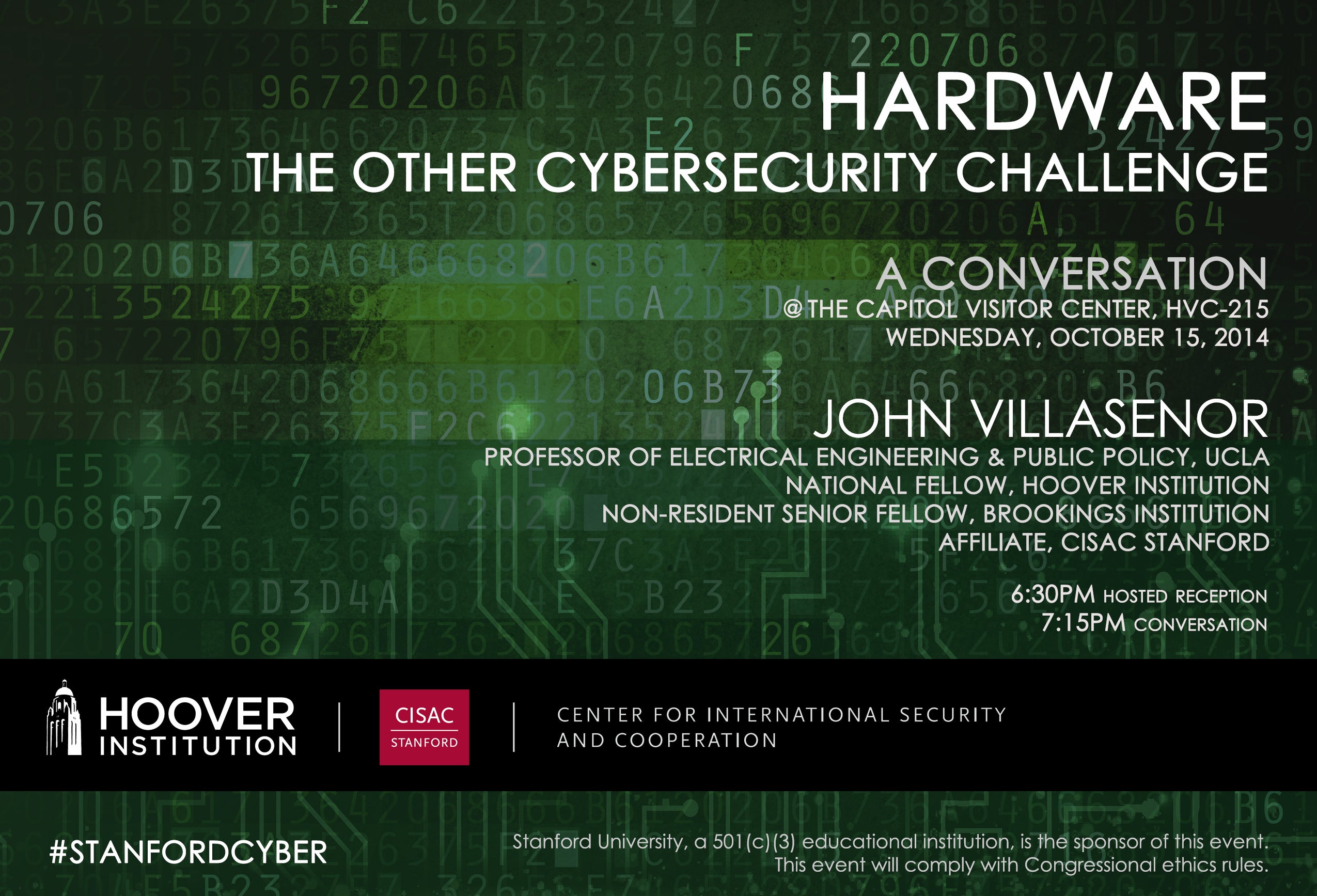
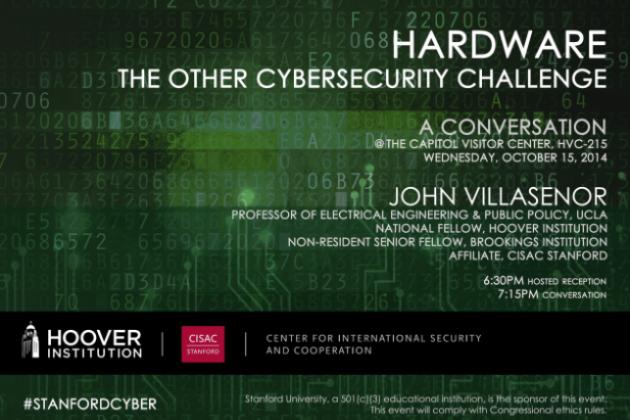
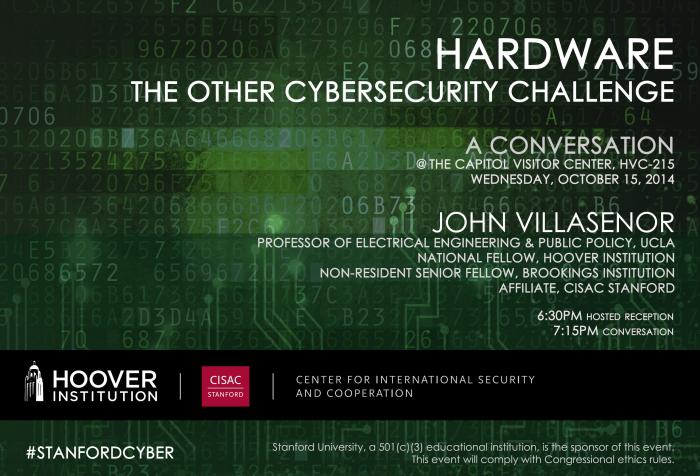
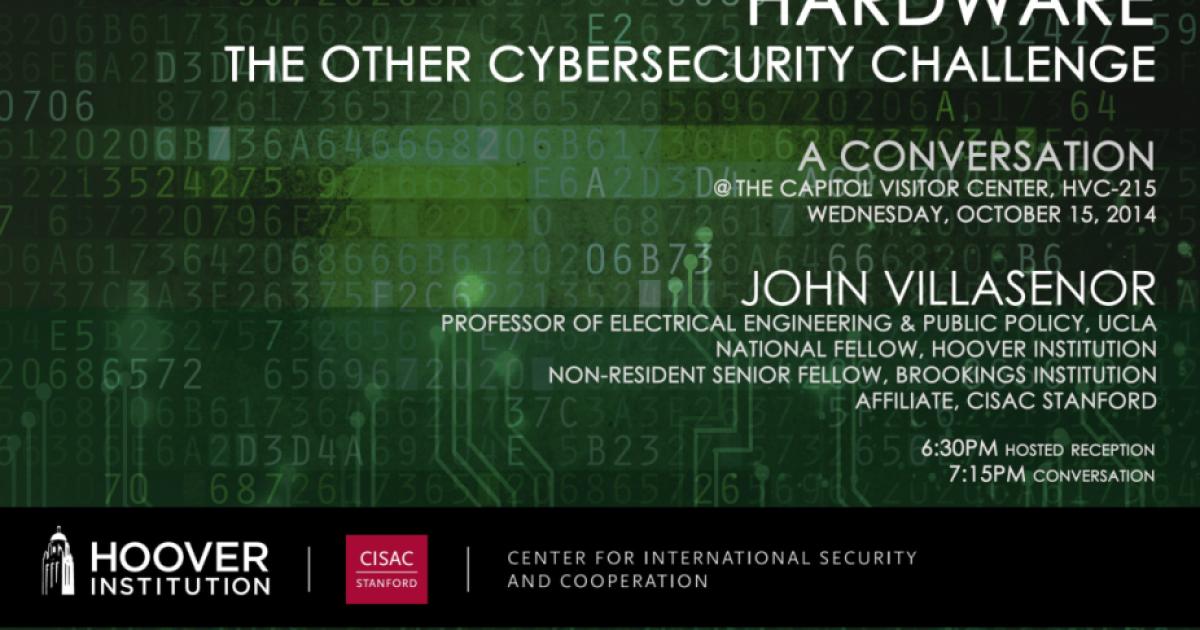
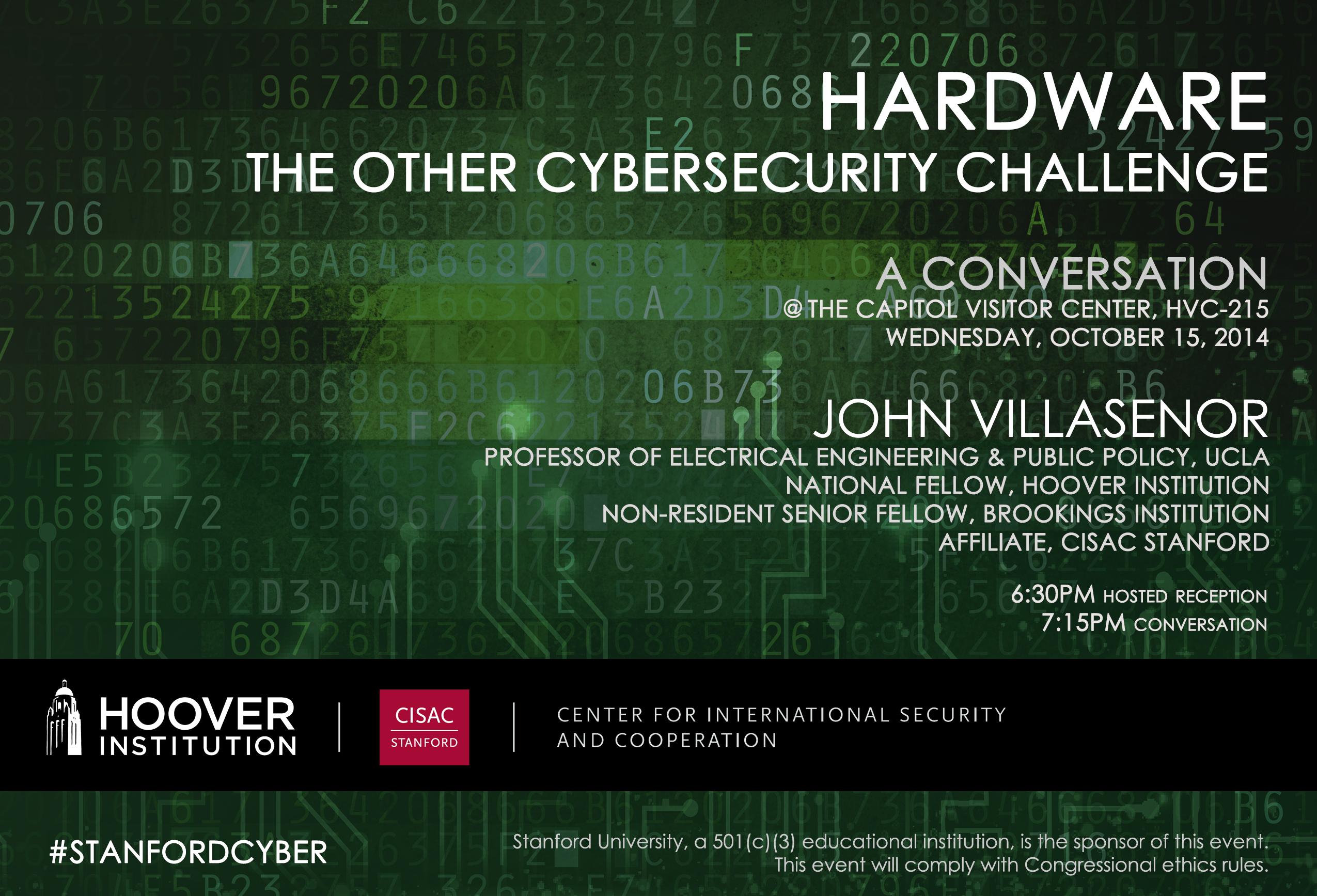
Despite the enormous amount of attention that has been directed to software security in recent years, relatively little attention has been given to hardware security. More than ever, the devices that are critical to everyday life and to the broader infrastructure are dependent on increasingly sophisticated integrated circuits ("chips"). As the complexity of chips and the supply chains involved in procuring them continue to grow, so does the risk that malicious circuity could be hidden within a chip during the design and manufacturing process. The circuitry could be triggered to launch an attack months or years later, with very significant consequences if carried out on a large scale.
This presentation will explain the increasingly global nature of the semiconductor industry and identify technology and policy steps that can be taken to minimize the likelihood of successful, large-scale, hardware-based cyberattack.
This event is by invitation only. All RSVPs should be sent to Russell Wald. There is a reception at 6:30PM, and the conversation begins promptly at 7:15.