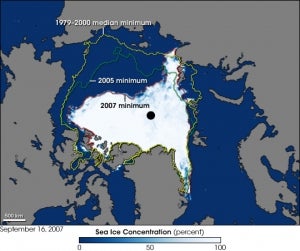
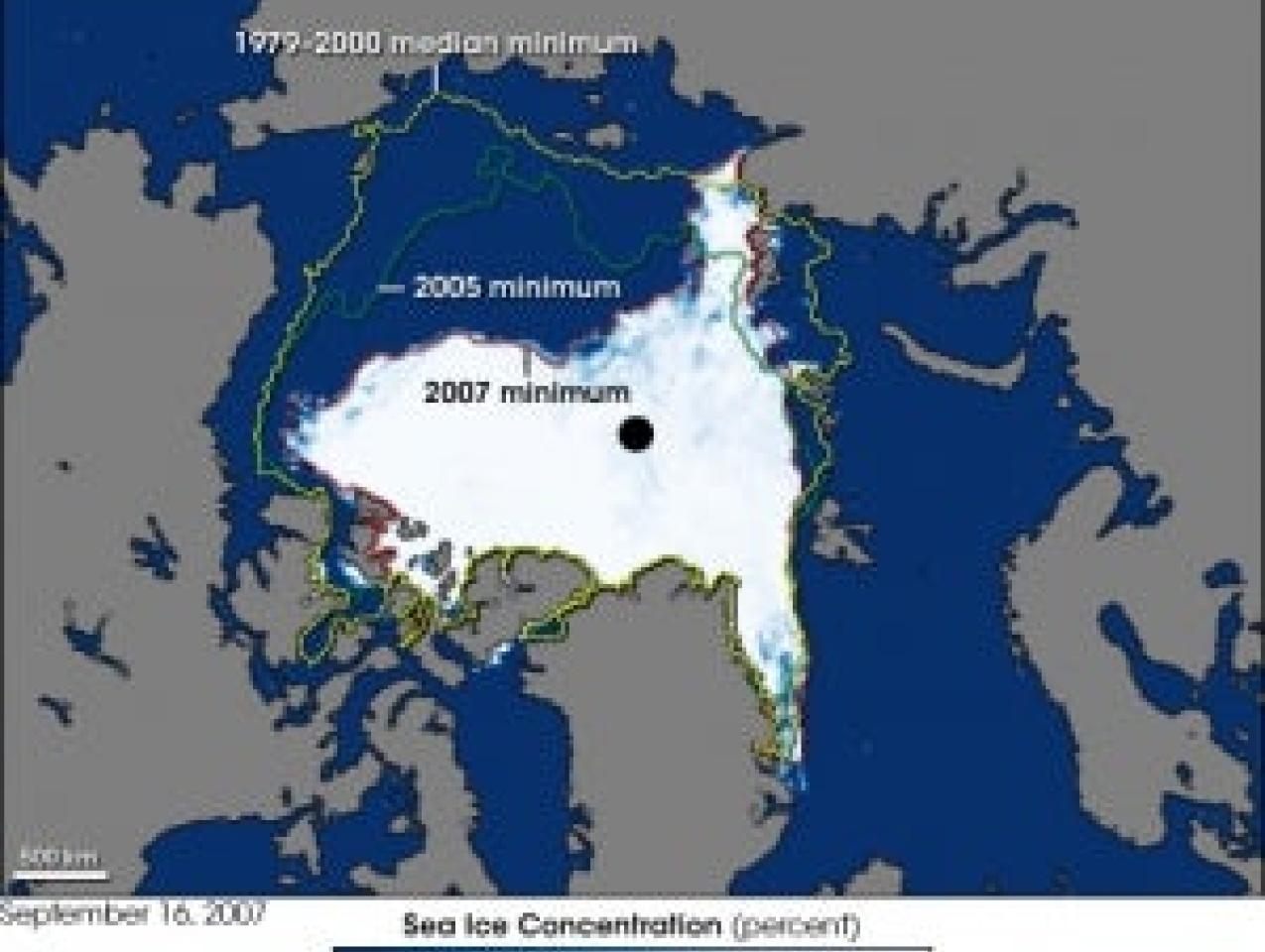
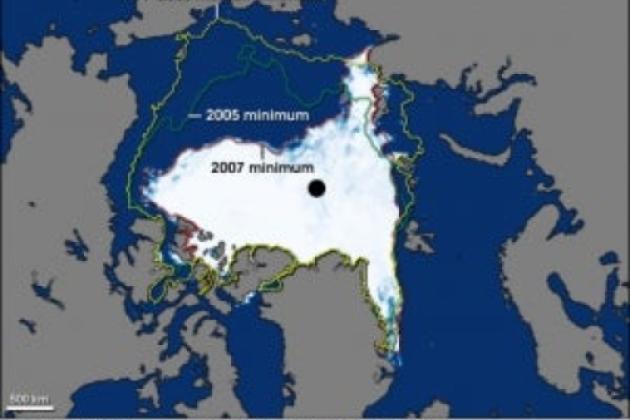
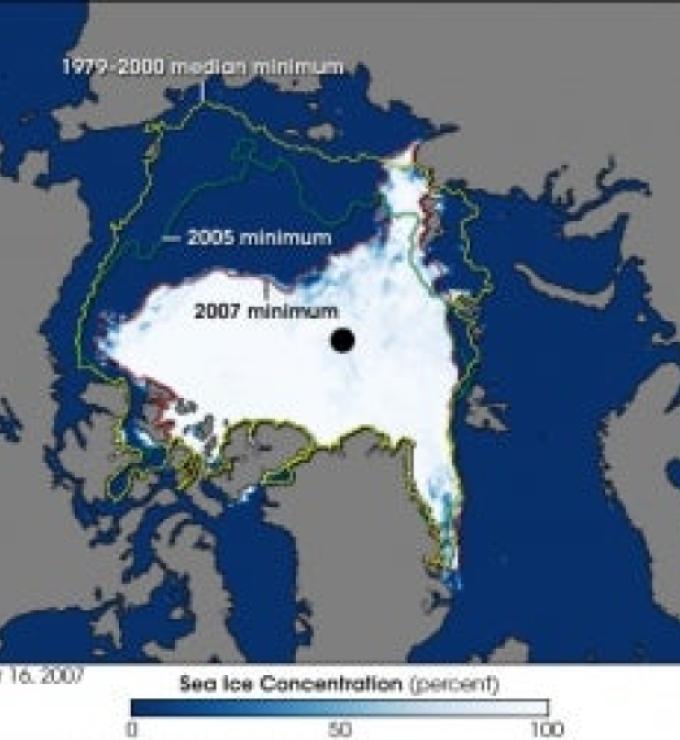
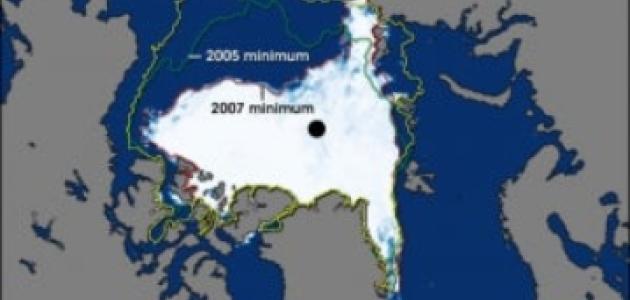
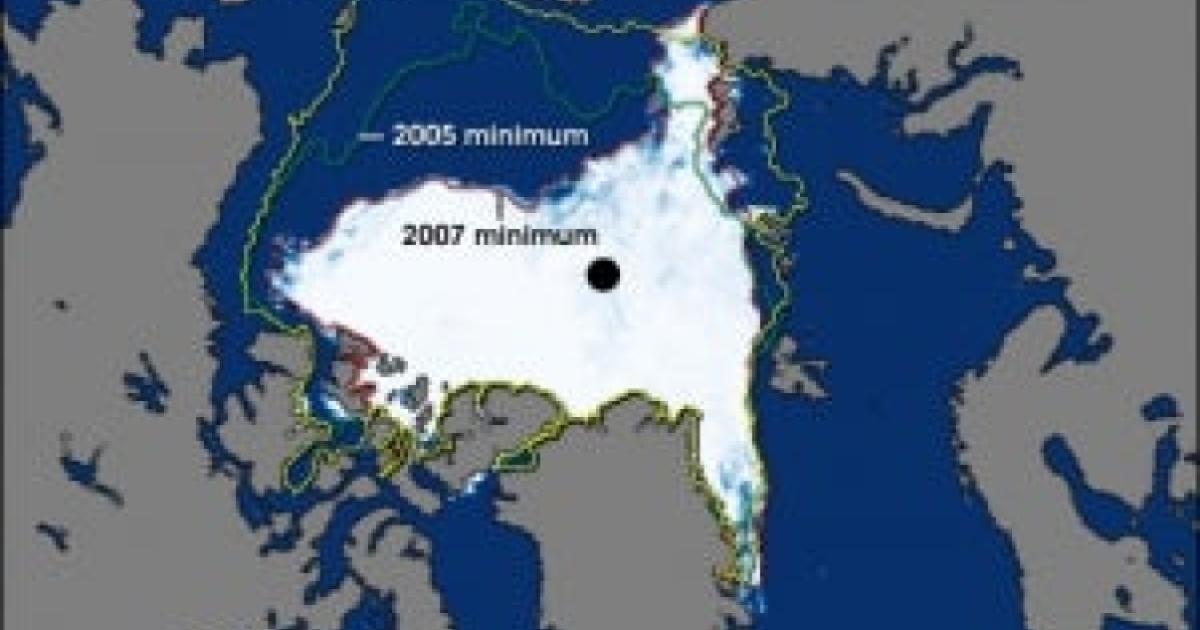
The most significant physical event on our planet since the end of the Ice Age is taking place today: the opening of the Arctic. Activity in the high north will increase. Fish stocks will migrate, and pursuing fishing fleets will thus move farther north. Access to natural resources will expand. New maritime shipping routes can reduce shipping times and costs and accelerate ties among commercial centers. Indigenous populations will be affected profoundly and rapidly.
The United States, one of eight Arctic nations, will face the changes, challenges, opportunities, and responsibilities of this evolving territory. Although access will increase, the region will remain a challenging place. The past year recorded the least amount of ice coverage and the stormiest on record. Only a small percentage of the Arctic has been surveyed; thus navigation and communications systems, commonplace in other regions of the world, are absent or spotty. The physical infrastructure to support resource extraction, commerce, environmental response, and inevitable search and rescue operations is scarce. Our US Coast Guard and Navy, stretched thin by other obligations and significant budget constraints, must now add the high north to their areas of operations. Legal schemes for the new maritime transit routes are evolving; the basis for addressing resource claims and disagreements will be the UN Convention on the Law of the Sea, an agreement to which the United States is regrettably not a party. In two years the United States will follow Canada as chair of the Arctic Council, the forum that addresses issues faced by the Arctic governments and indigenous people.
Although the issues are many and not without challenge s, the interaction and cooperative tone among the Arctic states afford opportunities to open the Arctic in a safe, secure, prosperous, and responsible manner. Now is the time to approach our Arctic interests and responsibilities as an urgent and national strategic priority. The Arctic Security Initiative at the Hoover Institution is addressing that strategic priority by bringing together experts in maritime law, energy, oceanography, communications, and shipping. Hoover’s initiative has been designed to increase awareness of Artic issues and develop integrated policy recommendations to ensure a safe, secure. and prosperous Arctic.
The World Affairs Council hosted Admiral Gary Roughead for an in-depth discussion of his research and the work of Arctic Security Initiative at the Hoover Institution on Wednesday, June 12, at 7:00PM.
For more information concerning Roughead’s efforts to identify solutions for dealing with the changing Arctic, click on the following events:
Arctic Security Initiative
Arctic Solutions