



Mexico City, Mexico – As the 2026 review of the United States–Mexico–Canada Agreement (USMCA) approaches, uncertainty surrounds the future of North American trade and investment relationships. Nevertheless, senior government officials, leading scholars, and industry executives from the United States and Mexico acknowledge that it is simply not possible, as a practical matter, for the two countries to decouple from one another.
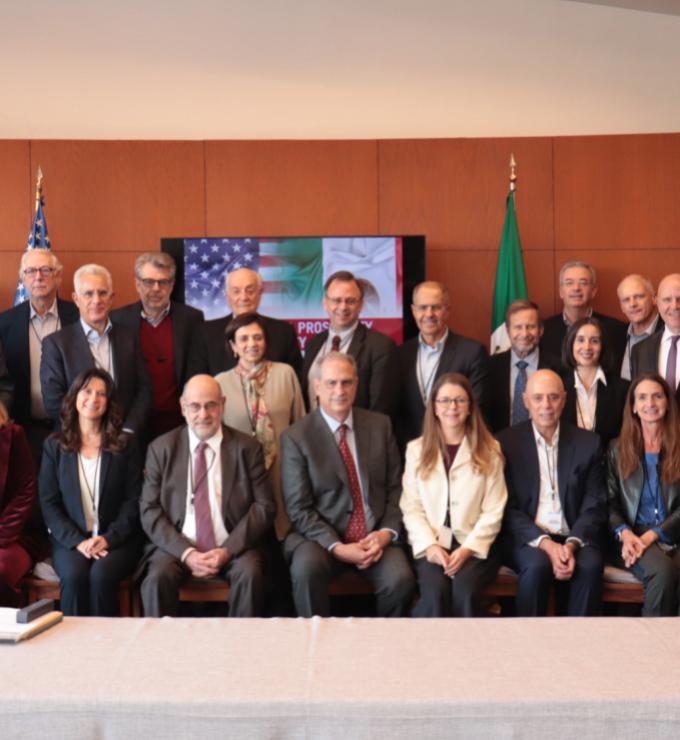
That realization shaped discussions at a recent meeting jointly convened by the Hoover Institution and the Instituto Tecnológico Autónomo de México (ITAM) at ITAM’s Mexico City campus. The Hoover delegation—led by Park L. Loughlin Senior Fellow and director of the Hoover Program on the Foundations of Economic Prosperity, Stephen Haber—offered perspectives on trade, energy, immigration, and security.
Participants focused on several challenges that will weigh heavily on the upcoming renegotiation of the USMCA. Competition with China remains a central concern for US policymakers and may encourage a freer flow of goods within North America. Mexico has agreed to some US requests designed to prevent China from using Mexico as a back door into the North American market, though additional issues are pending negotiation.
Energy cooperation remains a sticking point. Discussion at the Hoover-ITAM conference focused on the consequences of a recent amendment to the Mexican constitution which prioritizes public sector companies in that area—an action that has chilled cross-border investment, slowed innovation, and hindered infrastructure development.
Cooperation on security issues emerged as an urgent priority. With Washington increasingly focused on confronting “narcoterrorism,” participants underscored the importance of rebuilding trust and pursuing joint strategies to counter cartel activity in Mexico, rather than relying on unilateral actions.
Despite these challenges, the dialogue reflected cautious optimism. Participants emphasized that, while political realities may constrain government action, industry leaders on both sides of the border have a vital role to play in advancing market-driven cooperation.
Demographic trends across USMCA countries position the region for significant economic strength—particularly if labor mobility can be effectively harnessed. US industries such as agriculture and construction rely heavily on immigrant labor. Meanwhile, Mexico receives billions in annual remittances—primarily from the United States—which provide critical support to its poorest regions.
The strategic conversation will continue at a follow-up conference hosted at the Hoover Institution in 2026. A Mexican delegation coordinated by ITAM Provost Alejandro Hernández and Dean of Social Sciences Miguel Messmacher will join members of the Hoover fellowship and government officials to identify opportunities for deeper collaboration between the two countries.