Islamism and the International Order Working Group

Explore Research

Filter By:

Topic

Type

Author

Enter comma-separated ID numbers for authors

Support the Hoover Institution

Join the Hoover Institution's community of supporters in advancing ideas defining a free society.

Support Hoover

In the News

Expert: Fate of Copts in Egypt Uncertain

with Samuel Tadrosvia The Washington Free Beacon
Thursday, August 22, 2013

Egypt’s Coptic Christian community faces an uncertain future as widespread religiously motivated violence engulfs the country it has called home for centuries, one expert on the religious group said Thursday.

Analysis and Commentary

Excising the ‘Cancer’ in Egypt

by Fouad Ajamivia Bloomberg View
Wednesday, August 21, 2013

The knives -- or more properly the scalpels -- are drawn in the Egyptian public square. The liberal forums and the state media are suddenly filled with

Analysis and Commentary

A Coptic Monument to Survival, Destroyed

by Samuel Tadrosvia Wall Street Journal
Wednesday, August 21, 2013

No one knows exactly when the Virgin Mary Church was built, but the fourth and fifth centuries are both possible options. In both cases, it was the time of the Byzantines.

In the News

Tracing the Roots of Anti-Christian Violence in Egypt

with Samuel Tadrosvia National Catholic Register
Tuesday, August 20, 2013

Samuel Tadros, an authority on Islamic movements in the Middle East, says the persecuted minority…  

Interviews

Sam Tadros on Opinion Journal

with Samuel Tadrosvia Opinion Journal (WSJ Live)
Friday, August 16, 2013
In the News

Obama Golfs, Kerry Lectures, Egyptians Die in Droves

with Samuel Tadrosvia Washington Post
Thursday, August 15, 2013

The president has no policy for Egypt -- and the result is chaos.

In the News

The Nile Runs Red

with Fouad Ajamivia Weekly Standard
Thursday, August 15, 2013

This morning President Obama announced that he is cancelling this year’s joint military exercise with Egypt, Operation Bright Star. It’s a symbolic gesture intended to show that, should the army continue to pursue its present course, the White House may eventually decide to suspend military aid.

In the News

The Dangerous Life of Christianity in Egypt

with Samuel Tadrosvia Corner (National Review Online)
Wednesday, August 14, 2013

Samuel Tadros is a research fellow at the Hudson Institute’s Center for Religious Freedom and author of the new book Motherland Lost: The Egyptian and Coptic Quest for Modernity. A son of Egypt whose family has been active in the Coptic revival there, he talks about the unfolding events with National Review Online. KATHRYN JEAN LOPEZ: What are you thinking as you watch events in Egypt? SAMUEL TADROS: It is obviously a sad moment on a personal level. A combination of anger, sadness, fear and frustration. With the exception of my wife and daughter, all the rest of my family and friends are still there. So I am worried for them and for the direction the country is heading. LOPEZ: Not only protesters and journalists, but Churches are being attacked. Whats happening to the Coptic Christians? TADROS: Copts are facing very difficult times. They are especially vulnerable in the villages in the south of the country, where local hatreds have been brewing for decades. Even before the coup, pro-Morsi marchers had made a habit of passing through largely Christian areas, chanting derogatory slogans and writing curses on the walls of churches. In some cases, this is mixed with longstanding local tension and leads to a pogrom such as the one we saw in a village near Luxor. The Egyptian police have proven both unwilling and incapable to stop such acts and protect Copts. LOPEZ: Who are the Coptic Christians and why are they so hated? TADROS: The word Copt is derived from the Greek word for Egypt, which is itself derived from the pharaonic one, so the best answer would be that they are Egyptian Christians. The church of Alexandria was one of the pillars of Christendom in the early centuries. Monasticism was born in Egypt at the hands of St. Anthony, and Egyptian church fathers such as St. Athanasius and St. Cyril shaped what it means to be Christian. The Coptic Church did not accept the decisions of the Council of Chalcedon in 451 over the nature of Christ and has since been separated from the rest of the Christian world. It belongs to a group of churches called Oriental Orthodox, which also includes Armenia, Syria, and Ethiopia. Under the rule of Islam, Copts have fared poorly. Their numbers deteriorated throughout the centuries. Various forms of differentiation and discrimination were imposed upon them under their Dhimmi status. While most of the official restrictions against them were removed in modern times, the social aspects of Dhimmitude remain. Islamists continue to frown upon any attempt by Copts to act as equals, viewing it as an affront to Islam’s supremacy in its land. Even the liberals were largely anti-Coptic, as they viewed Coptic identity as a threat to the emerging Egyptian nationalism they were formulating. LOPEZ: In addition to the human-rights issues, why are the Copts important to Egyptian culture? TADROS: They are not a passing minority. They have been there for over 2,000 years and have contributed enormously to the country’s development. It is impossible to ignore men such as Louis Awad or Salama Moussa when one thinks of Egypt’s great intellectuals or Makram Ebeid or Boutros Boutros Ghali when one thinks of its politicians. LOPEZ: Have you tried to have that conversation with the Muslim Brotherhood? TADROS: Personally, no. Call me a skeptic on the possible transformation of the Muslim Brotherhood. Anti-Christian sentiments are at the heart of the Brotherhood’s worldview. When Hassan El Banna established his movement in 1928, fighting foreign missionaries was on the top of his agenda. The Brotherhood continues to use the most hateful language against Copts. LOPEZ: Is there any realistic hope for the future of Copts in Egypt? TADROS: It’s a tough question. I would go back to the Middle Ages and the story of Copts under the rule of Islam. You can look at those years with a sense of despair at the continuous decline of the Coptic Church, but you also see endurance. Remember, of all the great Christian centers in North Africa, only Alexandria stands. It has been severly beaten, it has been wounded, but it still stands. The last 50 years have witnessed a tremendous revival in the Coptic Church and the church is flourishing outside the boarders of Egypt.

Interviews

Fouad Ajami on The John Batchelor Show (19:19)

with Fouad Ajamivia John Batchelor Show
Tuesday, August 13, 2013

Guests: Charles Pellegrino, author and explorer. Kathleen Howley, Bloomberg. Fouad Ajami, Hoover. Robert Zimmerman, behindtheblack.

Pages

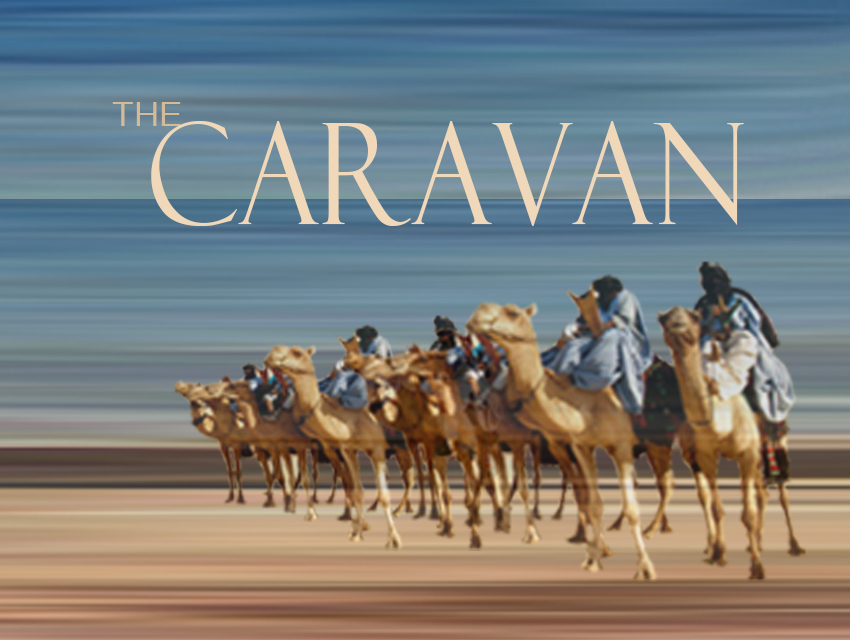
The Caravan | A Quarterly Publication


Visit the Caravan, a quarterly publication on the contemporary dilemmas of the greater Middle East.

Caravan Notebook | Essay & Podcast Platform

Caravan Notebook


A platform featuring essays and podcasts on current events to current trends in the Middle East and Islamic World.

Featured Essay Series


Featured Books

The Herbert and Jane Dwight Working Group on the Middle East and the Islamic World highlights the importance of studying both a region and a culture, while also addressing challenges outside the Middle East itself.

Chaired by Hoover fellow Russell Berman, the group draws on a wide network of scholars and practitioners, from within the United States and abroad, to support changes that enhance economic and political freedom, and foster personal liberty and rule of law—developments that are critical to the very order of the international system.


Visit The Caravan, a quarterly publication on the contemporary dilemmas of the greater Middle East.