






- History
- Revitalizing History
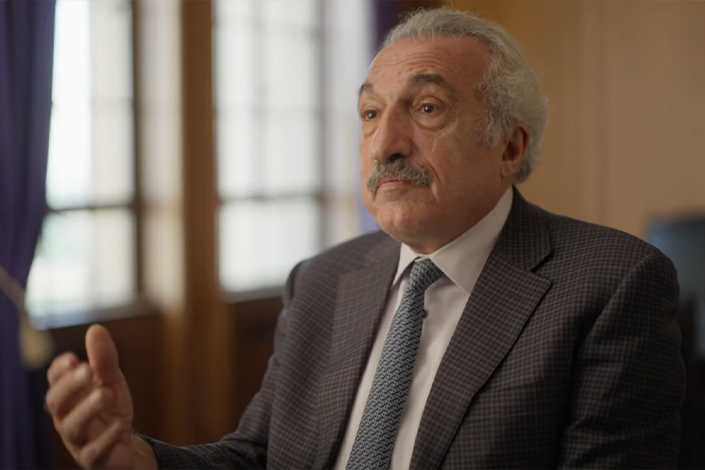
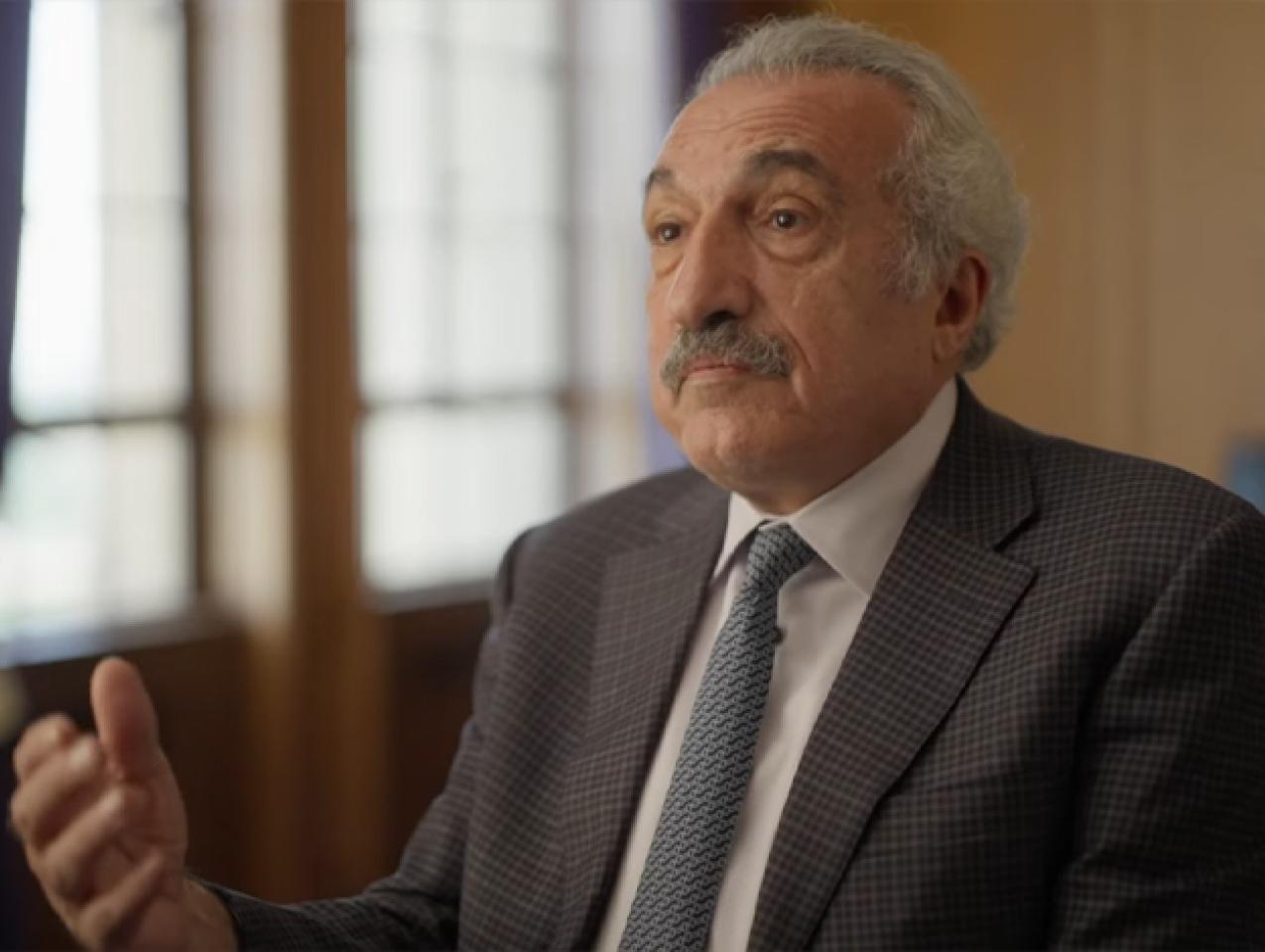
Why was August 1953 a pivotal moment in US-Iran relations? Abbas Milani, the Director of Iranian Studies at Stanford University and a research fellow and co-director of the Iran Democracy Project at the Hoover Institution, explores this topic through collections at the Hoover Institution Library & Archives and reveals why scholars have spent decades trying to figure out what exactly happened.
The Ardashir Zahidi papers are housed at the Hoover Institution Library & Archives at Stanford University. Explore the finding aid for the collection here.
WATCH THE VIDEO
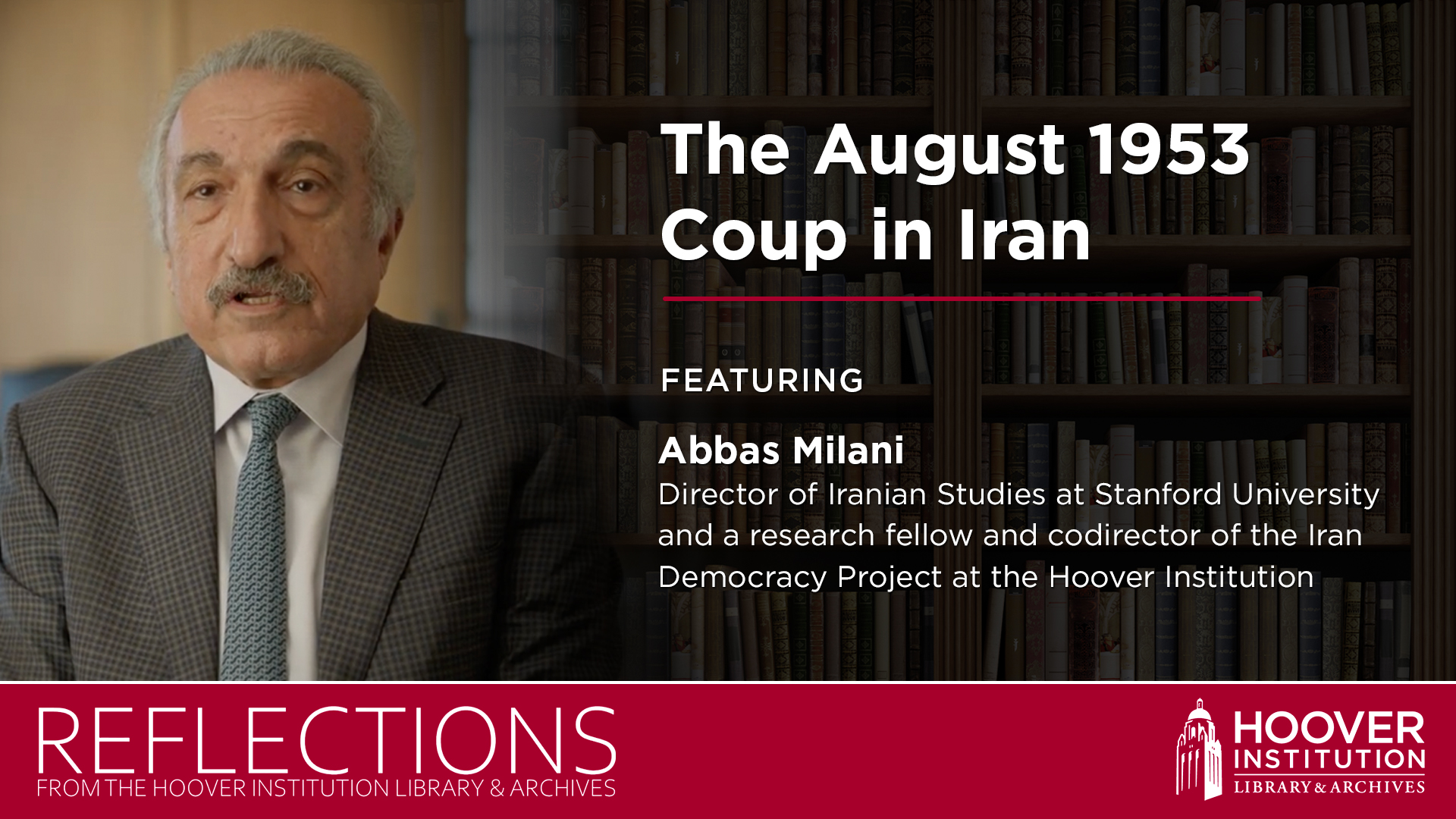
>> Abbas Milani: August 1953 is arguably one of the most pivotal moments in US Iran relations. And for almost 60 years, scholars have been trying to figure out what exactly happened on that day. I think there's something of a consensus that what happened in August 1953 is a pivotal moment not just in Iran's history, but in the U.S.
Iran relations. On that day, the government of Mohammad Al Mossadegh, the prime minister who had nationalized Iranian oil, was overthrown. Mossadegh supporters have always claimed that this was a CIA MI6 orchestrated coup. The Shah and his supporters have said that it was a national uprising trying to stop a communist incursion into Iran and overthrow an incompetent government.
For almost 60 years, scholars have been trying to figure out what exactly happened on that day. Which of these two narratives tells the more accurate version of history. Now, at Stanford, we have the Zahedi family collection of papers, which is about a million pages of one of the most remarkable and indispensable collections of documents, many of them relevant to August 53.
We have the notes of General Zahedi, who actually was the mastermind of the overthrow and became the Prime Minister for the next two years. We have some of the letters written to him, some of the notes in his office. There is a page in there in green ink that gives the names of a number of clerics, top clerics, and a number of top journalists and the amounts of money paid to them.
A BBC journalist found his way to this archive and found a copy of this document and thought he had the smoking gun that indicated that the United States, the CIA, had paid off these clergy and paid off these journalists. Answers to these complicated historical questions are never simple.
So it's the job of a scholar to come to Hoover Archive, read not just one document, but there are several hundred pages of documents about what happened on that event. Then you need to consult other documents that are relevant. There is no doubt that the US did pay some clerics.
There's no doubt the US did pay some journalists. But that doesn't explain whether that was the event that was the determining factor in the overthrow of Mossadegh. It is up to you to do the discerning work, to do the due diligence and find out the story behind each document.
These documents are primary sources, but they always speak to us through the lens of our perception. And that's why the work of scholarship is difficult. That's why it is indispensable to actually come to a place like Hoover Archive to get your hands on what are the most important firsthand clues to what happened in August 53.

