







- Middle East
- International Affairs
- Determining America's Role in the World
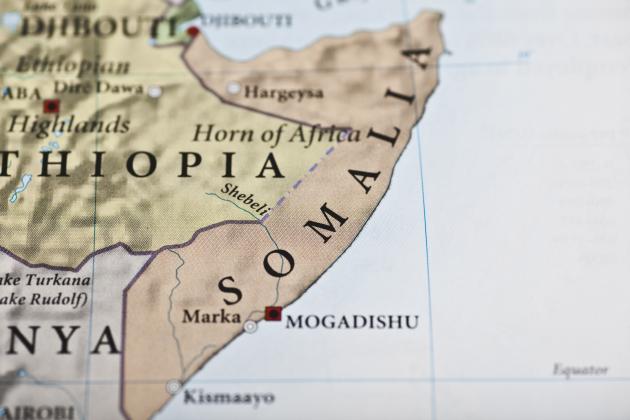
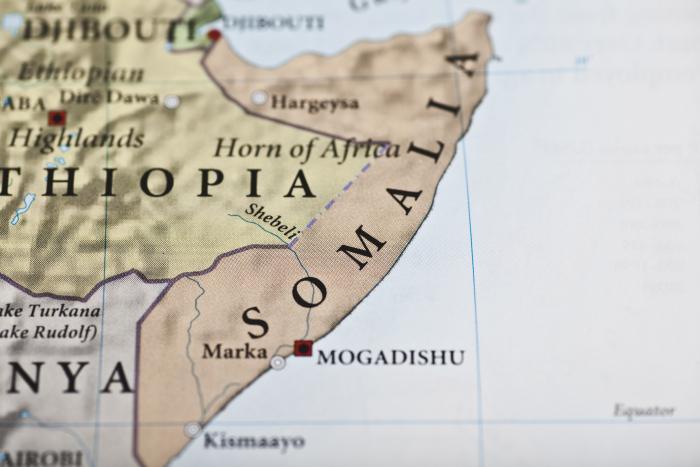
The Somali jihadi insurgent organization Harakat al-Shabaab al-Mujahideen (Al-Shabaab) has long been bolstered by recruiting hundreds of foreign fighters from outside of Somalia into its ranks, the majority of whom have come from neighboring countries in East Africa including Kenya, Uganda, Tanzania, Rwanda, and Ethiopia. In crafting its recruitment campaigns and messaging, Al-Shabaab continues to pay particular attention to pre-existing societal divisions and tensions, particularly as they effect East African Muslim minority communities. By emphasizing the “othering” of these communities and playing off of real and perceived discrimination against them, Al-Shabaab seeks to reframe these tensions into a narrative of a new “crusade” targeting the region’s Muslims, whom it seeks to convince that they have only one real choice to defend themselves and their families – join or otherwise support “jihad.” In a related messaging campaign, Al-Shabaab also actively engages in casting its regional enemies, chief amongst them the Ethiopian federal government, first under the late prime minister Meles Zenawi (1995-2012), and, since 2018, under prime minister Abiy Ahmed, of continuing a centuries-old Christian “crusade” against Somalis specifically and Islam more broadly.
Al-Shabaab’s most deeply-rooted recruitment networks are in Kenya where one of its key allies-turned-affiliates, the Muslim Youth Center (MYC)/Al-Hijra has been the insurgent group’s key facilitator there since at least 2007 when the Somali group emerged fully independent from the remnants of the Islamic Courts Union umbrella following the December 2006 Ethiopian invasion and subsequent occupation of large parts of central and southern Somalia. Al-Shabaab targets three different groups in its recruitment drives in Kenya: (1) Somali refugees living in areas such as the Eastleigh district of the capital city, Nairobi, (2) Kenyan-Somalis in the North Eastern Province who form a large segment, if not the majority, of the population in many of the northern counties, and (3) Kenyan Muslims who are not ethnically Somali. It is this third target group to whom Al-Shabaab and the MYC have long deployed “new crusade” narratives alleging that Kenya’s “Christian” government is actively persecuting and oppressing the country’s Muslim minority.
The MYC was founded in 2008 in the Majengo district of Nairobi and originally served as an informal advocate for lower socioeconomic class Kenyan Muslim youth who had become disillusioned with high unemployment and real and perceived discrimination against them. The organization expanded into other Kenyan cities, including Mombasa and Garissa, with large Muslim populations, under the direction of Ahmad Iman Ali and with the guidance of a charismatic preacher, Aboud Rogo, a pro-Al-Shabaab imam who was later murdered in August 2012 by unknown gunmen in Mombasa in an attack that many of his supporters allege was carried out by Kenyan anti-terrorism police as part of a broader campaign of extrajudicial killings.
The MYC and Al-Shabaab centered their recruitment campaign targeting Kenyan Muslim youth on events such as these killings by unknown parties of multiple controversial Kenyan imams known for their vocal support of “the jihad” in Somalia. Before his death, Rogo frequently delivered fiery sermons condemning what he alleged was blatant anti-Muslim discrimination by the Kenyan government under the administration of President Uhuru Kenyatta (April 2013-September 2022). Clips of these sermons were circulated on social media sites including YouTube and are frequently featured in Al-Shabaab propaganda videos. After he became the head of Al-Shabaab’s Kenyan branch and all of the organization’s Kenyan foreign fighters in 2012, Iman Ali has frequently warned Kenyan Muslims not to work for their country’s government and in particular the military and police because, he says, doing so would be a form of apostasy by working for a government that is actively persecuting Muslims and which is hostile to Islam itself. He has also said that the only way that Kenyan Muslims will be able to return with honor and safety to their home country is through “jihad” against their country’s government.
Al-Shabaab’s anti-Christian rhetoric was first prominently transformed into active targeting in 2014 with a series of insurgent raids in and around the town of Mpeketoni in Kenya’s Lamu County. During nighttime attacks on government offices, a police station, and a hotel, insurgents separated Kenyan Muslim and Christian villagers, executed government employees and harangued local Muslims with self-justifications for the violence. Al-Shabaab continues to separate Kenyan Muslims and Christians in attacks on major construction projects that are part of the Lamu-Southern Sudan-Ethiopia Transport (LAPSSET) Corridor Project, sparing workers who claim to be Muslim and who can recite the testament of faith, the shahada.
The deadliest single anti-Christian attack by Al-Shabaab occurred in April 2015 when four insurgents attacked Garissa University College targeting Christians as they moved from building to building, killing 148 people, most of them students. In a statement claiming responsibility for the attack, Al-Shabaab said that it was carried out in retaliation for decades of persecution and killings of Kenyan Muslims going back to the 1980s. The Kenyan government, the insurgents alleged, not content with only persecuting their own Muslims, had extended their hostile violence against Muslims and Islam into neighboring Somalia with Operation Linda Nchi, the name of the Kenyan military intervention that began in October 2010. Al-Shabaab highlighted what it said was sexual violence by Kenyan soldiers against Somali women as well as indiscriminate violence targeting civilians writ large: “…the Kenyan military has committed a countless number of atrocities against the Muslim population. With their government’s approval, the Kenyan military embarked on a series of mass killings, torture and systematic rape of the Muslim women in Somalia.” The focus on sexual violence against Somali women is a theme often repeated in Al-Shabaab’s strategic messaging; it draw on reports about such violence not only by the Kenyan Defense Forces but also by successive UN-mandated African Union peace operations missions in Somalia as well as by Ethiopia’s interventions, both by its military and the Liyu Police, a paramilitary Ethiopian-Somali police unit with a checkered human rights record.
Al-Shabaab seeks to connect modern day Ethiopia’s long-running military presence inside Somalia to historical conflicts between the Christian dynasties that ruled what is today Ethiopia and East African Muslim polities dating back to the Crusades in the twelfth and thirteenth centuries. In a two-part documentary-style film released in August 2020, Al-Shabaab’s Al-Kataib Media Foundation presented a historical narrative in which Ethiopia’s successive Christian polities from the Aksumite to the Abyssinian empires are painted as integral allies and partners of European Crusader states in the Levant during the medieval period – Ethiopia, in effect, is painted as a bastion of Crusader hostility toward Islam and Muslims in East Africa going back many centuries. To bolster its claims, Al-Shabaab deployed quotes from Sayyid Qutb, the Egyptian Islamist ideologue executed in 1966, and a senior Al-Shabaab commander, Adan Hashi Farah “Ayro,” who was killed in a U.S. airstrike in May 2008, tying modern day Ethiopia with these historical “enemies of Islam.”
The modern day Ethiopian state’s aggression towards Somalia, Al-Shabaab alleges, is a natural extension of the history of the former’s precursor states which allied with the Levantine Crusader states and, much later, with European imperial powers, chiefly the United Kingdom, to separate the Somali ethnic majority region that is today’s Somali Region in eastern Ethiopia from “Greater Somalia,” those regions in the Horn of Africa with Somali ethnic majorities. Prime Minister Ahmed’s attempts to reshape East African politics, the insurgents alleged, must be understood through this lens. Somalis and other East African Muslims must not be wooed by false promises of friendship, Al-Shabaab has said consistently, criticizing Somali politicians, including the former president of Somalia Mohamed Abdullahi Mohamed “Farmajo” (2017-2023), for allying with the head of a state which has always been, in its current form and through its precursor states, hostile to Islam and the region’s Muslims. Just as Ethiopia pursues a “crusader” regional foreign policy, so must East African Muslims respond with “jihad,” argues Al-Shabaab. The insurgent group also frequently emphasizes the Christian identities of African Union troops in the aftermath of other major attacks, including in the aftermath of its May 2023 capture of a Ugandan-manned African Transition Mission in Somalia (ATMIS) base in Bulo Mareer in Somalia's Lower Shabelle region.
Al-Shabaab’s strategic messaging and propaganda vis-à-vis Christians and Christianity in the Horn of Africa hinges on harnessing real grievances as well as perceptions that the region’s Muslim minority communities in countries including Kenya, Uganda, and Ethiopia are being oppressed by hostile Christian “crusader” governments. Holistically undercutting insurgent recruitment messaging requires addressing underlying social and economic drivers that make some youth more susceptible to it. This includes addressing unemployment as well as underemployment, improving access to education and job training/apprenticeships, and strengthening cooperation between government institutions and community organizations. Ultimately, the most effective way to counter the narratives of violent extremist organizations is to improve the lives of those members of society, in particular young men, most susceptible to messages of glory, revenge, a sense of belonging, and prosperity through political violence masquerading as a religious duty.
Christopher Anzalone is an assistant professor of security studies at Marine Corps University’s Command and Staff College and an adjunct professor of history and government at George Mason University with a Ph.D. in Islamic, African, and Middle Eastern studies from McGill University. The views expressed here reflect solely those of the author and not of the U.S. Marine Corps, Department of Defense, or any part of the U.S. government.

