











- Middle East
- International Affairs
- US Foreign Policy
- US Defense
- Determining America's Role in the World
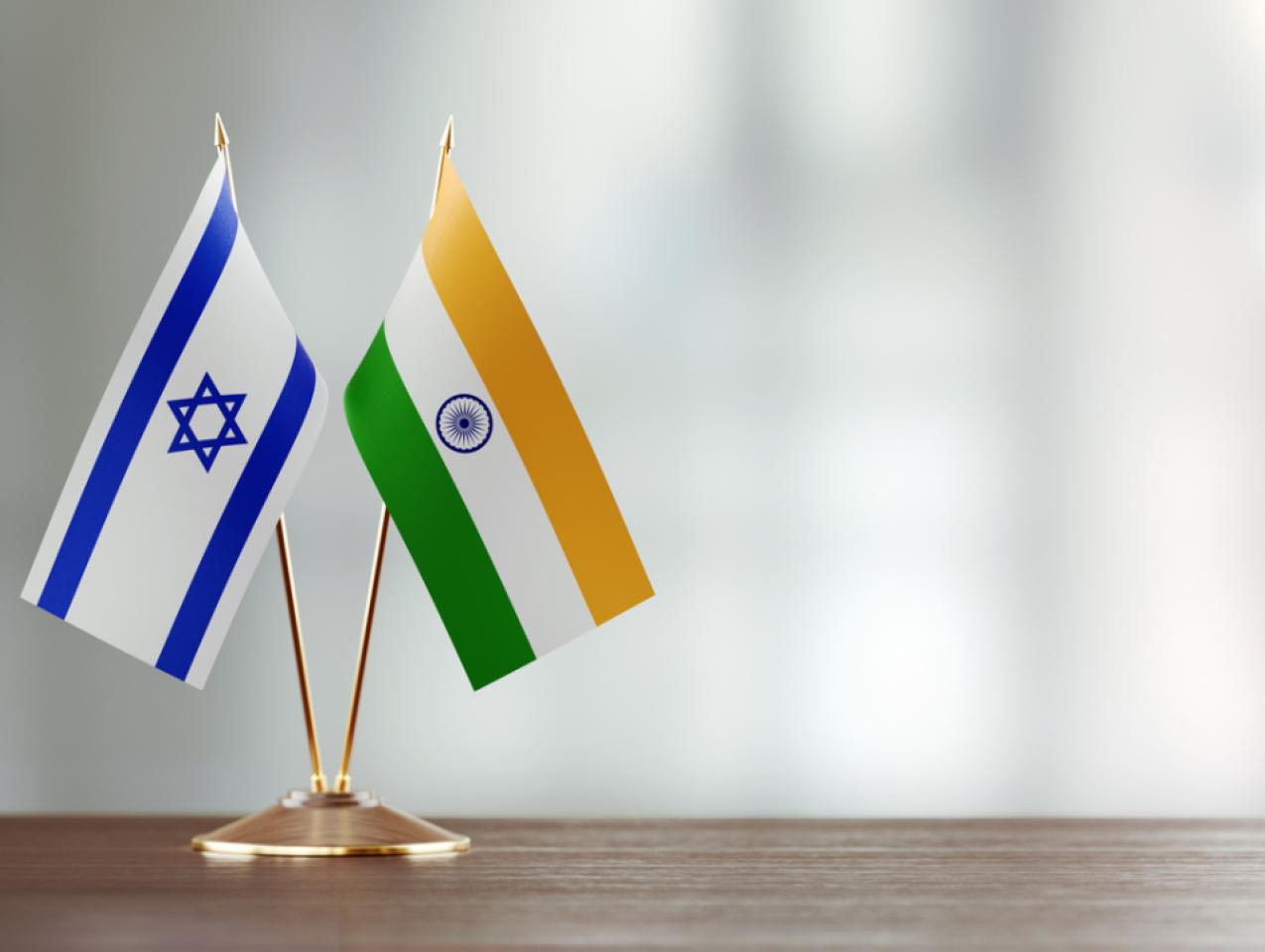
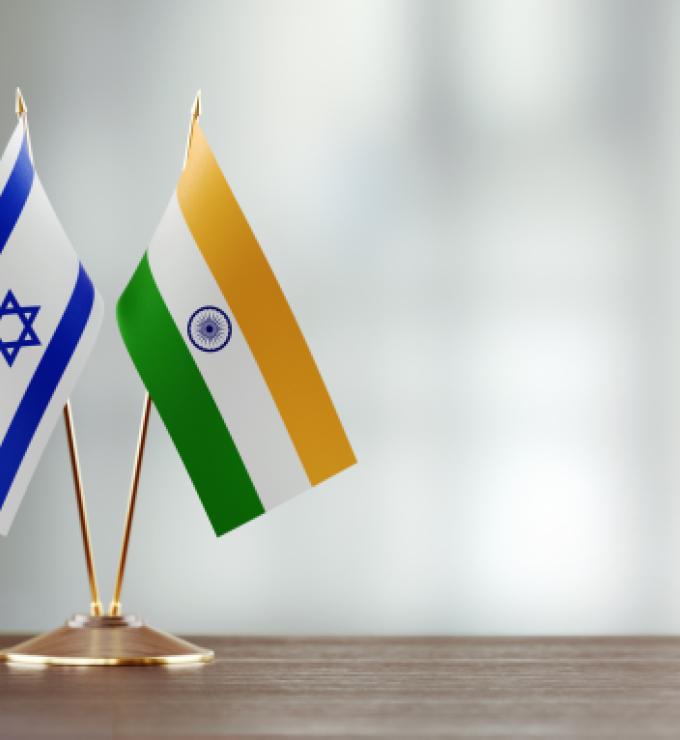
For most of their histories as independent countries, India and Israel have maintained one of the world’s most peculiar diplomatic fictions: a deepening relationship that neither side was entirely willing to acknowledge. Arms flowed, intelligence was shared, and defense cooperation quietly expanded, all while India publicly downplayed its ties with Israel. Every public gesture toward Israel was weighed against the sensitivities of Arab states, whose oil, remittances, and influence over India’s Muslim electorate imposed a ceiling on how openly New Delhi could embrace Tel Aviv. The India-Israel relationship was, in the parlance of diplomacy, built on compartmentalization.
That fiction has largely dissolved under Narendra Modi. When he became the first sitting Indian prime minister to visit Israel in 2017, it was not simply a diplomatic milestone. It was an acknowledgment that India was done pretending. Modi's decision to visit Israel without the customary stop in Ramallah—a ritual genuflection toward Arab sensibilities long performed by lower-level Indian delegations—announced a major strategic shift: India was dehyphenating. The relationship with Israel would stand on its own terms, no longer perpetually offset by gestures toward Palestinian or Arab causes.
To understand how remarkable this was, it helps to recall where India began. India’s first prime minister, Jawaharlal Nehru, was a founding voice of the Non-Aligned Movement. Solidarity with the Arab states, and particularly the Palestinian cause, formed a cornerstone of India’s foreign policy identity. Israel was recognized in 1950 but kept at a diplomatic distance for four decades, a studied ambiguity designed to placate domestic Muslim constituencies while simultaneously protecting India’s relationships with Arab oil exporters and the large Muslim-majority populations of the Middle East, whose remittances and goodwill New Delhi could not afford to alienate. Full diplomatic relations were established only in 1992, after the Cold War reshuffled the geopolitical deck and the Oslo Accords provided India political cover.
What grew in the decades between 1992 and Modi's first visit was a relationship of striking practical depth beneath a surface of continued political caution. Israel became one of India's largest defense suppliers, providing weapons systems, drone technology, and intelligence cooperation that India could not easily source elsewhere. The two countries' security establishments also grew closer, particularly following the 2008 Mumbai terrorist attacks. Yet Indian officials continued to hedge, supporting Palestinian statehood in international forums and avoiding the kind of public embrace that would have complicated relations with Arab partners.
Modi changed the calculus, and subsequent geopolitical shifts in the Middle East further strengthened India’s regional strategy. The Abraham Accords of 2020 provided New Delhi the political cover to embrace both sides more openly: as several Arab states normalized relations with Israel, the longstanding Arab consensus fractured, easing the pressure on countries like India to maintain a posture of public distance. In September 2023, at the G20 Summit in New Delhi, India proposed the India-Middle East-Europe Economic Corridor (IMEC). Though officially framed as an initiative for economic development and regional connectivity, IMEC’s deeper strategic significance was the implicit normalization it represented between India, Israel, and Arab partners.
A few weeks later, on October 7, 2023, Hamas attacked Israel, killing more than 1,200 people and seizing 251 hostages in one of the bloodiest days in Israel’s history. Israel responded with force, first in Gaza against Hamas, then expanding strikes to Lebanon, Syria, and Yemen before launching a Twelve-Day War against Iran in June 2025, a campaign that broadened into a more sustained U.S.-Israeli military offensive beginning in February 2026. That offensive began just hours after Modi’s plane departed Israeli airspace at the end of his second visit.
That timing was symbolically rich. Even as Modi and Netanyahu embraced on the tarmac, the war Israel was about to escalate was one India could not fully support. India's foreign policy has always been defined by strategic autonomy, and the events since 2023 have once again forced both countries back into compartmentalization. This is because the two countries see Iran through fundamentally different lenses. Israel regards Iran as an existential threat and has spent decades lobbying its partners to treat Tehran accordingly. India, by contrast, has historically maintained close relations with Iran, valuing it as an energy supplier, a transit corridor to Afghanistan and Central Asia, and a counterweight to Pakistani influence in the region. India’s refurbishment and operation of Chabahar Port in southeastern Iran illustrates the depth of this relationship. When Israel strikes Iranian assets or pushes for maximum pressure, India looks on but does not take sides.
If Iran has become the fault line in the India-Israel relationship, Pakistan is the foundation. Here the two countries find themselves in quiet but genuine alignment. Israel has long been wary of Pakistan's nuclear arsenal—what Zulfikar Ali Bhutto proudly termed “the Islamic bomb”—and its potential to proliferate across the Middle East. India needs no convincing of the Pakistani threat. The two countries do not coordinate openly on Pakistan policy, but they share a cold-eyed assessment of the risks that Pakistan's military establishment poses to regional stability. This convergence may be the deepest structural foundation of the relationship, more durable than any arms deal and more honest than any diplomatic communiqué.
What does this add up to? Not a formal alliance, as India remains deeply allergic to those. Yet India and Israel share something more than a typical transactional defense partnership. Theirs is a strategic alignment between two states that have both spent decades as the targets of hostile neighbors, built capable security establishments in response, and learned to be unsentimental about where their real interests lie.
The compartmentalization that has long defined India-Israel relations is not likely to disappear, but will instead morph. Even if Israel and its Arab neighbors are ultimately able to normalize relations, India and Israel are unlikely to converge on Iran. The current regional war has made that divergence more visible than ever. They will, however, continue to work together across a broad range of areas, particularly with regard to Pakistan. But compartmentalization carries a cost: it prevents the relationship from developing the institutional depth and public legitimacy that true partnerships require. Modi's dehyphenation was a vital step toward honesty. The next step is to build a relationship substantial enough to survive changes of government in both countries, one based not on the personal rapport of two nationalist leaders but on the durable convergence of two nations that, for all their differences, have more reason to stand together than either has yet been willing to fully admit.
Washington should view the deepening India-Israel partnership as a strategic asset rather than a complication. India’s strategic autonomy and its enduring interests in Iran mean the two countries will not always move in lockstep, and American policymakers should resist the temptation to demand that they do. Attempts to force India into a rigid anti-Iran posture would likely backfire, straining a relationship that the United States has spent decades cultivating. The compartmentalized realism that India and Israel have practiced so effectively is not a bug; it is a feature, and one worth understanding.
What the United States can do is quietly support deeper India-Israel cooperation in areas where interests genuinely converge: missile defense, drone technology, counterterrorism, and the shared concern over Pakistan's nuclear arsenal and its potential for proliferation. These are areas where stronger India-Israel ties reinforce American strategic goals without requiring India to abandon its own. For Washington, the lesson of the India-Israel relationship is ultimately the same lesson India and Israel themselves have had to learn: that durable partnerships are built not on ideological alignment but on the patient, unsentimental cultivation of shared interests. In a region growing more turbulent by the year, the quiet, hard-headed partnership that India and Israel have built may prove more durable than the alliances made with greater fanfare.
Dinsha Mistree is a research fellow at the Hoover Institution.

