Articles
The Cake That Gerhard Baked
Disclaimer… I’m going to torture a metaphor about baking a cake, how the baker is responsible for recipe, how it turns out, and how we can’t un-bake a cake once it has been made.
October 11, 2026
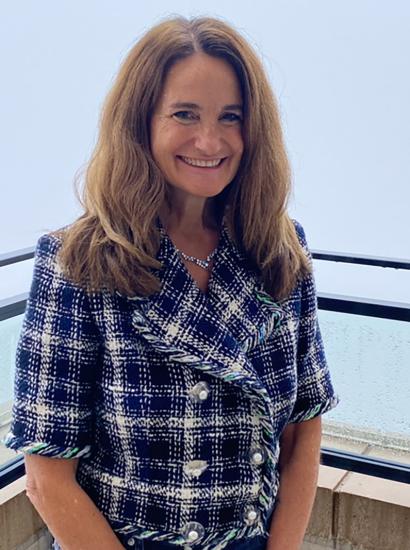
In this episode, Liz Economy sits down with Sarah Beran, a veteran US Foreign Service officer who served across six administrations, most recently as senior director for China and Taiwan at the National Security Council under President Biden. Beran traces her career from post-9/11 stints in the Middle East and South Asia, discussing how working outside of China early in her career gave her a sharper sense of how third countries assess their own interests when caught between Washington and Beijing. With experience across multiple administrations, the two touch on the contrasts between Republican and Democratic approaches to China policy, with Beran arguing that the ideal sits somewhere in between. The two conclude by looking ahead to the Trump-Xi summit and what possible outcomes we may or may not see.
Recorded on May 12, 2026.
- Welcome to China. Considered a podcast that brings fresh insight and informed discussion to one of the most consequential issues of our time. How China's changing and changing the world. I'm Liz Economy, how gross. Senior fellow and co-director of the program on the us, China and the world at the Hoover Institution at Stanford University. Today I'm delighted to welcome Sarah Barron on the podcast. Sarah is a veteran of the US Foreign Service, who's held a number of senior positions across multiple administrations, including most recently in the Biden administration as senior director for China and Taiwan at the National Security Council. She's currently a partner at Macro Advisory Partners and is a senior fellow at uc, San Diego's 20th, 21st Century China Center. Welcome, Sarah,
- Liz, it's so great to be here. Thank you for the invitation.
- Well, Sarah, I cannot imagine a better time to have you with us with all of your experience. We're right on the cusp of a summit between President Trump and President Xi less than two weeks away at this point. And I wanna get your insights into how Summitry works and what you think might be in the minds right now of the Trump administration and the Chinese. But I also wanna start just a little bit with you and your own trajectory, your own experience, because it really has been just an incredible, I think, path that you've followed in terms of your work within the foreign service and and for the US government. So let me just start by asking you, you know, you've spent virtually your entire career in the foreign service. What prompted you to join? And if you had to think back over the past two, you know, two and a half decades, what were some of the most memorable experiences that you had?
- I have been lucky to serve at just a fascinating time. Not just in US China relations, but really the shifting geopolitical strains around the world. I joined when I was 24, so I can't claim to have much of a thought out career path at that juncture in my life. I was interested in the work, wanted to live overseas. Had just finished up a couple of years working in the private sector for an American company in Beijing and had studied Chinese in college. And so I thought the foreign service makes sense. Perfect. Can focus on China. Nine 11 happened a few months before my orientation class, and I spent the next 10 years in the Middle East working Syria, Lebanon, Israel West Bank, and then Pakistan, India issues. And so it took me a full gosh, 10 years to get back to China. But I have been lucky to spend the last 15 years working US China relations. Most interesting. That is hard to say. I have been so lucky to serve in such interesting places, you know, at in the West Bank gauze at a time when the peace process actually was functioning and it seemed like there was a path towards disengagement and a two state solution participating in that shuttle diplomacy between us and both the Israelis and the Palestinians. You know, I was in Pakistan negotiating the openings and the continued maintenance of the ground lines of communication that kept our troops in Afghanistan supplied with everything from groceries to fuel to ammunition during the Afghanistan war. And then, you know, China, there is never a boring time to work China issues. And I know we'll dive into that next.
- Yeah, I mean that's incredible already. So, you know, you've already mentioned you served in, in Pakistan, you were, you know, working the Israeli Palestinian issues. I know you also served in, you know, keto. I mean, how, when you think about all of the regional experience that you've had, right, working around the world, and I just have to say as an aside, I had, you know, I was laughing when you said that you joined the foreign service, you wanted to work in China. I remember when I was finishing my master's here at Stanford degree and I went to the career fair and I stopped and I was a Soviet person. I'd studied the Soviet Union and I stopped by this, the state department's booth, they had a table. 'cause I was interested too. And, and they said, you know, here's something really exciting. You can work in Africa, you can work here. And I thought to myself, why would I want to do that? I spent all this time learning Russian and I wanted to go to the Soviet Union, but you know, they couldn't guarantee that. So when you said that you spent the first, you know, decade or so in the Middle East, I was think to myself, that's exactly why I did not join. Yes, the foreign service, although you've clearly had an amazing experience. I myself spent two years working on the Soviet Union at the CIA, so I went for the sort of straight out analytical approach. But, but anyway, it just was making me laugh that that exactly what happened to you was what I feared what happened to me. But you enjoyed it and made and made the best of it. So, so let me ask how sort of, you know, all that experience, you know, what did it it sort of bring to you in terms of when you were working on China, like how China's such a global power and, and you know, every place is engaged everywhere, but back then, what, what did all that work sort of, how did it inform the way that you thought about China?
- No, it's a really good question. Look, I think the foreign services diplomatic core of generalists and the idea is you essentially apprentice on the skills of diplomacy that you can then apply to any situation or most situations that you're in. I think what was helpful about having the frame of context of working so many different challenging issue sets before I really dove into China was that it right sized the China challenge. In some ways, the challenges we face with a whole host of partners and adversaries are tremendous and it is not based on the size of their economy, country like Pakistan or the West Bank. Gaza can pro produce just as imminent threat to national security as a country with an enormous innovative technology base like China. And so it just really sharpens the sense that the point of diplomacy is to try to navigate those challenges and rightsize them in a way that that gives you the tool sets to deal with and try to minimize the damage to national security and maximize us advantage in different situations. It also, I think, taught me that particularly, you know, in the early years of my foreign service career, China really wasn't present in a meaningful way in many of these markets or countries. And that changed over time. And I think sitting in Washington, it was often easy to think host countries or third countries were naive about the threats China challenged or presented. And in fact, that was not at all the case. It was a very naked assessment of their self-interest. And in many cases, the countries that I was serving in knew full well the dangers or the challenges presented by over-reliance on China. But they just didn't have many other options. And unless the US presented a real alternative or another, Europe presented an alternative. They were going to go with the options they had. And so countries weren't naive, they were just assessing the risks very differently than Washington did. The risk opportunity.
- I think that's such an important point because you're right, too often we don't appreciate that all of the host countries for the Belt and Road initiative, for example, have agency. Right, right. And and they, at least in part, I mean I think some countries probably didn't understand, you know, in a way that even United States might not understand, you know, what would happen when you built a road or you built a railroad and actually it didn't result in the kind of returns that you needed to repay the debt to That's right to China. Right, of course, yes. Don't necessarily, you're not always gonna be perfectly predictive in that way. But I do think it's a really important point that, you know, and also China did not go out deliberately to and trap these countries and, and get them indebted to China. These countries, you know, thought at least it was in their interest at the time that they signed these deals. So you, you know, as sort of one of your more recent positions was as the Deputy executive secretary for the Indo-Pacific at the State Department working sort of hand in glove with Secretary Blinken. So how would you think about, well first of all, what does that job even mean? Right? I'm, I am sure it's not being his secretary per se. What does it mean to be the Deputy Executive Secretary and and how would you characterize either Secretary Blinks or the state department's approach to China and how did it help sort of shape the Biden administration's China policy?
- It's a great question on the first one. What is the job? The State Department is notorious for titles that make no sense, that no one understands what they mean. It is not on purpose, it is just a function of the bureaucracy occasionally. But it was a endlessly fascinating job. I sat essentially in the same suite with the Secretary of State and his team. My job was management of the state department's operation center and then the, what we called the line, which was the team of advanced officers we'd send out on rolling basis to set up the secretary's travel stops in different regions and then coordination with the Indo-Pacific bureaus. So South Asia Bureau South and Central Asia Bureau and East Asia Pacific Bureau on what their priorities were for the secretary's engagement, how they informed him of the issue sets, what decisions were elevated up for him to sign off on, and then how he engaged with the leaders and the foreign ministers of those countries. It was a fascinating time to be doing this because of course it was about midway through the Biden administration after, or right around the time of the China policy rollout when the US was really trying to boost up and repair a lot of its alliances that had been damaged not just by the preceding years, but also COVID frankly, when there was a total lockdown on travel and that face-to-face diplomacy just stopped happening. So I remember one of my first trips I was on the secretary with, on his plane, as you I know you have traveled with Secretary Raimundo and, and seen that sort of traveling circus that transports the secretary level officials around. But we were doing an around the world trip and it was, this was during the middle of the darkest period of COVID in 2021, I think late 2021, you know, invasive testing regimes, quarantines. And we were hitting seven different stops And the logistics alone were mind boggling. But aside, even aside from the logistics, just seeing that importance of showing up in these countries, despite the difficulties for those hard conversations about how you start rebuilding alliance and partnership structures, what matters, what the countries care about, what they want from the us, what the US wants from them, it really reinforced to me that there is no alternative or no replacement for showing up and doing that work in person. A phone call just does not cut it. And we know that implicitly as diplomats, but it, it really reinforced to me. The second question you asked was about foreign policy difference.
- Yeah. How, how Secretary Blinken shaped or his approach to China and how, what kind of impact do you think that had on China policy and the Biden administration's China policy?
- Of course, it's important to remember the time period with which or when the Biden administration started and that that still very much was in the depths of COVID and COVID response was top of mind repairing, you know, sources of American strength rebuilding at home. You know, the, the time and energy spent on these big investment bills as I know, you know, well the infrastructure bill, but chips as well, really trying to build focus on America first and what needed to happen at home so that we'd be in a position to compete the second piece, you know, invest, align, rebuilding the partnerships, setting back up those habits of communication with our partners and allies on critical issues ranging from technology to diplomacy, to arms control issues. And then finally the last piece of that was really the China piece. And that to me was an important prioritization of the roles or of the, of the different sets of issues that really for sources of strength, you have to start at home first, then work with your partners, and then be in, in a position really to rightsize the relationship with China. I think the one, you know, stepping back a little bit, there are differences certainly between Democratic and Republican administrations. There's a tremendous amount of, or had been a tremendous amount of bipartisan consensus on China. I would argue over the last 10 years. The differences are more, what would I say in the implementation or the feel of administrations. You know, I worked for three Republican presidents and three Democratic president, Democrat president presidents. And I'd say this holds throughout the Republicans in general tend to have a very strong view of executive authority, much more top down, big on policies on here's the general direction. And then in past instances, I think left a lot of the details to the agencies. What I noticed certainly in both Obama and Biden was a much greater focus on consensus building across agencies and coming up with a policy that everyone agreed on that often meant it took quite a while for all those inputs to be coordinated out. But it generally meant that whether you were Secretary Blinken, secretary Mundo, or you know, various other secretaries throughout the US government, you were speaking with one voice on China or on any or on most foreign policy issues. And I would argue that's incredibly important to ensure that there is one game book playbook across the USG on an issue set like China.
- Yeah, I think that is also really important. And you know, I, I for one have to say that when I read Secretary Blink in's China speech, I really felt like it defined the Biden administration policy, you know, the invest, align, and then compete. And when I worked on a speech that Secretary Raimondo gave up at at MIT, you know, we followed, to your point, we followed the exact same structure but also added in a cooperate part. Right. Because I think, I think, you know, I remember when Secretary Blinken was with Jake Sullivan when they were in Alaska, and I don't know where you who you are on that trip, perhaps
- I was working for Secretary Blinken, but it was during the COVID days when
- Ah, okay.
- Travel was quite restricted, so,
- Right, okay. It's not on that trip, but I re recall that one of the lines that said was something about we need to be in a position to negotiate from a position of strength. And I think to your point about ensuring that we have the domestic capabilities that allow us to be competitive, I just think it was a really important framing that, excuse me, I think should, should hold, you know, throughout really, right. Because these are the, I think the pillars of, you know, what could be a very successful US China policy as long as you tack on that cooperate part perhaps. That's right. That's right. At the end. Right.
- I think we have to be cognizant too that we are in a period of transition. And so the way China policy has evolved over the last 10 years, it by very nature has changed because of the differing, the sort of changing state of, of where we are. Like we've changed as a country, China has changed as a country. Yes. Relative perceptions of power have changed. And so the sort of diplomacy and the relationship has to change as well. And it will require, it's been bumpy. There are things I would have done differently in retrospect, but I think it would not be a reflection of reality to expect that it would stay the same throughout this period.
- No, absolutely. And I think that's another important point, especially when you hear, you know, a lot of people in our field say, oh, we should, you know, never have let China into the WTO or this policy, you know, of engagement just failed. That I think it really fails to recognize where we were both countries at the time, and that there was a reasonable expectation when China joined the WTO, that it would grow and change in ways that would make it act more in accord with market-based principles, or that actually the policy of engagement did achieve a certain, you know, set of accomplishments with regard to China. I mean, you know, you and I both spent, I mean, you spent more time on the ground in China, but I worked on the environment. There was a lot that changed in China as a result for the better as a result of our engagement policy. And so, so I think it's just, it is another important thing. It's, it's not that everybody that came before a certain administration was, was stupid or something. Right. It's that people were thinking through, they were in the context was quite, you know, and sometimes radically different. So, so you served, you know, also from the state department then in the Biden administration, you moved to the NSC to occupy really the pivotal position responsible for, you know, coordinating, you know, sort of focusing US policy on China and, and Taiwan, you know, what was your sort of favorite part of the NSC job? Or how did it, how did it compare to the State Department? Like were there things you liked better or things you liked less? What was sort of your, your take?
- There were very different positions. You know, I have loved almost every job I have had, not all, but almost every job I have had at state though you, we were working with the tools of diplomacy. So economic diplomacy, public diplomacy negotiations, peace negotiations, ceasefire, all of those different pieces. At the end of the day, the goal was to use discussions and statutory authorities. We had negotiations and statutory authorities to advance US interests, but very much in a foreign and economic policy space. So when I was director of the China desk under both Secretary Pompeo, under the first Trump administration, but then also for a portion of Secretary Blinken time under the Biden administration, my job was implementation. The policy was set by the White House, the direction was indicated by the secretary, and then I had latitude to figure out how to do or how to implement, you know, what the messages were that we delivered, which sanctions we might recommend, what pressure tools, what carrots, all of those pieces were part of the recommendations. But I was very much an implementer and it was interesting and it gave me, I think, a tactile feel for the action reaction function between the US and China, particularly during Secretary Pompeo's time in office, when the pace of China related actions was fast and furious and we were seeing China respond in real time, right? It, when I moved to the NSC, it was entirely different, right? I went from focused on one set of tools under the state department to essentially pulling back and seeing the full scope of what the US had in its toolbox to advance foreign policy, department of defense authorities, the ic, department of Commerce, department of Treasury, sanctions investment screening, all those different tools. And my job was to take the policy direction set by the president and then figure out which of these tools in coordination with our partners throughout the interagency, we would deploy at what time to achieve the result we wanted the other piece. So that was endlessly fascinating, led to some very long, painful interagency meetings, but I hope a better
- Result. You are
- Great.
- You know, I have to say, Sarah, you are just a spectacular, you know, China head and coordinator and leader of all the agencies in this process. So let me just put on my own say for the, that you did.
- But the other piece, which I had had zero visibility on when I was at state, but really was show thrown into sharp relief at the White House is the balancing with domestic policy and how, you know, the White House and the president had to really figure out in a given amount of, you know, given limited resources on the domestic and foreign policy side where you allocate that money, where you allocate that pressure on the hill to achieve the result you want. And foreign policy didn't always win out. In fact, it often was domestic policy that took priority. And I would argue that's the oftentimes the right thing to do. But as a foreign policy practitioner, it was really eye-opening to see the trade-offs that were needed in real time when domestic politics was added on at as, as an at an additional layer.
- Yeah. So you said some, you know, interesting things about the differences that you experienced working in sort of Republican administrations and democratic administrations in terms of the way they approach the policy making process. Let me, let me just push a little bit and, and ask, you know, whether there's anything from the Trump administration Trump won that you think the Biden administration could have learned and then vice versa, or not really vice versa, but whether you think this Trump administration should be learning something from the Biden administration, like what are the most positive takeaways would you say, from each administration that you think the other one really hasn't necessarily learned?
- You know, I think if we could find a way to blend both, we would end up somewhere in the middle of where we should actually be as the US government. And to put a point on it, you know, I think oftentimes we were designing in the Biden administration tools and approaches that the goal was to advance American competitiveness, but we were not working closely enough, if I'm honest, with industry and understanding their world and bringing in their input as part of that. And I think that hampered both ability to design those policy tools, but also the ability to really push investment and companies to lean in, to bring them into the tent and, and on the, and inside the US approach. So I think somewhere between where this admin Trump administration is and where the Biden administration was, is probably the sweet spot because there are obviously challenges with bringing industry in too close and allowing their interests to subsume US national interest, right? And you've gotta balance against those two. But I would have liked to see, I would like to see wor more close coordination on some issue sets. The other piece I'd say is, you know, I think, and this is a cliche I know, but democratic administrations often tend to study a problem for a very long time before a result is spit out. On the other end, I found the Republican administrations tend to act quickly and think later about the consequences, consequences of their actions. Somewhere between that thoughtful approach and the shoot first ask questions later approach is probably the right policy balance. And maybe in the next administration we will find it.
- Yeah, I think really both important points, I will say at the commerce department, you know, secretary Raimondo was, you know, truly, you know, just an incredible sort of advocate for working with business in, in like leveraging US business in our commercial, you know, sort of the commercial elements of our foreign policy. And we did a lot with digital skilling, you know, through the Indo-Pacific economic framework. You know, we got 14 companies, it was very easy, you know, you asked us companies, will you step up and work with us on, you know, work with us on this effort to provide digital skilling opportunities for, you know, the sort of lesser developed economies of the Indo-Pacific economic framework. And you know, out of 15 companies that we asked, I think only one turned us down. People were eager to help. And I agree with you, I think it is something that the, you know, the Biden administration could have and should have thought of business throughout the administration, not just at the Commerce Department or treasury. And I know some people like you at the NSC also thought this way, but as a whole, I think should have looked upon business and, you know, really is an integral part of our foreign policy because they're a big part of not only what they do economically, but also our soft power, right? Our brands, they're in many respects, oftentimes our best advertisements globally. So, so, but yes, I think someplace in between, as you suggest, you know, sort of thinking about, you know, national security and economic security and, and trading out export controls for, you know, revenues and chips, you know, someplace in there, there's a, a balance to be found between doing that and, and sort of keeping business a little bit more at arm's length. So catch us up to the present. You have spent the past year in the private sector advising companies, I assume, on their China strategy. What are you telling them? How do you see the sort of economic relationship now with, with China, between China and the United States, expanding contracting? Are there new opportunities for trade and investment that, that you see
- There? You know, there's a shift, a vibe shift as they would say in how many companies are looking. I think at the China market, you know, the last, I, I argue that the shift in US policy that really happened under the first Trump administration would've taken place regardless of whether it had been Clinton or Trump that won that election because US companies were so frustrated with industrial policy over capacity, some of the IP or intellectual property theft that they were pushing for a shift in approach to China. And that, I think that loss of the private sector advocating for the China market and the, you know, a stable China relations really enabled a, a pretty seismic shift on China policy towards a more competitive framework. I'm starting to see signs now of another five shift, and it's for different reasons. It's not about getting into the market for China to sell into China. I think that's challenging both because of industrial policy, regulatory frameworks and intense Chinese competition. But now it's more about, look at the innovation that is happening in the China market. How do we adapt and take advantage of that for our presence in the global market? Just acknowledgement that it is such a rapidly innovative tech space that there are lessons and types of technologies that can be taken out and really supercharge us and multinational companies operations elsewhere. How we navigate that space is going to be challenging, I think because, you know, the frameworks that were set up under the Biden administration for investment screening for technology and export controls, they're still mostly there, but they're starting to erode and nothing is really come in place and there's not, I don't think, a clear view across the US government interagency on how to approach investment or trade in this area. And so I think for many companies it is really a fraught space as they try to read between the lines, figure out what US government intentions are, how much space they ABD act, what it'll be like in another couple of years that's just in the China market. I will tell you, most of what is keeping us busy now is stepping back and, you know, this, the Iran conflict and the knock on effects to supply chains, energy, petrochemicals, green energy that are just like cascading throughout the region or creating real challenges that to me are reminiscent of the disruptions during COVID.
- Yeah, so that's a, a great segue into, you know, the summit and you know, it's a little bit up in the air. President Trump has suggested that maybe he's gonna push the summit off a bit, delay it if China doesn't do more to help open up, you know, I guess pressure Iran to, to stop shelling and laying mines going after ships as they're going through the strait of MOUs. But talk to us about the SUMMITRY process because I think it is pretty unique what happens on the US side, what happens on the Chinese side, as much as you can tell about what's going on on the China side in terms of preparing for the kind of summit that we're supposed to have again in just under two weeks.
- My past experience in Summit Prep is not, probably not a useful explanation for what is happening these days in Summit Prep. I think many of those habits or processes have been turned around. I think
- By that, by that you mean that there was a very formal process coordination among
- Agencies,
- Right?
- Right. So I would say not just in Biden, but during Trump, during the first Trump administration as well, there was an effort first to figure out what the US wanted before a leader level meeting. Second, use different channels to advance those objectives. Treasury, commerce, DOD state, essentially through those different channels, push you know, outcomes that we wanted or framings for the relationship or channels of communication, whatever it was, get buy-in and agreement and then use a presidential level summit to essentially announce the direction of the relationship or modest steps forward. Now I, I should say, I think we are long past the time of joint statements and long outcomes. That has not been the case for 10 years now. It is more about trying to maintain channels of communication across Trump won Biden and Trump two and stabilize as best you can amidst competition. So I wanna rightsize expectations for the summit, even had there been months of planning that went into it. I think now the good news is there is a channel for prep. It is secretary, our treasury secretary scent and his counterpart vice premier Holy Fang. They're both authorized to speak on the whole RA range of trade and economic issues. And I think they've had, they have some degree of familiarity with each other. Their teams know each other and they, you know, just sat in Paris I think over the last two days to talk about prep for the summit. I think that is a positive, you need a channel for prep. However, neither of those two officials are authorized to talk about national security issues. And that I would say is the, where the greatest degree of friction between the US and China is cyber operations, cross street issues, foreign policy, Iran, arms control related issues. So in our designated channel for Summit Prep, none of those issues are on the table. Now it may be, I think on the US side there is an emphasis on the president being able to walk into a meeting and figure out what he wants on the fly. You and I both know that is not how the Chinese system works. It is a very centralized system, yes, very leader driven, absolutely. But there is also a high degree of interagency authority on different issue sets. And so a vice premier that sits over the econ agencies is not going to make decisions or even recommendations on force posture or mill mill talks or cross street issues. And so we are leaving off the table most of the really thorny issues between the US and China. And my concern I think as we approach this summit in a time of great geopolitical upheaval is that we are not messaging to reduce the possibility through all the channels that are important to do so, the military foreign ministry security services to ensure that we are reducing the chance of miscommunication, accidents and misperceptions. And I, I think this new period that we're entering into the risks are quite high. And I would really advocate for additional focus on some of these national security issues to manage the relationship.
- We're just two days or so away from the summit between President Trump and President Xi. You know, just broadly, what do you think the two people are gonna discuss? What's gonna be top of the agenda for the two leaders?
- So the team now in Washington is about ready to get on the plane. I expect that this will be the first time that the president is briefed in detail on the summit and the, and the details of the meeting itself. There is always a degree of volatility that is injected when the leader learns what he's about to do when he arrives on the ground. So I caveat everything I'm about to say with that piece of it. I think to date probably most of the president's attention has been focused on the CEO delegation. We just saw the invites go out, what about 24 hours before the wheel's up? That is not a lot of time. And I mention all of this because I think it speaks to the level of focus on other issues, not just US, China at the White House right now, obviously the Middle East War going on. And that has meant that there's probably been less attention paid to the substance around the summit instead, it really is about the optics. And I think both in Beijing and Washington, both leaders are probably very focused on positive optics and need it for their own domestic reasons.
- Right. I, I agree. I think both countries are facing some significant domestic challenges and frankly some international headwinds as well. I, I think, you know, what do you think about, there's supposedly gonna be a board of trade. They've been talking about a board of investment. You know, is this enough to bring the kind of stability to the relationship that both President Trump and presidency seem to desire?
- I think it, it's only realistic to really talk about managing the relationship. We're not going to resolve the issues through this meeting or frankly any bilateral meeting between the two sides. The interests in many cases are directly opposed. And so the question is how do you manage it? How do you try to set up mechanisms that can resolve some of the tensions or at least deal with them board of trade for, you know, we've called these mechanisms many different things in the past. Comprehensive economic dialogues, strategic economic dialogue, strategic and economic dialogue. Really the iterations are he lives through the
- Wall. Yes, that's
- Right. That's right. So if the goal is to raise up certain trade irritants, try to resolve them and encourage trade in nonsensitive sectors, that I think is a positive outcome and could provide opportunities for companies seeking to sell more into China. And certainly some of the CEOs traveling with the president, whether it's Boeing or Cargill, are seeking exactly that sort of assistance. The board of investment I think is more complicated and there are probably very different voices around the president warning about the national security risks with allowing a greater amount of Chinese investment or greater range of sectors of Chinese investment here in the United States. I tend to think this one is going to really stumble in the implementation, both because of Chinese concern about the durability of any guarantee that the Trump administration can give for its investments. And then on the Trump administration side, just concern about the risks that increased Chinese investment would bring in critical infrastructure or technology.
- Yeah, and I think congress and, and you know, some local officials too probably will raise some alarm bells at the specter of, you know, Chinese investments certainly in, you know, various tech sectors, probably in the areas that the Chinese would like to invest most will be the ones that are of greatest concern for members of Congress and local officials. So one of the things you mentioned that, you know, presidents obviously, you know, had his mind elsewhere with the US action and engagement in Iran. What does that mean for the leverage, you know, everybody's talking about which side has more leverage going into the summit, and I think partially that's because we've seen so much tit for tat also back and forth on the, you know, trade side with the tariffs and export controls and investigations into, to companies. Does it matter? Is it real thinking about this leverage or can President Trump just create his own reality and, and, and actual leverage? It doesn't really much matter.
- I recall that the last meeting in Busan was a 12 out of 10 according to the president. And I think most China experts would have rated that as a pretty standard biap meeting on the margins of a multi-let. So, you know, some of the discussion of around what are the optics, what does this look like? I, I think are less relevant than to how the White House and Jon Hai choose to portray this meeting on the discussion of leverage. I found in the past, in negotiations with Chinese officials, our mo the US most powerful tool of leverage was really optics providing positive optics that showed a close relationship between the two leaders. I don't know as if this White House is using that as leverage, it seems to me that it may be that both leaders really want those positive optics. And that's unfortunate, I think because it takes away a card that the US could use in this negotiation. So look, I think the meeting will happen, there will be a positive halo around the summit that provides companies with some ability to push their issues. But at the end of this, in another couple weeks, I would argue we're probably back to the same relationship we have had for the last certainly last couple of years. Tension at times escalation, but essentially both countries would have each other in a choke hold, rare earths and, and other issues that make it much more challenging really to talk about substantial gains.
- So a fairly realistic, if somewhat pessimistic, I think, outlook on the actual likely substantive outcomes from the summit. Yes,
- But I don't wanna underestimate the importance of the two leaders meeting. I do think it is better to be talking with a partner a a country as complicated as China than not talking. So I I do really want to note that I think this is important to do to have this meeting. I think we just need to be realistic about the outcomes.
- So one last question. I, is there anything that you can think of that the administration could have done differently or any sort of area of focus that you think actually could have provided a little bit more positive momentum, you know, real positive momentum based with, you know, sort of rooted in real substance that we could have seen for this summit had, had they thought about things a little bit differently or do you think that pretty much given the overall state of the relationship that what we're gonna get is about as good as we could get?
- I think with more preparation it would have been possible to advance the ball on admittedly modest goals. But, you know, setting up an understanding on AI around safety and risk I do think is critical. And this will come as no surprise having served in the last administration, but the work we did on, you know, ensuring there's a human in loop, in the loop on the use of nuclear weapons to me is very common sense, but important for the US and China to say that I would want to see something similar. And it sounds like there will be a, some sort of mechanism set up to talk about ai, but it takes diplomacy on the back end to get that across the finish line and you're not going to have she and and Trump talking about the dangers of LLMs in great detail and reaching an understanding. And so I think this is a start. I'd want to see some, some work on the backend to actually get this across the finish line. You know, it's better to do it before a summit because the summit sort of provides the uplift and ability to seal a deal, but there's still opportunities I think after the meeting ahead of the next engagement between the two leaders. Beyond that, I'll be honest, Liz, I I think we have to be realistic in what's possible and I don't think Beijing's gonna step in in way in any big way and mediate on the Iran question. I don't think we're going to see them pull back on over capacity. I don't think we'll see, you know, fundamental change in, in cyber related issues. It's just not where we are in the relationship.
- Right. I think China's very clear about where its interests stand at this point and it's executing on those interests I think quite effectively, if not actually in service of US interests. So I always end by asking a couple of quick questions first, just if you know, you were to recommend a book to our listeners or an article on China you think you know, had a particularly important impact on you, you know about China, what might you suggest that people read?
- It's hard to choose just one. I'll give you one rule of thumb and then a couple suggestions. We had a, a book list or reading list I would send out to all the people that I worked with on China over the years and continually added new titles to that first rule of thumb. Never a book that has a dragon and an eagle fighting on it there. I
- I'm with you, I'm with you. No more Dragon. Put that to the side. No more dragon titles or anything like that. I'm with you.
- Just put that to the side, obviously all of your books, Liz,
- Obviously I, okay.
- I really, the John Pore book and it's a little bit old now, but Beautiful Country in the Middle Kingdom about the history of US China relations. Yeah. Told through a very granular sense of all the way back to the 18 hundreds. Love that book I think is a really good read. Yep. I also really enjoyed and think that it was instructive, the Party by Rich McGregor great book and really sort of unmasks some of the machinations and the raw power of the party behind a lot of the institutions that we normally deal with. And then lastly, just because it is fun to read Red Roulette by Desmond Hum, which is of course about the big housing development or apartment complex and the corruption around it. That was right down the street from where I lived in Beijing for so many years.
- Okay, great, great suggestions all of them. And I love the dragon and the eagle Point on that. You know, again, you've spent so much time in China and so much time in the US government. If there's one issue that you would say us the people in, in the United States don't know, we don't know enough about with regard to China, what would you say that is? Like something that you would really like to know that you just can't get your arms around?
- I mean, we have such a limited sense by design, by I think of how the leadership is thinking and weighing these complicated problem sets on foreign policy in particular. I would, you know, we struggled with that throughout my time in government that it is, it just creates a degree of unpredictability because it is difficult to understand some of the inner decision making within the party and within the leadership. I think the common mistake we often make as China Watchers is to mirror behavior, to expect that China will respond to a situation like the US will respond. And that is, I found true across the intelligence community, across Department of Defense and across foreign policy policy makers instead of really framing China's reactions and responses in their sort of, in how they would respond in their equities and authorities and habits.
- Right. I I think that's, that mix of understanding China's history, its culture plus, you know, the individual leaders and how they approach issues, I think is, is so important. Helping to understand, for example, the importance of Taiwan right. To mainland China or you know, sovereignty issues versus, you know, with Hong Kong. I still remember people being shocked that, that China would be willing to sort of kill the golden goose to some extent. You know, the idea that because Hong Kong was such a shining example with its stock market and you know, so much, you know, foreign investment in trade going through Hong Kong, but the, but not understanding that politics trumps all, no pun intended there, but you know, when it comes to sovereignty issues, I think that was a mistake that I think a lot of us policy makers Yeah. Made when they thought about the tools at the US disposal when it came to trying to protect Hong Kong through things like the, you know, us, the human rights and de Hong Kong human rights and Democracy act, which, you know, was well intentioned but was not going to achieve its aims, I don't think,
- You know? Absolutely. And lessons for us as we look at China's increasing pressure on Taiwan, for
- Example,
- Right? And
- How absolutely
- Without the trade offs there.
- So, okay, last question. If in this moment, right, president Trump said, Sarah, I remember all the terrific work you did for me back in my first administration and for Secretary Pompeo. Tell me, what should I do about China? What do you tell him?
- I think the first thing is to know what we as the US want out of the engagement before you rush into a meeting. And I'm not saying he's rushing, he may have in his mind and communicated throughout the US government what our China policy is, but that has to be step one, what do we want out of the relationship and what is our longer term goal?
- Okay. I think that's good advice for any leader of the United States. I hope we'll all follow that. Yes. So Sarah, I want to thank you for sharing your incredible experience and your wisdom, and I very much hope, and I would say expect that at some point in the future, our country is going to be able to benefit again from your extraordinary service.
- Thank you, Liz. It's been such a pleasure.
- If you enjoyed this podcast and want more informed discussion and debate on all things China, please subscribe to China considered on the Hoover Institution, YouTube channel or podcast platform of your choice.
Articles
Disclaimer… I’m going to torture a metaphor about baking a cake, how the baker is responsible for recipe, how it turns out, and how we can’t un-bake a cake once it has been made.
October 11, 2026
Articles
Preventing a catastrophic conflict with China requires stronger deterrence, greater preparedness, and a U.S. commitment to strategic ambiguity.
October 9, 2026
Articles
Courted by China and Russia, and dissatisfied with America’s attentions, the continent awaits clarity from Washington.
October 7, 2026