







- Middle East
- International Affairs
- US Foreign Policy
- US Defense
- Determining America's Role in the World
America is a maritime nation with global interests, and the U.S. Navy is the “sine qua non” when kinetic force has to be exercised in any corner of the globe. That being the case, the UCP must prioritize the maritime domain and ensure seamless oceanic spaces in the Areas of Responsibility (AOR) of the Combatant Commanders (CC). The other domains should thereafter form the building blocks around it.
The Problem
The concept of the Indo-Pacific is now an accepted norm in U.S. strategic discourse. However, the Indian Ocean is not factored as a unified maritime space when defining the AOR of the CCs. The AOR of the U.S. Indo-Pacific Command (INDOPACOM) stretches from the west coast of the U.S. to the waters off the west coast of India. As a result, the Western Indian Ocean (WIO) which is intrinsic to India’s area of interest, falls outside the AOR of INDOPACOM, the combatant command that interacts with India. The WIO is further bifurcated between U.S. Central Command (CENTCOM) and U.S. Africa Command (AFRICOM). The littoral nations of the Indian Ocean, too, view the Indian Ocean as one composite maritime space. This trifurcation of the WIO creates “seams” in an operational maritime space.
While there would be processes for the CCs to address these seams, it is a challenge for the littoral nations, certainly for India which must coordinate between three CCs. It becomes even more important when shaping the environment during peace time where the U.S. works with allies and partners. Political geography matters. It is an irony that while on one end the Pacific and Indian oceans were seen as being interconnected, the Indian Ocean itself has been trifurcated between three CCs.
Historical Recap of the UCP
The immediate question that comes to mind is the criteria for deciding the AORs of CCs. A reading of the History of the Unified Command Plan 1946-2012 yields interesting pointers. It is seen that often a modus vivendi was arrived at to accommodate the competing demands of the services, and some cases reflect an ad hoc approach which often resulted in suboptimal solutions. The issue of “seams” in an operational maritime space came up at different points in time and indeed influenced changes to the UCP.
During the deliberations in 1961 on the establishment of the Strike Command, the CNO (Chief of Naval Operations) objected to the plan endorsed by Chairman JCS (Joint Chiefs of Staff), CSA (Chief of Staff of the Army), and CSAF (Chief of Staff of the Air Force), for integrating the Tactical Air Command (TAC) and Strategic Army Corps (STRAC), on the grounds that the inherent flexibility of naval forces would be sacrificed if assigned to a command tailored to the STRAC and TAC roles.
A Blue-Ribbon Panel was appointed in 1969 to study the organization and management of DoD including the combatant commands. It recommended “unfragmented command authority” for the unified commanders and adjustment of the PACOM (U.S. Pacific Command) area to join with EUCOM (U.S. European Command) east of Iran.
In the 1974-75 review, there were competing views between the CNO and CMC (Commandant of the Marine Corps) on one side, and CSA and CSAF on the other. In the event, Secretary Defense directed that CINCPAC (C-in-C U.S. Pacific Command) be given the responsibility “for the entire Indian Ocean to the East coast of Africa, including the Gulfs of Aden and Oman and the Indian Ocean Islands (Seychelles, Mauritius, and Maldives).
In the 1982 review, the military leadership except the CSA favored assigning the entire Indian Ocean to CC PACOM; CSA wanted the northwest portion of the Indian Ocean to be assigned to CC CENTCOM. In the event, the majority JCS recommendation was accepted, and the entire Indian Ocean was retained by PACOM.
The rationale advanced by various CNOs on UCP deliberations merits attention. In essence the view was that CC CENTCOM could not carry out his mission without the command of the seas stretching from the west coast of America. Treating the Pacific and Indian oceans as one single entity under PACOM would enhance efficiency and flexibility. There was an expectation that the demise of the Cold War would lead to defining principles for determining the AORs of CCs. That did not happen.
Current Plans for Reorganization of the UCP
As reported in December last year, the reorganization of the CCs is under consideration. One of the recommendations reportedly includes doing away with AFRICOM and CENTCOM and retaining INDOPACOM. Though there could be differing views on the merits of various facets of the proposed reorganization, the elimination of the current “seam” in the WIO in the AOR of INDOPACOM will be an important ‘first step’
The Indian Ocean Region as a Dedicated Combatant Command
Given the massive size of the Pacific and Indian oceans, the security challenges and the nature of responses predicated are widely contrasting. Further, the number of countries in the littoral that the CC INDOPACOM must engage with on myriad issues is large and could impede speedy decision-making in emergent situations. The question that the U.S. should pose to itself is whether it assesses the Indian Ocean region as a “contested space”, now or in the future. If the answer is in the affirmative, there is a strong case for the Indian Ocean region to be formed as an independent combatant command. A 2013 Congressional Research Report also flagged the Indian Ocean Region “as one AOR that could merit a separate command”.
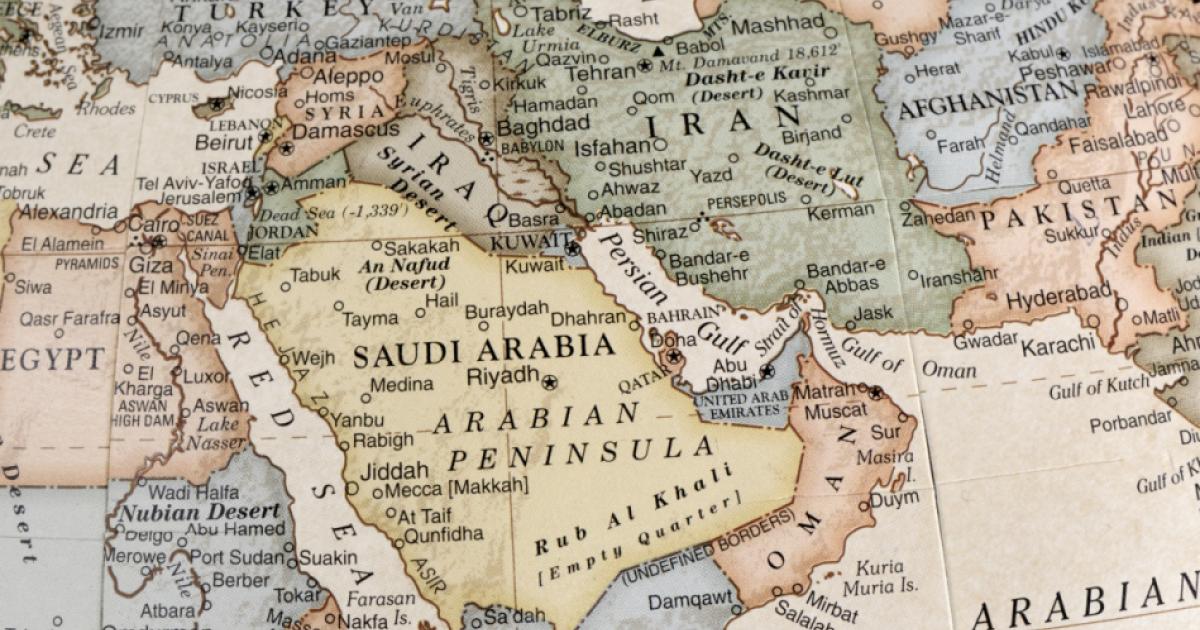
The question would arise on how the AOR of the Pacific and Indian oceans should be demarcated in the UCP. The optimum solution would be at the choke point of the Malacca Strait which eliminates a “seam” in an operational maritime space. It would lead to better coordination between the newly formed combatant command and the littorals. The responsibility for the security of the choke point itself could be assigned to one of the two combatant commands based on threat assessment and the assets available to them. The CC Indian Ocean Command should be made responsible for the Strait of Hormuz, the Red Sea and the Gulfs of Oman and Aden.
An Indian Ocean Fleet?
The proposal for an independent Indian Ocean combatant command resonates with the concept U.S. Naval War College’s Professor Derek Reveron outlined in his article Why America Needs a Four-Ocean Navy. He visualizes the Atlantic, Arctic, Indian, and Pacific oceans as co-equal theaters of American naval strategy. The article also brings out that the supporting fleets call for very different capabilities, each tailored to meet the mission sets of its theater. The Indian Ocean Fleet is one of the four fleets. Former Navy Secretary Kenneth Braithwaite had also called for the establishment of a new numbered fleet closer to the Indian Ocean and emphasized that reliance should not be placed solely on the 7th Fleet based in Japan.
Basing of the Indian Ocean Fleet
The obvious question that follows is where the Indian Ocean Fleet would be based. The bases from which the U.S. armed forces currently deploy in the region are in Diego Garcia, Djibouti, Bahrain and some other countries in the Gulf. Djibouti hosts forces from France, Japan, and China, a peer competitor, and is likely to fall short in meeting the requirements for basing a fleet. The locations in the Persian/Arabian Gulf increase risk in view of constraints placed by the choke point of the Hormuz Strait.
That leaves Diego Garcia. The U.S. military essentially uses Diego Garcia for long-range bomber operations, special forces staging, and replenishment for SSGNs, maritime reconnaissance aircraft and surface combatants. The pre-positioned ships are also based in Diego Garcia. The moot question is whether the hydrography lends itself to its further expansion to accommodate the Indian Ocean Fleet. Equally important is whether the location of Diego Garcia at a latitude of 7˚South meets the time and space demands for force deployment in the theater.
Both Bahrain and Diego Garcia have their roots in colonial Britain and were later inherited by the U.S. Of these, Diego Garcia was not developed by the British as a base as it was not required. The interests of colonial Britain were served by a string of ports stretching from Hong Kong to Singapore, Madras (Chennai), Trincomalee, Bombay (Mumbai), Aden, and Bahrain, all located above the equator. Britain also retained the island of Gan (now Addu Atoll) in the Maldives till 1976 for operations of the Royal Air Force, even though Maldives obtained independence in 1965.
A naval base takes time to operationalize. To begin with, if the land has to be acquired, it will call for the assent of the host nation which can be a challenging enterprise. Once the land rights are in place, building a new base would involve investment and time. Hence, what is of immediacy is the selection of the location for a base that could host the future Indian Ocean Fleet.
It is worth noting how China is securing its interests in the Indian Ocean. It has invested in diplomatic outreach and has a larger consular footprint than the U.S. China is the only major power with an embassy in every island nation in the Indian Ocean region that includes Sri Lanka, Maldives, Mauritius, Seychelles, Madagascar, and Comoros. The Belt and Road Initiative (BRI) has been a key enabling instrument and includes major Chinese investments in the port sector. A study by AIDDATA on China’s ports footprint and implications for future overseas naval bases shortlists eight locations where China might establish naval bases in the next two to five years. Of these, three are in the Indian Ocean. Some Chinese and outside naval experts speculate that the PLA (Navy) may have an Indian Ocean Fleet in the near future.
Conclusion
The U.S. would be well served while framing the next UCP in prioritizing the maritime domain in deciding the AOR of combatant commands. The oceanic spaces must be seamless for a combatant command. The demarcation with an adjacent combatant command could be planned at the choke point connecting them with its security assigned to the combatant command most suited for the task. An examination of the UCP since 1946 underscores the case for a seamless Indian Ocean with its island nations as a composite entity. The different mission sets and the scope of responsibilities in the Indian and the Pacific oceans predicate that each be designated a separate combatant command. The commissioning of an Indian Ocean Fleet and its basing merits early examination.
The opinions and views expressed are those of the author and do not necessarily represent those of the U.S. Government, U.S. Department of War or its components, to include the Department of the Navy or the U.S. Naval War College, and the Government of India.
Admiral (Retd) Nirmal Verma is a former Chief of the Indian Navy and High Commissioner of India to Canada. He is currently a CNO Distinguished International Fellow at the U.S. Naval War College.

