The Hoover Institution's Board of Overseers meeting in Washington, D.C.

this is an image
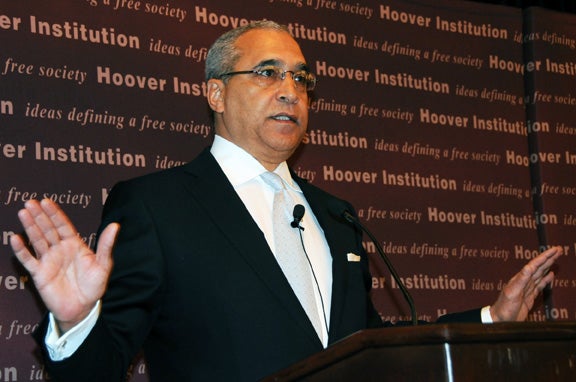
Shelby Steele, the Robert and Marion E. Oster Senior Fellow
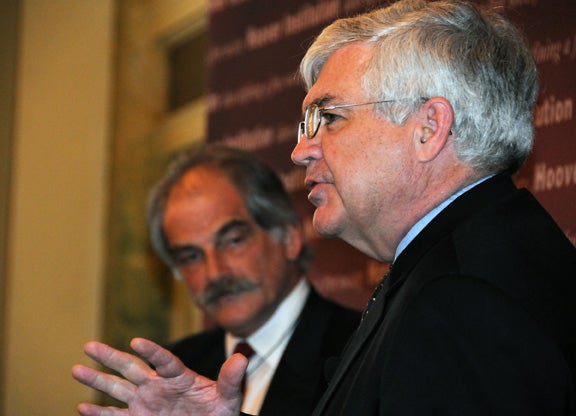
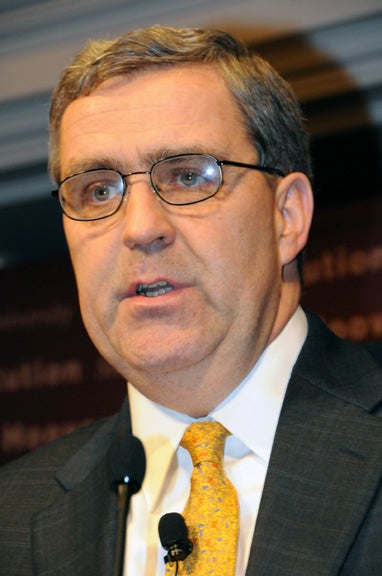
John Taylor, the Bowen and Janice Arthur McCoy Senior Fellow
John Taylor, the Bowen and Janice Arthur McCoy Senior Fellow (foreground), and John Lipsky, first deputy managing director at the International Monetary Fund. (Photo: Goodman/VanRiper Photography)
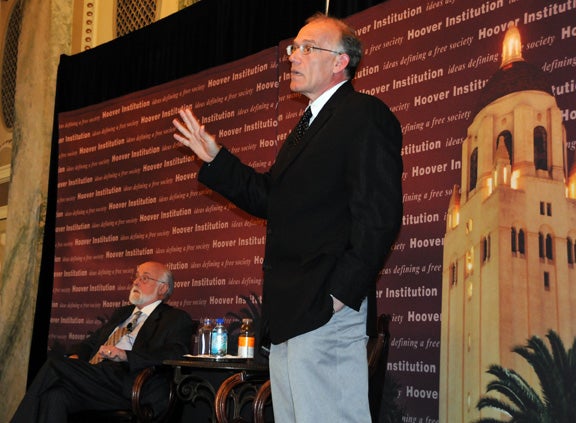
Victor Davis Hanson, the Martin and Illie Anderson Senior Fellow
Stability in the Middle East and the role of Iraq was the topic addressed by Victor Davis Hanson, the Martin and Illie Anderson Senior Fellow (standing, right), and Kenneth Jowitt, the Pres and Maurine Hotchkis Senior Fellow, in a late afternoon presentation. (Photo: Goodman/VanRiper Photography)
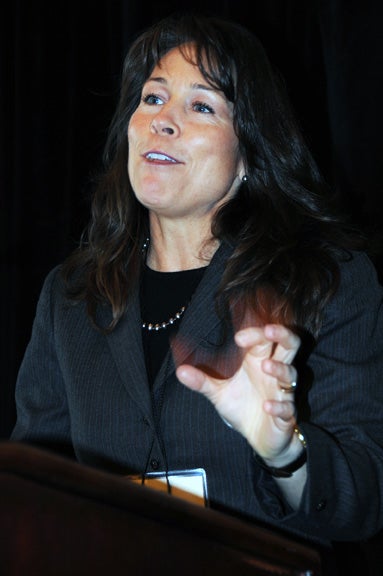
Kori Schake
Kori Schake, deputy director, policy planning staff, U.S. Department of State, and Hoover Institution research fellow (Photo: Goodman/VanRiper Photography)
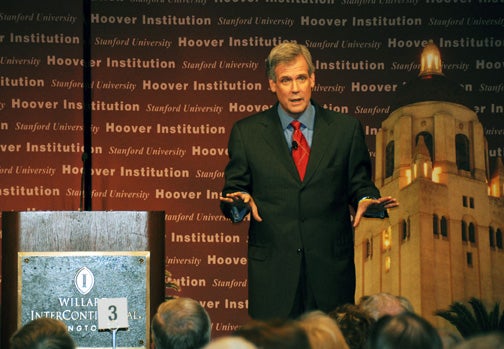
Tony Snow, White House press secretary, 2006–7
The shifting sands of the presidential candidacy season were the target of former White House press secretary Tony Snow, who spoke at the Hoover Institution Board of Overseers meeting on Monday, February 25. Offering pointed criticism for both Republicans and Democrats, Snow criticized the emphasis on personality and stale ideas from the New Deal among Democrats. He critiqued Republicans for not seizing opportunities and coming out strongly as the party for freedom. (Photo: Goodman/VanRiper Photography)
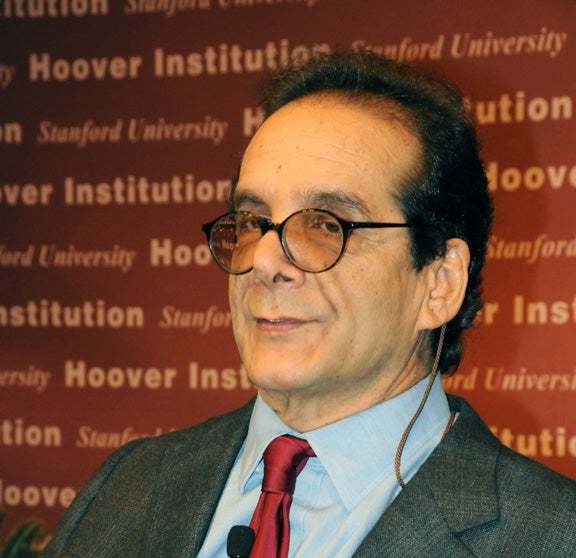
Charles Krauthammer, Pulitzer Prize–winning syndicated columnist
Charles Krauthammer, Pulitzer Prize–winning syndicated columnist, in discussing the presidential election, noted that “my job is to be the anthropologist who studies the selection of our leaders.” He identified the major issues under voter scrutiny as the economy, Iraq, the weariness of many with the Republican administration, and the difference in age between John McCain and Barack Obama, whom he believes will be the Democratic Party's nominee. Krauthammer said, “I hope that McCain will find the strength and eloquence to win the election against the formidable opponent found in Obama.” (Photo: Goodman/VanRiper Photography)
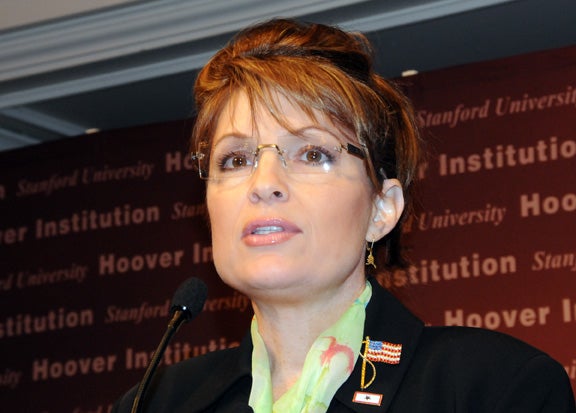
The Honorable Sarah Palin, governor of Alaska
The Honorable Sarah Palin, governor of Alaska, addressed the benefits of an Alaskan natural gas pipeline to offer clean, safe energy to the whole United States. “What we do in Alaska can help stabilize energy markets and provide safe energy,” she said. Palin noted that natural resources in Alaska are held by the residents of that state and entrusted to the state for appropriate management. Therefore, it is critical that parties involved in extracting and using those resources practice transparency, safety, and consideration of other resources. (Photo: Goodman/VanRiper Photography)
Edward Lazear, chairman of the Council of Economic Advisers and the Morris Arnold Cox Senior Fellow (on leave)
Edward Lazear, chairman of the Council of Economic Advisers and the Morris Arnold Cox Senior Fellow (on leave), presented a general picture of the U.S. economy and the economic stimulus package, which was recently approved by President George W. Bush. Although admitting that economists are not good at forecasting economic growth and change, he maintained that the stimulus package is necessary in order to develop long-term economic policy. (Photo: Goodman/VanRiper Photography)
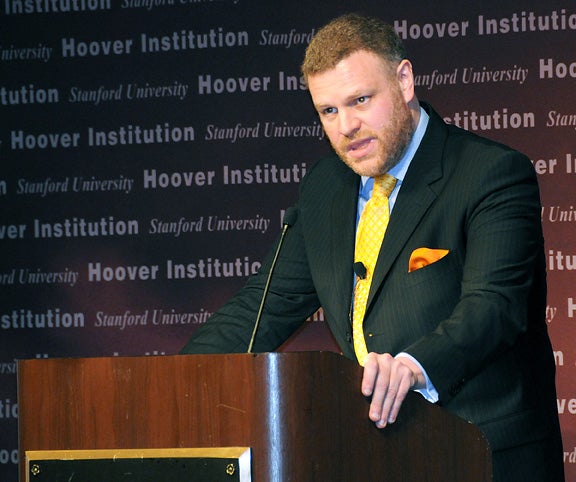
Mark Steyn, award-winning author, critic, and syndicated columnist
Mark Steyn, award-winning author, critic, and syndicated columnist, discussed the expansion of Islam and Islam extremism, during his talk at dinner on Monday night. He warned of deference to an Islam that is extreme and deplored what he called “the criminalization of vigilance” against it. (Photo: Goodman/VanRiper Photography)
Lieutenant General Douglas E. Lute, assistant to the president and deputy national security adviser for Iraq and Afghanistan
Lieutenant General Douglas E. Lute, assistant to the president and deputy national security adviser for Iraq and Afghanistan, in his presentation described the solid progress he has seen in Iraq. “Iraq has begun to operate as a national, federalist government,” he said. In the past year, legislation in Iraq has been debated, vetoed, amended, and passed to distribute oil revenues and set up[?] provincial powers, which have bolstered many of the steps forward. Grassroots groups have shifted their allegiance in outlying provinces from Al Qaeda to the United States and its allies, profoundly changing the political landscape there and in Baghdad, he said. (Photo: Goodman/VanRiper Photography)
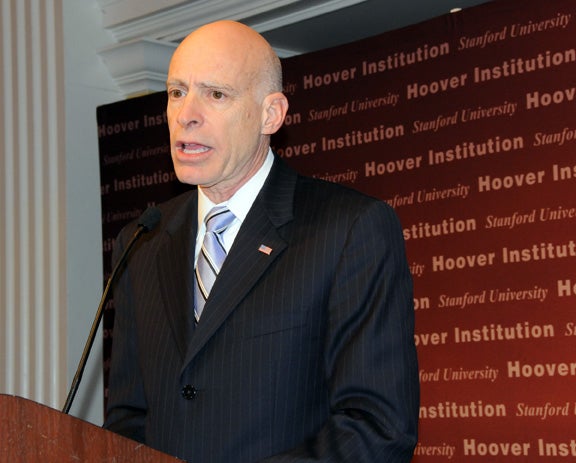
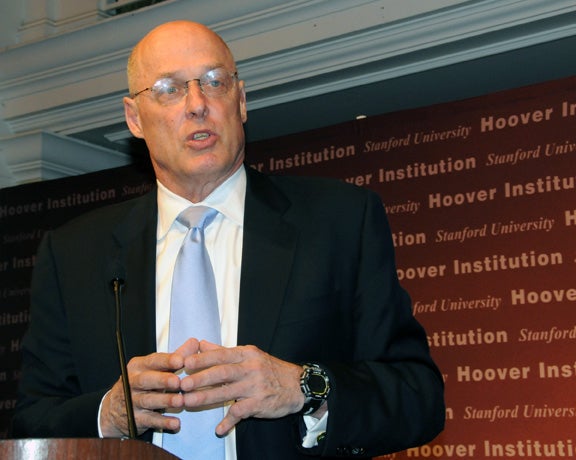
Henry M. Paulson Jr., U.S. secretary of the Treasury
The sagging housing market and drops in worldwide capital markets were the subject of comments by Henry M. Paulson Jr., U.S. secretary of the Treasury. “There's no doubt the economy slowed down at the end of the year [2007],” Paulson said. “I believe we're going to grow this year, but it will be at a smaller, slower rate than we've had.” Paulson also touched on the president's fiscal stimulus package, designed to kick-start the economy, and remarked on what he finds to be a strong protectionist sentiment among members of the public and some politicians. (Photo: Goodman/VanRiper Photography)