Bio-Strategies and Leadership | People

Leadership

Drew Endy

Science Fellow/Senior Fellow (courtesy)

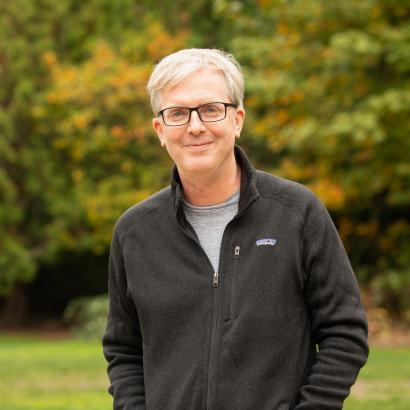
Drew Endy is a science fellow and senior fellow (courtesy) at the Hoover Institution. He leads Hoover’s Bio-Strategy and Leadership effort, which focuses on keeping increasingly biotic futures secure, flourishing, and democratic. Professor Endy also researches and teaches bioengineering at Stanford University, where he is the Martin Family University Fellow in Undergraduate Education, senior fellow (courtesy) of the Freeman Spogli Institute for International Studies, and faculty codirector of degree programs for the Hasso Plattner Institute of Design.

Professor Endy helped launch new undergraduate majors in bioengineering at both MIT and Stanford and the International Genetically Engineered Machine (iGEM) competition, which involves thousands of students annually. Endy has served on the US National Science Advisory Board for Biosecurity; the National Academies of Sciences, Engineering, and Medicine Committee on Science, Technology, and Law; the International Union for Conservation of Nature’s Synthetic Biology Task Force; and, briefly, the Pentagon’s Defense Innovation Board. He currently serves on the World Health Organization’s Advisory Committee on Variola Virus Research; the Organization for Economic Co-operation and Development’s (OECD) Global Forum on Technology’s synthetic biology task force; and the Defense Science Board’s Emerging Biotechnology and National Security Task Force. Endy earned his PhD from Dartmouth in biotechnology and biochemical engineering and has been recognized in Esquire magazine as one of the seventy-five most influential people of the twenty-first century.

Read Full Bio

Participants

Emily Clise Tully

Visiting Fellow

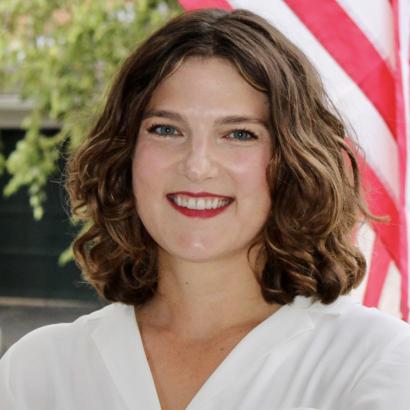
Emily Clise Tully is the Vice President of National Technology Strategy at In-Q-Tel, the strategic investor that connects the U.S. national security community with cutting-edge technology companies, and a Visiting Fellow at Stanford’s Hoover Institution, working at the intersection of national security and emerging tech. She served on the Senate Intelligence Committee, where she worked to reorient the post-9/11 national security community to America’s emerging strategic conflict with the Chinese Communist Party, profoundly shaped by technology. Emily began her career at the CIA, where she served nearly a decade writing for the president as a political analyst, completing a warzone tour, and holding leadership positions in the Director’s Area in the Office of Public Affairs and Congressional Affairs. Emily most recently was Senior Director of National Security at Ginkgo Bioworks, leading business development efforts to help the international and U.S. national security communities understand and incorporate biotechnologies. A Carnegie Mellon University graduate and proud native of Pittsburgh, Pennsylvania, she lives in Washington, DC with her family.

Read Full Bio

Richard Johnson

Distinguished Visiting Fellow

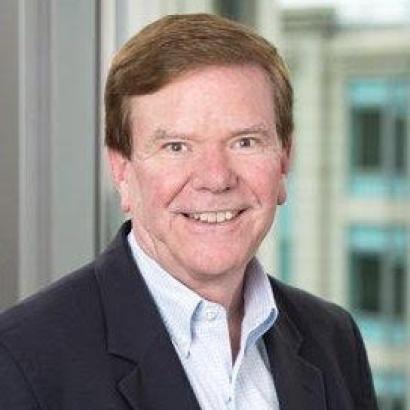
Rick Johnson is a distinguished visiting fellow at the Hoover Institution. He is a core member of the Bio-Strategy and Leadership initiative for a secure, flourishing, and democratic biofuture. He also serves as chairman of the OECD/BIAC Science, Technology, and Innovation Committee and Australia’s Synthetic Biology Centre of Excellence; cochair of the Global Forum on Engineering Biology; and member of the new OECD Global Forum on Technology and the World Economic Forum’s Global Futures Council.

Johnson’s expertise and interests are at the intersection of science, technology, and innovation policy, with a focus on synthetic biology and engineering biology and next-generation biotechnology; research and innovation policies for emerging technologies; national security; and translating pre-competitive research into impact.

Johnson is the founder of Global Helix LLC, a thought leadership and policy strategy firm for emerging technologies. He serves as a director for the iGEM Foundation, BioMADE (the US Manufacturing Innovation Institute for bio industrial manufacturing and design), the BioBricks Foundation, and the Engineering Biology Research Consortium (EBRC).

Johnson was previously a senior partner at Arnold & Porter in Washington, DC. He served for many years on the MIT Corporation Committee; on various technology and law projects of the American Enterprise Institute; as chairman of the Brown University Biology and Medicine Council; and on numerous technology, security, and innovation task forces.

He has been a member of the National Academies of Sciences, Engineering, and Medicine, serving on its Board on Life Sciences as well as numerous committees on emerging technologies, science, and security, and coauthoring several high-impact reports.

Johnson received his JD degree from the Yale Law School, where he was editor of the Yale Law Journal, his MS degree from the Massachusetts Institute of Technology, where he was a National Science Foundation National Fellow, and his AB undergraduate degree, with highest honors (Phi Beta Kappa), from Brown University.

Read Full Bio

Rear Admiral Ken Bernard

Distinguished Visiting Fellow

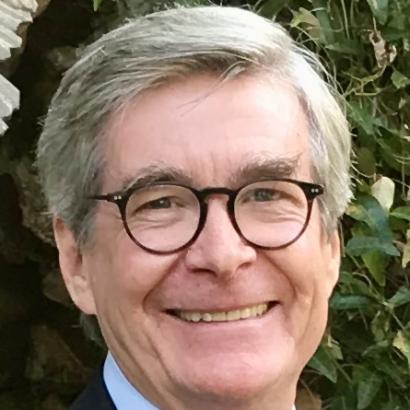
Rear Admiral Kenneth Bernard, USPHS (Ret.), is a Distinguished Visiting Fellow at the Hoover Institution, and is a member of the National Science Advisory Board for Biosecurity. He is a member of the Hoover Bio-Strategies and Leadership group.  RADM Bernard served in the George W. Bush White House as Special Assistant to the President for Biodefense and Assistant Surgeon General. After leaving the U.S. Government, he became the Senior Political Adviser to the Director-General of the World Health Organization.

In the George W. Bush White House, RADM Bernard directed policy development to prevent, mitigate and respond to chemical, biological, and radiological attacks by states or terrorist groups. Following the September 11 attacks, he created the position of Special Adviser for National Security, Intelligence and Defense for the Secretary at the Department of Health and Human Services, where he coordinated the development of an intelligence infrastructure around WMD threats.

In the Clinton White House, he was the first ever Senior Adviser for Security and Health on the National Security Council Staff, dealing with bioterrorism, smallpox, HIV/AIDS, and other threats as they affect national security. RADM Bernard served as the International Health Attaché at the U.S. Mission to the UN in Geneva and was head of the U.S. Delegation negotiating the Framework Convention on Tobacco Control. He began his career as a physician and a viral disease epidemiologist at the Centers for Disease Control.

RADM Bernard was awarded the USPHS Distinguished Service Medal, the Meritorious Service Medal, the Surgeon General’s Exemplary Service Medal, and the USPHS Outstanding Service and Commendation Medals. He also received the Secretary of Defense Medal for Outstanding Public Service and the Secretary of Defense Medal for Exceptional Public Service.  

He received his AB degree from the University of California, Berkeley, an M.D. from the University of California, Davis, a DTM&H from the University of London School of Hygiene and Tropical Medicine, is board certified in internal medicine, and is a member of the Council on Foreign Relations.

Read Full Bio

Joshua Hodges

Visiting Fellow

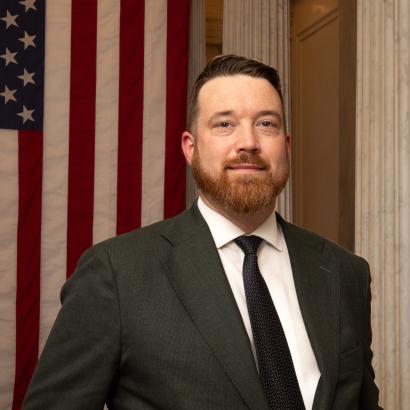
Josh Hodges is a visiting fellow at Stanford University’s Hoover Institution, where he is part of the Bio-Strategies and Leadership initiative. He is a national security and policy leader with extensive experience across the White House, Congress, the executive branch, international development, and international business. He most recently served as national security advisor to Speaker of the House Mike Johnson, where he shaped congressional priorities in response to multiple global crises, including support for Israel, countering expanding Russian aggression, US-China strategic competition, and security threats from the southern border.

Previously, Hodges was special assistant to the president and senior director for Western Hemisphere affairs at the National Security Council, where he guided US engagement across Latin America and the Caribbean during the first Trump administration. There he also held senior positions in strategic communications and information statecraft, advancing US messaging and influence initiatives.

In addition to his government service, Hodges brings international business and development expertise to his work. He currently serves as a commissioner on the US-China Economic and Security Review Commission and is a member of Anthropic AI National Security and Public Sector Advisory Council, helping shape the intersection of national security and emerging technologies. He also serves as senior advisor to the chairman of the board of VEON, an international telecommunications and digital services provider to East Asia and Europe.

Read Full Bio

Mike Kuiken

Distinguished Visiting Fellow

Mike Kuiken is a Distinguished Visiting Fellow at Stanford University's Hoover Institution and serves as Vice Chair of the U.S.-China Economic and Security Review Commission.

In the private sector, Mike is the Managing Member of Silver Valley Strategies, where he advises founders, CEOs, and investors on geopolitical and government strategies. He is an advisor to the Special Competitive Studies Project (SCSP) and a member of Anthropic's National Security and Public Sector Advisory Council. He serves on the boards of the National Defense Industrial Association and the Planetary Science Institute. His writing has appeared in the Financial Times, Newsweek, and the Boston Globe.

Mike previously served as Senate Majority Leader Schumer's National Security Advisor. He was a 'Gang of Eight' staffer for over seven years. He architected the legislative strategy to pass the CHIPS and Science Act and played a key role in establishing the Senate's Artificial Intelligence Insight Forums. Prior to the Leader's office, Mike spent over a decade on the Senate Armed Services Committee, a career that began with the late Senator Carl Levin.

His work has spanned the most consequential challenges of the post-9/11 era—from the wars in Afghanistan and Iraq to today's strategic competition with China. He has shaped U.S. responses to the Arab Spring, Russia's invasion of Ukraine, economic statecraft, and strategic cyber competition, working on the ground in over 85 countries to bring a frontline perspective to national policy.

Mike earned his B.A. in Political Science and Economics from Calvin University and his M.A. in International Commerce and Policy from George Mason University.

Read Full Bio

Research

Abdias Diaz-Rosado
Research Fellow
Abdias Diaz-Rosado
Research Fellow
Timothy Chu
Research Fellow
Timothy Chu
Research Fellow

Program Staff

Jacquelyn Johnstone
Assistant Director for Institutional Programming
Jacquelyn Johnstone
Assistant Director for Institutional Programming
Sarah Moront
Senior Research Program Manager
Sarah Moront
Senior Research Program Manager
overlay image