







On May 12, 2026, the Hoover Institution will host its fourth annual one-day conference on Markets vs. Mandates: Promoting Environmental Quality and Economic Prosperity. As in previous years, the conference will compare and contrast how markets and regulations can best resolve tradeoffs among environmental concerns, economic growth and individual freedom. This year’s theme is Technology, Trade, and Entrepreneurship. It will highlight successes and failures of U.S. institutions in promoting effective environmentalism.
Sessions will assess environmental effects of tariffs and trade bans as well as shifts from federal to state regulations. Speakers will also evaluate the effects of AI on energy demands and the potential for AI to improve measurement and monitoring of environmental goods and services. Refreshments will be served after the conference to give the audience and presenters time to mingle. The conference is open to the public and registration is required.
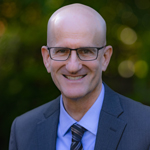
Arik Levinson is a professor of economics at Georgetown University and a research associate at the National Bureau of Economic Research. He is currently an editor of the Journal of the Association of Environmental and Resource Economists. He served as deputy assistant secretary for climate and energy economics at the US Department of the Treasury from 2022 to 2024 and as a senior economist at the White House Council of Economic Advisers from 2010 to 2011. Levinson’s recent projects assess the efficacy of subsidies for electric vehicle charging stations and evaluate methods of calculating carbon emissions caused by grid-connected electricity use.

Barton “Buzz” Thompson, a global freshwater expert, is the Robert E. Paradise Professor of Natural Resources Law at Stanford Law School and professor of environmental behavioral science at the Stanford Doerr School of Sustainability. He was the founding Perry L. McCarty Director of the Stanford Woods Institute for the Environment, where he remains a senior fellow and directs the Water in the West program. He is the author of multiple books and articles about effective management of natural resources, including Liquid Asset: How Business and Government Can Partner to Solve the Freshwater Crisis (Stanford University Press, 2024).
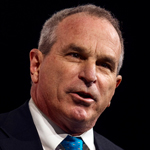
Robert Bryce, an author, journalist, and film producer, has been writing about energy, power, and politics for four decades. He is the author of six books, including A Question of Power: Electricity and the Wealth of Nations (PublicAffairs, 2020). He has given nearly 600 invited or keynote lectures to groups ranging from the Marine Corps War College to the Sydney Institute, as well as to a wide variety of associations, universities, and corporations. Bryce has also produced several energy-focused films, including his new mini-documentary, “The Data Center Backlash.”
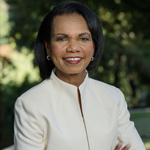
Condoleezza Rice is the Tad and Dianne Taube Director and the Stephenson Senior Fellow on Public Policy at the Hoover Institution. She is also the Denning Professor in Global Business and the Economy at Stanford’s Graduate School of Business and a founding partner of international strategic consulting firm Rice, Hadley, Gates & Manuel LLC. Rice served as the sixty-sixth US secretary of state (2005–09) and as national security adviser (2001–05) in the George W. Bush administration. She previously served on President George H. W. Bush’s National Security Council staff and as Stanford University’s provost. She has been on the Stanford faculty since 1981 and has won two of the university’s highest teaching honors. Rice is a fellow of the American Academy of Arts and Sciences and has been awarded more than fifteen honorary doctorates. Born in Birmingham, Alabama, Rice earned her bachelor’s degree, cum laude and Phi Beta Kappa, from the University of Denver; her master’s degree from the University of Notre Dame; and her PhD from the Graduate School of International Studies at the University of Denver, all in political science.

Dado Slezak joined QTS in 2024 after a decade in digital infrastructure private equity and serves as the company’s Executive Vice President of Energy Capital & Strategy. Dado oversees QTS’s energy strategy as well as the underwriting and execution of investment opportunities. Prior to QTS, Dado was Managing Director at Astatine Investment Partners overseeing and executing on global investments primarily in digital infrastructure and essential services. Dado earned an M.B.A from the Kellogg School of Management at Northwestern University and a Master’s degree from Harvard University.

Dominic Parker is the Ilene and Morton Harris Senior Fellow (adjunct) at the Hoover Institution, where he codirects the Renewing Indigenous Economies and Markets vs. Mandates for the Environment projects. He is the Anderson-Bascom Professor of Applied Economics at the University of Wisconsin, Madison. Parker’s expertise is in the economics of development, natural resources, and environmental policy with a focus on the role of property rights, rule of law, and governance.

Grant Canary is the founder and chief executive officer of Mast Reforestation and its nursery subsidiaries, Silvaseed and Cal Forest, which together form western America’s largest vertically integrated reforestation company. He has focused his entire career on sustainability—working at Vestas wind energy in China, the United States, and Denmark and for the US Green Building Council in its infancy. He spent close to a decade founding and building a prior company in Bogotá, Colombia, that utilized food waste to feed insect larvae for use as industrial fish feed. Canary attended Occidental College in Los Angeles and followed with a master’s degree at Politecnico di Torino, Italy, and then Universidad de la Sabana in Bogotá.

Holly Fretwell is a visiting fellow at the Hoover Institution, contributing to the Markets vs Mandates project and the Enviropreneur Fellowship Program. A conservation economist, she studies how institutional design, property rights, and economic incentives influence environmental outcomes. She has brought this expertise to Congress, testifying on the state of the national parks, recreation fees, and federal forest management.

David Fedor is the Stephenson Policy Fellow at the Hoover Institution, where he supports fellowship research within the George P. Shultz Energy Policy Working Group; Hoover’s national security–oriented Global Policy and Strategy Initiative; and the joint Hoover–Asia Society Working Group on Semiconductors and the Security of the United States and Taiwan. For nearly a decade, Fedor served on the Hoover staff of former US secretary of state George Shultz. Formerly at Asia-Pacific Economic Cooperation’s Asia Pacific Energy Research Center in Tokyo, Fedor has worked in economic and security policy analysis across the Indo-Pacific. He holds BS and MS degrees in Earth systems from Stanford University

Jamie Workman is a dynamic storyteller whose studies of hunter-gatherers sparked new thinking about how to replenish freshwater, marine fisheries, and wildlands. He founded AquaShares, Inc., which pioneered online water credit trading in California and Morocco. He wrote two narrative nonfiction books on rights-based conservation: the award-winning Heart of Dryness How the Last Bushmen Can Help Us Endure the Coming Age of Permanent Drought (Walker and Company, 2009) and (with Amanda Leland) Sea Change: Unlikely Allies and a Success Story of Oceanic Proportions (Torrey House Press, 2025). He has advised political leaders from Nelson Mandela to former Interior Secretary Bruce Babbitt; studied at Yale and Oxford; and taught at Wesleyan University and Whitman College.
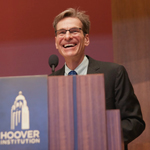
John Cochrane is an economist specializing in financial economics and macroeconomics and the Rose-Marie and Jack Anderson Senior Fellow at the Hoover Institution. Previously, he was a professor of finance at the University of Chicago Booth School of Business and before that at the Department of Economics. He writes the Grumpy Economist blog.

Jonathan H. Adler joined the William & Mary law faculty as the Tazwell Taylor Professor of Law and William H. Cabell Research Professor in 2025. Before joining the faculty, he was the inaugural Johan Verheij Memorial Professor of Law and the founding director of the Coleman P. Burke Center for Environmental Law at the Case Western Reserve University School of Law. His books include Climate Liberalism: Perspectives on Liberty, Property and Pollution (Palgrave Macmillan, 2023) and Marijuana Federalism: Uncle Sam and Mary Jane (Brookings Institution Press, 2020). Adler is a senior fellow at the Property & Environment Research Center in Bozeman, Montana, and a public member of the Administrative Conference of the United States.
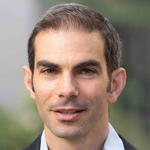
Joseph S. Shapiro is an associate professor at the University of California, Berkeley, in the departments of Economics and of Agricultural & Resource Economics. He has served as associate editor of the Journal of Political Economy and Quarterly Journal of Economics and co-editor of the Journal of Public Economics. His research studies two general questions: (1) How do globalization and the environment interact? (2) What have been the effectiveness, efficiency, and equity of environmental and energy policies over the last half century? Shapiro holds a PhD in economics from MIT and a BA from Stanford.
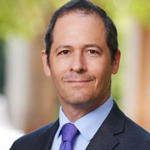
Josh Rauh -Joshua Rauh is a professor of finance at Stanford Graduate School of Business, a senior fellow at the Hoover Institution, and a research associate at the National Bureau of Economic Research (NBER). He formerly taught at the University of Chicago’s Booth School of Business (2004–09) and the Kellogg School of Management (2009–12).Professor Rauh studies corporate investment and financial structure, private equity and venture capital, and the financial structure of pension funds and their sponsors. He holds a BA degree in economics, magna cum laude with distinction, from Yale University and a PhD in economics from the Massachusetts Institute of Technology.

Maiky Iberkleid is the CEO of RESILIFT, a climate adaptation technology company focused on flood mitigation. The company develops integrated software and hardware solutions that make structural home lifting faster, safer, and more affordable. Before founding RESILIFT, Iberkleid served as head of solutions at Hologram, an internet of things start-up. He holds a BSE in electrical engineering from Princeton University and an MBA from Harvard Business School.

Manuel Piñuela is a nature advocate, technology, health, and science entrepreneur, and recipient of multiple awards and fellowships, including MIT Technology Review Innovator of the Year under 35 and Hoover’s Enviropreneur Fellowship 2025. He is co-founder of Cultivo, Drayson Tech. and SENS.L. He believes that land regeneration is one of the most valuable solutions needed to ensure resilience for current and future generations.

Matthew E. Kahn is a provost professor of economics at the University of Southern California; a research associate at the National Bureau of Economic Research; a research fellow at the Institute of Labor Economics (IZA); a senior fellow at the Schaeffer Center for Health Policy and Economics at the University of Southern California; and a visiting fellow at the Hoover Institution. He has taught at Columbia University, the Fletcher School at Tufts University, UCLA, and Johns Hopkins University. He is a graduate of Hamilton College and the London School of Economics. He holds a PhD in economics from the University of Chicago.

Niraj Swami is an avid technologist and innovator with deep interests in artificial intelligence, cognitive technologies, and behavioral economics. He has led, cofounded, and advised initiatives in learning, business productivity, healthcare, and conservation industries. His passions for entrepreneurship, AI, and human-centered design have earned him a Global “AI for Good” recognition and a role coleading the Techstars Sustainability Accelerator. He currently serves as the senior director of conservation technology strategy and enablement at The Nature Conservancy, a function focused on accelerating conservation impact through emerging technologies. Swami holds an Honors MBA from the University of Chicago Booth School of Business.
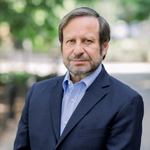
Steven Koonin, the Edward Teller Senior Fellow at Stanford’s Hoover Institution, has served as the Department of Energy’s under secretary for science, as chief scientist for BP, as a university professor at New York University, and as professor and provost at Caltech. He is a member of the National Academy of Sciences and a governor of Lawrence Livermore National Laboratory. Koonin holds a BS in physics from Caltech and a PhD in theoretical physics from MIT. He wrote the bestselling book Unsettled: What Climate Science Tells Us, What It Doesn’t, and Why It Matters (BenBella Books, 2021).
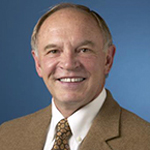
Terry L. Anderson is the John and Jean De Nault Senior Fellow at the Hoover Institution. He is the past president of the Property and Environment Research Center in Bozeman, Montana, and a professor emeritus at Montana State University, where he won many teaching awards during his twenty-year career. Anderson authored Free Market Environmentalism (Palgrave Macmillan, third edition, 2015), which established the concept of using markets and property rights to address environmental issues. Anderson received his PhD from the University of Washington and has been a visiting scholar at Oxford University, Basel University, Clemson University, and Cornell University and a Fulbright Fellow at the University of Canterbury.

Todd Myers has more than two decades in environmental policy, Todd Myers’s experience includes work on a range of environmental issues, including climate policy, forest health, and salmon recovery. His experience includes work at at the Washington State Department of Natural Resources, the Puget Sound Salmon Recovery Council and the Hanford Advisory Board. He is currently Vice President for Research at the Washington Policy Center, a public policy think tank. His recent book, “Time to Think Small: How nimble environmental technologies can solve the planet’s biggest problems,” outlines how people are using technology to solve difficult environmental problems better than governments.
