








- Middle East
- International Affairs
- US Foreign Policy
- Security & Defense
- Determining America's Role in the World
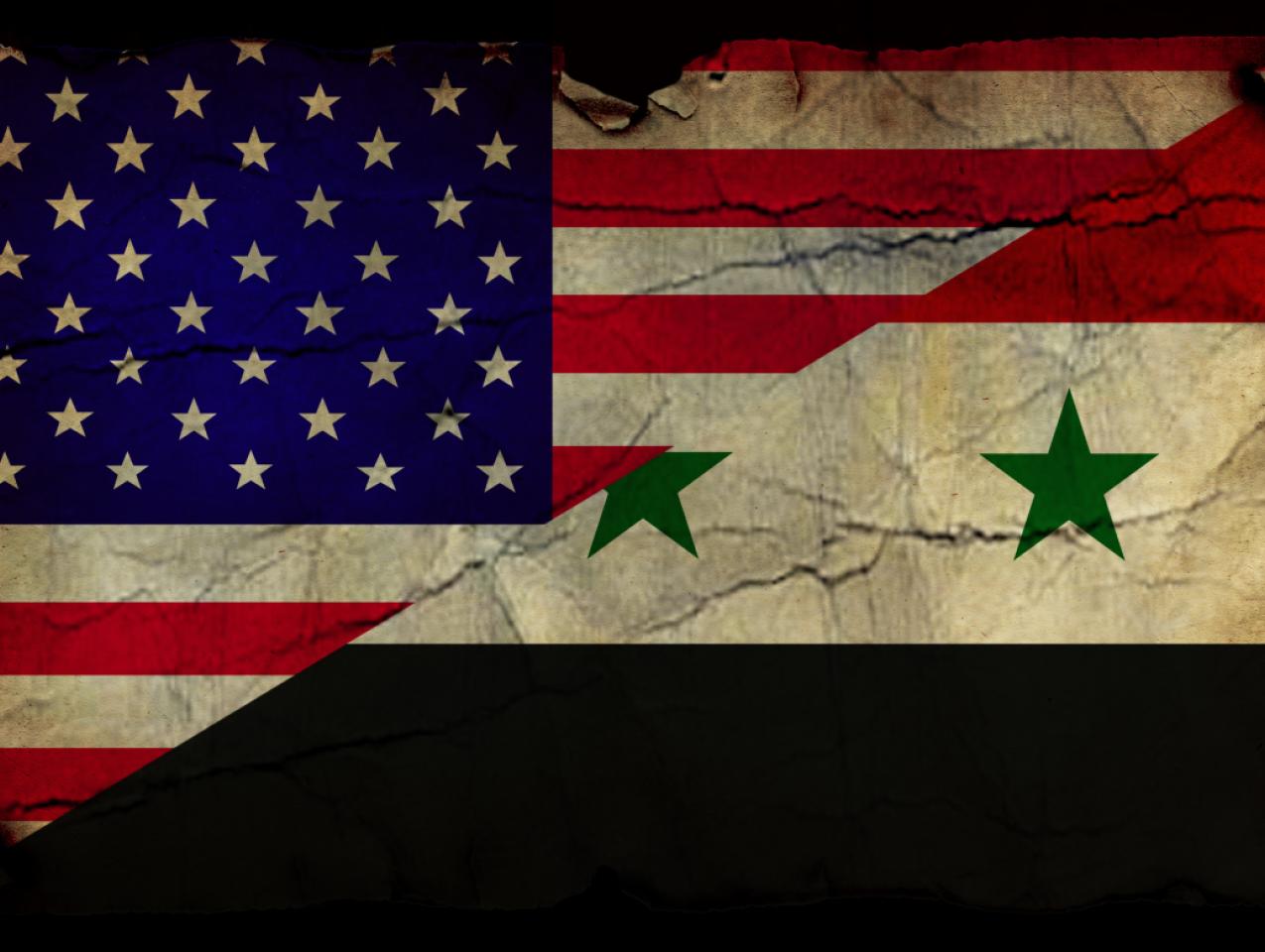
I was commissioned into the U.S. Army in 1989 and began the first of several combat tours in the Mideast in 1990. I retired from active duty 30 years later and spent roughly sixteen of those years either in the Mideast or working Mideast policy issues in Washington. Over that time, I saw war, suffering, state fragmentation, terrorism, failed diplomacy, and gradual loss of U.S. prestige across the entire region. The causes are many and U.S. policy failings only part of the problem, but it was fair to say American policymaking was not particularly effective. Yet after seeing U.S. interests damaged and undermined in Yemen, Syria, Iraq, Türkiye, Lebanon, Gaza, and adjacent regions over three decades, it has been pleasantly disorienting to see an instance wherein U.S. policy actually helped stabilize a Mideast state - in this case, Syria. And while the verdict on policy matters is always contingent and reversible, the past fifteen months have produced a truly remarkable example of U.S. policy adapting - and working.
Washington’s Dilemma
Since the fall of Bashar al-Assad, Syria has been led by the leader of the strongest faction that fought to overthrow him, Ahmed al-Sharaa (nom de guerre Jolani). Al-Sharaa’s faction, Hayat Tahrir ash-Sham (Front for the Liberation of Syria or HTS), has roots in al-Qaeda (AQ) but over the past decade broke from both AQ and the Islamic State in Syria (ISIS), focusing on controlling Idlib province and eschewing global jihad for the fight against the Assad regime. Al-Sharaa began communicating through back channels to Washington a willingness to moderate and cooperate in exchange for gradual removal of the designation as a Foreign Terror Organization (FTO). A modus vivendi emerged under which HTS suppressed AQ and ISIS in Idlib, did not oppose U.S. counter-terrorism actions in Syria, and was not subject to drone strikes, raids, or other kinetic action. It was a tolerable status quo for both sides.
With the surprisingly rapid collapse of Assad over twelve days in December 2024 and the emergence of al-Sharaa as the leading figure in the Syrian Transitional Government (STG), the incoming Trump Administration faced major policy dilemmas. Should the U.S. support consolidation of power by a new Syrian government even if its leaders had extremist backgrounds? Should Washington encourage re-assertion of sovereignty by Damascus over a fragmented country if it meant ending the decade-long instrumental relationship with the militia running northeast Syria, the Syrian Democratic Forces (SDF)? Should we side with regional allies pressing for a unified Syria or others wishing for a weak and fractured one?
Without much fanfare or public debate, and without the struggle of extended interagency discussions, President Trump chose a clear path. Stabilize Syria by embracing al-Sharaa, lifting sanctions, encouraging investment and regional diplomatic reintegration, deleveraging from open-ended military presence in Syria and open-ended subsidies to a radical proxy force. For nearly a year Trump and Tom Barrack, his Syria envoy, have worked with Congress, regional allies, and various Syrian factions to achieve those ends. The Trump Syria policy met sharp resistance - from Lindsey Graham, Israel, the global Left, and even the Wall Street Journal. Unlike Trump’s attempt to extricate from Syria in 2018/2019, though, this time the policy survived the resistance.
In the earlier instance, Congress and the Washington commentariat - even senior levels of the executive bureaucracy - were energized by narratives of ISIS resurgence, betrayal of heroic proxies, and credibility loss. Seven years later it was growing difficult to sell that the SDF was the only way for Kurds to flourish in the new Syria, that the U.S. had to sustain 2015 policy indefinitely, or that the residual ISIS threat justified and extended military deployment in Syria. In that sense it became increasingly evident that the tension between supporting consolidation of power by the STG - the Trump policy - and sustaining a divided Syria by subsidizing the SDF indefinitely - the Lindsey Graham policy - had to be resolved.
A Syrian Forcing Function
The Syria policy of neutralizing Damascus, centering regional policy on counter-terrorism, and maintaining a militant proxy as a precaution made decreasing sense after the fall of Assad, especially after al-Sharaa demonstrated a reasonable level of competence in internal consolidation and foreign relations. Yet inertia in public policy is a thorny challenge, and the U.S. foreign policy making system often suffers from an inability to make coherent policy changes in response to changing dynamics. Thus seven years after the defeat of ISIS in Syria, guarding ISIS prisoners and their families remained the organizing principle for Washington. Prolonged U.S. military presence in Syria was advertised as the only safeguard against a resurgence of ISIS. The post-Assad government was and is regarded in some quarters as no great improvement over Assad, and certainly not to be treated as a partner. U.S. policy remained one of containing, minimizing, deterring, and neutralizing threats from Syria.
Al-Sharaa gradually simplified the contradiction between the old and new U.S. policies by effectively centralizing power at home and selling his project abroad. He negotiated a power-sharing deal with the SDF in March 2025 and applied carrots and sticks in turn until achieving what looks like a durable reintegration in January 2026. He faced down an Alawite uprising with reasonable success, and with more mixed results Druze resistance in Sweida. Both entailed excesses by forces aligned with his transitional government, but al-Sharaa initiated a process to reform those forces and avoid future massacres - and the relatively limited bloodshed during the January 2026 fighting indicates those efforts succeeded at least in part.
Al-Sharaa did not entirely allay the concerns about his past, intentions and capabilities felt by Syria’s various constituencies or neighbors, but he consistently demonstrated patience, competence, and pragmatism - traits sorely lacking in the American experience of stabilization in other countries. He became the sort of actor the U.S. had lacked in Afghanistan and Iraq: brutal enough to succeed at home, deft enough to compromise with regional players, polished enough to interact with leaders in Europe, Washington, and further afield. The cynical Baathist aphorism in 2012 had been “Assad or we burn the country.” The zeitgeist of the following decade was that a broken Syria was the least bad option for various stakeholders (though clearly not for the Syrian people themselves). Al-Sharaa’s aspiration has been a Syria “free of its wretched past,” and that opens up a new set of possibilities for U.S. and allied interests.
Correcting Incoherent Policy
Syria has demonstrated so many pathologies of bad U.S. decision-making over the past fifteen years that a turn in Washington from inertia to clear and effective policy seemed unlikely. Since 2009, Washington issued redlines then talked itself out of backing them; pursued conflicting strategic aims rooted in deeply flawed assumptions; pivoted from calling for Assad’s ouster to proposing cooperation with Russia to keep him in power; launched a covert action program then canceled it; conceded broad freedom of action to Russia and Iran as they helped Iran quash the anti-Assad opposition; postured and equivocated while half a million Syrians were killed and 13 million displaced in a stunning refutation of the conceit of a just international order. U.S. policy on Syria prior to the second Trump term was inherently contradictory: a proxy counter-terror campaign against a dwindling ISIS target and without a political end game or transition plan, immiseration of the Syrian people through continuous sanctions, acquiescence to regional normalization of a regime with zero legitimacy among its people.
To be clear, Trump and his team did not at first set out to revolutionize or prioritize Syria policy. To the contrary, in December 2024 he responded to the rebel campaign that toppled Assad in a social media post: “Syria is a mess but is not our friend. THE UNITED STATES SHOULD HAVE NOTHING TO DO WITH IT. THIS IS NOT OUR FIGHT. LET IT PLAY OUT. DO NOT GET INVOLVED!”
Biden Administration officials actually began the re-engagement with Damascus by meeting with al-Sharaa before Trump’s inauguration. Yet after May 2025 discussions with Saudi Crown Prince Mohammed Bin Salman and Turkish President Recep Tayip Erdogan, Trump initiated the unambiguous policy of supporting stabilization through al-Sharaa and quickly appointed Barrack to oversee implementation. He backed up words with actions: repealing sanctions, meeting al-Sharaa, admonishing Benjamin Netanyahu to “be reasonable” on Syria and Turkey, encouraging intra-Syrian negotiations and international investment in Syria. This was decisive policy rooted in facts on the ground, coordinated with key regional allies, and backed up with meaningful steps - all qualities U.S. Syria policy had been sorely lacking for years.
After decades helping to shape, implement, and analyze U.S. Mideast policy I have now seen the exceedingly rare phenomenon of coherent and adaptive policy applied in real time. On so many previous occasions in the region, things seemed only to go from bad to worse for U.S. interests and the locals, or at best to remain on a slow simmer. Winston Churchill reputedly said that “Americans can always be trusted to do the right thing, once all other possibilities are exhausted.” It appears President Trump determined that we had reached that point, and the Syrian people have a great opportunity for stability and prosperity as a result.

