The American Experiment in Your Words

Calling all poets! To mark the 250th anniversary of the Declaration of Independence, the Hoover Institution invites high school and college students to reflect on the meaning and the future of the American Experiment through the spoken word.

For 250 years, each generation of Americans has been asked to carry forward a bold idea: that a people can govern themselves, and that freedom, equality, and opportunity are not fixed, but fought for, expanded, and redefined over time.

Now it’s your turn.

In an original spoken word composition performed (with the reading of the title) in three minutes or less, please respond to one or both of these questions:

  • At this moment, what do America's founding ideals demand?
  • Where have they endured, and where do they need to be reclaimed, reinterpreted, or renewed?

Through your voice, reflect on the legacy you’ve inherited and the future you are shaping.

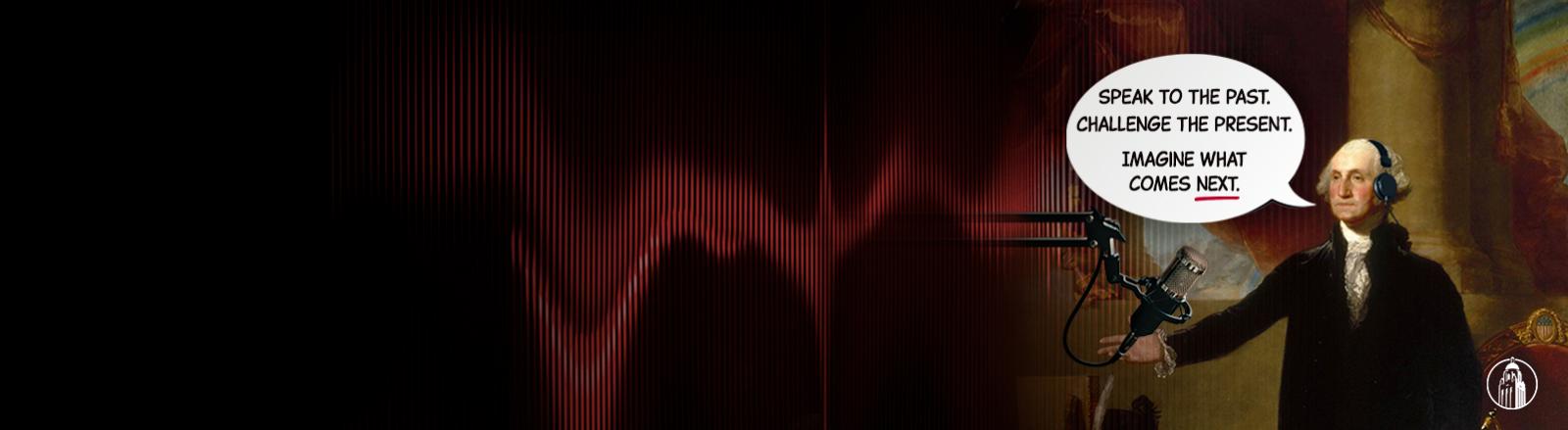
Speak to the past.
Challenge the present.
Imagine what comes next.


Eligibility:

This competition has two divisions:

  • Enrolled high school students
  • Enrolled college students

All participants must reside in the United States and be enrolled at a US high school or college.


Submission Guidelines:

  • Submit an original spoken word performance (video required).
    • By original we mean, that you are the author.
    • Entrants should read their poem’s title and then their composition. No additional explanation is required or desired.
  • Video submission of you performing your composition aloud is required.
  • Submission of the text of your original poetry or spoken word composition is required.
  • Maximum length: 3 minutes
  • Minimum length: 90 seconds
    • Video files shorter than 90 seconds or longer than 3:00 (three minutes exactly) will not be reviewed.
  • Submissions are due by 11:59pm Pacific Time on June 1, 2026. No submissions after this deadline will be accepted.

Rules on Artificial Intelligence Use

The Hoover Institution recognizes that AI tools offer powerful assistance in the creation of written work, including poems. In this competition, AI may be used for brainstorming ideas, refining drafts of your original composition, researching, and practicing your delivery. While you may use AI tools to assist with your composition, please recognize that the use of AI tools to generate a poem or spoken word composition in its entirety will not meet this competition’s standards of original authorship and authenticity. You should feel comfortable answering “Yes” to the question: Does this represent your original work?

Conditions of Participation:

The Hoover Institution reserves the right to use your submitted text and video files for research, marketing, communications, publishing, and social media purposes.


If your poem is selected as an award winner or runner-up, we would like to honor your achievement. This may include publishing all, or a portion of, your video or text submission. You may opt out of having your name associated with your submission if it is selected for promotion or publication. Before publishing your poem or videotaped performance, Hoover will contact you to obtain your consent to name you publicly as the author and performer.


Full terms and conditions are available on the Google Form through which we will accept all submissions for this contest.


Awards:

Winners in each division will receive $2,500 plus a trip to the Hoover Institution with travel and lodging expenses covered. One runner-up per division will also receive a $1,000 prize.


Frequently Asked Questions

Q) What is a spoken word poem?

A) Spoken word is defined by the Poetry Foundation as: “A broad designation for poetry intended for performance. Though some spoken word poetry may also be published on the page, the genre has its roots in oral traditions and performance. Spoken word can encompass or contain elements of rap, hip-hop, storytelling, theater, and jazz, rock, blues, and folk music. [Spoken word poems are] characterized by rhyme, repetition, improvisation, and word play.”

Q) Reading my poem and its title takes longer than three minutes. What should I do?

A) You must either shorten your poem or increase the speed of your delivery. Please bear in mind that rushing to read a lengthy poem will likely impact your delivery and performance in a negative way. We encourage you to write a poem and title short enough such that you can perform your whole composition in a relaxed and not rushed manner—as you would see in a professional poetry reading or spoken word delivery.

Q) I don’t want to appear on camera. Can I still participate?

A) Yes. You are not required to show your face in your video. However, we must be able to tell that you performed your poem, and that it was not read by a computer program or AI text-to-speech service or software.

Q) Where can I learn more about writing a poem?

A) We encourage you to visit the website of the Poetry Foundation and to consult other online resources, including YouTube. Additionally, artificial intelligence tools may be used—and could be a great resource—for learning about compositional techniques for poetry and spoken word.

Additional Questions:

If you have any questions about the rules of this competition that are not addressed on this page, you may email hoovermarketing@stanford.edu. Please note that we will not provide feedback on draft content or topic ideas and will limit replies to reasonable clarifications of the rules of this competition.


overlay image