






- State & Local
- California
- California Decides
- Empowering State and Local Governance
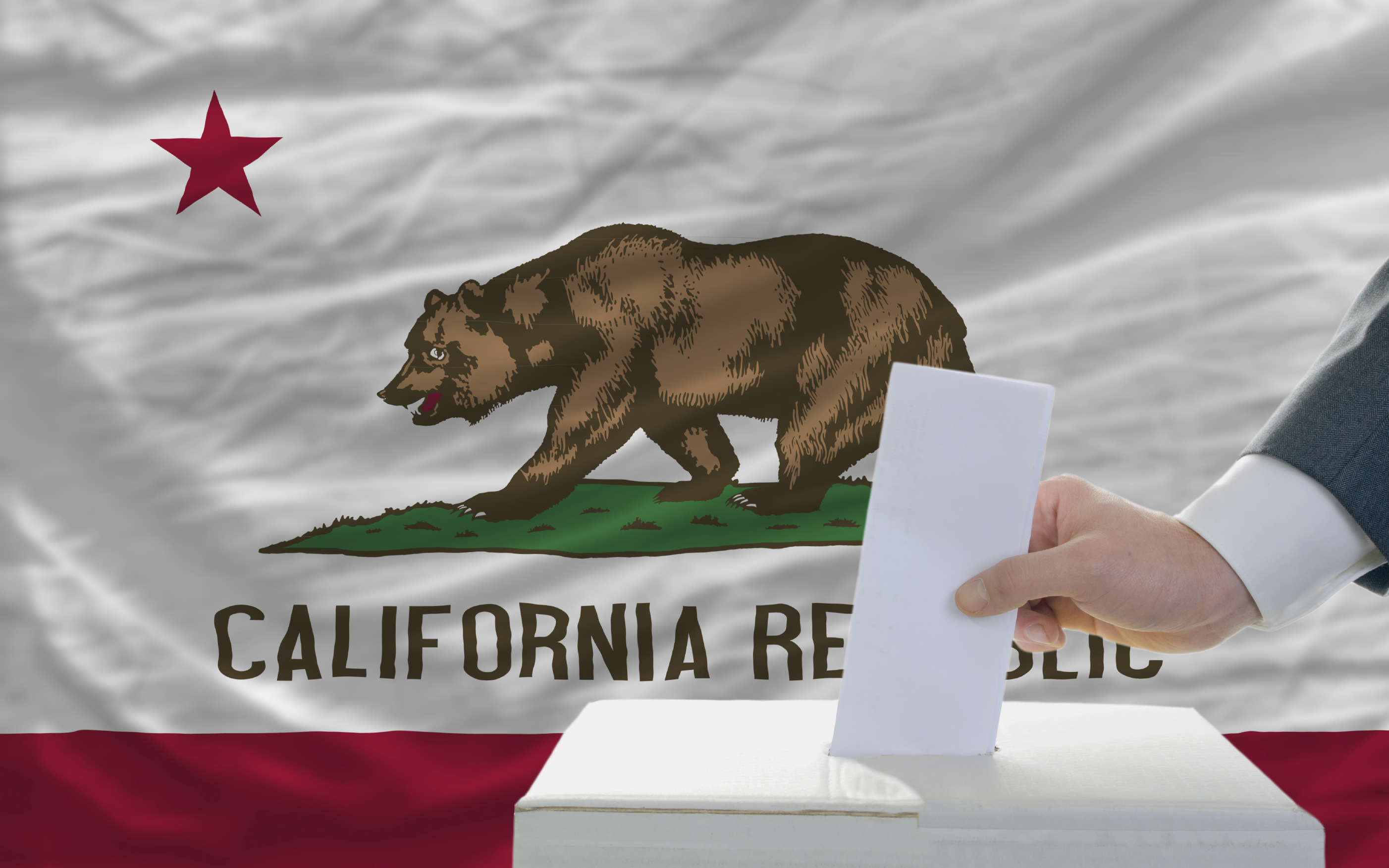
If you’re staring at your California primary ballot (it should have arrived in the mail by now) and can’t decide which Democratic hopeful to choose for governor based on policy specifics, you’re not to blame for your indecision.
With less than a month remaining in the primary, and on the heels of a candidates’ debate earlier this week that offered little in the way of policy clarity, it’s evident that America’s most populous state may be guilty of one of the more vapid elections in modern times— candidates favoring buzzwords and strawman arguments rather than intellectual approaches to how to make California a better society.
Case in point: this ad featuring former representative Katie Porter, a carryover from California’s 2024 Senate contest (finishing a distant third in that year’s primary) but hoping to catch fire now that voting has begun (the Real Clear Politics polling average has her running fifth in a field of six main candidates).
Aside from the spot being derivative of this ad run by billionaire Tom Steyer (note to future California candidates: please lay off the Love Actually mimicry), Porter’s commercial offends in that it offers up a montage of supporters each holding up signs bearing most non-germane or unfeasible goals for a California governor, as opposed to things the candidate might actually achieve if installed in office.
Those include:
“Dump Trump.” Aside from the fact that the matter takes care of itself (term limits will “dump” the current president in 2029), a California governor can’t remove an American president from office. At best, he or she can try to humiliate the Oval Office occupant, which California’s current governor, Gavin Newsom, has taken to an extreme. Question for the Democratic candidates: if elected, what’s your new obsession after Trump’s exit in early 2029?
“Call Out Racism.” A noble concept, but is Porter suggesting that executive orders and legislation will change bigoted hearts? A question for all gubernatorial candidates: if elected, would you declare racism a public health crisis, as have various California counties?
“Abolish ICE.” Porter, a Democrat, is playing to her party’s base: per this poll, two-thirds of California Democrats believe Immigration and Customs Enforcement should be “completely disbanded.” But as with the Trump-bashing, she’s a candidate for statewide office giving voice to what would be a federal action. Question for the Democratic candidates: now that the Ninth Circuit Court of Appeals has upheld an injunction banning California from requiring ICE agents to readily identify themselves, what’s the next governor’s next move?
“A Living Wage.” Porter once again is appealing to utopian sentiment (a living wage being a stipend that allows a worker to earn enough to cover a family’s basic needs). But let’s do the math, were California to forgo its current minimum wage of $16.90 per hour. According to MIT’s Living Wage Calculator, a single parent with three kids (the same as candidate Porter) would need a “living wage” of $90.66 per hour to get by in California (at forty hours a week, that would be a $180,000 annual salary for entry-level work). Question for all candidates: how would you make the California existence more affordable without driving businesses out of the state?
“Cheap Green Energy.” In theory, that’s music to voters of all stripes in a state where the price of gasoline recently passed $6 per gallon (California currently has only four to six weeks’ worth of gasoline and diesel in supply). But is green energy “cheap”? According to this Pacific Research Institute analysis, Californians will have to pay between $17,398 and $20,182 per household to fund the Golden State’s transition to green energy sources by 2050. Question for the Democratic candidates: isn’t this the argument in favor of the living wage?
“End Gun Violence.” Again, a noble sentiment—along with ending vehicular fatalities, drug overdoses, and overcrowded animal shelters. That said, is it possible without banning guns altogether, which takes the candidate into yet another state-federal divide? Perhaps Porter should focus instead on what’s trending positively in her home state: for the past three years, homicides are down in California’s major cities, with some seeing their fewest murders in decades. Question for the Democratic candidates: if ending gun violence in California is the goal, should guns be confiscated (that would include the Glock-owning Kamala Harris)?
“Debt-Free College.” Yet another noble concept, though it’s not clear that California is facing this kind of debt crisis. The University of California notes that 64 percent of California undergraduates leave school debt-free; that’s in line with the roughly 65 percent of CSU bachelor’s degree recipients who graduate without student-loan debt (according to this CSU fact sheet, graduates who left school in debt borrowed an average of $17,000 versus the national average of $29,650). Question for all candidates: would you give top priority to guaranteeing full state funding, safeguarding scientific research, or expanding student housing?
In fairness to Porter, she’s not the only California gubernatorial who’s running a campaign based not so much on Los Angeles as it is on la-la land. Steyer, for example, wants single-payer health care, a concept the last two Democratic governors have eschewed. Meanwhile, former state attorney general Xavier Becerra seems to think the road to Sacramento involves the path of least resistance revelation (ominously, Becerra’s campaign now includes the Newsom political brain trust, thus making him the status quo choice).
A cynic might note that candidates’ promises are overrated. As we’ve seen with Newsom and his recent predecessors, it’s not so much how a governor begins as it is where he ends up (here’s a look at various promises from Newsom back in 2018).
And, yes, the omnipresent Trump is a convenient lightning rod—and a good way to distract voters from various problems in the here and now (homelessness, educational inequality) that the party that dominates state government has failed to solve (by my count, the seven candidates participating in this week’s gubernatorial debate referred to Trump nearly five dozen times over the course of two hours on the same stage).
But in the end, the choice comes down to how candidates choose to run. Do they want to talk vexing issues, perhaps have a frank conversation about the outgoing governor’s job performance (does Newsom really merit a B for his record on homelessness?). Or is it a shallower approach: to offer ideas that will never see the light of day?
No wonder California voters may feel flustered. The list of certified candidates is long. But for those seeking the state’s highest office, the policy details are mostly scant or sorely lacking in imagination.
Call it the difference between running for office and, in California’s case, running on empty.

