The Hoover Institution Taiwan in the Indo-Pacific Region held Taiwanese Support for Self-Defense on Tuesday, May 19, 2026 from 1:30-3:00 pm PT through Zoom.
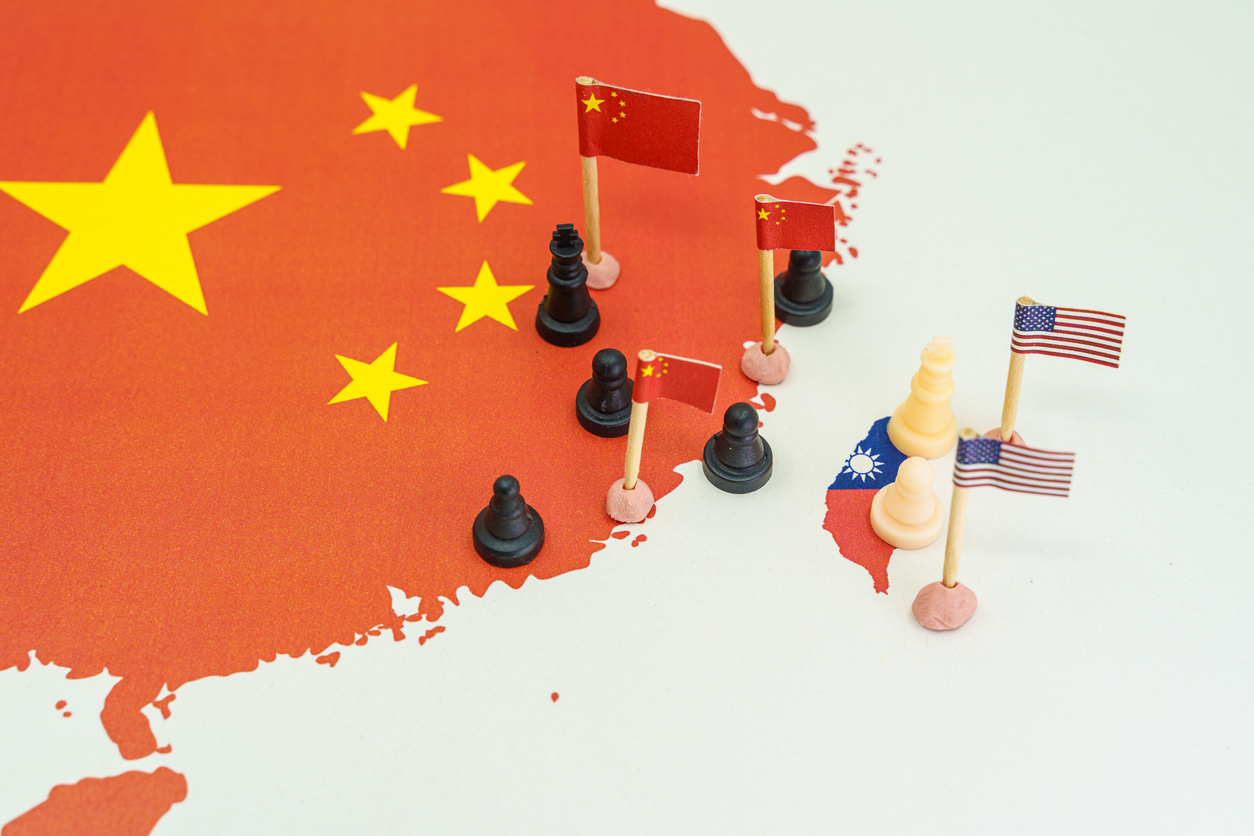
Taiwan sits at the center of intensifying great-power competition, where questions of deterrence, reassurance, and self-defense are no longer abstract strategic concerns but matters of everyday public debate. How do Taiwanese citizens perceive the threat from China? How do they understand the U.S. role in cross-Strait conflicts? Do they support greater investment in national defense and U.S. arms sales to Taiwan? And how willing are they to fight if Taiwan is militarily attacked?
In this talk, Wen-Chin Wu draws on evidence from multiple surveys to examine the determinants of Taiwan’s public resolve. The talk highlights two related but analytically distinct dimensions: general support for national defense and personal willingness to fight. It shows how Taiwan’s security attitudes reflect external threat perceptions, expectations of U.S. involvement, and partisan divisions within Taiwan. By foregrounding Taiwanese public opinion in debates over national security, the talk offers a mass-public perspective on Taiwan’s resolve amid coercion, uncertainty, and intensified U.S.-China competition.
- Well, good afternoon everyone. I'm Ka Templeman. I'm a research fellow here at the Hoover Institution at Stanford University where I manage the project on Taiwan in the Indo-Pacific region. And I'd like to welcome you today to our latest, greatest event for our speaker series We're featuring we Chin W who is a research fellow at the Institute of Political Science at Academia, SITA, and more Pertinently this year he is the Lenore Annenberg and Wallace Annenberg fellow at the Institute for Advanced Study in the Behavioral Sciences at Stanford. So he's, we we're fortunate to have him come down the hill and join us for this conversation today. Should note, I am, we're coming to you live from the Hoover Institution, Stanford campus. The Dulcet tones of the Korean mega band group BTS are echoing in the background as I speak to you. And so I, I also want to apologize for our late switch to an online only session today. And thank our audience for their flexibility and their continued interests in our programming. If you initially had plans to come onto campus today and weren't able to do so, don't blame us. Blame the Korean BTS Army. So I hope there's no disruptions from our, our guests on campus. I think we'll we'll proceed in short order to our talk today. I just wanna note that the title of the talk is Taiwanese Support for Self Depen Defense. And this is a particularly timely topic because it comes directly on the heels of President Trump's visits to the People's Republic of China, where he met with Chinese leader Xi Jinping. And it also comes directly after some fairly controversial comments that President Trump made about defending Taiwan and the ability and willingness of the United States to contribute to Taiwan's defense. So to help us unpack all of this today, I'm very pleased that we have Win Chin Wu to speak about Taiwanese support for self-defense win Chin, take it away.
- Okay, thank you Carrie for the kind introduction. It's a great honor to be invited to give my research talk in Hoover institution. Unfortunately, we cannot meet, meet in person, but it's also a good opportunity to share our research with people who are not on site. So today I'm going to share some of my survey findings with you regarding how Taiwanese people perceive their national security issues and with a specific focus on self defense. So I'm win Chin and yeah, as Carries introduced, I'm now a Casper fellow, but I'm leaving for Taiwan soon, probably in early July. But if you are around Stanford campus, yeah, you can send me an email and maybe we can yeah, meet up to discuss further regarding yeah, Taiwanese public opinion on national security issues. So as Carrie has mentioned that today we are going to focus on how Taiwanese public opinion on national security issues. I will focus on three parts. The first one is a support for national defense budget and the second one is Taiwanese willing to fight. And the third one is about Taiwanese public opinion on TSMC investment in the United States. And I will give some intro conclusion. So as many of you are aware, Trump visit President Trump visit China this week. And then actually his visit raised a lot of concern regarding AL relations after yeah, he returned to the United States. So he basically makes some statements during the interview with the Fox News. So first of all, he mentioned that, yeah, I'm holding the US arm CO to Taiwan because it depends on China and it's very good negotiation check for the United States and because it's a lot of blueprint. And the second one is about US defense of Taiwan. So when he was asked whether us was defend Taiwan, he mentioned that I'm not looking to, to have someone go independent and because the United States had to go over 9,000 miles to file war, so I want them to call down, I want China to call them. So basically this statement raised a lot of concern in Taiwan at this moment because yeah, many people think that Trump implicitly object Taiwan's independence Yeah, in the future. The third part is about Taiwan's chip, basically the TSMC. So he also mentioned that he would like to see everybody making chips in Taiwan come to the United States, and then he think that it's a good thing that those tech companies can do. And so these statements raised a lot of concern in Taiwan recently. And then actually our government and also a political observer observers are analyzing these statements right now. Unfortunately, we, we did not have any recent public opinion data in response to Trump statements. So in the following 20 to 30 minutes, I will just analyze how Taiwanese public opinion would react or possibly react to those statements. And I think the line is for President Trump's statement basically is another version or latest version of the so-called US sta strategic ambiguity toward course relations. So the US policy of STA and Guity basically focus on creating uncertainty for Beijing and Taipei about whether the US would intervene in the coastal war. So basically it wants to achieve two goals, which we call dual deterrent. So it will prevent China from in Beijing, Taiwan, and preventing Taiwan from the clear digital independence. And so basically we can conceptualize President Trump's recent statement as another or the latest version of us touch ambiguity, although some people may disagree, but yeah, that, that's many people's take. So that's another formulation of such ambiguity because as President Trump mentioned, so we are not looking to have somebody say that's go independent because the United States is expecting us. So basically that's for us defense of Taiwan. But he also mentioned that it, it depends on China and then it, it means that if China does something threatened in Taiwan, then the United States may consider sale weapons to China or the the, the charm will release the arm sale as well. So, but I mean the goal is that President Trump want both sides to be cool. Yeah. So basically that's a due deterrence and also the Secretary of State Rubio mentioned that the US policy on the issue of Taiwan is unchanged is of today. So, which is yeah, May 14th, 2026. And then he specifically mentioned that the reason of being static ambiguity or sta strategically ambiguous is that we don't want to see conflict, we don't want to see something disruptive happen. So we can yeah, conceptualize the current situation is a reformulation or re reinforcement of a strategic ambiguity and then the United States would like China and Taiwan to cool down. So, but let's see how cool our cost regulations in the past few years. So this is the, the, the data we collect from a Taiwan's Ministry of Defense, which release daily number of frequency of China's intrusion into Taiwan's air defense, identify occasion zone, which is called A DIZ or is a China's fly by wrong Taiwan Street. So we can see that after 2016 China began to yeah, send its fighter jets circulating around Taiwan Street and then after, yeah, after 2020. So the number increased significantly, especially after, yeah, speaker Nancy Pelosi visit in 2022, and then you can see that the number increased significantly. So, which post some military street on Taiwan in particular, after Nancy Pelosi's visit in 2022, China launched some military drills around the Taiwan Street just right after Speaker Pel left Taiwan. So those are the military threat. China is imposed on Taiwan daily or yeah, constantly. But so how, how do Taiwanese people view this kind of yeah. Military threat from China? So this is the data from war value survey. So since the latest three wave of war value survey conducted in Taiwan, we can see that there's a increasing concern or increasing worry about the possibility of involving in or in Taiwan. So, which means that Taiwanese people are worried about, yeah, being involved in the war. So since 2012, so more than seven 80, around 80% of respondents think that they are worried or there is a great deal of worry that they have regarding Taiwan involved in the war. On the other hand, it's very surprising to see that the stock market in Taiwan increased a lot since 2016. So that's in, in addition to Taiwan stock market index, the stock price of TSMC also increased significantly. So you can see that although there is a increased military rate from China, the economy in Taiwan is also very promising and prospering right now. So this is also another economic side of yeah, Taiwan's response to China's military rate or under the shade of China's threat. On the other hand, we also observed that in Taiwan, the opposition party right now or the opposition coalition right now try to block the, the, the US arms sale to Taiwan for several months until next month. So yeah, after several months of arguing, so Taiwan's lawmaker, which is legislated again, finally approved the, the, the, the, the US arms sales to Taiwan, yeah, a few weeks ago. So that's also another situation, although we have the increasing military street from China, Taiwan people seem to be divided in terms of how to respond to China's military, right? So whether we should purchase more weapons from China or not. So that's also a big issue in the past few months. So yeah. So here comes the, the interesting question we are going to investigate. So why do Taiwan is worry, but remain cool simultaneously. So another related issue is Taiwan is willing to defend themselves. So here we focus on two dimensions of self-defense. One is about purchasing weapons from the United States, the other is about their willing to fight against China's attack. So basically that will be our focus in the next 10 minutes. So we will answer these questions using data collected in Taiwan in the past few years, either by my team or my colleagues in Taiwan or other yeah, teams. So, but here are the survey result that I may use in the following presentation. I think the, now the most famous one on Taiwan people's national security attitude is about Taiwan's national Security survey established in 2002. Yeah, it's founded by the Duke University and it has been conducted several waves. And the recent one is about Taiwan national defense surveys. So it's also conducted by Institute for additional defense and security research. So basically they have telephones survey four times a year and a couple of analyze rates. So now they have accumulate more than 20 web of data since 2021. And my colleague mea, they also collect some data on how Taiwanese people view coast relations and also US Taiwan relations, which is called China Impact Survey. And in 2021, my colleague and I established a new survey which is called American Poacher Survey. So this is a new telephone survey. So we have been conducted for six waves and this also is administrated by the election study center at National Sensing University. So we just finished our latest wave early January this year. And if you are interested in our data, you can go to our website is called American Poacher Survey. So in the following 10 minutes I will share some our result with you regarding how Taiwanese people think about those national security issues in particular, the self-defense Yeah, topics. So before I jump into details, let me give you a brief introduction regarding the political landscape in Taiwan right now. So we are semi existential system and we have two major parties with a a small third party. So now the incumbent party is a Democrat progressive party, which across about 30% of support within the electorate. And the other is KMT, which the nationalist party. So it, it account for about 20% of support among electorate. However, now the KMT is the largest party in the legislative, which is Taiwan's Congress or parliament. Then, so now we are in a divided government and this also a third party, which is called Taiwan People's Party, which account for about 10% of support among the elector rate. And then with KMT and TPP, they collide with, with a major opposition coalition in the legislative UN right now. So now they account for the majority in the legislative. And so that's why we are in the divided government and we should notice that they are about 30% of the electorate who are nonpartisan, which means that they don't have a specific party of affiliation or party identification. So those are very important number to, to pay attention to. And so after we know that the distribution of party preference in Taiwan, so we can see how they view those national security issues in particular, how do they think about self-defense? So yeah, the first question we ask about is about to what extent China poses threat to our national security. And as you can see, people are aware of China's threat to Taiwan's national security. So about 80% of respondents think that China oppose a threat to Taiwan's national security. And actually people think that China may or may not take Taiwan with military. So when we ask our respondent, do you believe that China will use military force to attack Taiwan? And you can see that there is a cross party difference for, yeah, for the DPP supporters. They, they believe that China, they, they tend to believe that China will use military force to attack Taiwan. But for supporters of other parties, especially for the KMT, they think that China may not use military force to attack Taiwan. And then in general we can see that less than 50% of respondents think that China will use military force to attack Taiwan. So on the one hand they think that China oppose, right? But on the other hand, the majority think that Taiwan may not be attacked by China with military force. So here comes the first part we are going to investigate then how do people in Taiwan support US AM sales to Taiwan. So we can see across different surveys on, especially in our American purchase survey, we find that since 2021, our first year of survey, about 70% of respondents think that yeah, Taiwan should buy, or Taiwan can buy arms from the United States, and the number does not fluctuate significantly. So it's more than 65% and sometimes it will be about 70%. So there is a high support of US arms, CO, to Taiwan. However, as we can see in the past few months, there is yeah, their lack regarding whether Taiwan should purchase arms around the United States. And the reason is that there is actually a very deep partisan divide or partisan regarding hu the Taiwan should purchase arms from the United States. The green light here indicates that the supporters of the DPP, which is a incumbent party, so more than 90% of supporters think that yeah, we should purchase arms from the United States. However, for the major opposition party, KMT supporters, they do not think that there's an urgency for Taiwan to purchase arms from the United States. So the more than 50% of them think that we, yeah, we Taiwan do not need to purchase arms from the United States. So that's why there's a, regarding where the Taiwan should purchase weapons from the United States in the past few months, but finally, yeah, it it was approved with some discount, but yeah, that's also why it was delayed because of this partisan C village. But how do people think about us am to Taiwan? So this is the slide that we just do across table. So to show that when people think that China threat is higher, right, so it's in, in 2025 or 2026, we them whether how much China process threat to Taiwan's national security. So as they think that China's national China's threat to Taiwan's national security increases, they tend to be more supportive about supportive for Taiwan's purchase from purchase US weapons. And on the other hand, if they think that China is going to use military force to attack Taiwan, they tend to be more supportive of yeah, purchasing arms from the United States. So these are the, the patent across different parties and also among the nonpartisan, although you can still see that DBP supporters are very supportive of US arms sales to Taiwan, and then KMP supporters are less interested in their purchasing arms from the United States. And here comes the second issue or related issue. How do they think that the United States will help Taiwan or will send a military force to help Taiwan? So this is a very important topic in Taiwan's national security study. So since wave four we asked this question and then you can see that for DBP supporters, they have a high hope of US military assistance to Taiwan since 2024, yeah, 2005, 2126. On the other hand, the KMT supporters are less skeptical about the possibility of the United States to send troops to help Taiwan. So this also shifts how Taiwan people think about US arms sale to Taiwan. So as you can see when people think that, yeah, purchasing US arms may or may not increase the likelihood of the United States to help Taiwan with military force. So we asked the following question, if Taiwan purchase arms from the United States, we are the likelihood of the US deploying force to help Taiwan decrease, increase or stay the same. So as you can see, the DPP supporters are very optimistic about this question. So they think that once we purchase arms found the United States, it will increase the likelihood of yeah, the US to help Taiwan. However, for KMT supporters, it is a little bit polarized. Some believe that it will increase indicate by those green bar here, but on the other hand, the they also, some of them also think that you will decrease the likelihood of us to help Taiwan. So it's a very cing perspective among KMT supporters. And the same perspective is held by the supporters of the TPP and also for those nonpartisan. And, but you can also see that for the majority of the people in Taiwan think that okay, the purchasing Armstrong United States, maybe unrelated to US likelihood of helped in Taiwan with military force. So about more than 50% of them think about in this way. So on the other hand, we just do a cross stipulation between the US likelihood of defending Taiwan after purchasing arms from the United States and whether they support purchasing US arms. And you can see that once they think that there's a, like there is a increased likelihood of us to help Taiwan after we purchase, then of course they will be more supportive of purchasing arms from the United States. So this is a very interesting result because we, we, we, for some people purchasing arms from the United States does not mean just purchase arms. It also related to whether the US will help Taiwan after this conflict with China. Yeah. So we can see that, that that's why we can see the, regarding how Taiwan should, or whether Taiwan should purchase arms from the United States because there is a, a clear coverage across the party line, especially between the DPP and KMT supporters. And people think that the, the, the US to Taiwan is related to whether the United States will defend Taiwan in the future or whether China will take Taiwan or not. So that's about the sale. And, but the second issue would be about Taiwan's willingness to fight. So this is also a very important topic we ask by different countries and also different think tanks in the past few years. So Taiwan is willing to defend themselves mutually. So I think as a face value, I mean we have been collecting a related data since 1995. The first time we conducted world value survey in Taiwan. And across the past two decades, we found that Taiwan is willing to fight or willing to defend the country has been very high. So more than 50% of respondents think that they would like to fight or they would like to defend the country, and then those numbers is not lower among people who are under the age of 30. So basically, yeah, it, it's a, it's a very high support regarding self defense, especially fight for Taiwan. We also noticed that there is a very interesting research agenda there. The people's answer may vary by question wording. So for example, this is a data collected like Taiwan foundation for democracy since 2018. So for, for Taiwan foundation for democracy, they ask the, they ask the following two questions. The first one is whether they would like to defend Taiwan if there's a China's unilateral invasion of Taiwan. So of course we can see that people would like to yeah, defend Taiwan if there is a China invasion, which means that China changed the status quo of China, initiated the war unilaterally first. So there is a high percentage of one to defend Taiwan and also higher supportive rate for people under 30. However, if we ask the question differently, so if, if Taiwan's degree independence and China attacks are you willing to defend Taiwan, you can see that the support decrease compared to the previous one, right? You can see all the bars become lower. So which means that people are less willing to fight for Taiwan's independence. Nevertheless, you can see that more than 50% of respondents still think that, okay, we, we, we should fight if there's China attack, a Taiwan independence. So that's about question wording, but you may ask, you may say that, oh, this is because we fight for different reasons, right? So one is for, yeah, d defending Taiwan, the others fight for Taiwan's independence. But even if we don't frame question in that way, even if we use a very small change of the wording, you can also see a huge difference among how people think about their willingness to fight. So think in, in, in, in the project I collaborate with my colleagues. So basically we split our sample, we ask the following four questions, and then we assign each question randomly to our respondent. So whether they are willing to defend our country or whether they are willing to fight on a battlefield, whether they are willing to defend our country and fight, and whether they are willing to fight and whether they're willing to fight. And on a battlefield, so sorry, I I I misplace the Chinese character for the third and the first part, but basically you can get idea. So there is a very straightforward whether you are willing to defend our country or whether you are willing to fight on the battlefield. And there there are some combinations of both concept in, in the middle. So this is our finding. So when we ask whether you are willing to defend our country, we get a very high positive responses. 82% of respondents saying that they're willing to fight, they are willing to defend our country. But when we ask them, are you willing to fight on the battlefield, less than 60% of respondents say that, yes. Okay. And there are some, some support in the middle. So when we act the element of fight on the battlefield to defend our country, the support rate increase a little bit, but it's not yeah, significantly larger. But if we just ask them whether you are willing to defend our country and fight, then yeah, it also increase. So, which means that even a small change of wording, it will lead to different response. So that's something we need to pay attention to if we would like to study Taiwanese willing to fight. So another related issue regarding willing to fight is a social social de liability bias. So previous studies on Taiwanese willing to file already found that about 70, about 7% of respondents over reported they're willing to defend Taiwan. So because they, once they ask them, are you willing to defend Taiwan? If there's a China's attack, then yeah, obviously this question has some social disability bias there because people would feel obligated to say that, yes, I'm going to, I'm be willing to defend Taiwan. So to adjust this issue, we use an alternative approach. So we, instead of just asking whether you are willing to defend Taiwan, we ask if China attacks Taiwan, are you willing to resist at all cost? So which means that your answer will not be a leave service because you need to think about the cost that you can or you may bear when you answer. Yes. Okay, so here in the past two years we, in American poacher survey, we ask respondent whether they are willing to fight at all cost. And you can see that for DBP supporters, yeah, they are very willing to fight at all cost. And on average we still have more than 50% of respondent saying that they're willing to fight at Oak Coast. However, you can see that for the KMT supporters or KMT supporters, they are less willing to fight at Oak Coast. So you can see there is also a difference across the top party line regarding Taiwanese willing to fight. And for those nonpartisans of about 40% of them would like to fight regard with at all cost. And here is a cross stipulation between China's rate and their willing to fight. Again, you can see that when people perceive that there is a serious threat from China or there is a national threat to national security to Taiwan from China, they tend to be more willing to fight. But if they think that okay, China is not a threat or China is not threat at all, then they will be less willing to fight at all cost. That's also another relative finding. So a third, a relative issue is about the free writing argument because as President Trump say that some Taiwanese people may think that the US is going to have Taiwan, so they will just let the US fight against China and the Taiwanese people may free write. So actually there are a couple of studies on this issue. And then to address this issue, we also conduct a small survey experiment in our latest wave of American poached survey. So we split our sample into three parts and we ask or ly assign one question into 30% of the respondents. So we asked the baseline question, which is that whether they are willing to fight at all cost and but for the other two groups we have a small change regarding the wording. So the first one is that whether they are willing to fight at all cost if the US does not deploy force to help Taiwan and whether they are willing to fight at all cost if the US deploy force to help Taiwan. So from the free right argument, we can observe that if us deploy force to help Taiwan, we may see that lower willing to fight among Taiwanese people because they would like to freer US military. However, other studies also show that if Taiwanese people think that the US is going to help Taiwan, then they will be more willing to join the fight because now the chance of winning or the chance of not being defeated is also increased increasing, so they will be more willing to join the fight. So to, that's why we set up this experiment and this is a result and you can see that this the, I think that the result is not as straightforward as we expect in the beginning. So for, for some people, yeah, they think that they will fight at all course, but once we add the element US help or, or the the, the US does not help, then their, their answer will change and the answer will change over across the party line. Yeah, we, we haven't analyzed those results in a very systematic way, but the, the figure here is just to show you that once we add the, the US element, some people will free, right? But some people will try to, yeah, join the fight and, but some people are not affected at all. So I think that's something we need to examine further in the future studies. But you can see that yeah, there's a yeah, difference responses to this question. So the, the le the, the less issue is regarding whether the witness to fight will vary by age period cohort, because yeah, there is also debate whether young people in Taiwan are willing to fight or not from the war values data, there is a trend that young people are less likely or less willing to fight, but we try to replicate those data. The analysis in Taiwan, we have some interesting finding, so we can see that from the age, because we, we pull all the data collected by in Taiwan, so there are, it's over 29 years and then you can see that for, for age phase there's inverted, you shifted relationship between eight and age and willing to fight. So when people are young around the 18 to 30, so they have low winds to fight, but as as they grow up, they tend to be more willing to fight. So that's how we observe from different wave of world value survey in Taiwan. So there's inverted or yeah, uShip yeah. Relationship regarding winds to fight in Taiwan, but if we also consider the cohort effects, then I think that's the most controversial right now because there are a lot of studies trying to argue that younger people in Taiwan, especially for those who are under 30 in Taiwan now are less willing to fight. So that's why we try to investigate whether this is a h effect or a co cohort effect. So we can see that, yeah, if we just categorize our respondents based on their birth cohort. So we either we use a 10 year as a one cohort or we use a five year cohort, you can see that the, the willing to fight varies across cohorts. Yeah. And especially for, for younger cohorts, they tend to be less willing to fight than the older cohorts. However, for the very, very young cohorts, they tend to be become more willing to fight then there Yeah. Then other cohorts that are a little bit senior than them. So that's also a very interesting fighting and yeah, I think we need further studies to investigate why this case ab ab about the decline and also the, the rise of the wind supply among Taiwanese young cohorts, especially for those cohorts after born after 1980s. And this is a period effect. Basically this is just the, the two capture, whether there is a yeah. Period effect on the survey timing regarding willing to fight. So yeah, so Taiwan willing to fight is robust, but it can vary by question wording and it can also be influenced by social genetic bias and US help may shape willing to fight, but in very complicated way because there some people will free, right? And some people will join the fight and yeah, willing to fight will vary across HP and cohorts. Yeah. So basically the, the, the, the, the, the data try to speak to the argument that young good generations may be less willing to fight, but it really depends on how we define younger cohorts, whether it's defined by age or defined by cohorts. So that's also emerging research agenda that we should focus on. And I think sometimes I will focus on TSMC things that President Trump mentioned about T-S-M-C-A couple of times in the past two years. So yeah, so this is A-T-S-M-C-F in Arizona and there are two perspective TSMC and the United States. So one is a very common well known Silicon shield argument. So it means that TSMC importance will increase the likelihood of the United States to defend Taiwan. On the other hand, this is also another argument indicating that T TSM C'S investment in the United States will decrease the likelihood of the US military defense of Taiwan because now the, the US does not need to defend Taiwan since TSMC high technology has been moved to the United States. So those are competing perspective on whether Taiwan should increase its investment, especially t SMCs investment in the United States. So those are our survey result in, in, so this is, we, we have been investigating this issue in 2023. So you can see that there's a polarizing perspective on whether TSMC is a SHIELD or TSMC can, can lead to t TSMs investment can lead to risky result for Taiwan. So some people think that TSMC is a silicon shield, but some people disagree, but some people think that T s's importance may or may not lead the US to defend Taiwan after it invests in the United States. So there is also a clear partisan privilege. So language people believe Yeah. Second shield argument more than the silicon field argument. Yeah. However, you can see that the TPP supporters are very optimistic about the argument of silicon shield. 70% of them think that the US will help Taiwan. Yeah. Because of TSS see importance, however, only 80%, 18% of the res respondent supporting KMT will say yes. Yeah. And so we can see that there is a polarized views about the importance of, yeah, TSMC in the US will yeah, be related to US likelihood of defend in Taiwan. So among 42% of respondents think that TSM C'S investment in the United States will increase US likelihood of defend in Taiwan, but you can see that KMT supporters will think us actually decrease. So there is also another polarization regarding how to view TSMC investment in the United States among Taiwanese people's perspective. So yeah, here comes some conclusion. So we can see the support for Taiwan's self defense or we to defend is relatively high and, but there is also a clear partisan kage regarding whether the, whether Taiwan should purchase arms from the United States or whether they are willing to fight or defend China against China's attack. And the TSMC, they are very polarized regarding the, the role of TSMC played in Taiwan's national security, especially in the issue on TSMC investment in the United States. So I think I will stop here and I look forward to your comments and if you have any question or yeah, further suggestions, you are welcome to send email to me. Yeah, thank you very much.
- Thank you, Chen. That was a tour to force. You have packed a huge amount into this presentation. You've done it with a, I mean, it's just beautifully clear what you're doing here. So thank you for presenting these data to our audience. I wanna start with a big kind of general question, but before I do that, I wanna remind our online audience, if you have a question for our speaker, I invite you to drop it into the question and answer box, which you can find at the bottom of your screen. Just go ahead and write it in there. And I will hopefully have time to get through most of those questions as we end engage in our discussion. We have until about 3:00 PM for this event. So we've got time for about 45 minutes of discussion in q and a. So the, the broader question, your results on willingness to fight, I thought were generally surprisingly good news given the other surveys I've seen on this question. The the numbers were surprisingly high to me, and so I wondered if you could talk a little bit about how your survey results the American Portrait survey results compare to some of the others and whether there's systematic differences between them and what you think might explain those systematic differences.
- Okay, thank you Carrie, for the, for this question. So I have been working on this issue for years and I know my colleague in Taiwan or in the United States are also on this issue as well. So I think there are a couple. So we, we have different surveys, but I think the first one we can focus on is about the world value survey because that's where the research agenda begins. And then as we can see that even for the world value survey collected in 1995, the the winter fight is already high, more than 70%. And then we also have some other parallel survey with national representative sample in Taiwan. It's also very high. So there are, I think there are two issues regarding the, the, the difference across surveys. The first one is whether it's it's close-ended question or open-ended question, I think that's a major controversy in in the research agenda right now because we know that in Taiwan's national Security debate, TNSS, the use open-ended question. So in or, or they have some preset answers, but they actually will recall respondent's answer. And in that sense, many people will not say they will defend in the first place because they can come out other responses just like we will follow government's instruction or we will do nothing, something like that. So they allow respondent to say that. So once we focus on that kind of open-ended question or semi open-ended question, the number will be a significant difference from other surveys using the cross ended question because we just asked them whether you are willing to do this or not. So I think that's a major controversy regarding willing to fight in Taiwan at this moment. And the second one is about the social desirability desirability bias, because I have been asking this question in different space. So we can detect that there is a social de desirability bias, but we are not sure how much the social de bias embedded in a certain type of question wording. So because each, each, each phone of question wording will induce some level of social bias. What, what I can say is that regarding social, if we ask something about defending Taiwan, then that, or defending our country, you, you might have a very high level of social bias, but if you just ask a very straightforward question on whether you are willing to fight on a better field, then social bias may be mitigated. But whether you will be medicated more or not, we, we, we don't have answer for that. But if you have any insight on how to disentangle this yeah, please let me know. Yeah, because we would like to know about this, but what we can say is that because not everybody would like to go to the battlefield. So because given this assumption, people might have less feeling about obligated to answer Yes, I'm going to Yeah. Fight on a better field. So that, that's our assumption. But yeah, we don't have a very clear answer to this research question.
- Okay. Have you, just a quick follow up, have you seen surveys where they ask, are you willing to extend the length of conscription or your military service time in order to defend your country or, or ask some other sacrifice? Are you willing to have your taxes increased in order to pay for a broader, larger defense budget or anything like that?
- I, we, I think for other survey they do have a question on whether they support the extension of a military service. And I think this is also an, it's, it's also another version of social disability bias. Most respondents have served their military or they don't need to serve in the military, right? So of course they will say yes. So that's why I did not put the number here. But in the past few years, we have the military reform regarding the lens of the service Yeah. And the majority of respondents in that, yes, we we should do that, but I think that's another version of social or it's a lip service because yeah, they don't need to do that. But if we ask about national defense budget instead of us arm sale, I can share the result with you. I have two more slides here. So yeah, in 2025 and 2026, we asked our respondent regarding nation their support for the increase of national defense budget. So the best line question we just asked, are you willing to support the increase of national defense budget? Yeah. And you can see 70% of respondent say yes, I-I-I-I-I I'm support, I'm supporting Yeah. Increase of national defense budget. But if we ask them, if we, we increase our national defense budget through tax section,
- Right?
- Then people will be less willing to say yes.
- Yes. Okay.
- So you can see, yeah, the, the, the, the support decrease. And because in 2025, in the first year of Trump's 2.0, president Trump ex IES to share more burden about national defense budget. So we asked our respondent, do you support Taiwan to increase national defense budget in response to President Trump's request? Right. Because yeah, at that time, president Trump asked airlines to increase the national defense budget. And you can see the Chinese people do not want to be coerced. So actually the, the, the, the, the support rate also decreased from the baseline. Mm. Okay. And this year we don't ask about the tax question, we just ask about, and we try to avoid President Trump because we saw that that might be the Trump effect. So we, we just asked them in response to US government's request. So we did not mention Trump in the question. And you can see Yeah. People do not want to be Yeah. Requested to increase the national defense budget except for the support of the TTPP. Yeah. Taiwan peoples party. Yeah.
- So the, the Trump effect here is President Trump puts pressure on allies and partners to burden share, and the, the support in Taiwan actually drops. Then he does that. Yeah.
- So that's, that's striking. That's how we find in 2025.
- Wow. Okay. Let me go to my colleagues, Dr. Diamond and Admiral Ellis. Larry, would you like to offer some comments and questions?
- Sure. Chen, thank you so much. I agree with ka. We knew you were sitting on a wealth of valuable data and that you would do an extraordinary job of mobilizing it to enrich our understanding, but you far exceeded our expectations, so thank you very much, much. My reaction is very similar to kas, that these numbers are better than one might imagine. And the, you know, it, it's really in a way the DPP, the KMT, that's the outlier, like the TPP and nonpartisan, you know, have reasonable levels of support for arms purchases and support for defending Taiwan. So my question isn't part of methodologic one, a lot of your questions, I think all of them are premised implicitly, at least on the idea that Taiwan is directly attacked by the people's Republic of China may be invaded. Certainly fight on the battlefield implies that, but in this day and age, the battlefield may be a cyber battlefield, it may be a naval blockade, it may be frankly forms of PRC aggression that gradually squeeze the Taiwan economy and demoralize the public. And so my questions are, you know, we've done in survey research, I'd say we have had some success posing scenarios to respondents and seeing how they react to different scenarios. And I think those scenarios can be made more complex by not only posing different possibilities of PRC aggression or coercive pressure, but also different levels of resolve and leadership on the part of the government of Taiwan. The president, after all the Ukraine situation turned around decisively when President Zelensky said, I don't need a ride. I need arms, you know, I'm not leaving the country. So to what extent has any survey research in Taiwan posed different types of scenarios of Chinese military pressure and the willingness of the Taiwan public to incur economic and maybe energy hardship to resist PRC aggression and the conditionality of how a government might respond to it all. And then I have one more question.
- Okay. I think I've answered this question. Yeah, Larry, is that okay? Yeah, I think yeah, you, you, you, you point a very important dimension that we should focus on in the future, which is the, we we call gray zone tactic of China. Because as you can see in the modern terms, the, the fighting is not just yeah, fight on the field because everywhere can be a better field, especially the cyberspace my colleague and I are discussing about this. But most of the time we, we rely on telephone survey and if we are using telephone survey, I see you'll be very limited in terms of number of questions. Yeah. And also,
- And also by how long a scenario can
- Be, how long scenario, yeah. So in, in some, but we can do that with internet survey survey. But with internet survey, there is a huge limitation regarding the representativeness of sample. Yeah. So yeah, we do incorporate some of the scenarios into our internet survey, but we are not able to claim that it's a nationality representative outcome. So I think that's a trade off need to make. Okay. And that's, that's that's first point. The second point is that because there are multiple, multiple scenarios we can imagine, then we are not sure which one will be more important or which one is more crucial for us. So I think that's why I did not include them in this presentation, but we do ask some basic questions. So whether they support government to, to react if Taiwan is blockade by China. So in our latest web of American, we do have this question, and actually many people think that we, we should react and then, and then many people believe that the US will intervene as well. So I think that's something I can share with you, but I think you are right. A gray zone tactic is also a very important topic we need to focus on. But the button is that even there are so many gray zone tactics. I think if China is going to take over Taiwan someday China need to land its troops in Taiwan, on Taiwan. So I think that's a button like question we need to focus whether it's a, we call it the, yeah, the, the final stage whether yeah, there's a military combat on Taiwan and regarding the gray zone tactic, yeah, we do have a small experiment. So I think that's the first week, that's the first step we can go with telephone survey. So in 2025, so we do a very small survey experiment. So we ask our interviewers to read the following scenario to have of the respondent. So we just let them know that there is updated information regarding how many military flybys of Chinese fighter jet around Taiwan in 2024. Basically it's a historical high. So we give them, we give 50% of respondent on this information. And then so we ask them how, yeah, we ask them about their emotional response to that information, and then we extend about their support of, yeah. President s performance, which is something related to what you just mentioned, whether yeah, great zone tactic will influence presidential approval or whether they will support Taiwan's purchase from purchase Europeans from the United States, or whether they are willing to receive at all cost. So here are some of our result for control group, which means that they don't receive the information and for the experimental group, they receive the information and you can see, yeah. So for the out, for the outcome for people who receive the information, they tend to be more supportive of purchasing arms from the United States in response to the Yeah. Gray zone tactic. Military fighter just fly by. But the, the willing to fight does not vary too much. It's, yeah, the difference is 2%, I, I don't think it's a statistically significant, but for the support for arms sale, it's statistically significant. Yeah. So people, I think p value is point 0.6, something like that. Yeah. And so that's one, what do we have? And also about their emotion. So yeah. People, people may become more worried or more concerned about, yeah, China's military fly by if they get information, but they won't be more angry. Yeah. Even they have the information. So I think that's something I can share with you regarding our Yeah. Service experiment. But we, we were happy to Yeah. Conduct more questions than this. Yeah. Issue
- Second question. It's a little bit awkward, so I apologize, but do you ever worry not only as a scholar, but you know, as a citizen of Taiwan, that you know, as you get more and more deeply into scenarios and how the people of Taiwan would react, that, you know, certain results at some point in the future may actually be very valuable and even potentially may unwittingly encouraging to the leadership in the PRC in terms of how they might pursue their ambition to swallow Taiwan?
- Yeah, thank you for this question. This is tricky. So yeah, every time when I try to make a presentation, so I get the data and I, I need to decide what kind of data do I need to report or not. Yeah. So we, we do have some worrying sign. I would say, let me, speaking of the, the willing to go to fight on the Beto field, actually you can see it's a very, it's, it's relatively low compared to other, other type of scenario whether they're willing to defend Taiwan. So for this part, I think it, it will decrease Yeah. If we focus on certain type of group, like younger people because they bear a burden of fighting on a battle field if there is a conflict. So I think yeah, it, it, it, I think it will, it will be lower. I think we, and also among, yeah, you can see for, for people who, yeah, for people who are under 30, they are less likely to fight in 2025. So those are numbers we are concerned because yeah, we know that there's argument indicating that young people would less willing to fight for Taiwan. But that's why I think we had a military reform. That's why we try to highlight the importance of fighting cognitive warfare against China's disinformation. I, to be honest, I'm very concerned about China's cognitive warfare. So this is also another fighting of our, the key fighting about American poach survey. So we, we, we trace Taiwanese people's position on whether Taiwan or whether the United States, and China is a country that stick to its own words. So you can see that actually Taiwanese people are skeptical about the US as a country that will stick to its own words. So now only 34% of people think that the US is a country that can stick to its own words. However, in the past few years, fewer respondents think that China is a country that will stick to its own words. But in the past year, the number increased from 11% to 17%. We don't have the direct evidence to show that this is the outcome of cognitive warfare or disinformation, but we observe, yeah. There is a search of believing in China's credibility Yeah. Among Taiwanese people. So that's also another warning sign. But so yeah. But I, I think it's good because we, we, we, we need to know these numbers so that we can have some Yeah. Responding strategy. Yeah. Thank you.
- Thank you. Win Chin. I'm gonna bring in Admiral Ellis here. Jim, do you have any reactions or, or questions you'd like to raise?
- I do Caris, thanks very much. And, and thanks to to win Chin for yet another marvelous presentation. I find this interesting and every time I, I hear you present as we've now had the pleasure of doing that for a number of years, I, I learned a great deal. And then it raises even more questions. And, and, and I know that you can parse the data a lot of different ways and, and please don't interpret any of this as, as criticism, and you may have studies some of these issues in the past, but first off, I think, you know, I might try and position the, the conversation that just ended a little bit differently. You, you indicated that at some point it would be necessary if the PRC was to successfully take over Taiwan to land troops. I'm not sure I agree with that anymore. And, and I think it gets to the point that you've raised a number of times is the information operations and the, and the thought process. Remember as we all do, the governing documents say that this is a matter for the Taiwan is people to decide themselves and it needs to be decided peacefully. My wonder is, you know, given a number of the disparate pieces of data that you've already briefed us on and that have come out in the, in the course of Larry's questions, I mean, you know, at the end of the day, the willingness to fight personally is a, is a, is an important dimension. I think, you know, even in the US civil war centuries ago, you could pay somebody to fight for you. And I'm not in all implying that that's the approach that the Taiwanese people are taking, but there seems to be a, a much higher level of support for defense spending for larger military, those kinds of things. Except when it's me. And then when I couple that with the trend that you just concluded with that amongst the younger people, there's a arguably slightly less propensity for, for military service going forward. Now, I would suspect that's probably, that that is probably true around the world these days as well. I mean, but I, I wonder how those two conflate, and is there a way to, to look at that a a little bit more, a little bit more carefully? It's, it's one thing to support arm sales in, in a general sense and the concept of, of the nation fighting. It's another, when it comes home personally to you, particularly amongst the, the younger people that would ultimately in time of conscription be asked to, to do the fighting. So I'd welcome your, your thoughts on that. The second piece that I notice, or you know, and again, you've done the detailed analysis and, and I tried to, to do a little bit of that as you went through your, your excellent slides, but I noticed that the percentage of Taiwanese voters that categorize themselves as non-partisan is about the same as those that categorize themselves as following the, the DPP if my memory serves. But I, I guess the not so rhetorical question is, but you don't, does Taiwan normally run independent candidates? I, I don't think you do, do you? I think everybody is normally affiliated with a political party, and I guess my question is how do they vote? They say they're independent, but how do they vote? And it seemed in a number of those slides, their views that the, the, the nonpartisan voters were, were more aligned with, with KMT than they were DPP. And so I'm wondering if in if we're, if we're getting a little bit of a skewed picture here in terms of the DPP being preeminent, when you add in a, a, a nonpartisan group of significant size, a third of the population that tends to more closely aligned itself with, with KMT, am I, am I misreading that, or is that something that, that might, you know, put the, the balance of, of the two parties in a, in a, in a different light? And, and so I'd welcome your thoughts on, on that. In other words, the people that categorize themselves as independent, how do they really vote when it comes time to, do they vote for independent candidates or do they vote for party? And if so, which one do they normally align with?
- Yeah, I think, let me answer this question first because I, I actually, I, I'm not an expert on Taiwan's election. So, but usually we do, we, we don't have the independent candidates, so even they run independently, sometimes they will be Yeah, some kind of party organization, something like that. So basically because we are a semi presidential system and then we only select one candidate as a presidential candidate to win the election. So people will just choose one. So most of the time they will just vote for Yeah. Their preferred candidate unless their preferred, preferred third party candidate. It's, it is not in a favor. So I mean, for those independent, that's a very important Yeah. Group to study. And you are right. In some sense, they, their ideology or their preference is closer to the KMT, I won't say that they are closer to KMT. Yeah. But I, I mean, there, there are two issues. One is because the, the, the DBP right now is already being in power for yeah. More than eight, nine years. So I think they have certain burden. So that's why p those in those nonpartisans may have high expectations or may have some criticisms on the DVP. So I think that's one. The second is that for those nonpartisans, they might would like to stay at the status quo in terms of cost regulations. So as, as I can see, as we can see from this figure, so now more than, yeah, 30% of respondents think that Taiwan should maintain the status quo in indefinitely. So Yeah. And I think most of them would be, yeah, those nonpartisans. So I think the, that's why at some point we, we, we can see that there's a tension between the D-P-P-D-P-P and also between the DPP and those nonpartisans because of those two points. So I think that that's the incident I can tell you, but I am not expert on this. Maybe curious, you have more insight on this issue. Yeah,
- Well, we just, we know that nonpartisans vote at much lower rates, and so it may look like a third of the electorate, but they're less likely to turn out. I see. And then related to that, a lot of people who say they're nonpartisan and they don't identify with a particular political party are secret partisans or closet partisans. So when you ask them who they voted for in the last 14 elections, they say, oh, KMT, the whole way. But I'm nonpartisan. Right. And so a little bit of slide of hand here in the non-partisan category, Chen, I have a bunch of questions in the, the q and A that I'd like to get to, and I want to combine a couple and just ask you point blank, the difference between the DBP and the KMT respondents. It just, it jumps out in all of these surveys, right? They're really different. And so what do you think is the fundamental factor driving the divergence between partisans of the two major political parties? Is it that they watch different media? Is it that they have fundamentally different national identity? Is it that their KMT are pragmatic and the DPP are idealistic or something else?
- Yeah, but I think I forgot to answer Jim's the,
- Oh, Jim had a second question.
- I'm sorry. No, I mean, it's about, it's about the, the course. I mean the, whether people are willing to build a cost of fighting on the battle field. Yes. For that part, we, I don't think we can use a survey to go to that question. We do have some question on whether, how many days you can bear without electricity, how many days you can bear internet. So we probably can compare, we probably can use that as a pro proxy to see how long people can sustain if there's blockade or there is a military conflict that disrupt Taiwan's daily routine of life. But still, there's no real cause that we can impose on our respondent. So I, I don't have good answer for that. I do have some yeah. Other ideas about texting people's resolve of my team, but I haven't Yeah. Implemented yet. But if we have some result, I can let you know. Yeah. And also regarding the, the, the curious question regarding KMT and DP contrast. Yeah. That, that follows me a little bit in the past few months when I, I try to read up all of my very result in the past two years, I would say that the, the, the key, the key issue is about whether they view China is a threat or not. Hmm. I think that, that, that's the recent answer I have so far. So, so if they, if they think that China is a threat, then I think they will take a more aggressive view about Yeah. Self-defense. But if they think that China is not a serious threat than Yeah, people might be focused seen on other dimensions except national security, so they will focus on economy or social welfare. So I think that's how we, that's how I understand the situation right now is people have different positions on China. Yeah. And, but that will also relate to their possession about future relations between Taiwan and China. Right. Right. So it's very complicated, but yeah.
- So one of the interesting implications of that, if that is true, one of the interesting implications is that if the PRC were to dial down some of its very prominent military exercises around Taiwan, they were to ratchet back that might actually lower the sense of threat in the Taiwanese electorate and then make people less likely to support defense. Is that, am I understanding the argument right there?
- I think that's one, yeah. That's one interpretation. And I, that's plausible. But now the tricky issue, as I mentioned, is about China's credibility because I think there's no, yeah, there's no easy way to return because people, I think most people in Taiwan right now are skeptical about China's credibility. So even China right now is going to to, to reduce its military threat or military coercion against Taiwan, then people might be also skeptical about whether it can Yeah. Keep promise for long time period. So I think, yeah, it will take a lot of effort to establish the mutual understanding at this moment.
- Yeah. Okay. So lemme jump to another question from our, our queue here. This is from my colleague David Federer. Actually a couple of questions. One is about the willingness to serve in the military. So in particular, people who volunteer to join the military beyond just being conscripted. Do they have significantly different views on these questions? Do they see a higher threat? Are they more patriotic and so forth? And then a related question, people who've gone through conscription and actually served say, a full two years back when it was two years, versus people who haven't yet or served a much shorter period of time, do you see a different, see a kind of treatment effect for going through a longer period versus shorter period of conscription and at different times in the, in their life cycle?
- Yes. Thank you for raising these questions. Those are questions that my colleague are working down. And I also have some data on this, but I decided not to share them at this moment because we haven't read up the, the systematic outcome. So regarding the, the, those who serve in the military, yeah, we do, we do get sample from the military professionals. Yeah. But I think as you can see, there's the high labor of social disability bias there. Yeah. We, we did not, yeah, disentangle at this moment, but to fight among the military professionals. I mean, those professionals officers, it's even higher than the ordinary citizen. But that's for obvious reason because yeah. It's in the military and then Yeah, they feel obligated to, so to do so. So I think that's one. And I think, yeah, for other teams, I think, and also, yeah, they had a paper on the effect on military service, on military willing to fight. And they realized that yeah, military service and certain kind of military service will increase Yeah. People's willing to fight. So that's also the, the existing studies finding. What we are doing right now is that we conduct a survey in the military in Taiwan military in the first week of their military training, and also the last week of their training. And after a week of training in the bootcamp, they're willing to fight on a battle field increase. So that's what we are working on right now. So I, I'm writing a paper on this result. So basically we survey almost every new conscript in Taiwan in 2024, and we have the, the, the, the robustly fighting on that. So basically we can confidently say that military training will increase. We need to fight on the battlefield. So, yeah.
- Okay. Great. So I'm gonna turn now to a question about your findings on TSMC and their investment in the United States. This question comes from our colleague Charles Mock, at the Center for Cyber Policy here. He asks, well, he notes that, that the Taiwan stock market has been rising a lot in the last few months, and most of that is because of TSMC and its growing value. So in that sense, many Taiwanese are direct or indirect beneficiaries of TSMC and it's increasing profitability. Do you think the consideration of TSM C'S own financial performance may actually form part of the, the sort of silicon shield thinking in Taiwan?
- Yeah, but I, so I, I, I think that TSMC created a lot material benefit to Chinese people, including my mom. So yeah. But still, whether it can be conceptualized as you can share or not really depends on your partisanship and also yeah. How you think about the national security issues. So the, as this figure shows, yeah, KMT supporters are skeptical about the importance of TSMC in terms of yeah, US military help of Taiwan, but DPP supporters are very supportive for nonpartisans. Yeah. They have polarized view, something like that. Okay. Yeah. So I, I'm not sure, do I answer? Yeah, the critical
- Yeah. Well, well, yeah, that, that's a good, a good attempt. Yeah. It's a, it's a tricky question. Basically the question is, do you think there are non-national security concerns and how people are, are, are thinking about TSM C'S investment overseas? So maybe it will be a drain on TSM C'S profitability if it's investing in the United States versus keeping most investment in Taiwan.
- Yeah, but I think of course from the me me perspective, we would like to keep TSMC in Taiwan, but we have some limitations. I think the, the most important one is electricity. So yeah, Taiwan does not run nuclear at this moment. And then, yeah, it's very energy dependent on international market. So if we, we would like to create more fabs for TSM in Taiwan, then we need more electricity. And I think that's a very hard constraint we need to overcome at this moment. But I think people, if, if, if we can choose, yeah, I think many people would like to Yeah. Have more tsm CF in Taiwan. Yeah. If other concerns can be mitigated, one is electricity and the other is about the, the environment, because we are a small island, right. So we, we probably will not have many Yeah. Territory to have more fabs right now.
- So the next question comes from our colleague CJ Lee at the Hoover Institution. He asks, so let me rephrase this question a little bit. I know you don't have survey re survey results from after Trump's most recent comments about Taiwan and his meeting with Xi. But if you had to speculate, what do you think those results would look like? So how do you think Trump's comments will impact the things you've looked about, looked at today? So willingness to fight. Do you think the United States is a credible country? Do you support US arm sales and an increase in the budget to, to purchase arm sales from the US and so forth? And I, there's an interesting, if Trump is actually saying maybe I won't approve these arm sales, would we expect them to see an increase in Taiwan in support for actually buying arms now that it's hard to get apparently from Trump? Or is that, am I stretching this too far?
- No, but I, I, I, I think I would say that Chinese people are getting used to Trump style.
- Okay.
- So I think they will adjust. So I, I think there might be some fluctuations if we conduct the way this moment, but I think in the middle round, that will not matter that much. Yeah. I think that's also, we can say that that's also the dilemma. Dilemma or the, the beauty of s ambiguity because every person can pick up what he or she would like to believe. So in the long run, that will not make that much. Yeah. So unless there's some real consequences like, okay, we, we, we are not able to get weapons from the United States. So I think that that will be something consequential to coastal relations, right? And then, or there is a huge military exercise or military drill from China around Taiwan Street. So I think that will create some impact, but if it's only some verbal change or some verbal criticism, something like that, I think talented people will get used to it.
- Yeah. Okay. So a couple other questions. Let me take this one from a guest Zane home, and I'll try to summarize it. It's long here. So the ROC constitutional framework, Taiwan's formal name is still the Republic of China. And it seems like weakening an attachment to the ROC identity might actually increase Taiwan's sense of vulnerability or threat from the PRC. So I, I guess another way to put this in the context of your presentation today is people who identify with, who say their country is the ROC versus Taiwan, do they have different threat perceptions of the mainland? And are there than some implications for how Taiwan could best strengthen its kind of soc civil resiliency and, and just a general consensus for, for how to bolster its own defenses?
- Okay. So I think I, I can answer that question from two dimensions. One is about identity, but as you know, that many Taiwanese right now identify themselves as Taiwanese, but only, but also there, there's also a, a, a huge group of people indicating that they have dual identity with Taiwanese identity and also Chinese identity. So in one of my other set of slides, I, I show that for people who think that they are Taiwanese only, they, they have, they perceive highest rate from China, those who have dual identity. So I think that that, that's one, one thing I can share. The other is about the, the defecto, or I mean the yeah, relationship between PRC and also Taiwan or IOC. So actually in American poach, but we asked a very interesting question that we haven't had a time to explore it further. But as we can see in the previous survey, there are so many people who are supportive of the status quo, but status quo is never clearly defined. Right? So we ask our respondent to define what the status quo is, and one way we do is that we ask them to evaluate whether Taiwan and China belong to the same country,
- Ah,
- Or different country, or not, or not. So as this slides show, I think this is the result of our 2020, the latest one. So the, the rate, the rate bar indicates that the proportion of supporters within that party think that Taiwan and China belong to the same country for the Green Bay, indicates that the, we belong to different country. So you can see that even it, it's divided within the KMT supporters. Okay. Right. But for the DPP supporters, the insight is very clear. Taiwan and China belong to different countries. Yeah. And for nonpartisan, they are also clear about the situation here. So, so that, that might be something Yeah. Can be regarded as the answer to the question. So yeah, people do have different conceptualization about the legal status between Taiwan and China right now, especially for those supporters of the KMT. We do have questions, we do have follow up questions asking them that, what's the country name of the country we mentioned in this question, and we, we came out different responses. Some people think that, okay, we are Republic of China, we are Republic of China, Taiwan, so the people's Republic, China, something like that. So people have different interpretations of the status quo at this moment. Yeah. And I think that's also why they think that yeah, we, we may, we may keep different relations with many China from different groups. Yeah.
- Okay. Great. We've got time for just one more question, and I'm gonna go to Jackie Chen asks, and I was wondering this too, that seems that from 2025 to 2026, there was actually a decrease in the percentage of respondents who saw China as a serious threat and an increase in those thinking that China is not that serious a threat. What changed do you think, between those two survey waves? Is, is this China's cognitive influence in, in Taiwan that's driving that? Is it the US factor and Trump's liberation day tariffs and the impact in Taiwan? Is it Jung Lewin's meeting with Xi Jinping that's probably too late to affect this latest survey or, or something else?
- Unfortunately, I cannot answer that question with my data. I can only speculate.
- Okay. - I would say it's, it's China's propaganda, I would say, or the, yeah, I think that that's, that might be one possible answer. So China do a lot of work in terms of, yeah. Spreading information favoring China and Taiwan. So I think that's one. And the other is about, as I mentioned, it's about the burden of DPPs incumbency. So DPP been Yeah. Empower for yeah. More than eight years. And then I think, yeah, that's why some people would consider the possibility of changing or the possibility of another alternative. So I think that's also, yeah, the potential reason, but I don't have direct yeah. Evidence to, to, to the change. But yeah, we observe the change here, definitely. Yes. Right. But in addition to the threat, and also that's the position of Yeah. China's credibility increase. Yeah.
- Right, right. Well, when Chin, we're just about out of time. So I want to thank you again for presenting such a, a rich and extensive amount of data to our audience today to help us understand how Taiwanese perceive their own threats, their own capabilities, the reliability of China and the United States in this relationship. I'd also like to thank our events team, Amy Alonzo, Michelle Arroyo, Janet Smith, and Caitlyn Dung for pivoting to an online session today on very short notice. And I'd like to also thank our audience for sticking with us and invite you if you are interested in engaging with Win Chin, especially if you're already on campus. He'll be with us for about six more weeks before he has to return to Taiwan this summer. So finally, I'll just invite our audience to give you a virtual round of applause. I know you can't hear it, but I thank you again for sticking with us in this online format. And I'll just note that you have been listening to the project on Taiwan and the Indo-Pacific region, our speaker series. This concludes our spring speaker series lineup. Stay tuned. We will have announcements about our fall event series in a few weeks. And once again, win Chin. Thanks. And we look forward to seeing you offline in a few days as well.
- Yeah, sure. Thank you very much. Thank you for the invitation and arrangement, and thank you for all the questions. Yeah.
- Yes. - Yeah. Send me an email if you have any questions. Yeah, thank you very much.
- Wonderful. All right. Signing off now.
- Yeah,
- Take care everyone.
About the Speakers
Wen-Chin Wu is a Research Fellow at the Institute of Political Science, Academia Sinica, Taiwan, and the 2025–26 Lenore Annenberg and Wallis Annenberg Fellow at the Center for Advanced Study in the Behavioral Sciences (CASBS) at Stanford University. He was a visiting scholar at the Harvard-Yenching Institute from 2019 to 2020.
Dr. Wu’s research focuses on political economy, Chinese politics, and Taiwanese public opinion on cross-Strait relations and national security. His work has appeared in The China Quarterly, International Studies Quarterly, and Political Communication, among others.
Kharis Templeman is a Research Fellow at the Hoover Institution and program manager of the Project on Taiwan in the Indo-Pacific Region, as well as a lecturer in the Department of East Asian Studies at Stanford University. A political scientist by training, he writes and speaks frequently about cross-Strait relations and Taiwan politics and policy issues.